
Venues
15 venues
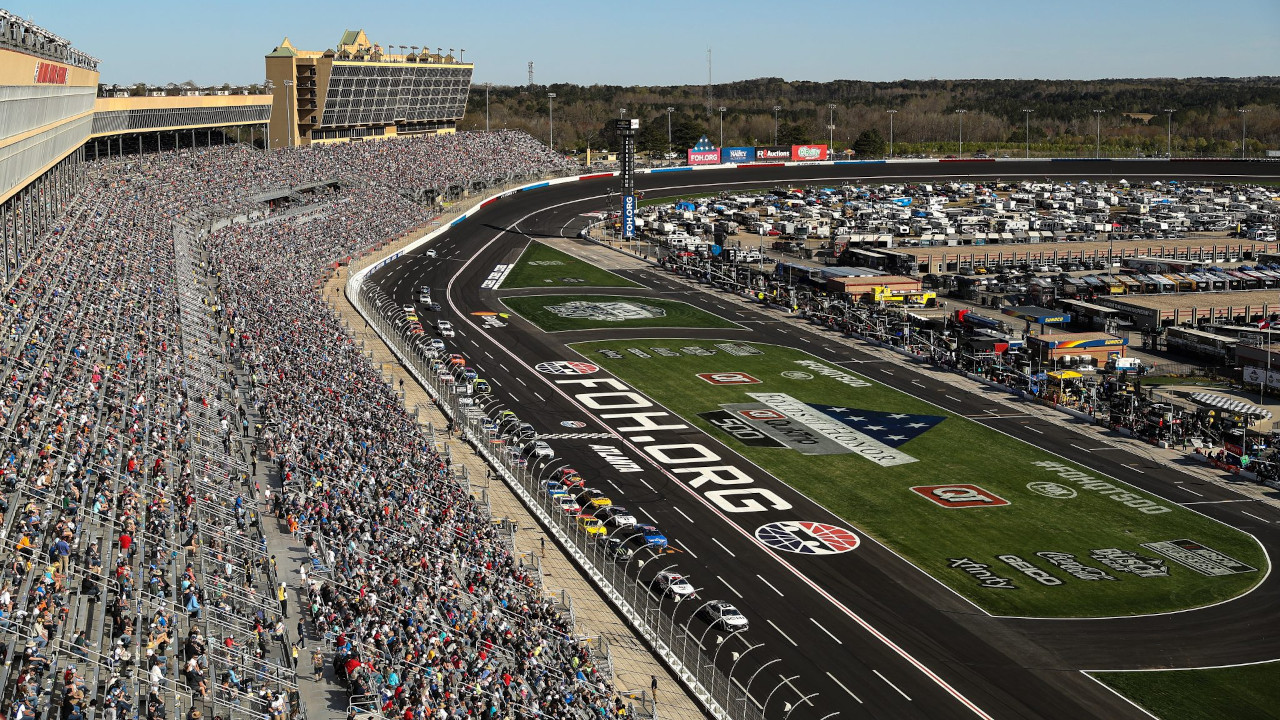
Atlanta Motor Speedway
Hampton, Georgia, United States
71,000 capacity
Atlanta Motor Speedway (formerly known as the Atlanta International Raceway from 1960 to 1990) is a 1.540 mi (2.478 km) quad-oval intermediate speedway in Hampton, Georgia. The track has hosted a variety of sanctioning bodies since its inaugural season of racing in 1960, including NASCAR and IndyCar. The venue has a capacity of 71,000 as of 2015 and includes various track layouts, including a 1⁄4 mile (0.40 km) oval on the track's frontstretch, and a 2.5 miles (4.0 km) roval road course layout. Atlanta Motor Speedway is currently owned Speedway Motorsports, LLC (SMI) and is led by track general manager Brandon Hutchison. In the late 1950s, plans were made by the First Georgia Securities Corporation to build a facility that rivaled the Indianapolis Motor Speedway. After a months-long delay, the first races were held in 1960. Shortly after, the track faced heavy financial troubles, having to enter Chapter 10 bankruptcy in 1971. After periods of stability directed by Stacey Cotton and Walt Nix, the facility was bought out by motorsports mogul Bruton Smith in 1990, with Smith and his company, SMI, directing the facility's expansion and renovation under longtime general manager Ed Clark. The track has since gone through two major reconfigurations since Smith's purchase: one in 1997 that changed the layout of the track, and one in 2021 that changed the style of racing to produce pack racing seen at superspeedways.
Auto Club Speedway
Fontana, United States
Rising from the high desert landscape of Southern California, Auto Club Speedway stands as one of NASCAR's most distinctive superspeedways, serving the nation's second-largest media market from its strategic location in Fontana. This massive racing facility, situated approximately 50 miles east of Los Angeles, has carved out a unique identity in American motorsport through its challenging layout and eventful racing action. Originally constructed as California Speedway, the venue emerged during NASCAR's westward expansion efforts in the 1990s, representing a bold investment in bringing premier stock car racing to the West Coast. The facility was designed to capture the growing motorsport enthusiasm in Southern California while providing fans with a world-class racing experience in a region previously underserved by major NASCAR events. The track's most defining characteristic is its distinctive D-shaped configuration, featuring a unique layout that sets it apart from traditional oval speedways. Measuring two miles in length, the circuit combines elements of both superspeedway and intermediate track racing, creating a challenging environment that demands versatility from drivers and teams. The banking varies significantly around the circuit, with the turns featuring progressive banking that increases toward the outside, ranging from 11 degrees on the inside to 14 degrees at the top. What makes Auto Club Speedway particularly challenging is its multiple racing grooves, which allow for side-by-side competition throughout much of the race distance. The track surface, originally constructed with a specific aggregate designed to promote tire wear, creates a unique racing dynamic where aerodynamics, mechanical grip, and tire management all play crucial roles in determining success. The wide racing surface, measuring 80 feet across in the turns, provides ample room for drivers to race multiple lines and execute eventful passing maneuvers. The facility's location in the high desert creates additional challenges for teams, as the elevation of approximately 2,200 feet above sea level affects engine performance and aerodynamic characteristics. Combined with Southern California's warm climate, these conditions often lead to tire degradation that significantly influences race strategy and can produce unexpected outcomes as races progress. Throughout its history, Auto Club Speedway has witnessed numerous memorable moments that have become part of NASCAR lore. The track has developed a reputation for producing intense, competitive racing with multiple lead changes and eventful finishes. Its wide surface and multiple grooves have facilitated some of the most notable side-by-side racing in the sport, with drivers able to race wheel-to-wheel for extended periods. The speedway's unique characteristics have made it a favorite among drivers who appreciate the challenge of managing tire wear while maintaining competitive speed over long runs. The track rewards both aggressive driving and strategic patience, as the racing surface evolves throughout events, creating different optimal lines and passing opportunities as conditions change. Beyond its primary NASCAR events, Auto Club Speedway has hosted various other motorsport activities, including IndyCar racing during certain periods of its history. The facility's versatile design and extensive infrastructure have made it capable of accommodating different series and racing formats, contributing to its significance in American motorsport. The speedway complex encompasses far more than just the racing surface, featuring extensive fan amenities, hospitality areas, and support facilities that reflect its status as a major motorsport destination. The facility's design takes advantage of Southern California's favorable climate, with many outdoor viewing areas and fan zones that enhance the spectator experience. Located in the heart of the Inland Empire, the speedway serves a massive population base stretching from Los Angeles to San Bernardino and beyond. Its proximity to major highways and transportation networks makes it accessible to millions of potential attendees, while its position in the entertainment capital of the world adds to its significance in NASCAR's overall marketing and promotional strategies. The track's impact extends beyond race weekends, as it serves as an important economic engine for the region and a showcase for NASCAR's presence on the West Coast. The facility has played a crucial role in developing motorsport culture in Southern California, introducing new generations of fans to stock car racing while providing a venue for corporate entertainment and special events. Auto Club Speedway's racing surface has evolved over the years, with various modifications and improvements designed to enhance competition and safety. These changes have generally been well-received by the racing community, maintaining the track's reputation for producing competitive events while adapting to the evolving demands of modern NASCAR competition. The speedway continues to occupy an important position on the NASCAR calendar, typically hosting events during the spring season when Southern California's weather is at its most favorable. The timing of these events often places them at crucial points in the championship battle, adding extra significance to the competition and creating additional pressure for drivers and teams. Today, Auto Club Speedway remains one of NASCAR's most challenging and respected venues, combining unique track characteristics with the glamour and excitement associated with Southern California motorsport. Its distinctive layout, demanding racing conditions, and notable setting continue to make it a highlight of the NASCAR season, representing both the sport's commitment to geographic diversity and its ability to create compelling competition in varied environments. The facility stands as a testament to NASCAR's successful expansion into new markets while maintaining the competitive integrity and excitement that defines premier stock car racing.
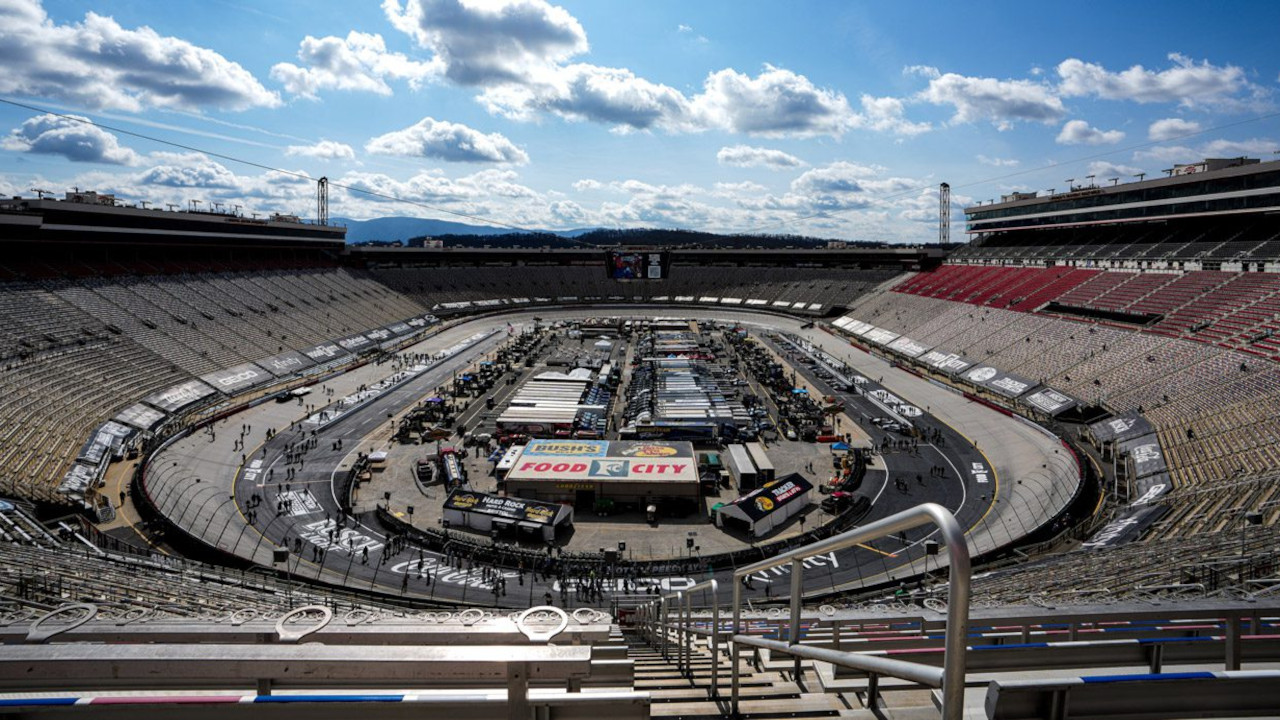
Bristol Motor Speedway
Bristol, Tennessee, United States
146,000 capacity
Nestled in the rolling hills of East Tennessee lies one of NASCAR's most iconic and intimidating venues, a concrete colosseum that has earned its place as the sport's most beloved short track. Bristol Motor Speedway stands as a testament to the raw intensity and close-quarters combat that defines short-track racing, drawing massive crowds to witness some of the most competitive and unpredictable competition in motorsports. Originally constructed as Bristol International Raceway, this half-mile oval opened its gates in the 1960s as a dirt track before evolving into the concrete fortress that defines modern short-track racing. The transformation from dirt to concrete fundamentally changed the character of racing at Bristol, creating the high-banked, high-speed environment that would make it one of NASCAR's premier destinations. The track's evolution mirrors that of NASCAR itself, growing from regional racing roots into a national spectacle that captivates audiences across the country. The physical characteristics of Bristol Motor Speedway set it apart from virtually every other venue on the NASCAR circuit. Measuring exactly 0.533 miles in length, the track features progressive banking that ranges from 24 to 28 degrees in the turns, with the front and back straightaways banked at a relatively modest 6 to 10 degrees. This unique banking configuration creates a racing environment where cars can maintain extraordinarily high speeds despite the track's compact dimensions, often exceeding 120 miles per hour in a space where drivers can see the entire racing surface from their cockpit. The concrete surface at Bristol presents its own set of challenges and opportunities for competitors. Unlike the asphalt surfaces found at most NASCAR tracks, Bristol's concrete provides different grip characteristics and wear patterns that significantly impact racing strategy. The surface tends to be less forgiving of setup mistakes while offering multiple racing grooves that can shift throughout an event as track conditions evolve. The combination of high banking and concrete surface creates a scenario where aerodynamic draft plays a crucial role despite the relatively short straightaways, leading to the pack racing and frequent position changes that have become synonymous with Bristol competition. Perhaps no venue in NASCAR generates more excitement about overtaking opportunities than Bristol Motor Speedway. The track's compact nature means that slower traffic becomes a constant factor throughout races, creating situations where lead changes can occur rapidly and frequently. The high banks allow cars to run multiple grooves simultaneously, from the preferred inside line to the challenging but sometimes faster outside wall. Turn entries and exits provide prime passing opportunities, though the concrete surface and high speeds make every move a calculated risk that can result in either notable success or devastating contact. Bristol's reputation as "The Last Great Colosseum" stems from the gladiatorial nature of competition that unfolds within its concrete walls. The track's unforgiving characteristics have produced some of NASCAR's most memorable moments, from notable crashes to eventful last-lap battles that have defined careers and championships. The venue has witnessed everything from dominant performances where single drivers have led wire-to-wire to chaotic affairs featuring dozens of lead changes and multiple caution periods that test every aspect of team strategy and driver skill. The atmosphere at Bristol Motor Speedway rivals that of any sporting venue in America. With a seating capacity of 146,000, the facility creates an amphitheater-like environment where spectators enjoy unobstructed views of the entire racing surface. The steep banking of the grandstands mirrors the track's banking, creating sightlines that allow fans to follow the action from any seat in the house. The proximity of the seating to the track surface intensifies the sensory experience, with the sound of 40 NASCAR engines reverberating off the concrete walls and aluminum grandstands to create an audio assault that embodies the raw power of stock car racing. Night racing at Bristol adds another dimension to the venue's mystique. The track's lighting system transforms the concrete oval into a nighttime spectacle where the combination of high speeds, close competition, and eventful shadows creates television coverage that regularly ranks among NASCAR's highest-rated broadcasts. The cooler nighttime temperatures often change track conditions throughout the event, adding strategic elements that teams must navigate while managing the intense wheel-to-wheel racing that defines Bristol competition. Bristol Motor Speedway has also served as a venue for innovation within NASCAR, hosting experimental race formats and serving as a testing ground for new rules packages designed to enhance competition. The track's unique characteristics make it an ideal laboratory for understanding how changes to cars and competition procedures affect racing quality, with lessons learned at Bristol often applied to NASCAR's broader competitive landscape. Beyond NASCAR's premier Cup Series, Bristol Motor Speedway hosts multiple racing series throughout its annual calendar. The venue regularly features NASCAR Xfinity Series and Truck Series competition, each bringing their own distinct racing characteristics to the concrete surface. The track has also hosted various touring series and special events that showcase different forms of motorsports, though stock car racing remains the facility's primary identity. Today, Bristol Motor Speedway continues to hold its position as one of NASCAR's most anticipated annual stops, with tickets for Bristol races traditionally among the most difficult to obtain in the sport. The combination of limited seating relative to demand, notable racing, and the venue's reputation for unpredictability ensures that Bristol maintains its status as a crown jewel on the NASCAR schedule. As the sport continues to evolve, Bristol Motor Speedway remains a constant reminder of NASCAR's short-track roots and the raw, uncompromising competition that built the sport's foundation.
Bristol Motor Speedway Dirt
Bristol, Tennessee, United States
Nestled in the Appalachian Mountains of Tennessee, one of NASCAR's most iconic venues underwent a eventful transformation that would captivate the motorsport world. Bristol Motor Speedway, long known as "The Last Great Colosseum" for its thunderous concrete banking, made headlines when it temporarily converted its racing surface to dirt for select NASCAR Cup Series events, creating an entirely new racing experience at this legendary half-mile facility. The dirt conversion at Bristol Motor Speedway represented a bold experiment that merged NASCAR's modern era with its dirt-track roots. This transformation required covering the track's famous concrete surface with carefully prepared clay, fundamentally altering the racing characteristics that had defined Bristol for decades. The process involved trucking in hundreds of tons of dirt to create a racing surface that would challenge drivers accustomed to the predictable grip levels of asphalt and concrete. Bristol's unique characteristics as a dirt track stem from its unusual dimensions and configuration. Unlike traditional dirt ovals that are typically flat or feature minimal banking, Bristol's dirt surface maintained much of the speedway's eventful elevation changes and banking angles. The track's 24-degree banking in the turns, combined with the variable grip characteristics of dirt, created racing conditions unlike anywhere else in NASCAR. The tight confines of the half-mile layout, measuring just 0.533 miles around, ensured that cars remained in close proximity throughout races, amplifying the unpredictable nature of dirt racing. The racing surface itself became the star of the show, with its constantly evolving characteristics throughout race weekends. As cars circulated, the dirt would develop multiple grooves, with drivers searching for the optimal line that could change from lap to lap. The bottom groove often provided the most consistent grip early in runs, while the top groove could become dominant as rubber was laid down and the surface conditions changed. This created strategic elements rarely seen in modern NASCAR, as drivers had to adapt their lines and techniques in real-time. Weather conditions played an enormously amplified role in dirt racing at Bristol compared to traditional asphalt events. Moisture content in the track surface could eventfulally alter grip levels and racing characteristics, sometimes within a single race. Track preparation became an art form, with officials working to maintain optimal surface conditions through watering, packing, and grading between sessions. The unpredictability added an element of excitement that distinguished these events from typical NASCAR races. The dirt configuration transformed Bristol's famous racing characteristics in fascinating ways. While the concrete version of Bristol was known for its intense, side-by-side racing and frequent contact, the dirt surface introduced slide jobs, crossover moves, and racing techniques borrowed directly from sprint car and late model dirt racing. Drivers found themselves relearning how to race at a track where many had competed for years, with traditional Bristol racing lines often proving ineffective on the dirt surface. NASCAR's return to dirt racing at Bristol marked the first time the Cup Series had competed on dirt since the early 1970s, representing a significant moment in the sport's evolution. The event attracted attention from both traditional NASCAR fans and dirt racing enthusiasts, creating a unique crossover appeal. Many NASCAR drivers had to quickly adapt their skills or rely on previous dirt racing experience, while some enlisted the help of dirt track specialists to prepare for these unique events. The dirt races at Bristol showcased the versatility of NASCAR's modern race cars, with teams making significant setup adjustments to accommodate the different surface. Suspension geometries, tire choices, and aerodynamic considerations all required modifications from the typical Bristol setup. The events often featured more unpredictable outcomes than traditional NASCAR races, with the surface conditions serving as a great equalizer that could elevate underdogs and challenge favorites. Track conditions during dirt events evolved eventfulally throughout race weekends. Practice and qualifying sessions would begin with a freshly prepared surface, but by race time, the track would have developed character through rubber buildup, moisture changes, and the natural evolution that occurs as dirt surfaces are worked in. This created strategic elements around tire conservation and track position that differed significantly from typical NASCAR competition. The spectacle of dirt racing at Bristol extended beyond just the on-track action. The visual elements of cars sliding through turns, dirt flying from spinning wheels, and the dusty atmosphere created a unique aesthetic that set these events apart from standard NASCAR races. The sounds were different too, with engines note changes as drivers modulated throttle through sliding conditions, and the distinctive sound of tires working against the dirt surface. Bristol Motor Speedway's dirt configuration represents NASCAR's willingness to experiment with its racing formats while honoring the sport's historical roots. The temporary dirt surface created racing that was both nostalgic and innovative, combining elements of traditional dirt track racing with the modern NASCAR experience. These events have contributed to ongoing discussions about surface diversity in NASCAR and the potential for more experimental racing formats. The success and reception of dirt racing at Bristol has implications for the future of NASCAR's schedule diversity. While maintaining the track's primary identity as a concrete speedway, the dirt conversion capability demonstrates the venue's adaptability and NASCAR's openness to format experimentation. Bristol Motor Speedway Dirt stands as a testament to the sport's evolution while celebrating its fundamental connection to grassroots dirt track racing across America.
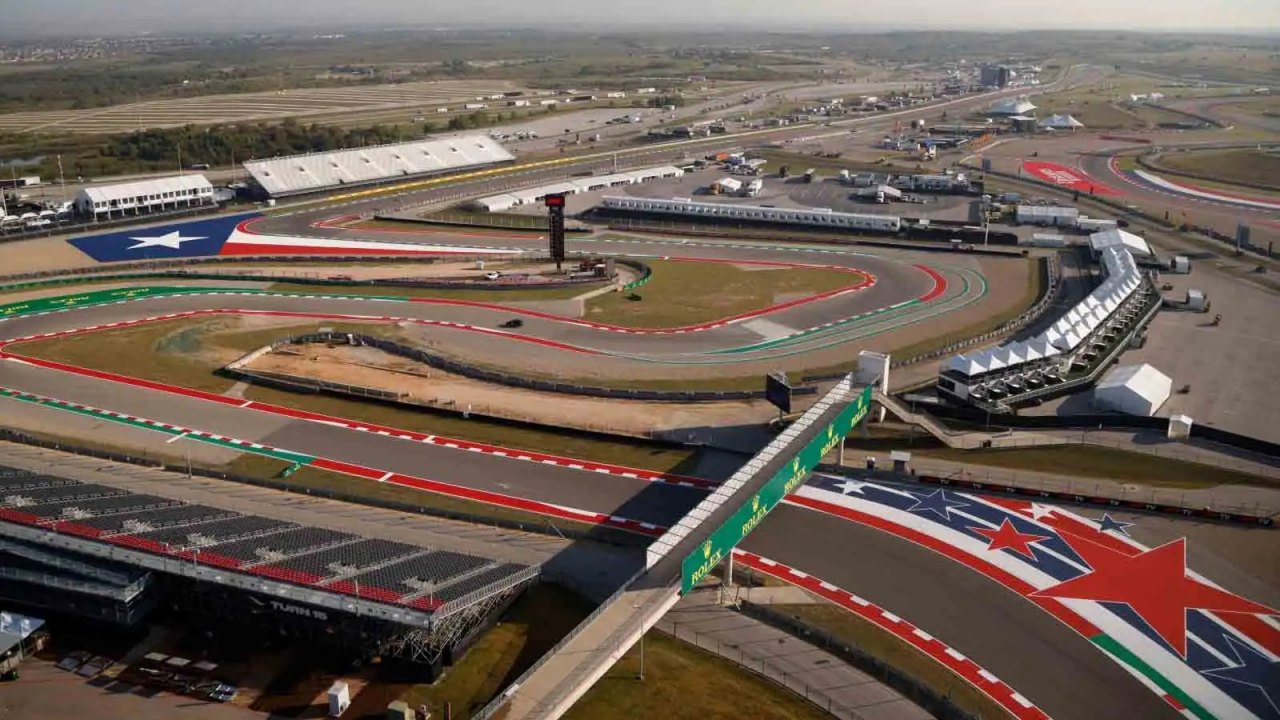
Circuit of The Americas
Austin, TX, United States
120,000 capacity
The Circuit of the Americas (COTA) in Austin, Texas, is the first purpose-built Formula 1 circuit in the United States and has established itself as one of the premier racing venues in the world since its inaugural race in 2012. Designed by renowned circuit architect Hermann Tilke, COTA draws inspiration from some of the greatest corners in motorsport and combines them into a challenging 5.513-kilometer layout. The circuit's signature feature is Turn 1, a eventful uphill left-hander approached via a steep blind crest. Drivers arrive at the top of the hill with the track falling away beneath them, creating one of the most notable and challenging braking zones in Formula 1. The elevation change of over 40 meters across the circuit is remarkable for a venue in relatively flat Texas terrain, achieved through extensive earthworks during construction. The flowing esses of Turns 3-6 are directly inspired by Silverstone's Maggots-Becketts complex, providing a high-speed test of aerodynamic grip and driver commitment. The long back straight leads to a heavy braking zone at Turn 12, which has become a prime overtaking spot. The stadium section (Turns 15-18) was designed to accommodate large grandstands close to the action, and the amphitheatre-like setting creates an intense atmosphere on race day. COTA has quickly built a reputation for producing excellent racing. Lewis Hamilton has been the dominant force at the venue, winning five times including a strong wet-weather drive in 2015. The 2012 inaugural race saw Hamilton defeat Sebastian Vettel in front of an ecstatic crowd, immediately establishing the circuit's credentials. Kimi Räikkönen's charge from the back of the grid to the podium in 2018 demonstrated how the layout rewards brave overtaking. The United States Grand Prix at COTA has become a major cultural event, extending far beyond motorsport. The circuit regularly hosts major music concerts during race weekend, with headliners including Taylor Swift, Eminem, Billy Joel, and Ed Sheeran performing on a purpose-built stage within the circuit grounds. This fusion of racing and entertainment has helped attract new fans to Formula 1 and contributed to the sport's explosive growth in the American market. Austin's vibrant food, music, and technology scenes provide the perfect backdrop for a Grand Prix weekend, with the city's "Keep Austin Weird" culture adding a uniquely American flavour to the event. The growth of F1 in the US, fuelled by the Netflix series "Drive to Survive," has seen COTA sell-out crowds exceed 400,000 across race weekends, rivalling Silverstone as the best-attended Grand Prix. Beyond F1, COTA hosts MotoGP, NASCAR, the World Endurance Championship, and IndyCar, making it one of the most versatile and busy racing venues in North America.
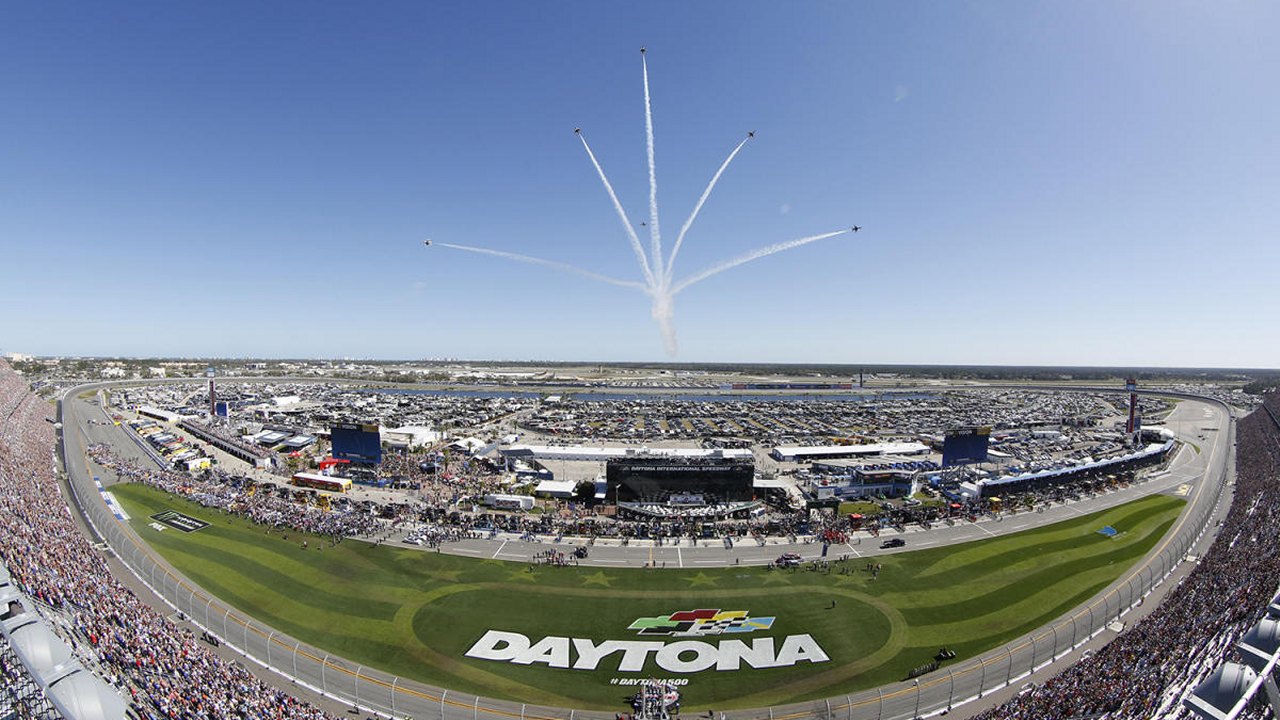
Daytona International Speedway
Daytona Beach, FL, United States
123,500 capacity
Among motorsport's most hallowed grounds stands a sprawling temple to speed in Florida's coastal plains, where generations of drivers have chased glory at velocities that defy comprehension. Daytona International Speedway represents the apex of American stock car racing, serving as both the spiritual home of NASCAR and a proving ground where legends are forged in thunderous battles at nearly 200 miles per hour. Born from the vision of NASCAR founder Bill France Sr., this iconic venue emerged in the late 1950s as racing outgrew the confines of Daytona Beach's famous beach-road course. The ambitious project transformed 444 acres of swampland into what would become known as "The World Center of Racing," opening its gates to establish a new era in American motorsport. The facility's construction marked a pivotal moment in NASCAR's evolution from regional curiosity to national phenomenon, providing a permanent home worthy of the sport's growing ambitions. The speedway's defining characteristic lies in its massive 2.5-mile tri-oval configuration, a design that combines breathtaking speeds with intense wheel-to-wheel competition. Unlike traditional ovals, the track features distinct banking variations that create multiple racing grooves and strategic opportunities. The towering 31-degree banking in turns one and two, coupled with 18-degree banking in turns three and four, allows cars to maintain extraordinary speeds while providing drivers with different lines through each corner. The frontstretch and backstretch banking of 18 degrees creates additional racing room, enabling the side-by-side battles and multi-car drafting formations that have become synonymous with superspeedway racing. This unique geometry transforms racing into an intricate chess match played at breakneck speeds. The draft becomes paramount, as cars slip behind one another to reduce air resistance, then slingshot past in carefully timed moves that can involve dozens of vehicles. The track's wide 40-foot racing surface accommodates these multi-groove battles, where position changes can happen anywhere along the 2.5-mile circuit rather than being confined to traditional passing zones. Daytona's asphalt surface has undergone numerous transformations over the decades, each repaving bringing subtle changes that affect racing dynamics. The track's relatively flat straightaways stretch for significant distances, with the frontstretch extending over 3,000 feet and providing ample opportunity for drafting maneuvers and last-second passes to the finish line. These long straights, combined with the sweeping turns, create sustained speeds that distinguish superspeedway racing from competition on shorter ovals. The speedway's crown jewel event, the Daytona 500, stands as NASCAR's most prestigious race and effectively serves as the sport's Super Bowl. Known as "The Great American Race," this season-opening notable has produced countless memorable moments that have transcended motorsport to capture mainstream American attention. The race's unique qualifying format and its position as NASCAR's most important victory have elevated winners into motorsport immortality, while its unpredictable nature ensures that underdogs can challenge established stars on racing's biggest stage. Beyond the Daytona 500, the facility hosts multiple NASCAR Cup Series events annually, including summer races that present different challenges as track temperatures and atmospheric conditions alter racing dynamics. The speedway also welcomes the Rolex 24 at Daytona, a prestigious endurance race that transforms the venue into a challenging road course using both the oval and an intricate infield section. This event attracts international sports car racing stars and provides a completely different test of man and machine over 24 grueling hours. Tragedy has also shaped Daytona's character, most notably following incidents that prompted significant safety innovations throughout NASCAR. These events led to the development and implementation of revolutionary safety technologies that have since spread throughout motorsport, demonstrating how the sport's most challenging venues often drive its most important advances in driver protection. The speedway's massive grandstand capacity of 123,500 creates an atmosphere unlike anywhere else in motorsport. The facility's sheer scale, with towering grandstands rising above the banking, provides spectators with decisive views of the entire racing surface while generating a thunderous wall of sound when 40 cars circulate at full speed. The venue's design ensures that fans can witness the intricate drafting battles and strategic positioning that define superspeedway competition. Modern Daytona continues evolving through facility upgrades and technological enhancements that maintain its status as motorsport's premier destination. The speedway incorporates cutting-edge timing and scoring systems, advanced safety equipment, and fan amenities that complement its racing heritage with contemporary comforts. These improvements ensure that while the fundamental challenge remains unchanged, the experience for both competitors and spectators continues reaching new heights. The track's influence extends far beyond its physical boundaries, as success at Daytona serves as a measuring stick for NASCAR careers. Drivers who master the unique demands of superspeedway racing often find themselves elevated to legendary status, while the speedway's unpredictable nature means that breakthrough victories can launch careers and create instant stars. Today, Daytona International Speedway remains the undisputed crown jewel of American motorsport, a venue where the past, present, and future of NASCAR converge in notable fashion. Its combination of raw speed, strategic complexity, and historic significance ensures that every event becomes part of an ongoing legacy that defines not just a racing circuit, but an entire sport's identity and aspirations.
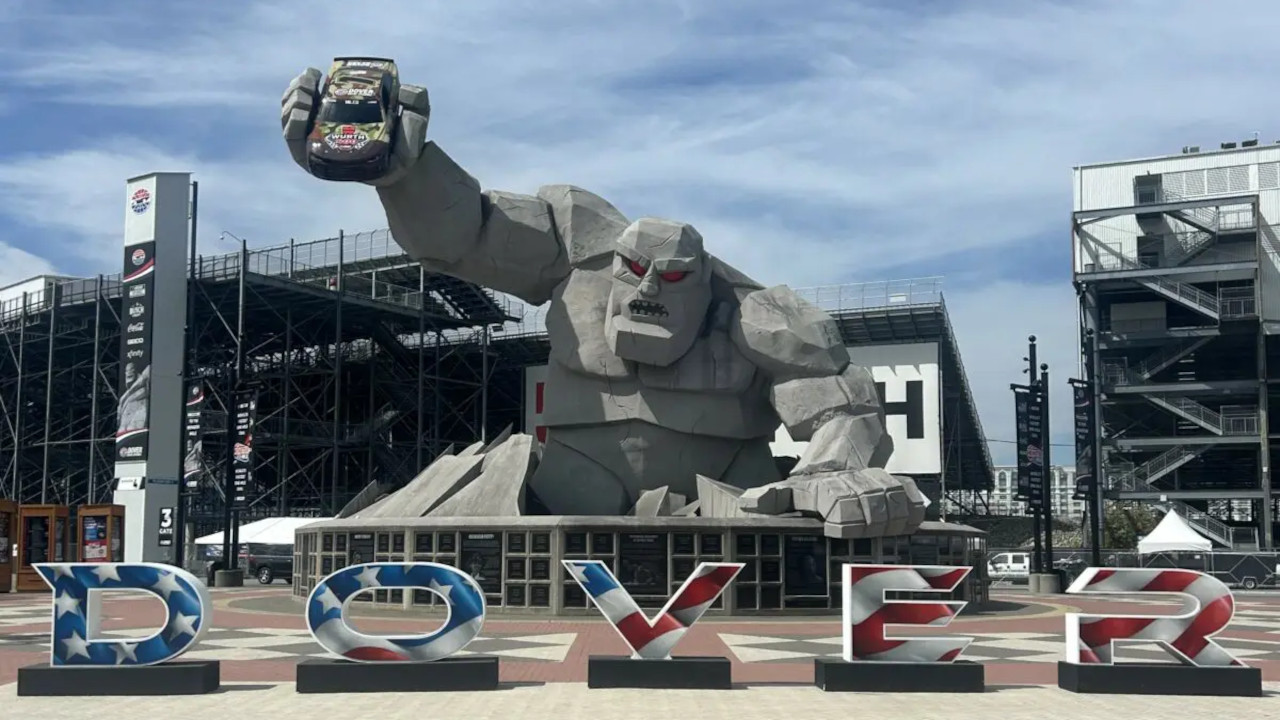
Dover Motor Speedway
Dover, Delaware, United States
Carved into the landscape of Delaware's capital region, Dover Motor Speedway stands as one of NASCAR's most distinctive and challenging venues, earning its fearsome reputation as "The Monster Mile." This concrete colossus has been testing drivers' skills and nerve since opening its gates in 1969, establishing itself as a cornerstone of American stock car racing. The speedway's origins trace back to the vision of Melvin Joseph, who sought to bring major motorsports to the First State. Construction began in the late 1960s on what would become Delaware's first and only NASCAR Cup Series venue. The track officially opened for competition in 1969, though it initially hosted primarily local and regional racing events before eventually earning its place on NASCAR's premier circuit. What immediately sets Dover apart from its contemporaries is its unique concrete racing surface, a characteristic shared by only a handful of tracks in NASCAR's top series. This abrasive surface creates distinctive racing conditions, generating higher tire wear rates and demanding exceptional car setup precision. The track's banking measures 24 degrees in the turns and nine degrees on the straightaways, creating a high-speed environment where aerodynamic efficiency proves crucial. The speedway's most defining characteristic is its one-mile oval configuration, which places it in a unique category within NASCAR's schedule. Neither a short track nor a superspeedway, Dover's intermediate length combined with its concrete surface and substantial banking creates racing dynamics unlike anywhere else on the circuit. The track's width varies from 40 feet in the corners to 46 feet on the straightaways, providing multiple racing grooves that can shift eventfulally as track conditions evolve throughout a race weekend. Dover's concrete surface becomes increasingly challenging as races progress, with the abrasive nature of the material creating tire falloff that can eventfulally alter competitive order. This characteristic has produced countless strategic battles, as teams must balance speed with tire conservation. The track's surface also tends to "rubber up" differently than asphalt, creating varying grip levels across different racing lines and adding another layer of complexity to race strategy. The venue's proximity to major East Coast population centers has made it a favorite destination for NASCAR fans, while its challenging nature has created numerous memorable moments throughout its history. Dover's demanding nature has often separated contenders from pretenders, with only the most skilled drivers and well-prepared teams able to master its concrete challenges consistently. Weather often plays a significant role at Dover, with the track's location in the Mid-Atlantic region subjecting it to various seasonal conditions. Spring and fall race weekends can experience eventful temperature swings, affecting tire performance and track grip levels. The concrete surface's response to temperature changes differs markedly from asphalt tracks, adding another variable that teams must account for in their race preparations. The facility underwent significant renovations and improvements throughout its existence, expanding grandstand capacity and upgrading amenities to enhance the spectator experience. The track's layout allows for excellent sightlines from most seating areas, giving fans clear views of the entire racing surface. The speedway's compact design creates an intimate atmosphere despite its substantial seating capacity, allowing spectators to witness the intensity of high-speed competition up close. Dover's role in NASCAR's playoff system has often elevated its importance, with races frequently occurring during crucial points in the championship battle. The track's unforgiving nature means that mechanical failures, tire strategies, or minor mistakes can have championship-altering consequences. This pressure-cooker environment has produced some of NASCAR's most eventful moments and has often served as a proving ground for championship contenders. The speedway has also played host to various support series throughout its history, including NASCAR Xfinity Series and Truck Series events. These races have often served as stepping stones for drivers advancing through NASCAR's developmental ladder, providing valuable experience on one of the sport's most demanding surfaces before reaching the Cup Series level. Beyond its racing action, Dover Motor Speedway has become an integral part of Delaware's sporting identity and economic landscape. The facility brings hundreds of thousands of visitors to the region during race weekends, generating significant economic impact for local businesses and establishing the venue as one of the state's premier entertainment destinations. The track's maintenance requirements differ significantly from asphalt facilities, with the concrete surface requiring specialized care and attention. This unique aspect has made Dover's track preparation crew among the most skilled in the business, as they must understand the nuances of maintaining optimal racing conditions on concrete throughout varied weather conditions and seasonal changes. Today, Dover Motor Speedway continues to challenge NASCAR's elite drivers while maintaining its reputation as one of the sport's most demanding venues. The combination of its concrete surface, banking configuration, and strategic importance within NASCAR's schedule ensures that "The Monster Mile" remains a crucial test of driver skill, team preparation, and strategic execution. As NASCAR continues to evolve, Dover's unique characteristics guarantee its continued relevance as a venue where championships can be won or lost, and where only the strongest survive the concrete challenge that has defined this Delaware landmark for more than five decades.
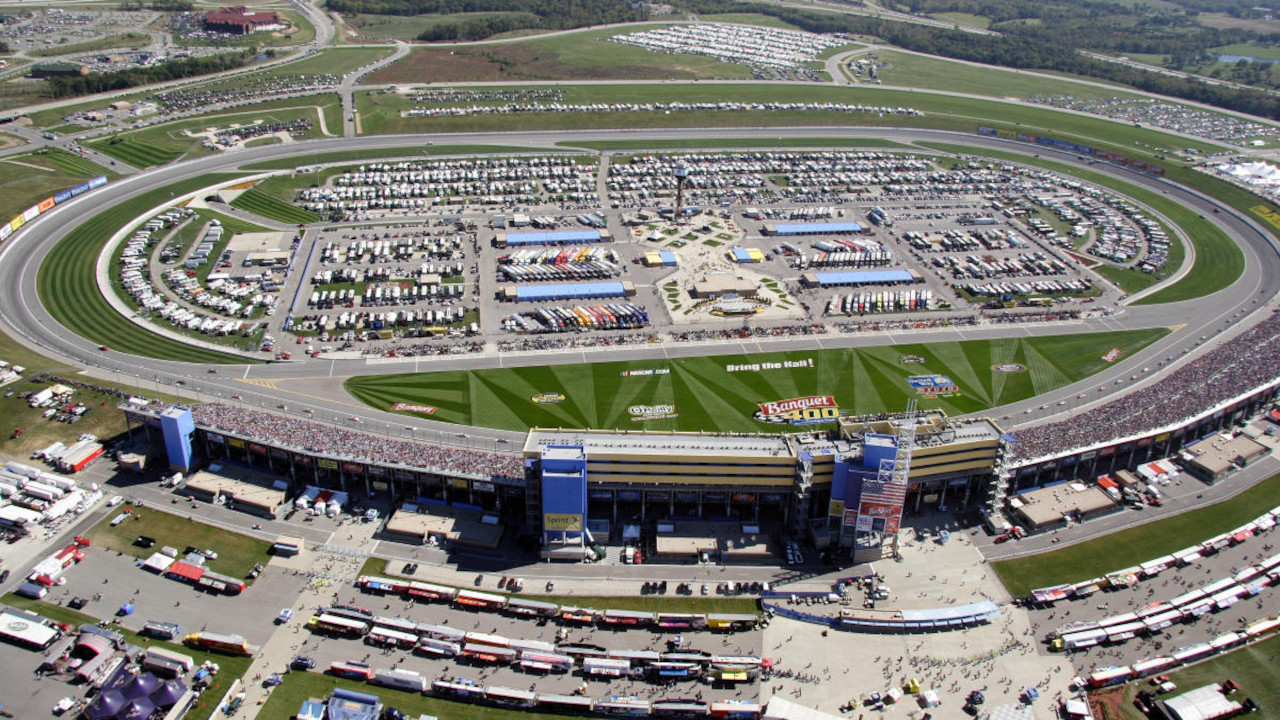
Kansas Speedway
Kansas City, Kansas, United States
48,000 capacity
Nestled in the heart of America's heartland, Kansas Speedway stands as one of NASCAR's most distinctive facilities, offering a unique blend of challenging racing conditions and Midwestern hospitality. This 1.5-mile tri-oval has carved out its own identity within the NASCAR Cup Series since opening in the early 2000s, becoming known for producing some of the sport's most memorable battles and unexpected outcomes. Built on the site of a former agricultural area in Kansas City, Kansas, the speedway was designed to bring premier motorsports entertainment to a region hungry for top-tier racing action. The facility's construction represented a significant investment in the area's sporting infrastructure, creating a world-class venue that would serve racing fans across the Great Plains and beyond. From its inception, Kansas Speedway was engineered to meet the demanding specifications required for NASCAR's premier series while incorporating modern amenities and safety features. The track's configuration presents a fascinating challenge for drivers and teams alike. Unlike many of its sister facilities in NASCAR's lineup of intermediate speedways, Kansas Speedway features progressive banking that increases from the inside to the outside of the racing surface. This variable banking creates multiple racing grooves, allowing drivers to choose different lines around the track depending on their car's handling characteristics and race strategy. The front stretch measures longer than the back stretch, creating an asymmetrical layout that adds complexity to aerodynamic packages and setup decisions. One of the most distinctive features of Kansas Speedway is its relatively flat banking in the turns compared to other intermediate tracks on the circuit. The banking measures approximately 15 degrees in turns one and two, and 17 degrees in turns three and four, with additional progressive banking that allows the track surface to bank up to 20 degrees on the outside edge. This configuration, combined with the track's width of approximately 75 feet, creates opportunities for side-by-side racing and multiple passing zones throughout each circuit of the facility. The racing surface at Kansas Speedway has evolved significantly since the track first opened. Originally constructed with a concrete surface, the track underwent a major reconfiguration that included the installation of an asphalt racing surface, which eventfulally changed the racing characteristics and driver approach to the facility. This transformation marked a pivotal moment in the track's history, as it shifted from producing single-file, aerodynamically dependent racing to creating opportunities for more diverse racing lines and passing opportunities. Kansas Speedway's location in the geographic center of the United States has made it a popular destination for fans traveling from across the region. The facility's capacity of 48,000 provides an intimate atmosphere compared to some of NASCAR's larger venues, while still offering excellent sightlines from virtually every seat in the facility. The speedway's design incorporates modern amenities including wide concourses, diverse food and beverage options, and comprehensive fan engagement areas that reflect the track's commitment to providing a complete entertainment experience. Weather has played a significant role in many of Kansas Speedway's most memorable moments. The facility's location in "Tornado Alley" has led to several rain delays and weather-related complications that have affected race outcomes and created eventful storylines. The track's exposure to prairie winds also creates unique aerodynamic challenges for drivers, as crosswinds and shifting wind patterns can significantly impact car handling and race strategy throughout an event. The speedway has become particularly known for producing unexpected winners and eventful finishes. The track's characteristics often reward drivers who can adapt their driving style throughout a race, as track conditions and tire wear create evolving challenges from green flag to checkered flag. Kansas Speedway's pit road and garage area were designed with modern NASCAR operations in mind, featuring wide pit stalls and comprehensive garage facilities that can accommodate the complex logistical requirements of contemporary NASCAR competition. The facility's infrastructure supports not only Cup Series events but also other NASCAR touring series and driving experiences that bring racing action to the facility throughout the year. The economic impact of Kansas Speedway extends well beyond race weekends, as the facility serves as a catalyst for tourism and economic development in the Kansas City metropolitan area. The speedway has become a landmark destination that attracts visitors from across the Midwest and beyond, contributing significantly to the local hospitality and service industries while providing high-profile exposure for the region on national television broadcasts. Today, Kansas Speedway continues to evolve as both a racing facility and entertainment destination. The track remains committed to providing challenging, competitive racing while enhancing the fan experience through facility improvements and expanded programming. Its position as one of NASCAR's newer facilities allows it to incorporate modern design principles and technologies while maintaining the essential character that has made it a respected and challenging venue for the sport's top competitors. The speedway's future appears bright as it continues to build upon its reputation for producing compelling racing and serving as a premier entertainment destination in the American heartland, maintaining its important role in NASCAR's diverse portfolio of racing venues.
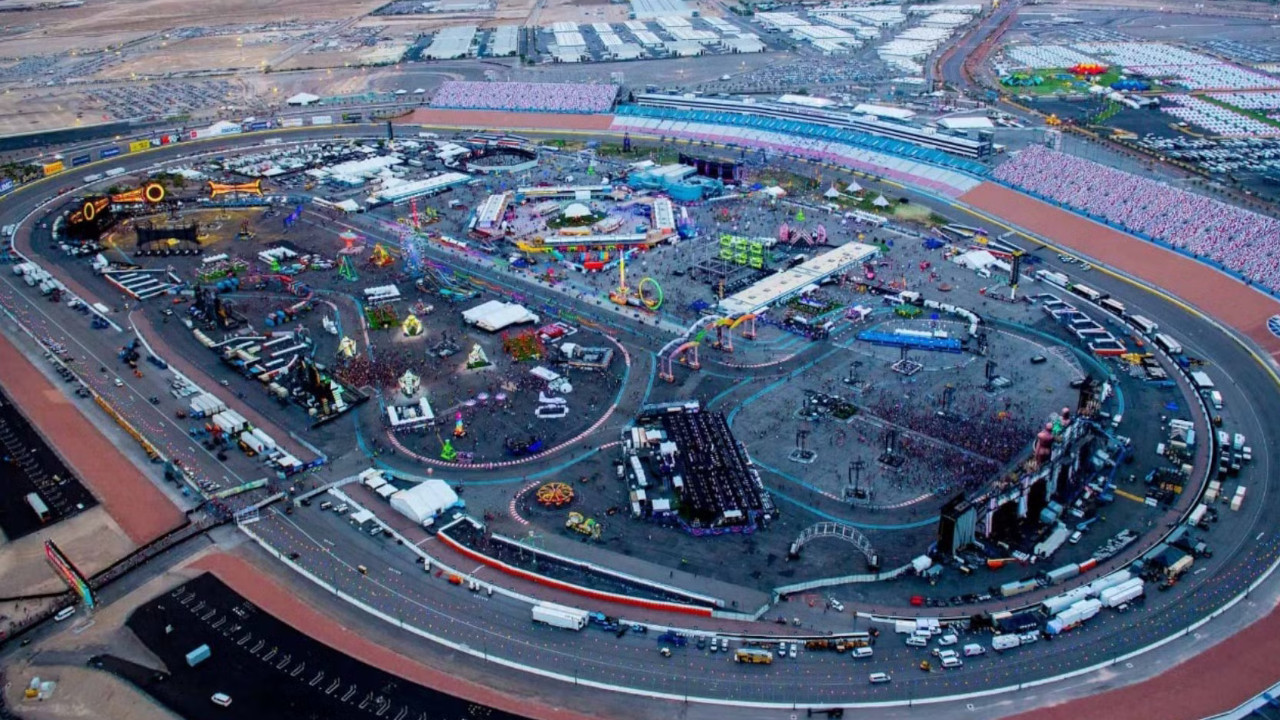
Las Vegas Motor Speedway
Las Vegas, Nevada, United States
80,000 capacity
Rising from the Nevada desert approximately fifteen miles northeast of the Las Vegas Strip, Las Vegas Motor Speedway stands as one of NASCAR's most distinctive venues, combining the spectacle of Sin City with high-speed oval racing. This 1.5-mile tri-oval has become synonymous with eventful finishes, championship battles, and the unique atmosphere that only Las Vegas can provide to motorsport. The facility emerged during NASCAR's expansion era of the 1990s, when the sport was actively seeking to broaden its geographic footprint beyond its traditional Southern strongholds. Las Vegas represented an ideal market—a rapidly growing metropolitan area with no major professional sports teams at the time, situated in a region hungry for major sporting events. The speedway's construction reflected NASCAR's ambitions to create a world-class facility that could accommodate the sport's growing popularity while taking advantage of Las Vegas's reputation as an entertainment destination. Designed as a 1.5-mile D-shaped oval, Las Vegas Motor Speedway features progressive banking that varies around the circuit. The turns are banked at 12 degrees, while the front and back straightaways maintain a relatively flat 9-degree banking. This configuration creates a unique racing dynamic where drivers must adapt their strategies between the more technical turns and the high-speed straightaways. The track's surface, originally concrete, has undergone various treatments and modifications over the years to optimize grip levels and racing quality. The speedway's layout presents several key characteristics that define its racing personality. The front straightaway stretches 1,200 feet, providing ample opportunity for drafting and side-by-side racing heading into Turn 1. The backstretch, at 1,500 feet, is even longer, creating additional passing zones and strategic opportunities. The turns themselves, while moderately banked compared to some NASCAR venues, offer multiple racing grooves that allow for various racing lines and overtaking opportunities. One of the track's most notable features is its width, which varies from 90 feet in the turns to 55 feet on the straightaways. This varying width creates natural racing dynamics, as drivers can utilize different parts of the track surface to find speed or make passes. The racing surface typically produces side-by-side competition, with the ability for drivers to run multiple grooves through the corners—a characteristic that has led to numerous memorable finishes. The facility's 80,000-seat capacity makes it one of NASCAR's larger venues, with grandstands that provide excellent sightlines of the entire racing surface. The main grandstand offers views of both the start-finish line and the critical Turn 4, where many late-race battles unfold. The speedway's location in the desert provides a unique backdrop, with the surrounding mountains creating a eventful setting for racing events. Las Vegas Motor Speedway has hosted numerous memorable moments throughout its NASCAR history. The track has been the site of multiple championship celebrations, as NASCAR has frequently scheduled Las Vegas races during crucial points in the season. The facility has witnessed eventful last-lap passes, multi-car accidents, and breakthrough victories for drivers seeking their first NASCAR Cup Series wins. The speedway's connection to Las Vegas's entertainment culture has created a unique race weekend atmosphere. The proximity to the Strip means that race weekends often extend well beyond the track, with drivers, teams, and fans taking advantage of the city's numerous entertainment options. This has helped establish Las Vegas as one of NASCAR's most popular destinations for both competitors and spectators. Beyond NASCAR Cup Series competition, Las Vegas Motor Speedway serves as a multi-purpose motorsports facility. The complex includes various racing configurations and has hosted different racing series throughout its history. The facility features additional tracks and configurations that accommodate other forms of motorsport, making it a comprehensive racing destination rather than simply a single-purpose oval. The track's surface characteristics have evolved over the years, with NASCAR and track officials working to optimize racing conditions. The concrete surface provides durability in the harsh desert climate while offering consistent grip levels throughout race distances. Weather rarely impacts racing at Las Vegas, as the desert location typically provides clear skies and minimal precipitation, though desert winds can occasionally influence racing conditions and strategy. Driver feedback about Las Vegas Motor Speedway consistently emphasizes the track's racing characteristics and the unique challenges it presents. The combination of relatively modest banking with long straightaways requires a different approach compared to higher-banked intermediate tracks. Aerodynamics play a significant role, but mechanical grip and handling remain crucial factors in lap time and race performance. The speedway's current status reflects its continued importance in NASCAR's annual schedule and its role as a premier motorsports destination in the western United States. The facility continues to invest in improvements and upgrades, maintaining its position as a modern, well-equipped racing venue that meets contemporary NASCAR standards while preserving the unique character that distinguishes it from other tracks on the circuit. Las Vegas Motor Speedway represents more than just another stop on the NASCAR calendar—it embodies the sport's successful expansion into new markets while creating a distinctive racing experience. The combination of competitive racing, notable desert setting, and Las Vegas's unmatched entertainment atmosphere has established this speedway as one of NASCAR's most recognizable and popular venues, continuing to attract fans from across the country to witness high-speed competition in America's entertainment capital.

Martinsville Speedway
Ridgeway, VA, United States
65,000 capacity
Nestled in the rolling hills of southern Virginia, Martinsville Speedway stands as NASCAR's oldest continuously operated venue, earning its place as one of the most revered short tracks in American motorsport. This half-mile paperclip-shaped oval has been testing drivers' skills and patience since the sport's earliest days, creating a legacy that spans generations of racing excellence. Clay Earles founded the facility in 1947, transforming a former cornfield in Ridgeway, Virginia, into what would become known as "The Paperclip" due to its distinctive elongated oval shape. The track opened its doors during NASCAR's formative years, hosting its first Cup Series race in 1949, just one year after NASCAR's official founding. Earles' vision was to create an intimate racing venue where fans could experience the intensity of stock car racing up close, a goal that has remained central to Martinsville's identity throughout its history. The track's unique configuration sets it apart from virtually every other venue on the NASCAR circuit. Measuring exactly 0.526 miles around, Martinsville features extremely tight turns with banking of only 12 degrees, connected by long straightaways that create deceptive opportunities for speed. The corners are so sharp that drivers must slow eventfulally from straightaway speeds exceeding 120 miles per hour to negotiate the turns at roughly half that pace. This eventful speed differential, combined with the track's narrow 40-foot width in the turns, creates a bottleneck effect that makes passing extremely challenging and requires precision driving. The racing surface itself tells a story of evolution and adaptation. Originally dirt, the track was paved with asphalt in 1955, though it retained concrete in the turns until a complete repaving project. The surface characteristics contribute significantly to tire wear and handling challenges, with drivers constantly battling grip levels that change throughout a race distance. The track's relatively flat banking means drivers cannot rely on gravitational assistance through the corners, instead depending entirely on mechanical grip and driving technique. What truly distinguishes Martinsville from other NASCAR venues is its unique blend of characteristics that create a style of racing reminiscent of short-track Saturday night action, but at the sport's highest level. The combination of tight quarters, heavy braking zones, and limited passing opportunities often leads to contact between competitors, earning the facility its reputation as one of NASCAR's most physically demanding venues. Drivers frequently describe racing at Martinsville as requiring equal parts patience and aggression, as the temptation to force passes often results in contact and potential retaliation. The facility's grandfather clock trophies have become iconic symbols in NASCAR, awarded to race winners since 1964. These unique trophies, standing over three feet tall, represent one of the most distinctive prizes in American motorsport and reflect the track's connection to traditional craftsmanship and timeless racing values. The tradition began when track officials sought a trophy that would reflect the facility's Virginia heritage and the patience required to succeed on its challenging surface. Throughout its history, Martinsville has witnessed countless memorable moments that have shaped NASCAR lore. The track has been the site of numerous last-lap eventful finishes, career-defining victories, and championship-deciding races. Its spring and fall race dates have often played crucial roles in determining playoff positioning and championship outcomes, adding extra significance to victories achieved on its challenging surface. The facility has also been notable for producing some of NASCAR's most heated rivalries, as the close-quarters racing and difficulty of passing often lead to on-track incidents that carry over between competitors. The venue's intimate atmosphere, with grandstands rising steeply above the racing surface, creates an environment where fan engagement reaches levels rarely matched at larger facilities. With a current capacity of approximately 65,000, spectators enjoy clear sightlines to the entire racing surface, allowing them to witness the strategic chess match that unfolds as drivers position themselves for potential passing opportunities. The facility's famous concession stands, particularly known for their signature hot dogs and other regional specialties, have become part of the Martinsville experience for generations of race fans. Martinsville's role in NASCAR's playoff system has elevated its importance in recent years, as the facility typically hosts elimination races where championship hopes are either advanced or dashed. The track's unforgiving nature and limited margin for error make it a fitting venue for high-stakes competition, where a single mistake or moment of overly aggressive driving can end a season's championship aspirations. The facility continues to balance respect for its historical significance with necessary modernization efforts. Recent improvements have focused on enhancing fan amenities while preserving the intimate atmosphere and challenging racing characteristics that define the Martinsville experience. These upgrades ensure the venue remains relevant in contemporary NASCAR while maintaining the essential elements that have made it special for over seven decades. Today, Martinsville Speedway maintains its position as one of NASCAR's most anticipated tour stops, representing a connection to the sport's roots while continuing to challenge the world's best stock car drivers. Its enduring appeal lies in its ability to strip away aerodynamic advantages and tire strategy complexities, reducing racing to its most fundamental elements: driver skill, patience, and the ability to execute under pressure. In an era of increasingly complex racing technology, Martinsville remains a venue where driving talent and racecraft ultimately determine success, preserving the essence of what made stock car racing compelling from its earliest days.
Memorial Coliseum
Portland, Oregon, United States
Nestled in the heart of Portland, Oregon, Memorial Coliseum stands as one of NASCAR's most distinctive and historically significant venues, representing a unique chapter in American motorsport history. This iconic facility has carved out a special place in racing lore through its unconventional setting and the remarkable events it has hosted over the decades. Originally constructed as a multipurpose arena, Memorial Coliseum was transformed into a racing venue that defied conventional expectations of what a NASCAR track should look like. Unlike the sprawling superspeedways and traditional oval circuits that dominate the NASCAR landscape, this Portland facility offered something entirely different – an indoor racing experience that brought stock car competition into an intimate, enclosed environment. The venue's adaptation for motorsport represented an innovative approach to racing that captured the imagination of fans and drivers alike. The facility's unique characteristics set it apart from virtually every other venue in NASCAR's diverse portfolio of racing locations. The indoor nature of Memorial Coliseum created an atmosphere unlike any other, with the roar of engines reverberating off the walls and ceiling, amplifying the sensory experience for spectators. The confined space meant that fans were positioned much closer to the action than at traditional outdoor tracks, creating an intensity and intimacy that was both competitive and unprecedented in stock car racing. Racing at Memorial Coliseum presented drivers with a completely different set of challenges compared to their usual outdoor oval experiences. The venue's configuration required careful navigation of tight quarters, with limited room for error and unique sight lines that tested even the most experienced competitors. The indoor environment also meant dealing with different air circulation patterns and atmospheric conditions that could affect both car performance and driver comfort throughout extended racing sessions. The surface characteristics of the venue contributed significantly to the racing dynamics, with drivers needing to adapt their typical setups and driving styles to maximize performance in this specialized environment. The confined nature of the facility meant that overtaking opportunities were at a premium, requiring strategic thinking and precise execution. Every move had to be calculated, as the margin for error was significantly reduced compared to the wide-open spaces of traditional NASCAR venues. Memorial Coliseum's place in NASCAR history extends beyond its physical uniqueness to encompass the memorable moments and races that unfolded within its walls. The venue became synonymous with close-quarters competition and unpredictable racing, where field position and strategy took on heightened importance. The indoor setting created a pressure-cooker atmosphere that often produced exciting finishes and unexpected outcomes, contributing to the venue's growing reputation as a must-see destination for racing enthusiasts. The facility's significance in the broader context of NASCAR's evolution cannot be understated. At a time when the sport was expanding its horizons and experimenting with different formats and venues, Memorial Coliseum represented bold thinking about how and where stock car racing could be presented. It demonstrated NASCAR's willingness to embrace unconventional approaches and bring racing to new audiences in unique settings. Portland's motorsport heritage found a perfect expression in Memorial Coliseum, as the venue became a bridge between the region's racing enthusiasm and NASCAR's national presence. The Pacific Northwest had always maintained a strong connection to motorsport, and the coliseum provided a focal point for that passion while introducing the area to top-level stock car competition in an accessible, exciting format. The venue's design elements and architectural features contributed to its distinctive character as a racing facility. The enclosed nature of the building meant that lighting, ventilation, and acoustics all played crucial roles in creating the racing environment. These factors combined to produce an atmosphere that was both unique in NASCAR and compelling for spectators who might never have experienced indoor stock car racing before. Throughout its NASCAR involvement, Memorial Coliseum demonstrated the sport's adaptability and willingness to explore new frontiers. The venue showed that exciting racing could happen in settings far removed from the traditional oval speedways, opening up possibilities for how the sport might reach new markets and engage different audiences. This experimental spirit reflected NASCAR's ongoing evolution and its commitment to innovation. The legacy of Memorial Coliseum in NASCAR circles extends beyond the specific races held there to encompass the broader lessons learned about alternative venue formats and the potential for stock car racing in non-traditional settings. The facility proved that with proper planning and execution, NASCAR could successfully adapt to virtually any appropriate venue, maintaining the sport's competitive integrity while offering fans entirely new experiences. Today, Memorial Coliseum stands as a testament to NASCAR's adventurous spirit and willingness to push boundaries in pursuit of exciting racing and expanded fan engagement. While the motorsport landscape has continued to evolve, the venue's contribution to NASCAR history remains significant, representing a bold experiment that succeeded in bringing stock car racing to new heights of accessibility and excitement. The facility continues to serve the Portland community in various capacities, but its place in racing history is secure as one of the most unique and memorable venues ever to host NASCAR competition.
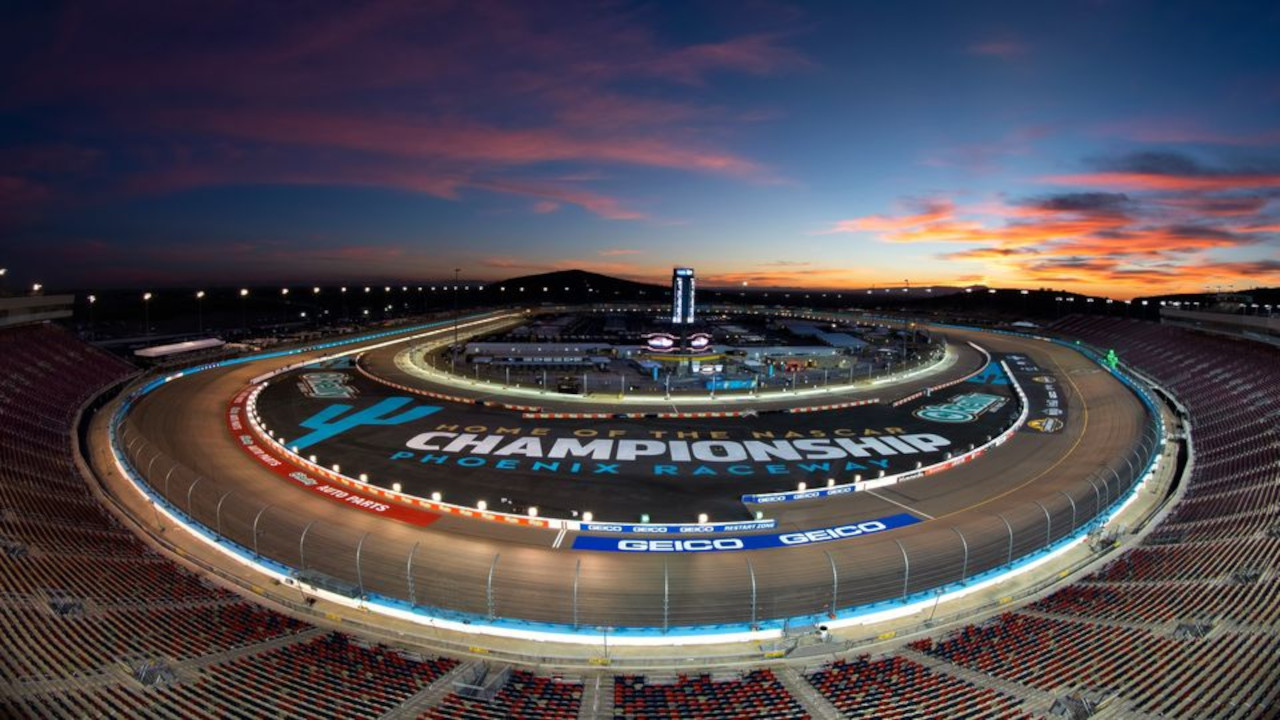
Phoenix Raceway
Avondale, Arizona, United States
42,000 capacity
Nestled in the desert landscape of Avondale, Arizona, Phoenix Raceway stands as one of NASCAR's most distinctive venues, offering a unique blend of challenging track characteristics and eventful racing action. This one-mile D-shaped oval has carved out a special place in American motorsport, serving as the crown jewel of NASCAR's western presence and hosting some of the sport's most memorable moments. Originally constructed as a flat, traditional oval, Phoenix Raceway underwent a significant transformation that would define its modern character. The facility's most distinctive feature is its asymmetrical design, with varying banking angles that create multiple racing grooves and strategic challenges for drivers. Unlike many NASCAR ovals, the track features progressive banking that ranges from relatively flat sections to more steeply banked corners, creating a complex racing surface that rewards both technical skill and tactical thinking. The track's layout presents a fascinating study in contrasts. Turn One features a dogleg configuration that opens up multiple racing lines, allowing drivers to choose between the traditional low groove or venture higher up the track for different grip levels. This corner complex often becomes a critical passing zone, as drivers can utilize the varied banking to gain momentum for the long back straightaway. Turn Two transitions into a sweeping arc that flows into the backstretch, where aerodynamic effects become particularly important as cars draft and battle for position. The most challenging section of Phoenix Raceway comes at Turns Three and Four, where the progressive banking creates a unique racing dynamic. The banking increases as drivers work their way around the corner, allowing multiple racing grooves to remain competitive throughout a race. This design philosophy has created some of the most exciting racing in NASCAR, as drivers can make moves both high and low on the track surface, often resulting in eventful side-by-side battles that extend for several turns. Phoenix Raceway's surface characteristics add another layer of complexity to the racing equation. The desert climate and track composition create changing grip levels throughout race events, with track temperature playing a crucial role in tire performance and overall car handling. The abrasive surface typically produces multiple racing grooves as rubber gets laid down during practice and racing sessions, allowing for varied racing lines and strategic opportunities. The facility's 42,000-seat capacity provides an intimate atmosphere that allows fans to experience the intensity of NASCAR racing up close. The grandstand configuration takes advantage of the track's unique shape, offering excellent sightlines to multiple sections of the racing surface. Spectators can observe the technical challenges drivers face navigating the varying banking angles and witness the strategic battles that unfold throughout race events. Racing at Phoenix Raceway demands a specific skill set from drivers and teams. The combination of low downforce aerodynamic packages typically used at the facility, combined with the challenging track characteristics, places a premium on driver talent and car setup expertise. Teams must balance their setups to handle both the flat sections and banked portions of the track, while also considering how their cars will perform as track conditions change throughout long green-flag runs. The venue has witnessed numerous pivotal moments in NASCAR history, hosting championship-deciding races that have shaped the sport's narrative. Its position in the NASCAR Cup Series schedule has varied over the years, but the track has consistently delivered compelling racing action that showcases both veteran expertise and emerging talent. The facility's role in determining champions has elevated its status within the NASCAR community and created lasting memories for fans and competitors alike. Beyond its primary NASCAR events, Phoenix Raceway has served as a testing ground for various racing series and has played host to different forms of motorsport throughout its history. The facility's location in the southwestern United States has made it an important venue for expanding NASCAR's geographic reach and attracting diverse audiences to the sport. The track's maintenance and continuous improvements reflect its importance within NASCAR's venue portfolio. Ongoing surface preparation and facility enhancements ensure that Phoenix Raceway continues to provide challenging racing conditions while meeting modern safety standards and fan experience expectations. The venue's commitment to excellence extends beyond race weekends, as it serves as a year-round facility supporting various motorsport activities and community events. Currently, Phoenix Raceway occupies a prestigious position in NASCAR's premier series schedule, continuing to challenge drivers with its unique characteristics while providing fans with exciting racing action. The facility represents the evolution of NASCAR track design philosophy, where traditional oval racing concepts meet innovative engineering solutions to create distinctive racing experiences. The venue's significance extends beyond its physical characteristics, serving as a symbol of NASCAR's growth and adaptation in changing markets. Phoenix Raceway's success demonstrates how thoughtful track design and strategic scheduling can create compelling motorsport entertainment while respecting the sport's traditional roots. As NASCAR continues to evolve, this Arizona facility remains a testament to the enduring appeal of well-designed racing venues that challenge competitors and captivate audiences through pure racing excitement.
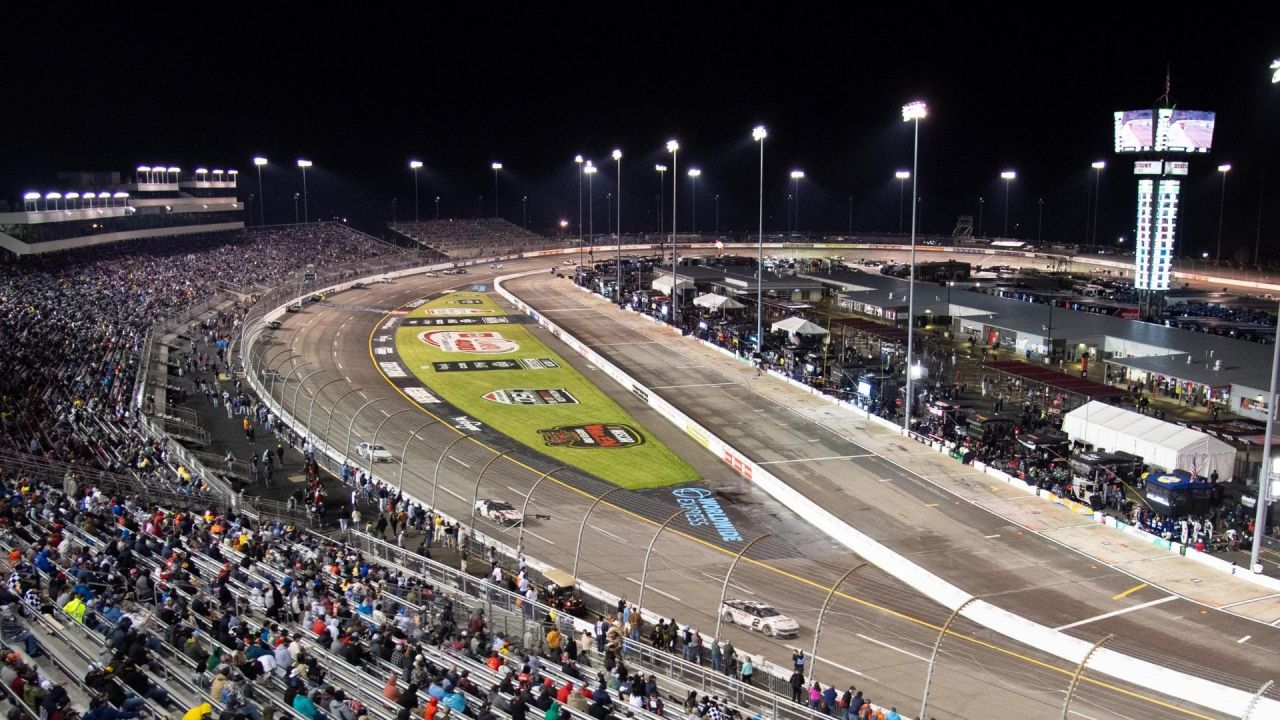
Richmond Raceway
Henrico County, Virginia, United States, United States
51,000 capacity
Richmond Raceway (RR) is a 0.750 mi (1.207 km), D-shaped, asphalt race track located just outside Richmond, Virginia in unincorporated Henrico County. It currently hosts one NASCAR Cup Series race weekend and the NASCAR Craftsman Truck Series. It formerly hosted events such as the NASCAR Xfinity Series, International Race of Champions, Denny Hamlin Short Track Showdown, and the USAC sprint car series. Richmond Raceway's "D" shape allows drivers to reach high speeds. Nicknamed the "Action Track" and "America's Premier Short Track", Richmond sold out 33 consecutive NASCAR Cup Series races before the streak ended in September 2008 due to the Great Recession as well as the impact of Tropical Storm Hanna. Richmond has hosted the final "regular-season" race, leading up to the start of the NASCAR Cup Series playoffs, each year since the format was introduced in 2004 until 2018 when its second weekend was moved into the playoffs. In 2022, their second race weekend was moved into the Summer. In 2025, the first race weekend was removed, with the Cup Series race moving to Mexico City. Before 2019, the raceway had a track seating of 59,000.
Talladega Superspeedway
Lincoln, Alabama, United States
80,000 capacity
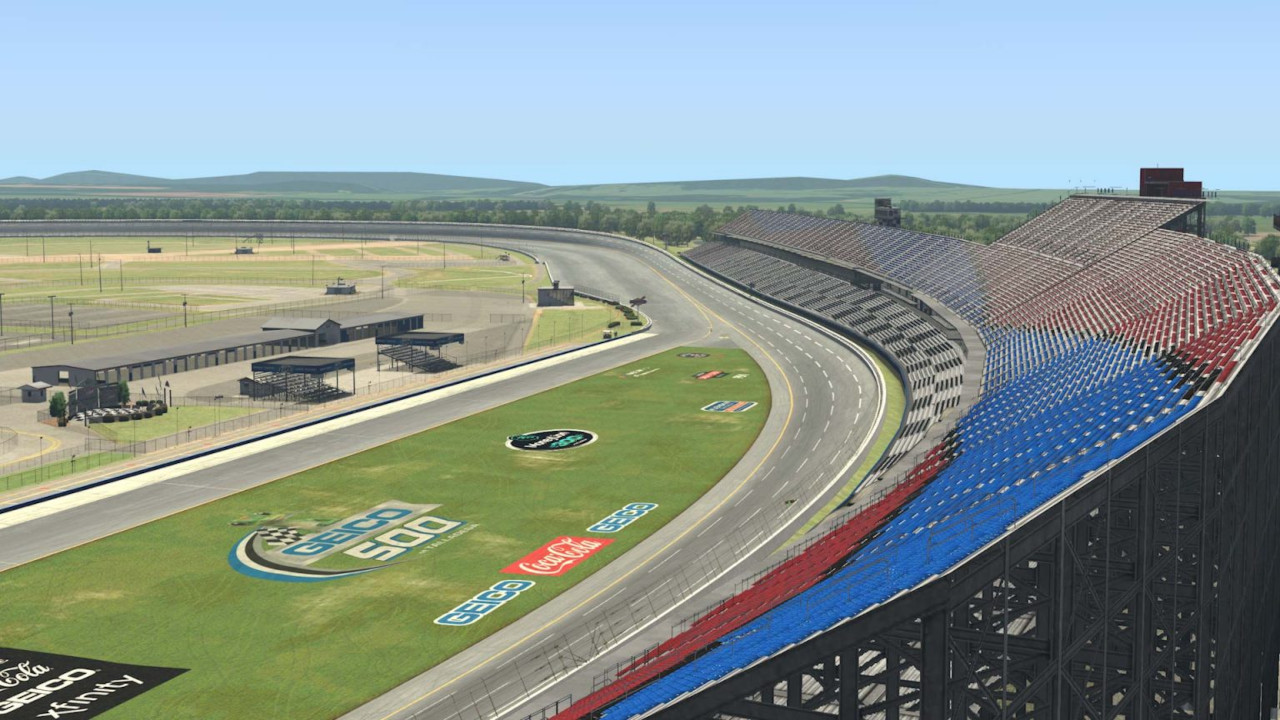
Talladega Superspeedway (formerly named Alabama International Motor Speedway from 1969 to 1989) is a 2.66-mile (4.28 km) tri-oval superspeedway in Lincoln, Alabama. The track has hosted a variety of racing events since its inaugural season of racing in 1969, primarily races sanctioned by NASCAR. The track is currently owned by NASCAR and is led by track president Brian Crichton. The facility has a grandstand capacity of 80,000 as of 2022. Along with the main track, the track complex also features a 4-mile (6.4 km) long roval-style road course. After a proposal in Spartanburg, South Carolina, fell through in the early 1960s, NASCAR founder Bill France Sr. opted to seek his proposal elsewhere, eventually landing on an area near Talladega, Alabama. Over the track's first couple decades, it gained a reputation for being a fast, wild, and chaotic track, with speeds of over 200 miles per hour (320 km/h), major accidents, and unusual occurrences being commonplace. NASCAR's introduction of the restrictor plate and the subsequent appearance of pack racing in the late 1980s exacerbated its chaotic reputation, with "Big One" accidents involving 10 or more cars occurring often; a phenomenon that has lasted into the present day.
Texas Motor Speedway
Fort Worth, Texas, United States
75,000 capacity
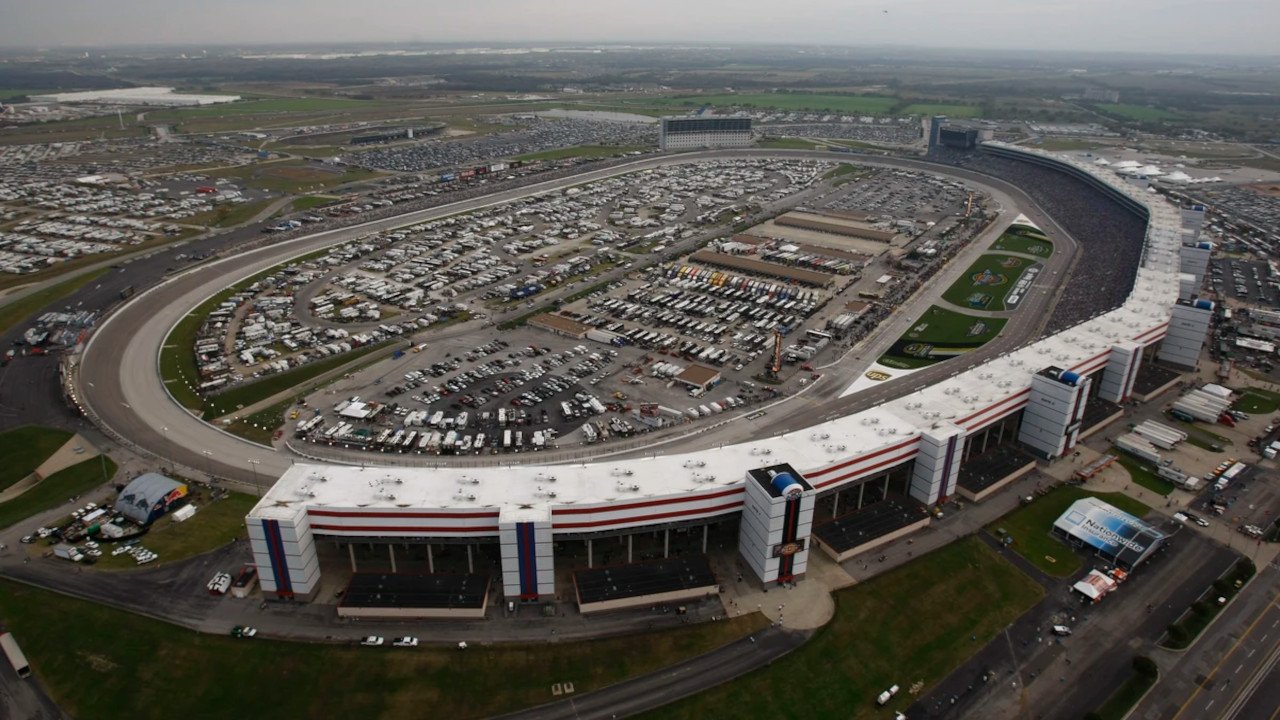
Rising from the rolling hills of North Texas in the mid-1990s, Texas Motor Speedway emerged as one of NASCAR's most ambitious venue projects, designed to bring premier motorsports to the heart of cowboy country. Located in Fort Worth, this massive facility was conceived during NASCAR's explosive growth period when the sport was expanding beyond its traditional southeastern roots to capture new markets across America. The track's creation represented a bold vision to establish a world-class motorsports destination that could rival any facility in the country. Built as a 1.5-mile quad-oval, Texas Motor Speedway features progressive banking that varies from 8 degrees in the turns to 5 degrees on the frontstretch and 9 degrees on the backstretch. This configuration places it among NASCAR's intermediate tracks, a category that has become increasingly important in determining championship outcomes due to the frequency of races held on similar-sized ovals throughout the Cup Series schedule. What immediately distinguishes Texas Motor Speedway from many of its contemporaries is its sheer scale and ambition. The facility's grandstands accommodate 75,000 spectators, making it one of the larger venues on the NASCAR circuit. The track's design philosophy emphasized creating multiple racing grooves to encourage side-by-side competition, with a racing surface width of 60 feet in the turns that gradually expands to 80 feet on the straightaways. This varying width was specifically engineered to provide drivers with multiple lines through the corners, theoretically creating more opportunities for overtaking and eventful racing action. The racing surface itself tells the story of constant evolution and adaptation. Originally constructed with a specific aggregate and asphalt composition, the track has undergone several repaving and reconfiguration projects over its operational history. These surface changes have eventfulally altered racing characteristics, sometimes creating periods of dominant single-file racing followed by eras of more competitive side-by-side action. The track's relationship with tire wear has been particularly noteworthy, with some race weekends producing significant tire degradation that rewards strategic thinking and car setup expertise. From a driver's perspective, Texas Motor Speedway presents unique challenges that have evolved with each surface iteration. The track's four turns are identical in radius but subtle differences in banking transitions and surface characteristics can create distinct handling challenges. The long straightaways place a premium on horsepower and aerodynamic efficiency, while the turns reward cars with superior mechanical grip and balanced setups that can maintain speed through the extended cornering sequences. Notable racing moments at Texas Motor Speedway have become part of NASCAR lore, though the track's reputation has fluctuated with changes to its racing surface and NASCAR's technical regulations. The facility has hosted numerous memorable finishes, championship-deciding races, and career-defining performances. The track's position in the NASCAR Cup Series schedule has often placed it at crucial moments in the championship battle, amplifying the significance of victories achieved there. Beyond NASCAR's premier series, Texas Motor Speedway has served as a versatile motorsports venue hosting various racing disciplines. The facility has welcomed IndyCar racing, which presents entirely different challenges on the same racing surface due to open-wheel cars' distinct aerodynamic and handling characteristics compared to stock cars. These diverse racing programs have helped establish the venue's credibility across multiple forms of motorsport. The track's infrastructure extends far beyond the racing surface itself. The facility includes extensive garage and pit areas designed to accommodate the logistical demands of modern NASCAR operations. The infield contains numerous buildings housing race control, media facilities, driver meeting areas, and technical inspection bays. This comprehensive infrastructure allows Texas Motor Speedway to handle not just race weekends but also serve as a testing venue and corporate entertainment destination throughout the year. Weather considerations play a significant role in racing at Texas Motor Speedway, particularly during traditional spring and fall race dates. Texas weather patterns can produce eventful temperature swings, sudden wind changes, and occasional precipitation that fundamentally alters racing conditions. The track's exposed location means wind direction and intensity can significantly impact aerodynamic performance, creating additional strategic variables for teams to consider. The venue's impact on Fort Worth and the broader Dallas-Fort Worth metroplex cannot be understated. Race weekends bring hundreds of thousands of visitors to the region, creating substantial economic impact while establishing the facility as a landmark destination. The track has become integrated into the local cultural landscape, hosting concerts, driving experiences, and corporate events beyond its racing calendar. Currently, Texas Motor Speedway maintains its position as a significant venue in NASCAR's Cup Series schedule, typically hosting races that attract large television audiences and substantial attendance figures. The track continues to evolve, with ongoing discussions about surface improvements, facility upgrades, and schedule positioning that reflect NASCAR's broader strategic objectives. The facility represents both the opportunities and challenges facing modern NASCAR venues. While its scale and infrastructure capabilities position it well for contemporary motorsports demands, the ongoing quest to consistently produce compelling on-track competition remains paramount. Texas Motor Speedway's story continues to unfold as NASCAR evolves, maintaining its role as a major destination where championships are won and racing legends are made in the heart of Texas.