
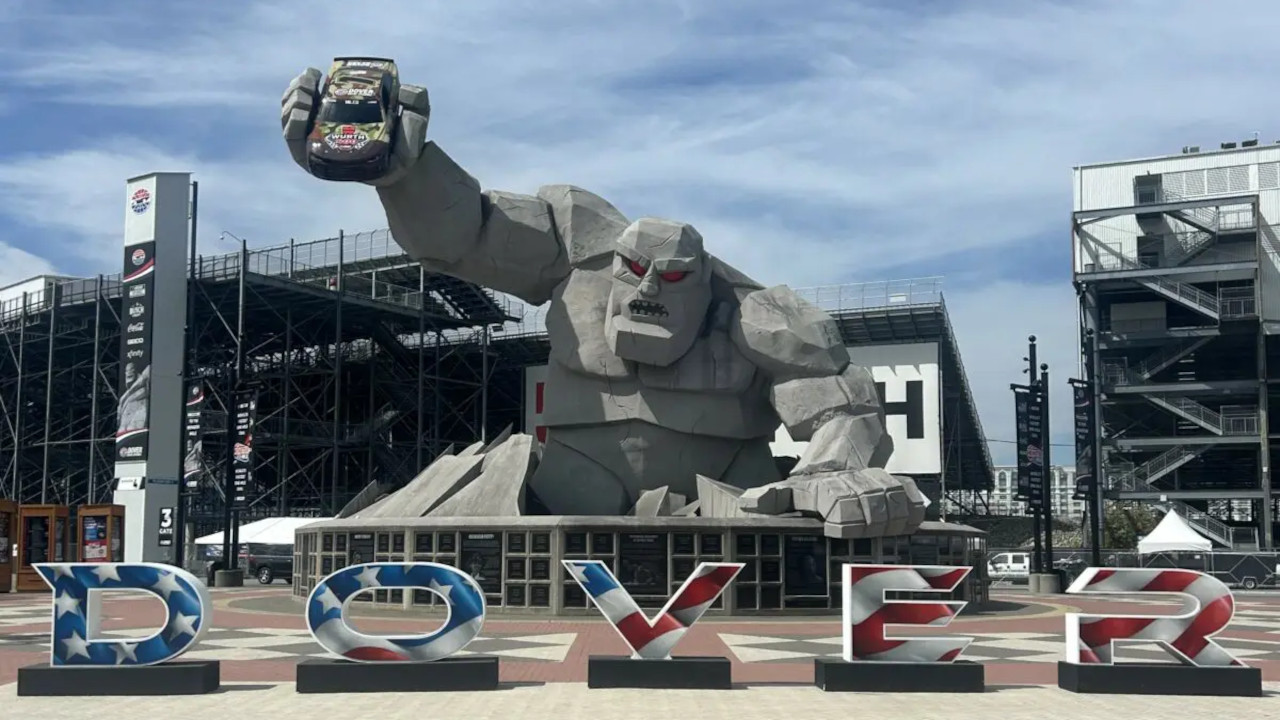
Dover Motor Speedway
Carved into the landscape of Delaware's capital region, Dover Motor Speedway stands as one of NASCAR's most distinctive and challenging venues, earning its fearsome reputation as "The Monster Mile." This concrete colossus has been testing drivers' skills and nerve since opening its gates in 1969, establishing itself as a cornerstone of American stock car racing. The speedway's origins trace back to the vision of Melvin Joseph, who sought to bring major motorsports to the First State. Construction began in the late 1960s on what would become Delaware's first and only NASCAR Cup Series venue. The track officially opened for competition in 1969, though it initially hosted primarily local and regional racing events before eventually earning its place on NASCAR's premier circuit. What immediately sets Dover apart from its contemporaries is its unique concrete racing surface, a characteristic shared by only a handful of tracks in NASCAR's top series. This abrasive surface creates distinctive racing conditions, generating higher tire wear rates and demanding exceptional car setup precision. The track's banking measures 24 degrees in the turns and nine degrees on the straightaways, creating a high-speed environment where aerodynamic efficiency proves crucial. The speedway's most defining characteristic is its one-mile oval configuration, which places it in a unique category within NASCAR's schedule. Neither a short track nor a superspeedway, Dover's intermediate length combined with its concrete surface and substantial banking creates racing dynamics unlike anywhere else on the circuit. The track's width varies from 40 feet in the corners to 46 feet on the straightaways, providing multiple racing grooves that can shift eventfulally as track conditions evolve throughout a race weekend. Dover's concrete surface becomes increasingly challenging as races progress, with the abrasive nature of the material creating tire falloff that can eventfulally alter competitive order. This characteristic has produced countless strategic battles, as teams must balance speed with tire conservation. The track's surface also tends to "rubber up" differently than asphalt, creating varying grip levels across different racing lines and adding another layer of complexity to race strategy. The venue's proximity to major East Coast population centers has made it a favorite destination for NASCAR fans, while its challenging nature has created numerous memorable moments throughout its history. Dover's demanding nature has often separated contenders from pretenders, with only the most skilled drivers and well-prepared teams able to master its concrete challenges consistently. Weather often plays a significant role at Dover, with the track's location in the Mid-Atlantic region subjecting it to various seasonal conditions. Spring and fall race weekends can experience eventful temperature swings, affecting tire performance and track grip levels. The concrete surface's response to temperature changes differs markedly from asphalt tracks, adding another variable that teams must account for in their race preparations. The facility underwent significant renovations and improvements throughout its existence, expanding grandstand capacity and upgrading amenities to enhance the spectator experience. The track's layout allows for excellent sightlines from most seating areas, giving fans clear views of the entire racing surface. The speedway's compact design creates an intimate atmosphere despite its substantial seating capacity, allowing spectators to witness the intensity of high-speed competition up close. Dover's role in NASCAR's playoff system has often elevated its importance, with races frequently occurring during crucial points in the championship battle. The track's unforgiving nature means that mechanical failures, tire strategies, or minor mistakes can have championship-altering consequences. This pressure-cooker environment has produced some of NASCAR's most eventful moments and has often served as a proving ground for championship contenders. The speedway has also played host to various support series throughout its history, including NASCAR Xfinity Series and Truck Series events. These races have often served as stepping stones for drivers advancing through NASCAR's developmental ladder, providing valuable experience on one of the sport's most demanding surfaces before reaching the Cup Series level. Beyond its racing action, Dover Motor Speedway has become an integral part of Delaware's sporting identity and economic landscape. The facility brings hundreds of thousands of visitors to the region during race weekends, generating significant economic impact for local businesses and establishing the venue as one of the state's premier entertainment destinations. The track's maintenance requirements differ significantly from asphalt facilities, with the concrete surface requiring specialized care and attention. This unique aspect has made Dover's track preparation crew among the most skilled in the business, as they must understand the nuances of maintaining optimal racing conditions on concrete throughout varied weather conditions and seasonal changes. Today, Dover Motor Speedway continues to challenge NASCAR's elite drivers while maintaining its reputation as one of the sport's most demanding venues. The combination of its concrete surface, banking configuration, and strategic importance within NASCAR's schedule ensures that "The Monster Mile" remains a crucial test of driver skill, team preparation, and strategic execution. As NASCAR continues to evolve, Dover's unique characteristics guarantee its continued relevance as a venue where championships can be won or lost, and where only the strongest survive the concrete challenge that has defined this Delaware landmark for more than five decades.