
Venues
83 venues
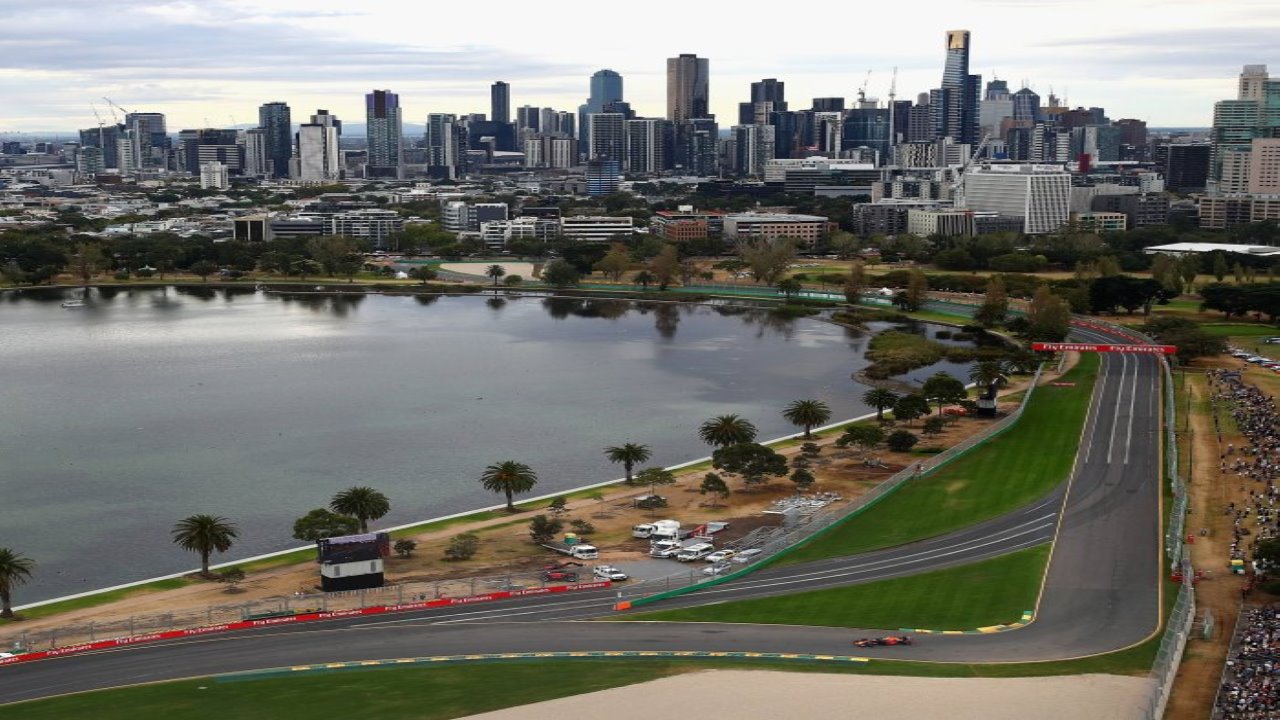
Albert Park Circuit
Melbourne, Victoria, Australia, Australia
125,000 capacity
Located within Melbourne's inner-city Albert Park precinct, this temporary street circuit has become synonymous with the opening of Formula 1's championship season since the mid-1990s. Built around Albert Park Lake and utilizing existing public roads, the venue transforms from a quiet recreational area into one of motorsport's most recognizable settings each March, hosting the Australian Grand Prix in front of capacity crowds of 125,000 spectators. The circuit's origins trace back to Melbourne's successful bid to host the Australian Grand Prix, wrestling the event away from Adelaide in a move that sparked considerable controversy within Australia's motorsport community. The decision to create a temporary circuit within Albert Park represented a bold vision, utilizing the area's natural beauty while maintaining its function as public parkland for the remainder of the year. This dual-purpose approach has become the circuit's defining characteristic, with roads that serve everyday traffic transformed into high-speed racing tarmac through temporary modifications. Measuring approximately 5.3 kilometers in length, the Albert Park Circuit features a unique blend of high-speed sections, technical corners, and limited overtaking opportunities that create a distinctive challenge for drivers. The lap begins with a fast approach to Turn 1, a right-hand corner that has witnessed numerous first-lap incidents over the years as drivers jostle for position in the season opener. The circuit then flows through a series of medium-speed corners before reaching the back section, which runs along Lakeside Drive with Albert Park Lake providing a picturesque backdrop. Turn 3 stands out as one of the circuit's most challenging corners, a fast right-hander that demands precision and commitment from drivers. The subsequent sequence through Turns 4 and 5 creates a flowing section where cars can maintain good speed, though overtaking opportunities remain limited. The circuit's middle sector features several 90-degree corners that test drivers' ability to maximize grip from their tires while managing the demands of street circuit racing. Perhaps the most distinctive section comes at Turn 11 and 12, a chicane-like sequence that has been modified multiple times since the circuit's inception to improve racing and safety. This area has produced memorable moments and occasional controversy, with drivers often finding the limits of track boundaries. The final sector includes the challenging Turn 13, a corner that can make or break qualifying laps, before drivers navigate the last few turns leading onto the main straight past the packed grandstands. The circuit's surface characteristics reflect its temporary nature, with the track typically offering limited grip during early practice sessions as rubber gradually builds up on roads that see regular street traffic throughout the year. This creates an evolving track surface throughout the weekend, often leading to significant improvements in lap times as more rubber is laid down. The relatively smooth surface, combined with the circuit's flowing nature, generally produces close racing, though overtaking opportunities remain at a premium due to the narrow width of many sections. Several corners have gained particular notoriety over the years. The approach to Turn 1 consistently provides drama as drivers attempt bold overtaking moves at the race start or following safety car restarts. Turn 6, a tight right-hander, has claimed numerous victims over the years, while the high-speed nature of Turns 9 and 10 demands absolute precision as drivers navigate close to the barriers that line the track. The venue has witnessed numerous memorable moments that have shaped Formula 1 history. The circuit has seen everything from notable upset victories to championship-defining incidents, with its season-opening status adding extra significance to every race result. Multiple world champions have claimed their first victories here, while others have seen their title hopes damaged in the Melbourne sunshine. Beyond its racing characteristics, Albert Park Circuit's integration within the city of Melbourne creates a unique atmosphere. The circuit's location allows for notable views across the lake and city skyline, while the surrounding parkland provides space for extensive fan facilities and entertainment areas. This urban setting, combined with Melbourne's reputation for sports enthusiasm, generates an electric atmosphere that drivers and teams consistently praise. The temporary nature of the facility requires extensive setup and breakdown operations each year, with barriers, grandstands, and racing infrastructure erected specifically for the event before being removed to restore the area's public use. This process represents a significant logistical undertaking but allows the circuit to maintain its dual identity as both a world-class racing venue and public recreational space. In recent years, the circuit has undergone various modifications aimed at improving racing quality and safety standards. These changes reflect Formula 1's evolving technical regulations and the ongoing effort to enhance the spectacle for fans while maintaining the essential character that makes Albert Park unique among the sport's venues. Today, Albert Park Circuit continues its role as Formula 1's traditional season opener, setting the tone for each championship campaign. Its combination of natural beauty, urban sophistication, and racing challenge ensures its position as one of the most photographed and recognizable circuits in motorsport. The venue's ability to deliver exciting racing while showcasing Melbourne to a global television audience of hundreds of millions maintains its value to both Formula 1 and the host city, securing its place on the championship calendar for years to come.
Angel Stadium of Anaheim
United States
Located in the heart of Orange County, California, Angel Stadium of Anaheim stands as one of the more unconventional venues to host MotoGP racing, representing the sport's ongoing efforts to expand into new markets and capture American audiences through innovative venue selection. While primarily known as the home of Major League Baseball's Los Angeles Angels, this multi-purpose stadium has demonstrated the versatility required to transform from America's pastime into a world-class motorcycle racing facility. The stadium's conversion for MotoGP events showcases the remarkable adaptability of modern motorsport infrastructure. Unlike traditional purpose-built racing circuits, Angel Stadium presents unique challenges and opportunities for both riders and organizers. The venue's baseball diamond and surrounding areas are transformed through temporary circuit construction, creating a compact yet technically demanding layout that winds through and around the existing stadium structure. This temporary configuration allows for creative track design that incorporates the stadium's natural architecture while providing the safety standards and technical specifications required for premier motorcycle racing. The racing surface at Angel Stadium consists of specially prepared tarmac laid over the existing stadium infrastructure, creating a smooth yet challenging riding environment. The temporary nature of the circuit means that grip levels and surface characteristics can vary significantly from traditional permanent racing facilities, requiring riders to adapt their riding styles and motorcycle setups accordingly. The compact nature of the venue creates a more intimate racing environment, with spectators positioned closer to the action than at many traditional circuits. One of the most distinctive aspects of racing at Angel Stadium is the unique atmosphere generated by the enclosed stadium environment. The architectural design of the venue creates a natural amphitheater effect, concentrating sound and energy in ways that differ eventfulally from open-air racing circuits. This acoustic characteristic enhances the sensory experience for spectators while creating an intense, pressure-cooker environment for competitors who must navigate the technical challenges while surrounded by the constant roar of engines amplified by the stadium's structure. The track layout at Angel Stadium typically features a series of tight, technical sections that demand precision and bike control over raw speed. Without the long straights found at traditional circuits, overtaking opportunities are limited and require careful planning and execution. Riders must rely on late braking maneuvers and superior corner exit speed to gain positions, creating wheel-to-wheel racing that keeps spectators on the edge of their seats. The confined space also means that any mistake or mechanical failure can quickly impact multiple riders, adding an element of unpredictability to race outcomes. Angel Stadium's role in MotoGP represents part of the championship's strategic expansion into the American market, where motorcycle road racing has historically struggled to compete with NASCAR, IndyCar, and other established motorsports. By utilizing a familiar venue known to millions of baseball fans, MotoGP organizers attempt to bridge the gap between mainstream American sports culture and the global phenomenon of premier motorcycle racing. This approach reflects broader trends in motorsport where traditional boundaries between different types of venues and events continue to blur. The logistical challenges of hosting MotoGP at a baseball stadium are considerable, requiring extensive coordination between multiple organizations and careful timing to minimize disruption to the Angels' baseball schedule. The transformation process involves not only laying the racing surface and installing safety barriers but also reconfiguring spectator areas, establishing pit facilities, and ensuring that all technical requirements for modern MotoGP operations are met within the constraints of an existing structure designed for an entirely different sport. From a spectator perspective, Angel Stadium offers viewing experiences that differ significantly from traditional racing circuits. The stadium's tiered seating provides elevated viewpoints that allow fans to observe larger portions of the track simultaneously, creating a more comprehensive understanding of race dynamics. The proximity to the action, combined with the acoustic properties of the enclosed venue, generates an intensity that many attendees find more engaging than the often distant viewing positions at conventional racing facilities. The venue's location in Southern California provides additional advantages, tapping into the region's strong motorcycle culture and year-round riding weather that supports a substantial population of motorcycle enthusiasts. Orange County's proximity to major population centers, combined with established transportation infrastructure and hospitality services developed for baseball operations, creates an environment conducive to hosting international motorsport events. Angel Stadium's integration into the MotoGP calendar represents broader experimentation within motorsport regarding venue utilization and fan engagement strategies. As traditional racing circuits face increasing costs and regulatory challenges, the successful adaptation of existing sports facilities for motorcycle racing could influence future championship planning and venue selection processes. The ongoing relationship between Angel Stadium and MotoGP continues to evolve as organizers refine their approach to temporary circuit construction and event management within existing sports infrastructure. This partnership serves as a testing ground for innovative approaches to motorcycle racing presentation while contributing to the sport's growth in crucial American markets. Whether this venue model proves sustainable long-term remains to be seen, but Angel Stadium's participation in MotoGP undoubtedly represents a bold experiment in bringing world-class motorcycle racing to new audiences through creative venue utilization and enhanced accessibility.
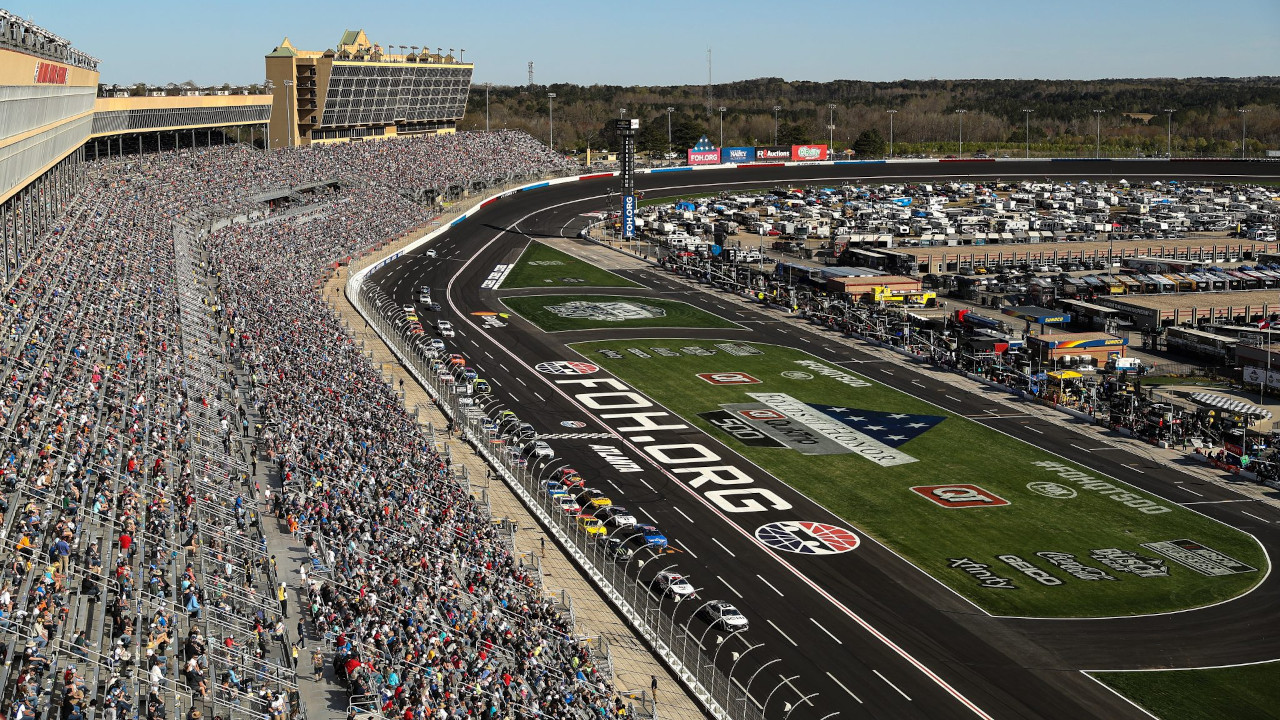
Atlanta Motor Speedway
Hampton, Georgia, United States
71,000 capacity
Atlanta Motor Speedway (formerly known as the Atlanta International Raceway from 1960 to 1990) is a 1.540 mi (2.478 km) quad-oval intermediate speedway in Hampton, Georgia. The track has hosted a variety of sanctioning bodies since its inaugural season of racing in 1960, including NASCAR and IndyCar. The venue has a capacity of 71,000 as of 2015 and includes various track layouts, including a 1⁄4 mile (0.40 km) oval on the track's frontstretch, and a 2.5 miles (4.0 km) roval road course layout. Atlanta Motor Speedway is currently owned Speedway Motorsports, LLC (SMI) and is led by track general manager Brandon Hutchison. In the late 1950s, plans were made by the First Georgia Securities Corporation to build a facility that rivaled the Indianapolis Motor Speedway. After a months-long delay, the first races were held in 1960. Shortly after, the track faced heavy financial troubles, having to enter Chapter 10 bankruptcy in 1971. After periods of stability directed by Stacey Cotton and Walt Nix, the facility was bought out by motorsports mogul Bruton Smith in 1990, with Smith and his company, SMI, directing the facility's expansion and renovation under longtime general manager Ed Clark. The track has since gone through two major reconfigurations since Smith's purchase: one in 1997 that changed the layout of the track, and one in 2021 that changed the style of racing to produce pack racing seen at superspeedways.
Auto Club Speedway
Fontana, United States
Rising from the high desert landscape of Southern California, Auto Club Speedway stands as one of NASCAR's most distinctive superspeedways, serving the nation's second-largest media market from its strategic location in Fontana. This massive racing facility, situated approximately 50 miles east of Los Angeles, has carved out a unique identity in American motorsport through its challenging layout and eventful racing action. Originally constructed as California Speedway, the venue emerged during NASCAR's westward expansion efforts in the 1990s, representing a bold investment in bringing premier stock car racing to the West Coast. The facility was designed to capture the growing motorsport enthusiasm in Southern California while providing fans with a world-class racing experience in a region previously underserved by major NASCAR events. The track's most defining characteristic is its distinctive D-shaped configuration, featuring a unique layout that sets it apart from traditional oval speedways. Measuring two miles in length, the circuit combines elements of both superspeedway and intermediate track racing, creating a challenging environment that demands versatility from drivers and teams. The banking varies significantly around the circuit, with the turns featuring progressive banking that increases toward the outside, ranging from 11 degrees on the inside to 14 degrees at the top. What makes Auto Club Speedway particularly challenging is its multiple racing grooves, which allow for side-by-side competition throughout much of the race distance. The track surface, originally constructed with a specific aggregate designed to promote tire wear, creates a unique racing dynamic where aerodynamics, mechanical grip, and tire management all play crucial roles in determining success. The wide racing surface, measuring 80 feet across in the turns, provides ample room for drivers to race multiple lines and execute eventful passing maneuvers. The facility's location in the high desert creates additional challenges for teams, as the elevation of approximately 2,200 feet above sea level affects engine performance and aerodynamic characteristics. Combined with Southern California's warm climate, these conditions often lead to tire degradation that significantly influences race strategy and can produce unexpected outcomes as races progress. Throughout its history, Auto Club Speedway has witnessed numerous memorable moments that have become part of NASCAR lore. The track has developed a reputation for producing intense, competitive racing with multiple lead changes and eventful finishes. Its wide surface and multiple grooves have facilitated some of the most notable side-by-side racing in the sport, with drivers able to race wheel-to-wheel for extended periods. The speedway's unique characteristics have made it a favorite among drivers who appreciate the challenge of managing tire wear while maintaining competitive speed over long runs. The track rewards both aggressive driving and strategic patience, as the racing surface evolves throughout events, creating different optimal lines and passing opportunities as conditions change. Beyond its primary NASCAR events, Auto Club Speedway has hosted various other motorsport activities, including IndyCar racing during certain periods of its history. The facility's versatile design and extensive infrastructure have made it capable of accommodating different series and racing formats, contributing to its significance in American motorsport. The speedway complex encompasses far more than just the racing surface, featuring extensive fan amenities, hospitality areas, and support facilities that reflect its status as a major motorsport destination. The facility's design takes advantage of Southern California's favorable climate, with many outdoor viewing areas and fan zones that enhance the spectator experience. Located in the heart of the Inland Empire, the speedway serves a massive population base stretching from Los Angeles to San Bernardino and beyond. Its proximity to major highways and transportation networks makes it accessible to millions of potential attendees, while its position in the entertainment capital of the world adds to its significance in NASCAR's overall marketing and promotional strategies. The track's impact extends beyond race weekends, as it serves as an important economic engine for the region and a showcase for NASCAR's presence on the West Coast. The facility has played a crucial role in developing motorsport culture in Southern California, introducing new generations of fans to stock car racing while providing a venue for corporate entertainment and special events. Auto Club Speedway's racing surface has evolved over the years, with various modifications and improvements designed to enhance competition and safety. These changes have generally been well-received by the racing community, maintaining the track's reputation for producing competitive events while adapting to the evolving demands of modern NASCAR competition. The speedway continues to occupy an important position on the NASCAR calendar, typically hosting events during the spring season when Southern California's weather is at its most favorable. The timing of these events often places them at crucial points in the championship battle, adding extra significance to the competition and creating additional pressure for drivers and teams. Today, Auto Club Speedway remains one of NASCAR's most challenging and respected venues, combining unique track characteristics with the glamour and excitement associated with Southern California motorsport. Its distinctive layout, demanding racing conditions, and notable setting continue to make it a highlight of the NASCAR season, representing both the sport's commitment to geographic diversity and its ability to create compelling competition in varied environments. The facility stands as a testament to NASCAR's successful expansion into new markets while maintaining the competitive integrity and excitement that defines premier stock car racing.

Autodromo Enzo e Dino Ferrari
Imola, Italy
Nestled in the Emilia-Romagna region along the banks of the Santerno River, the Autodromo Enzo e Dino Ferrari stands as one of Formula 1's most distinctive and challenging circuits. Born from the ambitious dreams of local Romagna pioneers in the post-war era, this legendary track officially took shape in 1950, though its origins as a racing venue trace back to 1953 when it first began hosting competitive motorsport events. The circuit carries the honor of bearing the name of Ferrari's legendary founder Enzo Ferrari (1898-1988) and his beloved son Alfredo "Dino" Ferrari (1932-1956), forever linking this historic venue to Italy's most iconic automotive dynasty. This naming reflects not just geographical proximity to Ferrari's Maranello headquarters, but also the deep connection between Italian motorsport heritage and the passion that drives racing culture in this region. Stretching over 4.909 kilometers through the undulating Italian countryside, Imola immediately distinguishes itself from the majority of Formula 1 circuits through its counter-clockwise configuration. This anti-clockwise direction creates a unique challenge for drivers, affecting everything from physical conditioning to strategic overtaking maneuvers. The layout demands exceptional skill navigation through a combination of high-speed corners, blind apexes, and sections where margin for error remains minimal due to traditionally unforgiving run-off areas. The original circuit design featured a eventful contrast between flat-out sections and tight hairpin corners, creating a layout that tested both raw speed and technical precision. The run from Rivazza, positioned at the bottom left of the track map, exemplifies this philosophy, connecting flowing sections with demanding directional changes that have challenged generations of racing's finest talents. This varied topology, combined with elevation changes that add another layer of complexity, creates a driving experience that many consider among the most demanding on the Formula 1 calendar. Throughout its decades of operation, Imola has undergone extensive modernization programs aimed at improving safety standards while preserving the circuit's essential character. Run-off areas have been systematically widened to provide greater margins for driver error, while protective barriers have been enhanced and upgraded to meet contemporary FIA safety requirements. These modifications represent the ongoing balance between maintaining the track's challenging nature and ensuring the highest possible safety standards for contemporary racing. The circuit's surface characteristics and corner combinations create limited overtaking opportunities, placing premium value on qualifying performance and strategic race management. This has historically led to processional races, but also moments of extraordinary drama when drivers commit to ambitious passing moves. The layout's demanding nature means that small advantages in car setup or driver skill become magnified over a full race distance. Lewis Hamilton's lap record of 1:15.484 stands as testament to both the circuit's speed potential and the evolution of Formula 1 technology. This benchmark represents not just individual brilliance, but also the culmination of decades of track development, car advancement, and driver technique refinement. Over 63 race laps, this translates to one of motorsport's most grueling challenges, where physical fitness, mental concentration, and technical precision must be sustained at the absolute limit. Imola's place in Formula 1 history extends beyond mere lap times and race results. The circuit has witnessed some of motorsport's most memorable moments, serving as a venue where careers have been made, championships decided, and legends born. Its unique characteristics have consistently separated the exceptional from the merely good, creating a natural amphitheater where driving talent is displayed in its purest form. The venue's significance extends beyond Formula 1, hosting various other motorsport categories and maintaining its role as a crucial testing ground for teams and manufacturers. Its location in Italy's motorsport heartland, combined with excellent facilities and infrastructure, ensures continued relevance in contemporary racing calendars. Modern Imola represents successful evolution from its pioneering origins, maintaining the essential character that makes it special while adapting to contemporary requirements. The circuit continues serving as a bridge between motorsport's golden age and its high-tech present, offering drivers and teams challenges that remain fundamentally unchanged despite decades of technological advancement. Today, the Autodromo Enzo e Dino Ferrari stands as more than just another racing circuit. It represents the enduring spirit of Italian motorsport, the memory of the Ferrari family legacy, and the continuing tradition of circuits that test every aspect of racing craft. Its counter-clockwise configuration, challenging corners, and unique atmosphere ensure that Imola remains one of Formula 1's most distinctive and respected venues.
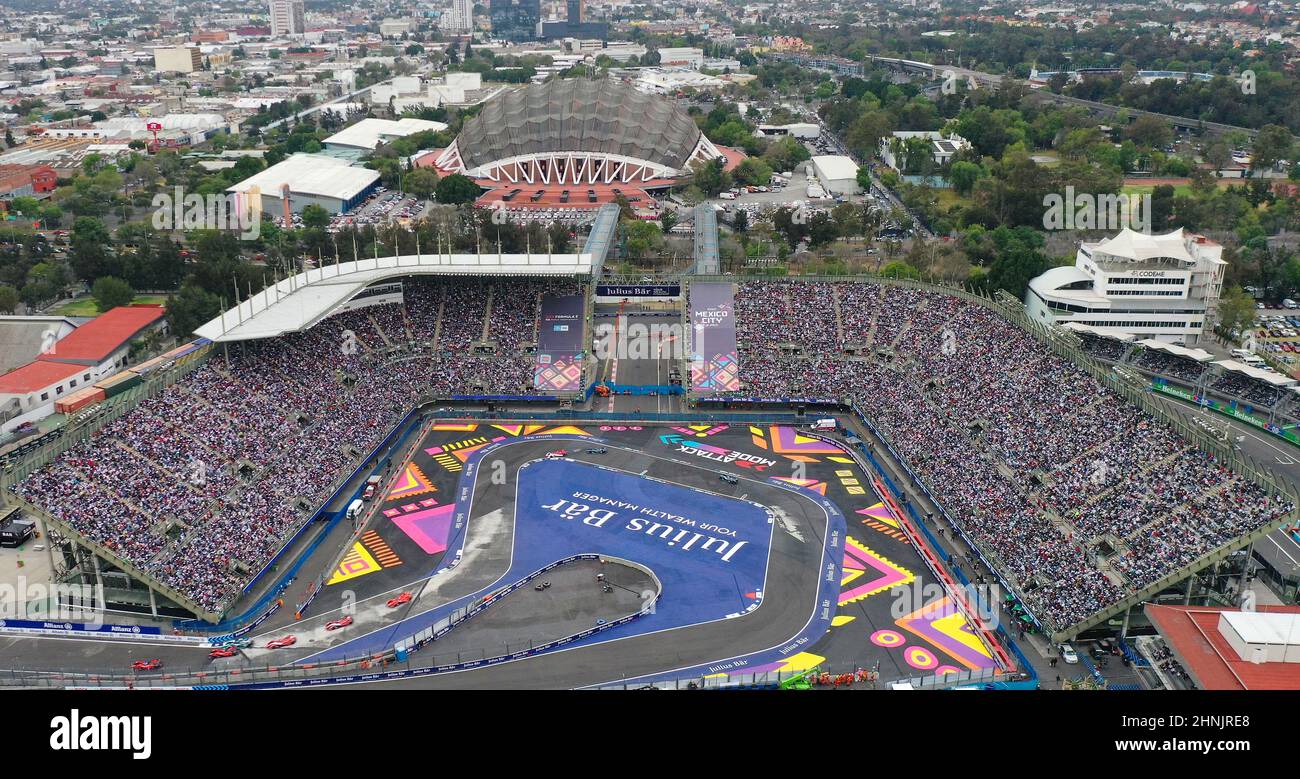
Autódromo Hermanos Rodríguez
Mexico, Mexico
110,000 capacity
Nestled in the vibrant heart of Mexico City, one of Formula 1's most atmospheric and historically significant venues continues to captivate drivers and spectators alike with its unique blend of challenging racing characteristics and passionate Mexican motorsport culture. The Autódromo Hermanos Rodríguez stands as a testament to the enduring appeal of Formula 1 racing in Latin America, offering a distinctive racing experience that combines technical demands with an electric atmosphere. The circuit's name honors the Rodriguez brothers, Ricardo and Pedro, two pioneering Mexican racing drivers who helped establish their nation's presence in international motorsport during the 1960s. Their legacy lives on through this remarkable facility, which has become synonymous with some of the most memorable moments in Formula 1 history. The track's location in Mexico City places it at one of the highest altitudes of any permanent Formula 1 venue, creating unique challenges for both drivers and teams as they contend with the effects of reduced air density on engine performance and aerodynamics. Measuring 4.304 kilometers in length, the circuit demands 71 laps to complete a full Grand Prix distance, creating a race that tests both machine reliability and driver endurance. The track's layout presents a fascinating mix of high-speed sections and technical corners that reward precision and bravery in equal measure. The most iconic section remains the challenging Peraltada corner, a sweeping banked turn that has become legendary among drivers for its unique characteristics and the commitment required to navigate it at racing speeds. The circuit's design incorporates several elevation changes that add to its technical complexity, with drivers constantly adjusting their approach as the track rises and falls throughout its length. These undulations not only challenge the drivers but also provide excellent viewing opportunities for spectators, who can often see multiple sections of the track from a single vantage point. The surface characteristics have evolved over the years, with modern resurfacing efforts ensuring consistent grip levels while maintaining the track's fundamental character. From an overtaking perspective, the Autódromo Hermanos Rodríguez offers several opportunities for drivers to make moves on their competitors. The long main straight provides excellent slipstreaming opportunities, while the heavy braking zones into the first corner and other key sections of the track create natural overtaking points. The stadium section, where the track winds through a purpose-built arena-like environment, creates some of the most notable close-quarters racing action, with fans able to witness wheel-to-wheel battles from remarkably close proximity. The current lap record of 1:17.774, set by Valtteri Bottas, demonstrates the incredible speeds achievable around this challenging circuit. This benchmark represents the culmination of decades of technical development in Formula 1, showcasing how modern cars can exploit every aspect of the track's design to achieve remarkable lap times despite the challenges posed by the high altitude and technical layout. What truly sets this venue apart is its incredible atmosphere and the passion of Mexican motorsport fans. With a capacity of 110,000 spectators, the circuit can accommodate one of the largest crowds on the Formula 1 calendar, creating an electric atmosphere that drivers frequently cite as among the most inspiring in the sport. The Mexican fans' enthusiasm for motorsport, combined with their deep appreciation for racing history and their national heroes, generates an energy that is palpable throughout race weekends. The circuit's unique characteristics extend beyond its physical layout to include the challenges posed by Mexico City's altitude, which sits approximately 2,200 meters above sea level. This elevation significantly affects engine performance, with power units producing less power due to the thinner air, while also impacting aerodynamic efficiency. Teams must carefully calibrate their setups to account for these conditions, often running different wing configurations and engine mappings compared to sea-level circuits. The track's infrastructure has undergone significant modernization in recent years, with improvements to safety systems, spectator facilities, and broadcast capabilities ensuring it meets the highest standards required for contemporary Formula 1 racing. The paddock and pit lane facilities provide teams with the necessary resources to operate at the pinnacle of motorsport, while the media center and other support facilities ensure comprehensive coverage of events. Beyond Formula 1, the Autódromo Hermanos Rodríguez hosts various other motorsport events throughout the year, including domestic racing series, international touring car competitions, and motorcycle racing events. This diverse programming helps maintain the circuit's position as the premier motorsport facility in Mexico and Latin America, while also providing opportunities for local drivers to compete on the same track as their Formula 1 heroes. The venue's significance extends beyond pure motorsport, serving as a cultural landmark that celebrates Mexico's rich automotive heritage and its contributions to international racing. The circuit museum and various displays throughout the facility help educate visitors about the history of Mexican motorsport and the achievements of drivers like the Rodriguez brothers, ensuring their legacy continues to inspire future generations. Today, the Autódromo Hermanos Rodríguez remains one of Formula 1's most beloved venues, combining technical challenges, passionate fans, and unique atmospheric conditions to create a racing experience unlike any other on the calendar. Its continued presence in Formula 1 ensures that the spirit of Mexican motorsport remains vibrantly alive at the sport's highest level.
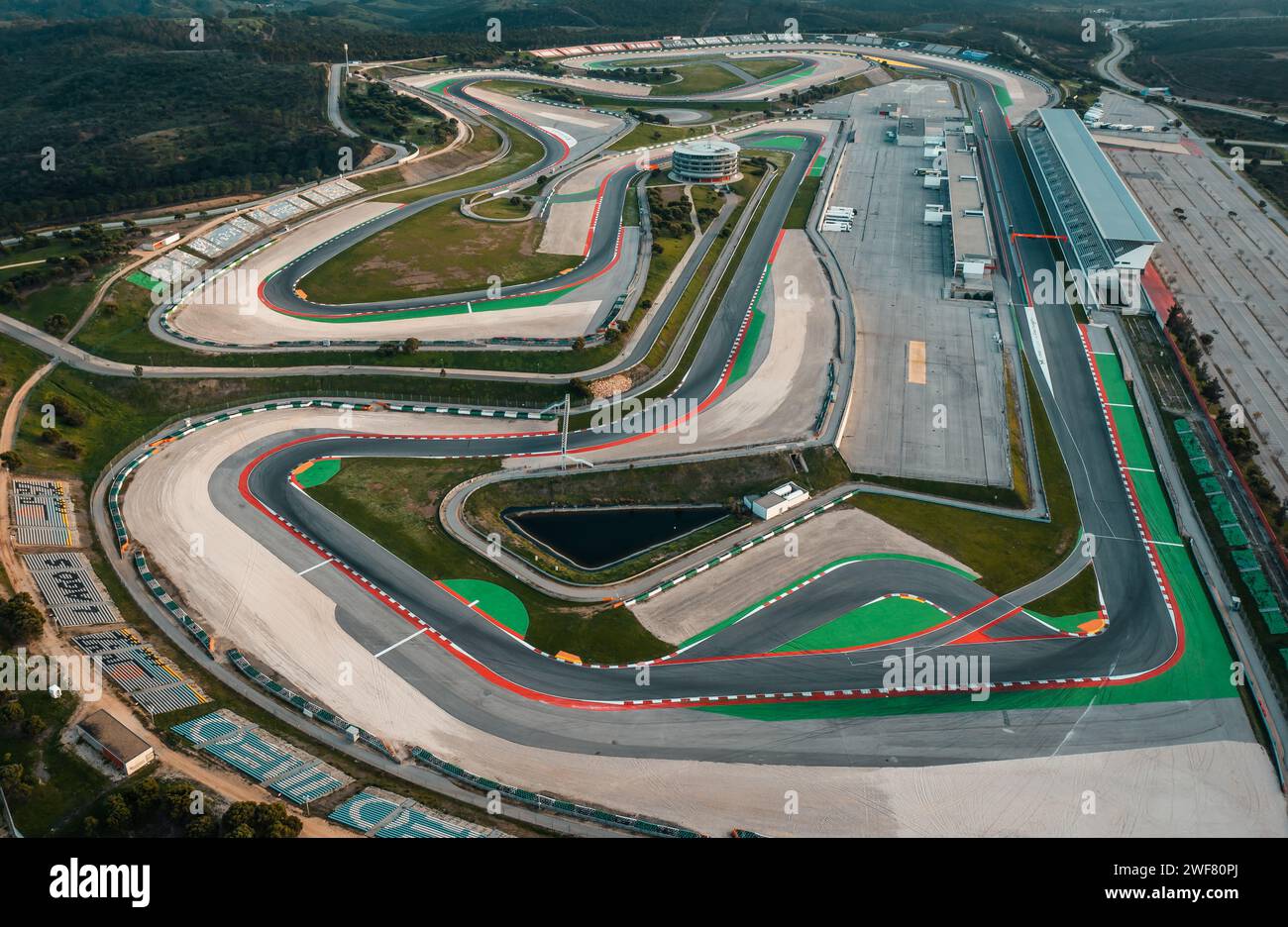
Autódromo Internacional do Algarve
Algarve, Portugal
Rising from the undulating hills of southern Portugal's Algarve region, the Autódromo Internacional do Algarve stands as one of modern motorsport's most distinctive and challenging racing venues. Better known to many as the Portimão Circuit, this 4.653-kilometer marvel has earned a reputation that extends far beyond its relatively recent addition to the Formula 1 calendar, captivating drivers and fans alike with its unique blend of technical complexity and raw speed. Located in Portimão within Portugal's picturesque Algarve region, the circuit represents a bold architectural statement in track design. Unlike many contemporary racing facilities that prioritize flat, predictable layouts, the Autódromo Internacional do Algarve embraces the natural topography of its surroundings, creating what many describe as a motorsport rollercoaster. The track's defining characteristic lies in its eventful elevation changes, which create a series of blind crests and sweeping undulations that challenge even the most experienced drivers. The circuit's 4.653-kilometer layout winds through either 15 or 16 corners depending on classification, each presenting unique challenges amplified by the track's constantly changing elevation. These corners range from high-speed sweepers that flow naturally with the landscape's contours to more technical sections that demand precise braking and throttle control. The combination of fast-flowing sections with challenging technical elements creates a venue that tests every aspect of both machine and driver performance, from aerodynamic efficiency to suspension setup and driving skill. What truly sets the Algarve International Circuit apart from many of its contemporaries is its ability to promote competitive racing. The track's design philosophy emphasizes overtaking opportunities, with multiple racing lines available through many corners and strategic points where drivers can mount attacks on their rivals. This characteristic has made it particularly popular among racing drivers, who often praise the circuit for its pure driving challenge and the opportunities it provides for wheel-to-wheel combat. The circuit's fast, flowing nature creates a unique driving experience that has quickly established it as a favorite among Formula 1 drivers. The blind crests add an element of bravery to high-speed driving, while the elevation changes create complex aerodynamic challenges that push engineering teams to find optimal setups. The combination of high-speed straights with the circuit's technical corners means that successful lap times require a delicate balance between aerodynamic efficiency and mechanical grip. When Formula 1 finally arrived at Portimão, it brought with it the establishment of new benchmarks for speed and performance. Lewis Hamilton's lap record of 1:18.750 stands as a testament to both the circuit's challenging nature and the incredible speeds achievable by modern Formula 1 machinery on this demanding layout. This record represents the fastest completion of the circuit's 66-lap Formula 1 race distance configuration, showcasing the precision required to master the track's complex rhythm. The surface characteristics of the Autódromo Internacional do Algarve contribute significantly to its racing appeal. The track provides good grip levels while still allowing for multiple racing lines, enabling drivers to explore different approaches to corner combinations and creating opportunities for strategic overtaking moves. The circuit's design ensures that tire management becomes a crucial factor, particularly over longer race distances, adding another layer of complexity to race strategy. Beyond its technical merits, the circuit's location in the Algarve region provides a notable backdrop for motorsport. The facility represents significant investment in Portuguese motorsport infrastructure and has helped establish the country as a serious player in the international racing calendar. The venue's ability to attract top-tier motorsport events has brought increased recognition to Portuguese racing and created new opportunities for local motorsport development. The track's reputation extends beyond Formula 1, hosting various international racing series that take advantage of its challenging layout and excellent facilities. Its design philosophy, which prioritizes driver challenge and racing spectacle over pure safety margins, represents a refreshing approach in an era where many new circuits are criticized for being overly sanitized or processional. Current status sees the Autódromo Internacional do Algarve maintaining its position as one of motorsport's most respected modern circuits. The venue continues to host significant racing events, with its inclusion in the Formula 1 calendar marking a particular high point in its relatively short history. The circuit's ability to provide exciting racing while maintaining the highest safety standards has established it as a model for future track development projects worldwide. The lasting appeal of the Algarve International Circuit lies in its successful combination of natural terrain utilization with purposeful design philosophy. Rather than fighting against the landscape, the track works with the existing topography to create a venue that feels organic while providing the technical challenges that define great racing circuits. This approach has created a facility that stands as both a testament to modern track design capabilities and a throwback to the more demanding circuits of motorsport's golden eras.
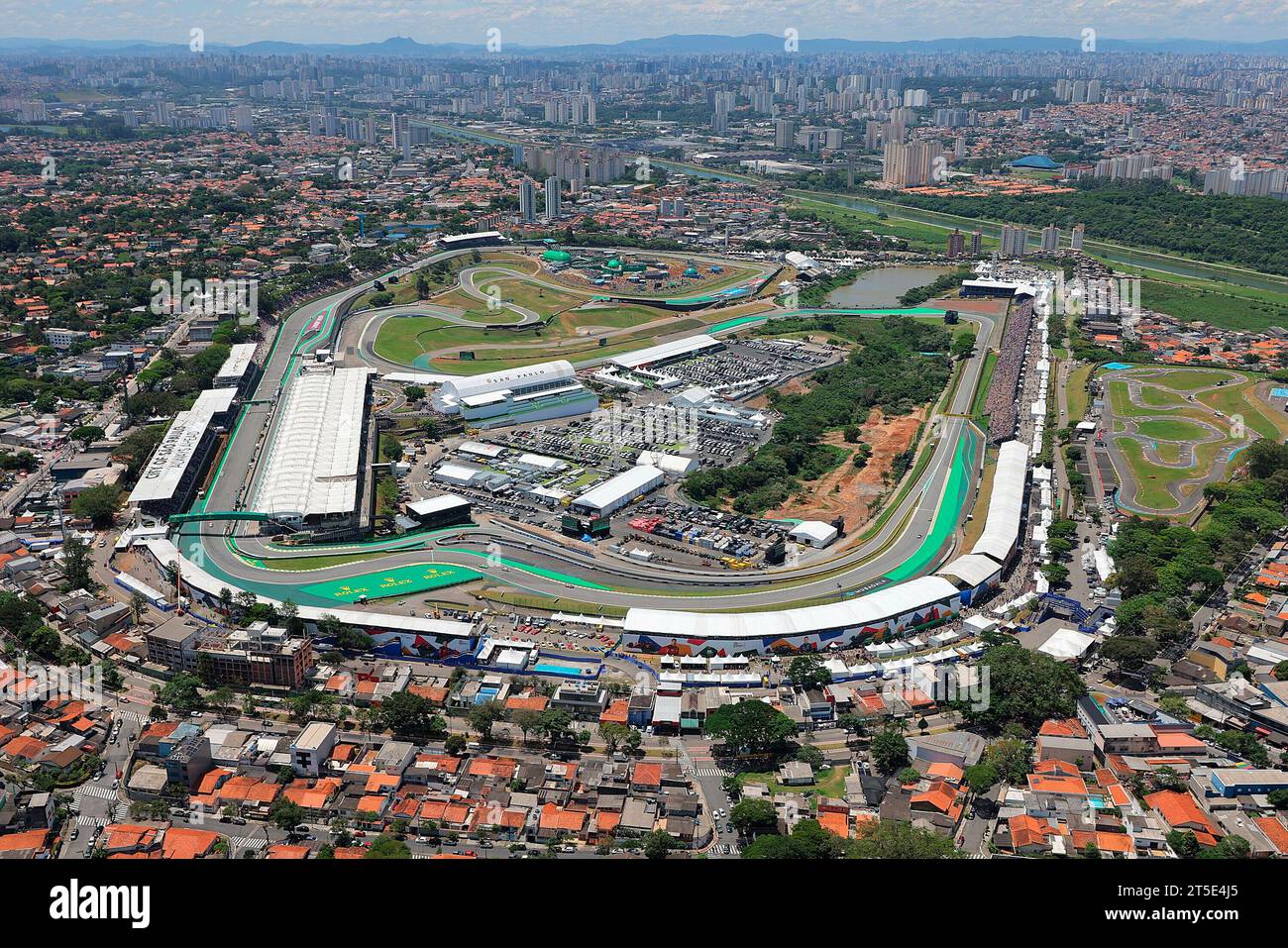
Autódromo José Carlos Pace
São Paulo, Brazil
60,000 capacity
Nestled in a natural amphitheater on the outskirts of São Paulo, Brazil's most famous racing circuit stands as a testament to both motorsport passion and national pride. The Autódromo José Carlos Pace, universally known as Interlagos, represents one of Formula 1's most challenging and atmospheric venues, where unpredictable weather, passionate crowds, and a demanding track layout combine to create some of the sport's most memorable moments. The circuit's origins trace back to the late 1930s, when construction began on what would initially open in 1940 as the "Autódromo de Interlagos" – a dirt track that reflected the ambitious vision of Brazilian motorsport enthusiasts. The name "Interlagos," meaning "between the lakes," perfectly captured the venue's geographical setting. During the late 1940s, the facility underwent a significant transformation when the original dirt surface was replaced with asphalt, marking the beginning of its evolution into a world-class racing venue. Like many circuits constructed in the pre-World War II era, Interlagos was designed with banked corners that would become one of its defining characteristics. The original layout featured a natural bowl configuration with a six-turn counter-clockwise oval measuring 3.214 kilometers, complemented by a lengthy infield section that added technical complexity to what might otherwise have been a simple speedway. Between 1957 and the early 1970s, drivers would begin their laps on what essentially amounted to a half-oval, taking advantage of the banking before diving into the more technical sections of the circuit. The venue's entry into Formula 1 came in the early 1970s, with its debut race taking place in 1972, initially as a non-championship event. However, it wasn't long before Interlagos established itself as a permanent fixture on the Formula 1 calendar, becoming the home of the Brazilian Grand Prix and cementing Brazil's position as a major force in international motorsport. In 1985, the circuit received its current official designation when it was renamed to honor José Carlos Pace, the Brazilian Formula 1 driver who tragically died in a plane crash in 1977. This renaming represented more than just a memorial gesture – Pace had been one of Brazil's pioneering F1 drivers, and the circuit became his final resting place, creating a deeply personal connection between the venue and Brazilian motorsport heritage. Today's Interlagos measures 4.309 kilometers and challenges drivers with 71 demanding laps that test every aspect of their skill and machinery. The current lap record of 1:10.540, set by Valtteri Bottas, demonstrates the incredible speeds achievable on this deceptively challenging circuit. The track's counter-clockwise direction, unusual in Formula 1, places unique physical demands on drivers, while the elevation changes throughout the lap create both notable viewing opportunities and significant aerodynamic challenges for the cars. The circuit's most distinctive feature remains its natural bowl setting, which not only provides excellent sightlines for the 60,000-capacity crowd but also creates a unique microclimate that can eventfulally affect racing conditions. Weather at Interlagos is notoriously unpredictable, with sudden rain showers capable of transforming race strategies in minutes. This meteorological volatility has contributed to some of Formula 1's most eventful moments, where races have been won and lost based on split-second decisions about tire strategies and track conditions. The banking that characterizes several corners at Interlagos provides multiple racing lines and creates excellent overtaking opportunities, particularly important in an era where passing has become increasingly difficult at many modern circuits. These banked sections, combined with the track's flowing layout, reward brave drivers willing to commit to alternative lines while punishing those who make even minor errors in judgment. Interlagos has earned a reputation as the venue for some of Formula 1's most emotional and significant races. The passionate Brazilian crowd, combined with the circuit's challenging characteristics, has created an atmosphere unlike anywhere else in the sport. The venue has witnessed championship celebrations, heartbreaking defeats, and career-defining performances that have become part of Formula 1 folklore. The circuit's surface characteristics present their own unique challenges, with the asphalt offering good grip levels while remaining demanding enough to separate the very best drivers from the rest of the field. The combination of high-speed sections, technical corners, and significant elevation changes means that car setup becomes crucial, with teams needing to find the perfect balance between straight-line speed and cornering performance. Beyond Formula 1, Interlagos serves as Brazil's premier motorsport venue, hosting various national and international racing series throughout the year. The facility represents not just a racing circuit but a cultural institution that embodies Brazil's deep connection to motorsport and its production of world-class racing talent. Today, the Autódromo José Carlos Pace continues to evolve while maintaining its essential character, remaining one of Formula 1's most beloved venues where history, passion, and pure racing excitement converge to create an experience that defines what makes motorsport truly special.
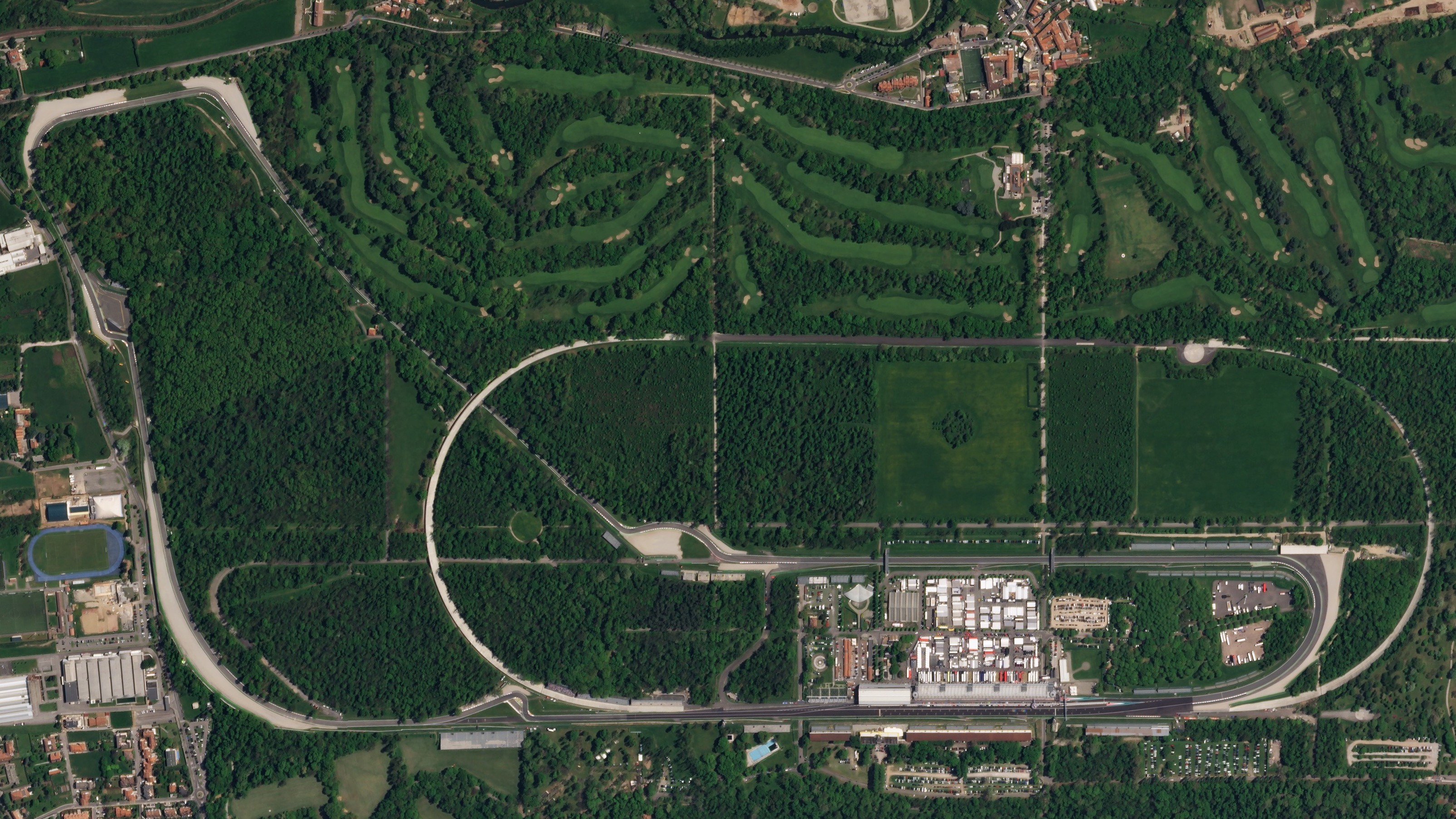
Autodromo Nazionale Monza
Monza, Italy
113,860 capacity
Autodromo Nazionale Monza, the "Temple of Speed," is one of the oldest and most revered circuits in motorsport history. Located in the Royal Villa of Monza park just north of Milan, Italy, this legendary track has hosted the Italian Grand Prix almost continuously since the inaugural Formula 1 World Championship in 1950. The 5.793-kilometer circuit is renowned for its ultra-high-speed characteristics, featuring long straights separated by chicanes that were added in the 1970s to reduce speeds. The original layout included the famous banked oval, remnants of which can still be seen alongside the modern circuit. Monza consistently produces the highest average speeds on the F1 calendar, with lap speeds regularly exceeding 260 km/h. The circuit features several iconic sections: the Variante del Rettifilo chicane at the end of the main straight, the legendary Curva Grande sweeper, the Variante della Roggia, the famous Lesmo curves, the Variante Ascari, and the eventful Curva Parabolica (now named after Michele Alboreto). Teams run their lowest-downforce configurations here, creating a unique engineering challenge that can shuffle the competitive order. Monza holds a special place in the hearts of Ferrari fans — the tifosi — who flood the circuit in a sea of red on race day. The atmosphere is unmatched in Formula 1, with passionate Italian fans creating a wall of noise that drivers can hear even inside their cockpits. When a Ferrari wins at Monza, the track invasion that follows is one of sport's most iconic celebrations. The circuit has witnessed both triumph and tragedy throughout its history. Legendary victories include Peter Gethin's 1971 win by 0.01 seconds in the closest finish in F1 history, Sebastian Vettel's emotional 2008 win for Toro Rosso in the rain, and Charles Leclerc's breathtaking 2019 victory for Ferrari that sent the tifosi into raptures. Tragically, several drivers have lost their lives at the circuit, including Wolfgang von Trips in 1961 and Jochen Rindt, F1's only posthumous champion, in 1970. Monza remains an essential stop on the Formula 1 calendar, combining raw speed, rich history, and the passionate atmosphere that makes the Italian Grand Prix one of the most anticipated events of the season. The surrounding park setting, with its tree-lined straights and century-old grandstands, provides a unique backdrop that no purpose-built circuit can replicate.
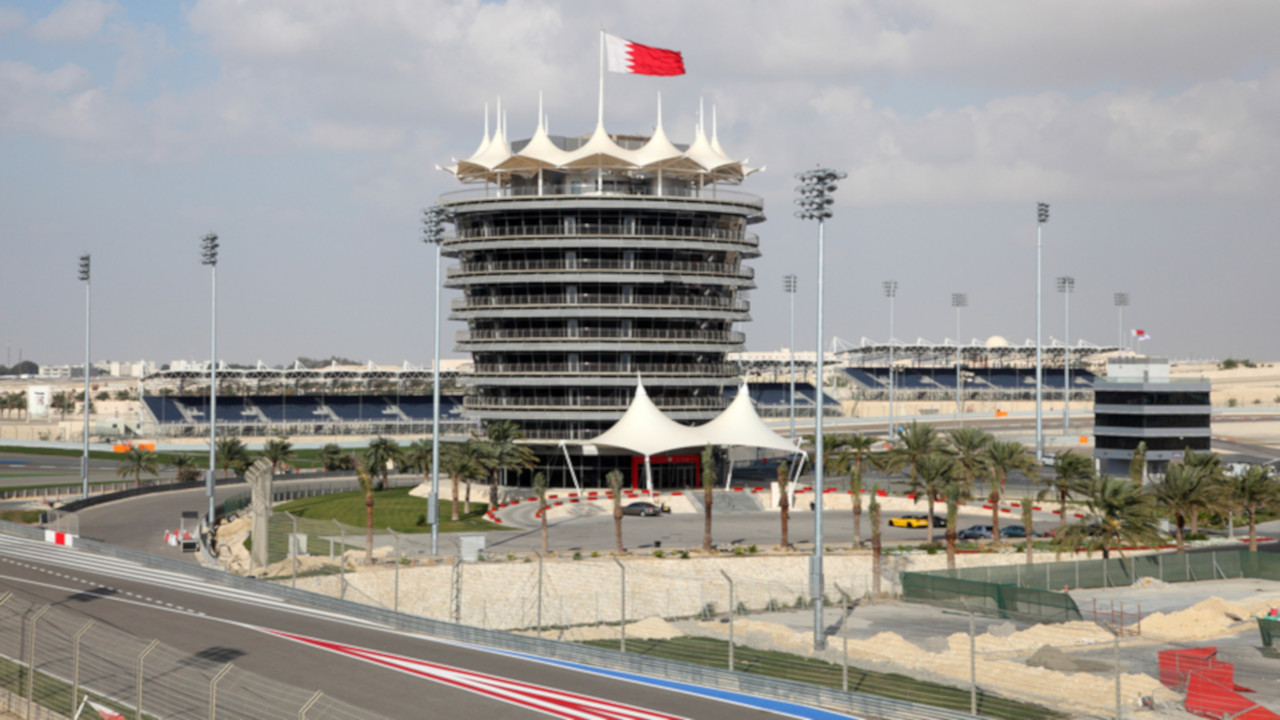
Bahrain International Circuit
Sakhir, Bahrain, Bahrain
70,000 capacity
Rising from the desert sands of the Arabian Peninsula, Bahrain International Circuit stands as a testament to the Gulf nation's ambitious vision for motorsport excellence. Located in Sakhir, approximately 30 kilometers southwest of Manama, this state-of-the-art facility has established itself as one of Formula 1's most significant venues in the Middle East, capable of accommodating 70,000 spectators across its modern grandstands and hospitality areas. The circuit's creation marked Bahrain's bold entry into the world of international motorsport, representing the first Formula 1 venue in the Middle East when it joined the championship calendar. Designed by renowned track architect Hermann Tilke, the facility was conceived as more than just a racing circuit – it was envisioned as a comprehensive motorsport destination that would put Bahrain firmly on the global racing map. The project reflected the country's diversification strategy, moving beyond its traditional oil-based economy to embrace sports tourism and entertainment. Bahrain International Circuit's layout spans 5.412 kilometers in its Grand Prix configuration, featuring 15 challenging corners that test every aspect of a driver's skill set. The track begins with a long main straight that flows into Turn 1, a tight right-hand corner that has become synonymous with eventful first-lap incidents and strategic overtaking moves. This opening complex immediately establishes the circuit's character, demanding late braking and precise positioning from drivers attempting to gain early advantages. The circuit's middle sector presents a fascinating blend of technical challenges, including the sweeping Turn 4 that leads into a series of direction changes requiring delicate balance between speed and control. One of the track's most distinctive features is the uphill climb toward Turn 10, where elevation changes add complexity to car setup and racing lines. This section tests aerodynamic efficiency and power delivery, often revealing subtle differences between competing vehicles. Perhaps no corner at Bahrain International Circuit is more crucial than Turn 11, a late-braking zone that has produced countless memorable overtaking maneuvers. The combination of a long approach, significant speed differential, and multiple possible racing lines makes this corner a natural focal point for wheel-to-wheel combat. The final sector continues this theme of overtaking opportunities, with Turn 14 providing another prime location for position changes, particularly when drivers can maximize their exit speed onto the main straight. The circuit's surface characteristics contribute significantly to its racing appeal. The smooth asphalt provides excellent grip levels while allowing for multiple racing lines, enabling drivers to explore different approaches to corner entry and exit points. However, the desert environment presents unique challenges, with sand frequently blown onto the track surface, particularly during practice sessions when rubber hasn't yet been laid down. This environmental factor adds an extra dimension to setup work and tire strategy considerations. What truly distinguishes Bahrain International Circuit is its commitment to hosting races under floodlights, creating notable nighttime racing conditions that enhance both the visual spectacle and strategic complexity. The powerful lighting system transforms the desert facility into a gleaming oasis, while cooler evening temperatures affect tire performance and aerodynamic efficiency, adding layers of tactical consideration for teams and drivers. The venue's infrastructure reflects modern standards of motorsport facility design, with comprehensive pit and paddock complexes that accommodate the logistical demands of international racing series. The pit building features advanced garage facilities, team hospitality areas, and media centers, while the circuit's multiple configuration options allow it to host various categories of motorsport beyond Formula 1. Throughout its operational history, Bahrain International Circuit has witnessed numerous pivotal moments in Formula 1 history. The venue has served as a backdrop for championship-deciding races, breakthrough victories for emerging talents, and eventful battles between the sport's biggest names. Night racing at the facility has produced particularly memorable spectacles, with the unique atmospheric conditions often contributing to unpredictable and exciting race outcomes. The circuit's significance extends beyond its role as a racing venue, serving as a catalyst for motorsport development throughout the Gulf region. Its success has inspired similar projects across the Middle East while establishing Bahrain as a legitimate motorsport destination. The facility regularly hosts driver training programs, automotive industry events, and motorsport education initiatives, contributing to the broader development of racing culture in the region. Safety standards at Bahrain International Circuit meet the highest international specifications, with comprehensive gravel traps, tire barriers, and run-off areas strategically positioned around the circuit. The facility's medical center and emergency response capabilities ensure rapid assistance when needed, while the track's design minimizes inherent risk factors without compromising racing excitement. Today, Bahrain International Circuit continues to evolve and adapt to meet changing demands in international motorsport. Beyond its Formula 1 commitments, the facility hosts various other racing series, automotive exhibitions, and corporate events, maximizing its utility as a year-round destination. The circuit's management remains committed to maintaining its position among the world's premier motorsport venues while contributing to Bahrain's broader economic and cultural objectives. The venue stands as proof that successful motorsport facilities can flourish in challenging environments when backed by proper vision, investment, and execution, cementing its legacy as a cornerstone of modern Formula 1's global expansion.

Baku City Circuit
Bakou, Azerbaijan
18,500 capacity
Nestled along the shores of the Caspian Sea, the Baku City Circuit stands as one of Formula 1's most distinctive and challenging venues, weaving through the ancient streets and modern boulevards of Azerbaijan's capital. This remarkable street circuit combines the narrow, technical demands of Monaco with high-speed sections that push cars and drivers to their absolute limits, creating a unique spectacle that has quickly established itself as one of the calendar's most unpredictable and exciting races. The circuit came to life as part of Formula 1's eastward expansion, marking Azerbaijan's ambitious entry into the pinnacle of motorsport. The track's creation represented a bold vision to showcase Baku's blend of historic charm and contemporary ambition, routing the circuit past UNESCO World Heritage sites while incorporating the city's striking modern architecture. The venue officially joined the Formula 1 calendar, bringing Grand Prix racing to the Caucasus region for the first time and establishing Azerbaijan as a new frontier in the sport's global reach. Stretching 6.003 kilometers through Baku's diverse urban landscape, the circuit presents one of Formula 1's longest lap distances, requiring 51 laps to complete the race distance. The track's character is defined by its eventful contrasts, featuring some of the narrowest sections on the calendar alongside the longest flat-out straight in Formula 1. This unique combination creates a venue where precision and bravery are equally essential, demanding different skills from drivers as they navigate between tight, castle-walled passages and high-speed runs that see cars reaching extraordinary velocities. The circuit's most iconic feature is its incredibly long main straight, which extends for over two kilometers and allows cars to reach speeds exceeding 350 kilometers per hour. This mammoth straight, officially the longest in Formula 1, runs alongside Baku's waterfront and provides notable overtaking opportunities while testing the limits of engine power and aerodynamic efficiency. The straight culminates in a tight right-hand corner that has become notorious for catching out unwary drivers, creating a natural pinch point where races can be won or lost. At the opposite extreme, the circuit features a claustrophobic section that winds through Baku's Old City, where medieval walls create a narrow canyon barely wide enough for modern Formula 1 cars. This historic quarter presents drivers with one of the most challenging sequences in the sport, requiring millimeter-perfect precision as they thread their cars between ancient stone walls with virtually no margin for error. The contrast between this technical maze and the high-speed sections creates a unique challenge that tests every aspect of a driver's skill set. Charles Leclerc holds the circuit's lap record with a time of 1:43.009, a mark that reflects both his exceptional talent and the demanding nature of the track. This record stands as testament to the circuit's challenging characteristics, where finding the perfect balance between risk and reward across such diverse sections requires extraordinary skill and commitment. The track's surface characteristics add another layer of complexity to the challenge. Like many street circuits, the tarmac evolves significantly throughout a race weekend, beginning with limited grip due to the lack of regular racing rubber but improving eventfulally as cars lay down more rubber. This evolution means that track conditions can change substantially between sessions, affecting everything from qualifying strategies to race-day tire choices. Since its introduction to Formula 1, the Baku City Circuit has produced some genuinely memorable moments and unexpected results. The venue has developed a reputation for eventful races featuring multiple safety cars, sudden changes in fortune, and surprise podium finishers. The combination of high speeds and unforgiving barriers has led to notable incidents, while the lengthy straight has facilitated competitive wheel-to-wheel battles that showcase Formula 1 at its most exciting. The circuit's elevation changes, while subtle, add to its character and challenge. The track undulates gently as it flows through different areas of the city, with drivers navigating slight climbs and descents that affect braking points and racing lines. These elevation variations, combined with the diverse corner types, mean that car setup represents a significant compromise between the demands of the high-speed sections and the precision required in the technical areas. From a spectator perspective, the circuit offers a relatively intimate experience despite its urban setting, with a capacity of 18,500 creating an atmosphere that is both exclusive and electric. The grandstands are strategically positioned to offer views of the most eventful parts of the track, while the notable backdrop of Baku's skyline and the Caspian Sea provides a visually notable setting for Grand Prix racing. The Baku City Circuit has established itself as a venue where the unexpected regularly occurs, where qualifying positions often bear little resemblance to finishing orders, and where driver skill and racecraft are tested to the maximum. Its combination of technical precision and high-speed bravery, set against the backdrop of one of the world's most intriguing cities, has made it a distinctive and valued addition to the Formula 1 calendar. As the sport continues to evolve, this unique circuit stands as a testament to Formula 1's ability to create compelling racing in the most challenging and notable urban environments.
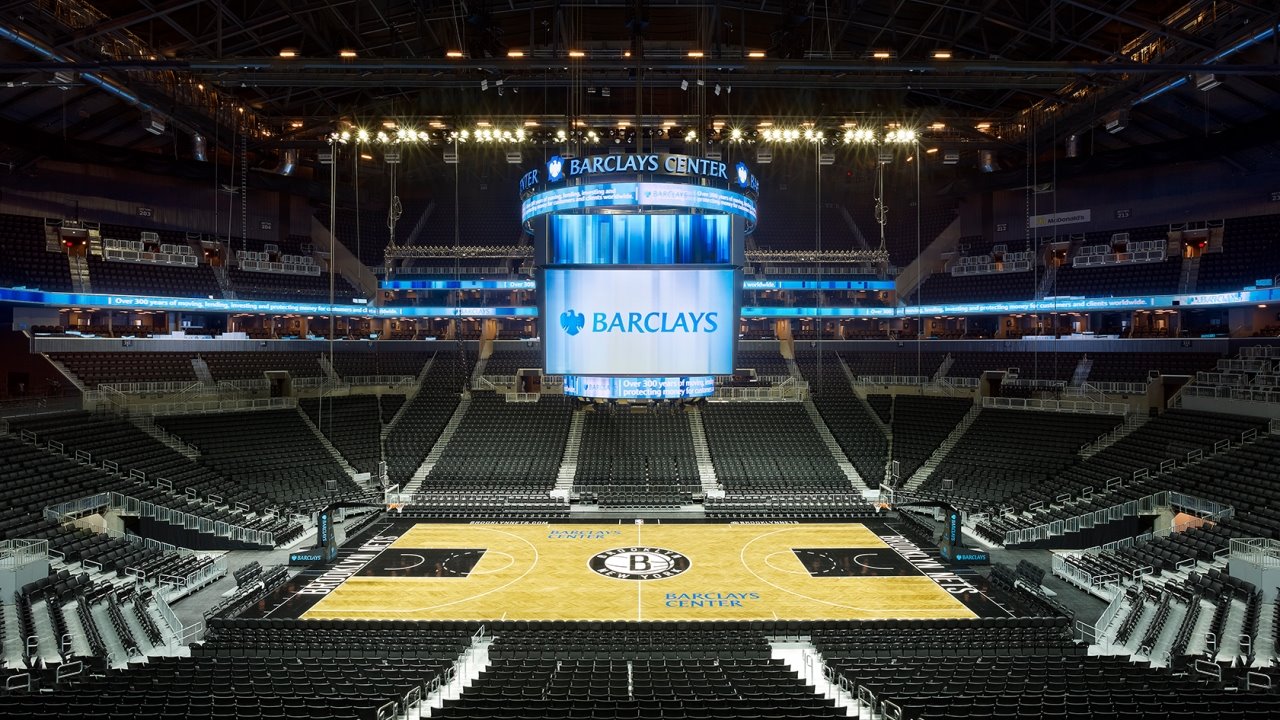
Barclays Center
Brooklyn, New York, United States
17,732 capacity
Barclays Center is a multi-purpose indoor arena in the New York City borough of Brooklyn. It sits partially on a platform over the Metropolitan Transportation Authority (MTA)-owned Vanderbilt Yards rail yard at Atlantic Avenue for the Long Island Rail Road (LIRR). It is part of a $4.9 billion future business and residential complex now known as Pacific Park. The site is located adjacent to the renamed Atlantic Avenue–Barclays Center subway station on the 2 3 4 5 B Q D N R routes, as well as directly above the LIRR's Atlantic Terminal. The arena is currently home to the Brooklyn Nets of the National Basketball Association and the New York Islanders of the National Hockey League. The arena also hosts concerts, conventions and other sporting and entertainment events. The arena competes with other facilities in the New York metropolitan area, including Madison Square Garden in Manhattan and Prudential Center in Newark. The arena and the Brooklyn Nets are owned by Mikhail Prokhorov's American holdings. The arena, initially proposed in 2004 when real estate developer Bruce Ratner purchased the Nets for $300 million as the first step of the process to build a new home for the team, experienced significant hurdles during its development. Its use of eminent domain and its potential environmental impact stirred up community resistance, especially as residential buildings and businesses such as the Ward Bakery were to be demolished and large amounts of public subsidies were used, which led to multiple lawsuits. The global recession of 2009 also caused financing for the project to dry up. As a result, the start of construction was delayed until 2010, with no secure funding for the project having been allotted. Groundbreaking for construction occurred on March 11, 2010, and the arena opened to the public on September 21, 2012, which was also attended by some 200 protesters. It held its first event with a Jay-Z concert on September 28, 2012.
Bert Ogden Arena
Edinburg, Texas, United States
7,688 capacity
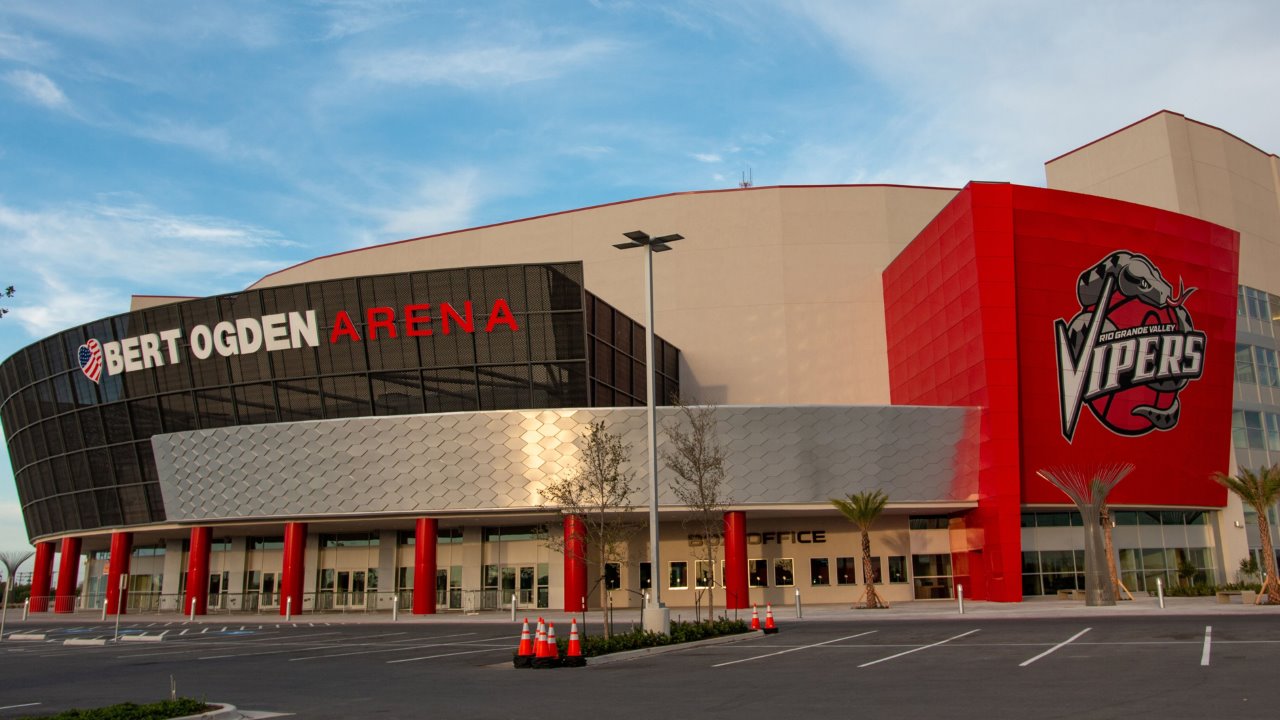
Deep in the heart of South Texas, an unconventional motorsport venue has carved out a unique niche in the American racing landscape. Bert Ogden Arena in Edinburg, Texas, represents a fascinating intersection of traditional motorsport and innovative event hosting, challenging conventional notions of where high-speed racing can take place. Located in the Rio Grande Valley, just miles from the Mexican border, this multipurpose arena serves as home to a diverse array of events that extend far beyond typical motorsport venues. With a capacity of 7,688 spectators, the facility operates on a scale that prioritizes intimate fan experiences over massive grandstand spectacles, creating an atmosphere where every seat offers proximity to the action that larger venues simply cannot match. The arena's connection to IndyCar racing represents one of the more intriguing developments in American open-wheel motorsport's ongoing evolution. While traditional IndyCar venues typically feature either oval superspeedways or permanent road courses, Bert Ogden Arena's configuration challenges these established formats. The venue's indoor capabilities and flexible layout options have opened doors to racing formats that blur the lines between traditional motorsport disciplines and exhibition-style competition. What sets this Edinburg facility apart from conventional racing venues is its fundamental design philosophy. Rather than being purpose-built exclusively for motorsport, the arena was conceived as a community anchor capable of hosting everything from concerts and sporting events to family entertainment and cultural celebrations. This multipurpose approach reflects the evolving economics of modern venue development, where successful facilities must generate revenue streams throughout the calendar year rather than relying solely on racing events. The arena's technical specifications create unique challenges and opportunities for drivers and teams. The controlled indoor environment eliminates weather variables that can eventfulally impact outdoor racing events, ensuring consistent track conditions regardless of South Texas's sometimes unpredictable climate. The compact dimensions demand precision driving skills that differ markedly from the high-speed endurance required at traditional IndyCar ovals or the complex braking zones found on permanent road courses. For spectators, the arena format offers an entirely different motorsport experience. The proximity of seating to the racing surface creates sound levels and visual perspectives that outdoor venues cannot replicate. Every engine note reverberates through the enclosed space, while the ability to see the entire racing surface from most vantage points provides comprehensive race awareness that sprawling outdoor circuits often fail to deliver. The venue's location in Edinburg carries significant cultural and economic implications for the region. South Texas has historically been underserved by major motorsport events, despite a passionate local fanbase that regularly travels hundreds of miles to attend races in other markets. Bert Ogden Arena's presence helps fill this geographic gap while introducing motorsport to communities that might otherwise have limited exposure to professional racing. The facility's operational flexibility extends beyond simple venue rental arrangements. The arena's infrastructure can accommodate the complex logistical requirements of modern motorsport, from broadcast television production to corporate hospitality functions. This adaptability has proven crucial in an era where racing events must serve multiple constituencies simultaneously, balancing pure sporting competition with entertainment value and commercial viability. Technical teams face unique challenges when preparing for events at Bert Ogden Arena. The controlled environment affects everything from tire compound selection to aerodynamic setup strategies. Without natural wind patterns or temperature fluctuations to consider, engineers must focus on different variables than those that dominate outdoor racing preparation. These distinctive requirements have contributed to the venue's reputation as a technical proving ground that rewards innovative thinking. The arena's compact scale also influences race strategy in fundamental ways. Traditional fuel strategy calculations become less relevant in shorter-format events, while the premium on qualifying performance increases when overtaking opportunities may be limited by track configuration. These factors combine to create racing that emphasizes different driver skills than those required at traditional IndyCar venues. Community engagement represents another defining characteristic of Bert Ogden Arena's operational approach. The venue's programming extends well beyond motorsport, hosting educational initiatives, cultural celebrations, and family-oriented events that help establish deep local roots. This community integration helps sustain long-term viability while building the next generation of motorsport fans. The facility's impact on the broader IndyCar landscape reflects ongoing changes within American motorsport. As traditional venues face economic pressures and changing fan demographics, innovative formats and non-traditional locations have gained increased attention from series organizers and broadcast partners. Bert Ogden Arena's model demonstrates how motorsport can adapt to serve underserved markets while creating new revenue opportunities. Looking toward the future, the arena's flexible design positions it well for continued evolution alongside changing motorsport trends. The facility's ability to accommodate different racing formats, coupled with its established community presence and modern infrastructure, suggests continued relevance as the industry navigates technological advancement and shifting fan preferences. Today, Bert Ogden Arena stands as a testament to motorsport's capacity for innovation and adaptation. By successfully integrating high-level racing competition with broader community entertainment needs, the venue has established a sustainable model that serves multiple constituencies while advancing the sport's reach into previously underserved markets. This approach may well represent the future of motorsport venue development in an increasingly competitive entertainment landscape.
Bob Carpenter Center
United States
Located in Newark, Delaware, the Bob Carpenter Center represents a unique chapter in American motorsport history as one of the few indoor arenas to have hosted major open-wheel racing. This multipurpose facility, primarily known as the home venue for the University of Delaware's basketball teams, briefly transformed into an unconventional racing circuit that challenged both drivers and the traditional boundaries of IndyCar competition. Built as a basketball arena and convocation center, the Bob Carpenter Center opened its doors to serve the University of Delaware community and the broader region. The facility was designed with the typical characteristics of a modern sports arena: concrete construction, permanent seating arranged in tiers around a central floor space, and the infrastructure necessary to host large-scale events. What made this venue extraordinary in motorsport terms was its temporary conversion into a racing circuit, representing the ambitious and sometimes experimental nature of American open-wheel racing during certain periods of its evolution. The arena's transformation into a racing venue required extensive modifications to accommodate high-speed motorsport within the confines of an indoor space. Temporary barriers were installed around the perimeter of the arena floor, creating a short oval circuit that pushed the limits of what was considered feasible for IndyCar competition. The track configuration was necessarily compact, with tight turns that demanded precise car control and offered limited opportunities for traditional overtaking maneuvers. The surface, adapted from the arena's standard flooring, presented unique challenges in terms of grip levels and tire management that differed significantly from purpose-built racing circuits. Racing at the Bob Carpenter Center was characterized by its intensity and close-quarters competition. The confined nature of the circuit meant that drivers had to exercise exceptional car control while maintaining competitive speeds. The short straights between corners provided minimal opportunity for slipstreaming and overtaking, placing premium value on qualifying position and race strategy. The indoor environment created a distinctive atmosphere, with engine noise reverberating off the arena walls and creating an acoustic experience unlike any traditional outdoor racing venue. The technical demands of racing within the arena were considerable. Drivers had to adapt their racing lines and braking points to accommodate the tight confines of the circuit, while teams faced unique challenges in car setup and aerodynamic configuration. The short lap times meant that traffic management became a critical factor, with slower cars potentially creating significant obstacles for leaders attempting to maintain competitive pace. The limited space also meant that any incident could quickly affect multiple competitors, adding an element of unpredictability to race outcomes. What distinguished the Bob Carpenter Center from other motorsport venues was its dual identity as both an academic institution's sports facility and a professional racing circuit. This duality reflected a particular era in American motorsport when promoters and sanctioning bodies were willing to experiment with unconventional venues in efforts to expand the sport's reach and appeal to new audiences. The arena races represented an attempt to bring the excitement of open-wheel racing to regions and demographics that might not typically have access to major motorsport events. The logistics of converting a basketball arena into a racing circuit were complex and required careful coordination between university officials, racing organizers, and safety personnel. Temporary grandstand configurations had to be adjusted to provide optimal viewing angles for motorsport rather than basketball, while ensuring that safety barriers and emergency access routes met the stringent requirements of professional racing. The arena's existing infrastructure, including lighting, sound systems, and broadcast capabilities, had to be adapted to serve the specific needs of televised motorsport events. From a competitive standpoint, races at the Bob Carpenter Center often produced unexpected results due to the unique challenges presented by the venue. The compact nature of the circuit and the indoor environment created racing conditions that favored different driving styles and car setups compared to traditional oval or road course venues. This leveling effect sometimes allowed less-favored competitors to achieve strong results, contributing to the unpredictable and entertaining nature of these events. The Bob Carpenter Center's role in IndyCar history, while brief, represents an important example of the sport's willingness to innovate and experiment with different formats and venues. These arena races demonstrated both the adaptability of open-wheel racing and the challenges inherent in translating high-speed motorsport to unconventional settings. The events held there contributed to ongoing discussions within the motorsport community about venue diversity and the balance between traditional racing environments and efforts to reach new markets. Today, the Bob Carpenter Center has returned to its primary function as a university sports and events facility, hosting basketball games, concerts, and other entertainment events. While its days as a racing venue have passed, the arena remains a notable footnote in the broader history of American open-wheel racing and stands as a testament to the experimental spirit that has characterized various periods in the sport's evolution. The facility continues to serve the University of Delaware and the surrounding community, maintaining its role as a significant venue in the region's sports and entertainment landscape, even as its brief but memorable chapter in professional motorsport history remains part of its unique legacy.
Bristol Motor Speedway
Bristol, Tennessee, United States
146,000 capacity
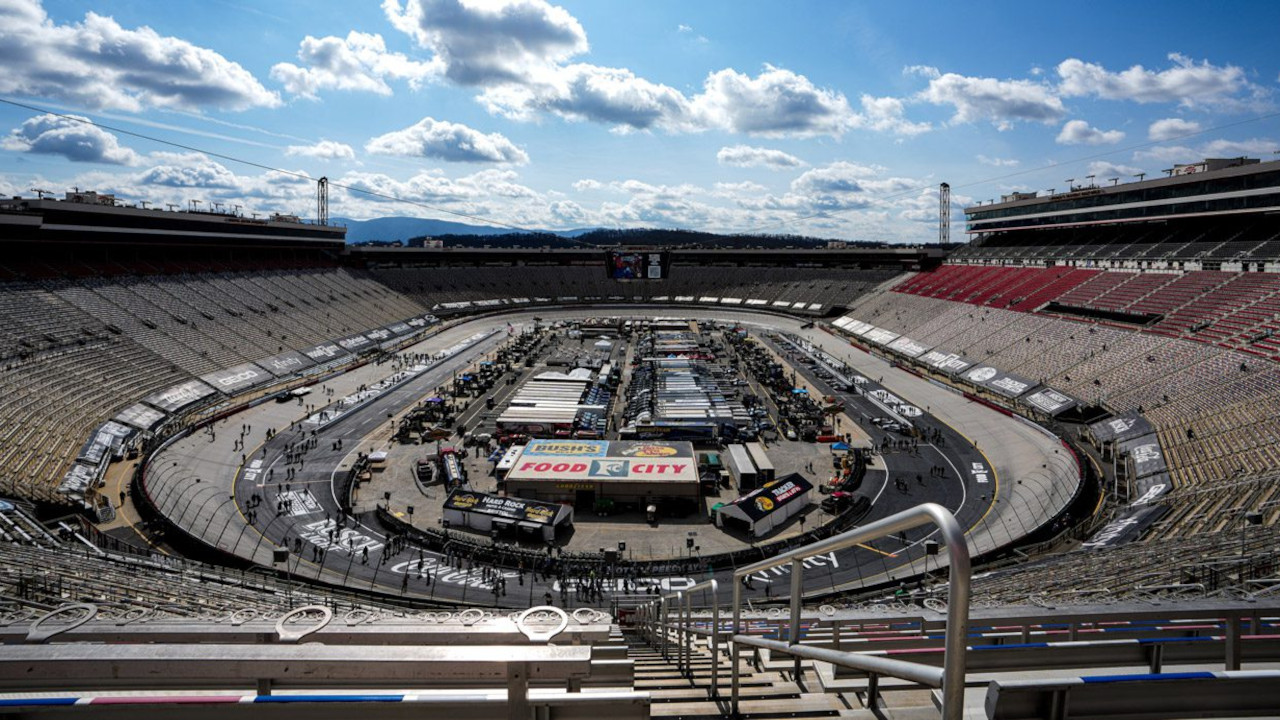
Nestled in the rolling hills of East Tennessee lies one of NASCAR's most iconic and intimidating venues, a concrete colosseum that has earned its place as the sport's most beloved short track. Bristol Motor Speedway stands as a testament to the raw intensity and close-quarters combat that defines short-track racing, drawing massive crowds to witness some of the most competitive and unpredictable competition in motorsports. Originally constructed as Bristol International Raceway, this half-mile oval opened its gates in the 1960s as a dirt track before evolving into the concrete fortress that defines modern short-track racing. The transformation from dirt to concrete fundamentally changed the character of racing at Bristol, creating the high-banked, high-speed environment that would make it one of NASCAR's premier destinations. The track's evolution mirrors that of NASCAR itself, growing from regional racing roots into a national spectacle that captivates audiences across the country. The physical characteristics of Bristol Motor Speedway set it apart from virtually every other venue on the NASCAR circuit. Measuring exactly 0.533 miles in length, the track features progressive banking that ranges from 24 to 28 degrees in the turns, with the front and back straightaways banked at a relatively modest 6 to 10 degrees. This unique banking configuration creates a racing environment where cars can maintain extraordinarily high speeds despite the track's compact dimensions, often exceeding 120 miles per hour in a space where drivers can see the entire racing surface from their cockpit. The concrete surface at Bristol presents its own set of challenges and opportunities for competitors. Unlike the asphalt surfaces found at most NASCAR tracks, Bristol's concrete provides different grip characteristics and wear patterns that significantly impact racing strategy. The surface tends to be less forgiving of setup mistakes while offering multiple racing grooves that can shift throughout an event as track conditions evolve. The combination of high banking and concrete surface creates a scenario where aerodynamic draft plays a crucial role despite the relatively short straightaways, leading to the pack racing and frequent position changes that have become synonymous with Bristol competition. Perhaps no venue in NASCAR generates more excitement about overtaking opportunities than Bristol Motor Speedway. The track's compact nature means that slower traffic becomes a constant factor throughout races, creating situations where lead changes can occur rapidly and frequently. The high banks allow cars to run multiple grooves simultaneously, from the preferred inside line to the challenging but sometimes faster outside wall. Turn entries and exits provide prime passing opportunities, though the concrete surface and high speeds make every move a calculated risk that can result in either notable success or devastating contact. Bristol's reputation as "The Last Great Colosseum" stems from the gladiatorial nature of competition that unfolds within its concrete walls. The track's unforgiving characteristics have produced some of NASCAR's most memorable moments, from notable crashes to eventful last-lap battles that have defined careers and championships. The venue has witnessed everything from dominant performances where single drivers have led wire-to-wire to chaotic affairs featuring dozens of lead changes and multiple caution periods that test every aspect of team strategy and driver skill. The atmosphere at Bristol Motor Speedway rivals that of any sporting venue in America. With a seating capacity of 146,000, the facility creates an amphitheater-like environment where spectators enjoy unobstructed views of the entire racing surface. The steep banking of the grandstands mirrors the track's banking, creating sightlines that allow fans to follow the action from any seat in the house. The proximity of the seating to the track surface intensifies the sensory experience, with the sound of 40 NASCAR engines reverberating off the concrete walls and aluminum grandstands to create an audio assault that embodies the raw power of stock car racing. Night racing at Bristol adds another dimension to the venue's mystique. The track's lighting system transforms the concrete oval into a nighttime spectacle where the combination of high speeds, close competition, and eventful shadows creates television coverage that regularly ranks among NASCAR's highest-rated broadcasts. The cooler nighttime temperatures often change track conditions throughout the event, adding strategic elements that teams must navigate while managing the intense wheel-to-wheel racing that defines Bristol competition. Bristol Motor Speedway has also served as a venue for innovation within NASCAR, hosting experimental race formats and serving as a testing ground for new rules packages designed to enhance competition. The track's unique characteristics make it an ideal laboratory for understanding how changes to cars and competition procedures affect racing quality, with lessons learned at Bristol often applied to NASCAR's broader competitive landscape. Beyond NASCAR's premier Cup Series, Bristol Motor Speedway hosts multiple racing series throughout its annual calendar. The venue regularly features NASCAR Xfinity Series and Truck Series competition, each bringing their own distinct racing characteristics to the concrete surface. The track has also hosted various touring series and special events that showcase different forms of motorsports, though stock car racing remains the facility's primary identity. Today, Bristol Motor Speedway continues to hold its position as one of NASCAR's most anticipated annual stops, with tickets for Bristol races traditionally among the most difficult to obtain in the sport. The combination of limited seating relative to demand, notable racing, and the venue's reputation for unpredictability ensures that Bristol maintains its status as a crown jewel on the NASCAR schedule. As the sport continues to evolve, Bristol Motor Speedway remains a constant reminder of NASCAR's short-track roots and the raw, uncompromising competition that built the sport's foundation.
Bristol Motor Speedway Dirt
Bristol, Tennessee, United States
Nestled in the Appalachian Mountains of Tennessee, one of NASCAR's most iconic venues underwent a eventful transformation that would captivate the motorsport world. Bristol Motor Speedway, long known as "The Last Great Colosseum" for its thunderous concrete banking, made headlines when it temporarily converted its racing surface to dirt for select NASCAR Cup Series events, creating an entirely new racing experience at this legendary half-mile facility. The dirt conversion at Bristol Motor Speedway represented a bold experiment that merged NASCAR's modern era with its dirt-track roots. This transformation required covering the track's famous concrete surface with carefully prepared clay, fundamentally altering the racing characteristics that had defined Bristol for decades. The process involved trucking in hundreds of tons of dirt to create a racing surface that would challenge drivers accustomed to the predictable grip levels of asphalt and concrete. Bristol's unique characteristics as a dirt track stem from its unusual dimensions and configuration. Unlike traditional dirt ovals that are typically flat or feature minimal banking, Bristol's dirt surface maintained much of the speedway's eventful elevation changes and banking angles. The track's 24-degree banking in the turns, combined with the variable grip characteristics of dirt, created racing conditions unlike anywhere else in NASCAR. The tight confines of the half-mile layout, measuring just 0.533 miles around, ensured that cars remained in close proximity throughout races, amplifying the unpredictable nature of dirt racing. The racing surface itself became the star of the show, with its constantly evolving characteristics throughout race weekends. As cars circulated, the dirt would develop multiple grooves, with drivers searching for the optimal line that could change from lap to lap. The bottom groove often provided the most consistent grip early in runs, while the top groove could become dominant as rubber was laid down and the surface conditions changed. This created strategic elements rarely seen in modern NASCAR, as drivers had to adapt their lines and techniques in real-time. Weather conditions played an enormously amplified role in dirt racing at Bristol compared to traditional asphalt events. Moisture content in the track surface could eventfulally alter grip levels and racing characteristics, sometimes within a single race. Track preparation became an art form, with officials working to maintain optimal surface conditions through watering, packing, and grading between sessions. The unpredictability added an element of excitement that distinguished these events from typical NASCAR races. The dirt configuration transformed Bristol's famous racing characteristics in fascinating ways. While the concrete version of Bristol was known for its intense, side-by-side racing and frequent contact, the dirt surface introduced slide jobs, crossover moves, and racing techniques borrowed directly from sprint car and late model dirt racing. Drivers found themselves relearning how to race at a track where many had competed for years, with traditional Bristol racing lines often proving ineffective on the dirt surface. NASCAR's return to dirt racing at Bristol marked the first time the Cup Series had competed on dirt since the early 1970s, representing a significant moment in the sport's evolution. The event attracted attention from both traditional NASCAR fans and dirt racing enthusiasts, creating a unique crossover appeal. Many NASCAR drivers had to quickly adapt their skills or rely on previous dirt racing experience, while some enlisted the help of dirt track specialists to prepare for these unique events. The dirt races at Bristol showcased the versatility of NASCAR's modern race cars, with teams making significant setup adjustments to accommodate the different surface. Suspension geometries, tire choices, and aerodynamic considerations all required modifications from the typical Bristol setup. The events often featured more unpredictable outcomes than traditional NASCAR races, with the surface conditions serving as a great equalizer that could elevate underdogs and challenge favorites. Track conditions during dirt events evolved eventfulally throughout race weekends. Practice and qualifying sessions would begin with a freshly prepared surface, but by race time, the track would have developed character through rubber buildup, moisture changes, and the natural evolution that occurs as dirt surfaces are worked in. This created strategic elements around tire conservation and track position that differed significantly from typical NASCAR competition. The spectacle of dirt racing at Bristol extended beyond just the on-track action. The visual elements of cars sliding through turns, dirt flying from spinning wheels, and the dusty atmosphere created a unique aesthetic that set these events apart from standard NASCAR races. The sounds were different too, with engines note changes as drivers modulated throttle through sliding conditions, and the distinctive sound of tires working against the dirt surface. Bristol Motor Speedway's dirt configuration represents NASCAR's willingness to experiment with its racing formats while honoring the sport's historical roots. The temporary dirt surface created racing that was both nostalgic and innovative, combining elements of traditional dirt track racing with the modern NASCAR experience. These events have contributed to ongoing discussions about surface diversity in NASCAR and the potential for more experimental racing formats. The success and reception of dirt racing at Bristol has implications for the future of NASCAR's schedule diversity. While maintaining the track's primary identity as a concrete speedway, the dirt conversion capability demonstrates the venue's adaptability and NASCAR's openness to format experimentation. Bristol Motor Speedway Dirt stands as a testament to the sport's evolution while celebrating its fundamental connection to grassroots dirt track racing across America.

Buddh International Circuit
Rising from the agricultural landscapes of Greater Noida in Uttar Pradesh, the Buddh International Circuit emerged as India's ambitious entry into the Formula One world, marking a historic milestone for motorsport in the subcontinent. This state-of-the-art facility, designed by renowned circuit architect Hermann Tilke, opened its doors in October 2011 amid enormous anticipation and excitement from racing enthusiasts across the globe. With a construction cost of Rs 2,000 crore, the circuit represented one of the most significant investments in Indian motorsport infrastructure, signaling the country's serious intentions to establish itself on the international racing map. Spread across an expansive 874-acre site, the Buddh International Circuit presents a clockwise configuration that stretches 5.14 kilometers, though Formula One measurements place it at 5.010 kilometers. The track's layout showcases Tilke's signature blend of high-speed flowing sections and technical challenges, creating a modern FIA Grade 1 facility that stands in stark contrast to the temporary street circuits that dot the Formula One calendar. The circuit's design philosophy emphasizes both driver challenge and spectator excitement, with meaningful elevation changes that add complexity to racing lines and provide natural amphitheater viewing positions for fans. The circuit's most distinctive feature is undoubtedly its main straight, a decisive 1.06-kilometer stretch that ranks among the longest in Formula One. This extended acceleration zone creates eventful speed differentials and sets up crucial overtaking opportunities as drivers approach the first corner complex. The pit infrastructure matches this ambition, featuring a 600-meter pit lane that stands as one of the longest in professional racing, providing ample space for the complex choreography of Formula One pit stops and team operations. Beginning with this impressive pit straight, the track layout unfolds through 16 corners that test every aspect of a driver's skill set. The opening sequence features a sharp 90-degree right-hand turn that immediately challenges drivers emerging from the long straight, followed by a gently sweeping left-hand curve that begins to reveal the circuit's flowing character. The elevation changes throughout the lap create blind crests and compression zones that demand precise timing and commitment from drivers, while the modern surface characteristics provide consistent grip levels that allow for aggressive racing lines and late braking maneuvers. The circuit achieved its greatest prominence as the venue for the annual Formula One Indian Grand Prix, which made its debut in October 2011. This inaugural event marked a watershed moment for Indian motorsport, bringing the pinnacle of international racing to a country with a rapidly growing passion for automotive competition. The facility's design and infrastructure impressed teams and drivers alike, with many praising the challenging layout and professional facilities that met the exacting standards required for Formula One competition. Beyond its Formula One credentials, the circuit's flowing, high-speed character has made it suitable for various forms of motorsport. The track's design philosophy prioritizes safety without compromising on excitement, featuring modern barrier systems, extensive run-off areas, and clear sightlines that enhance both competitor safety and spectator viewing. The facility's grade 1 FIA certification ensures it meets the highest international standards for professional motorsport, making it capable of hosting world-championship level events across multiple racing categories. The circuit's architectural and engineering elements extend beyond the track itself, encompassing comprehensive facilities for teams, media, and spectators. The paddock complex provides spacious accommodation for the logistical demands of modern motorsport, while the pit building features advanced timing and scoring systems, team facilities, and race control operations that meet Formula One's sophisticated requirements. These elements combine to create an environment that supports the complex operational needs of international racing events. The track's technical characteristics present unique challenges that distinguish it from other circuits on the international calendar. The combination of long straights and technical corner sequences creates opportunities for different racing strategies, while the elevation changes add layers of complexity to vehicle setup and tire management. The surface quality and drainage systems ensure consistent racing conditions, while the layout's variety means that success depends on achieving a balanced car setup rather than optimizing for any single characteristic. Currently, the Buddh International Circuit continues to serve as a significant motorsport facility in the region, though its role has evolved since its Formula One years. The venue maintains its infrastructure and capabilities, hosting various domestic and regional racing events while preserving its potential for future international competitions. The circuit stands as a testament to India's motorsport ambitions and remains a symbol of the country's capacity to deliver world-class sporting infrastructure, ready to resume its place on the global racing calendar when opportunities arise.
Busch Stadium (III)
United States
I cannot write a factual bio for "Busch Stadium (III)" as a MotoGP racing circuit because this appears to be based on incorrect information. Busch Stadium is actually a baseball stadium in St. Louis, Missouri, home to the MLB's St. Louis Cardinals, not a motorcycle racing venue. There are three iterations of Busch Stadium that have existed: - The original Busch Stadium (1966-2005) - The current Busch Stadium (opened in 2006) - And historically, Sportsman's Park was sometimes referred to in this context None of these have ever hosted MotoGP or motorcycle racing events. MotoGP does not currently have a permanent venue in the United States on its calendar, though it has previously raced at circuits like Laguna Seca and Indianapolis Motor Speedway. To provide you with an accurate bio, I would need correct information about an actual MotoGP circuit or racing venue. If you're looking for information about a specific American racing circuit that hosts or has hosted MotoGP, please provide the correct name and I'll be happy to write a comprehensive bio.
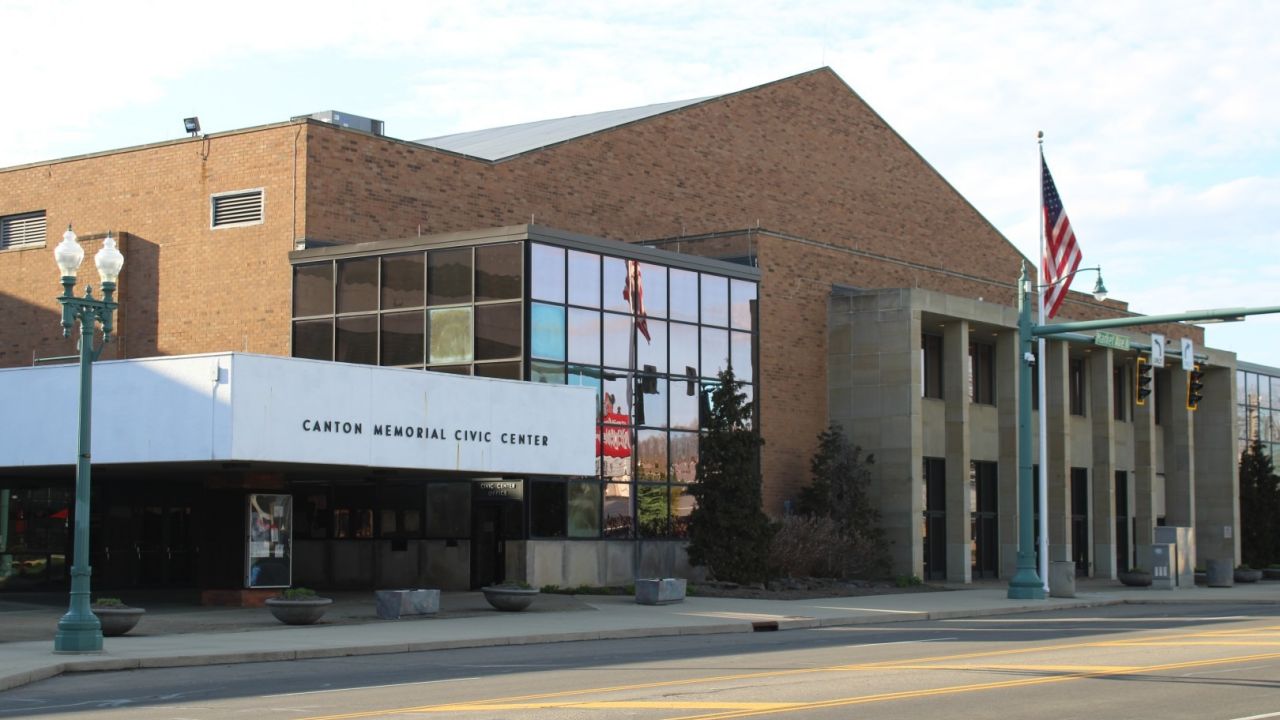
Canton Memorial Civic Center
Canton, Ohio, United States
5,200 capacity
Nestled in the heart of Ohio's Stark County, the Canton Memorial Civic Center stands as a unique venue in American motorsport history, having briefly hosted IndyCar racing during the sport's experimental indoor racing era. This multi-purpose facility, with its 5,200-seat capacity, represents one of the more unconventional chapters in open-wheel racing's ongoing quest to bring high-speed competition to new audiences and markets. The civic center itself was constructed as part of Canton's broader urban development initiatives, designed primarily to serve as a venue for concerts, conventions, trade shows, and community events. Like many municipal facilities of its era, the building featured a large, open floor plan that could be adapted for various purposes, including sporting events. The facility's architecture emphasized functionality over form, with its concrete construction and utilitarian design typical of mid-20th century civic buildings across industrial America. Canton's connection to motorsport extends beyond this single venue, as the city sits within a region that has long embraced racing culture. Ohio has produced numerous racing legends and continues to host significant motorsport events across various disciplines. The state's central location and strong industrial heritage made it a natural fit for racing promoters looking to expand their reach into new markets during periods of growth and experimentation in American motorsport. The IndyCar events held at Canton Memorial Civic Center were part of a broader trend in the 1980s and early 1990s, when race promoters experimented with indoor racing formats to extend the racing season and bring the sport to markets that lacked traditional racing facilities. These events typically involved constructing temporary racing surfaces within existing buildings, creating tight, technical courses that bore little resemblance to the high-speed ovals and road courses that traditionally hosted Indy car competition. The indoor racing format presented unique challenges for both drivers and teams. The confined space meant that races were run on extremely tight circuits, often featuring sharp turns, limited straightaway sections, and minimal room for error. Visibility could be compromised by dust and exhaust fumes, while the hard walls and limited runoff areas made crashes potentially more dangerous than those on traditional circuits. The racing surface, typically constructed of concrete or specialized materials, offered different grip characteristics than the asphalt or concrete found on conventional racing venues. For drivers accustomed to reaching speeds exceeding 200 miles per hour on traditional IndyCar circuits, the indoor events required significant adjustments in driving technique and racecraft. The emphasis shifted from raw speed to precision, car control, and tactical positioning. Overtaking opportunities were extremely limited, placing greater importance on qualifying position and strategic decision-making during pit stops and caution periods. The technical demands of indoor racing also presented unique challenges for racing teams and their equipment. Cars required specific setup modifications to handle the tight confines and different surface characteristics. Aerodynamic packages needed adjustment for the lower speeds and confined spaces, while suspension settings had to account for the different track surface and the increased likelihood of contact with walls or other cars. From a spectator perspective, indoor IndyCar events offered an intimate racing experience that traditional large-capacity speedways could not match. The 5,200-seat capacity of Canton Memorial Civic Center meant that virtually every seat provided a close-up view of the action, allowing fans to hear the engines, see driver inputs, and experience the intensity of wheel-to-wheel competition in ways that weren't possible at larger venues. The controlled environment also meant that weather was never a factor, and the acoustic properties of the enclosed space amplified the sound of the high-performance racing engines. The indoor racing experiment, while innovative, ultimately proved to have limited staying power in the IndyCar world. Safety concerns, the artificial nature of the competition, and the challenges of creating compelling racing on such tight circuits led to the eventual abandonment of most indoor racing initiatives. The sport's focus returned to traditional ovals, road courses, and street circuits that better showcased the speed and technical capabilities of Indy cars while providing more natural racing environments. Today, Canton Memorial Civic Center continues to serve its original purpose as a multi-use municipal facility, hosting a variety of community events, exhibitions, and entertainment programming. While its brief connection to IndyCar racing represents just one chapter in its history, that period serves as a reminder of the sport's willingness to experiment and adapt in pursuit of new audiences and racing experiences. The facility's legacy in motorsport history, though brief, illustrates the creative approaches that racing series have employed to expand their reach and explore new formats. While indoor IndyCar racing did not become a permanent fixture of the sport, venues like Canton Memorial Civic Center played important roles in pushing the boundaries of what was considered possible in professional motorsport, contributing to the ongoing evolution of racing entertainment and the sport's relationship with its fans and communities.
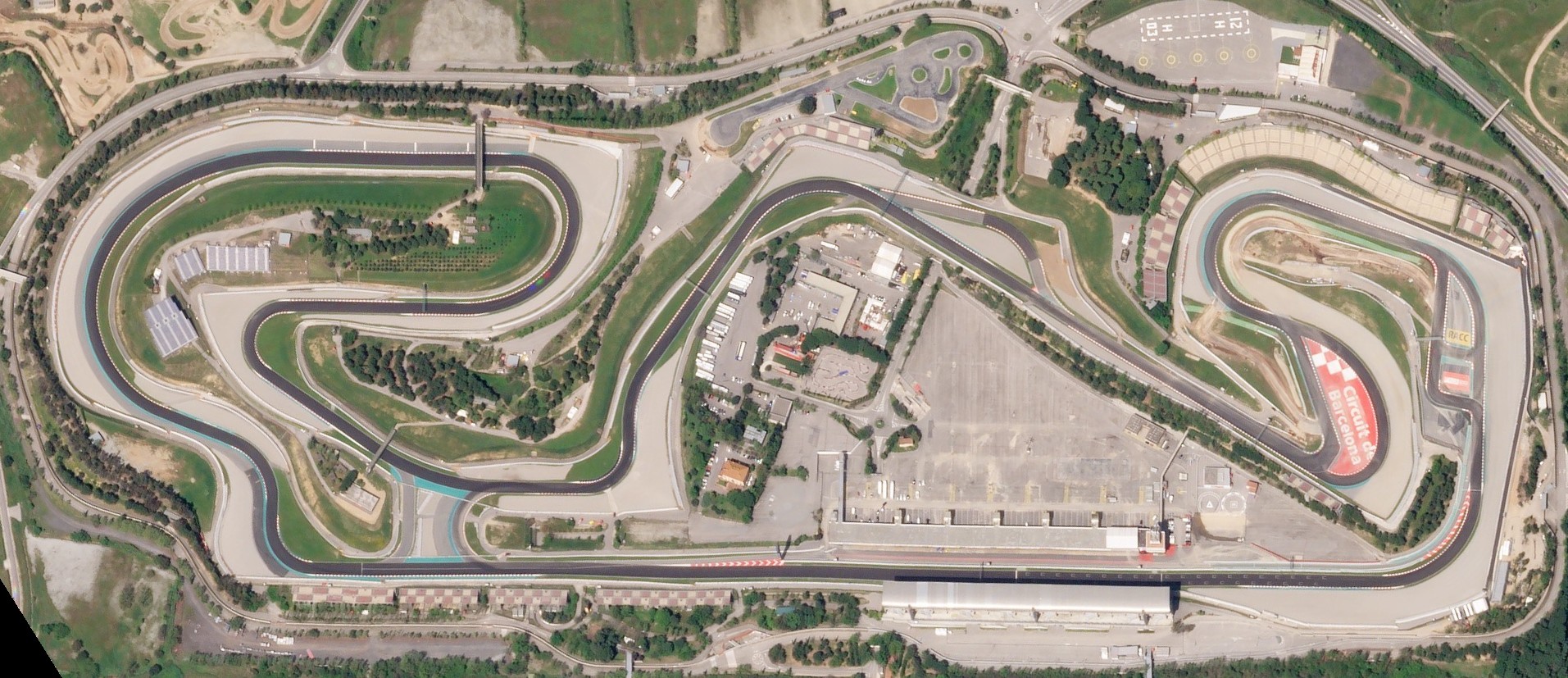
Circuit de Barcelona-Catalunya
Barcelona, Spain
140,700 capacity
Nestled in the hills of Montmeló, just north of Barcelona, lies one of Europe's most demanding and technically challenging racing circuits. The Circuit de Barcelona-Catalunya has evolved from hosting its first Grand Prix in 1991 to becoming an indispensable fixture in the Formula 1 calendar and one of the sport's most crucial testing venues. Measuring 4.657 kilometers in length, this Spanish motorsport facility has earned its reputation through a combination of fast, flowing corners and technical sections that thoroughly test both driver skill and car performance. The track's demanding layout features long straights that challenge aerodynamic efficiency while rewarding pure power, seamlessly transitioning into complex corner sequences that require precision and commitment. This unique blend of characteristics has made the circuit a favorite among engineers and drivers alike, as it provides comprehensive data about a car's capabilities across multiple performance parameters. The venue's significance extends far beyond its role as the host of the Spanish Grand Prix. Due to its demanding nature and strategic location, the Circuit de Barcelona-Catalunya has long served as Formula 1's primary testing ground. Teams regularly descend upon the facility during the off-season and throughout the racing calendar to develop their cars, gather crucial setup data, and prepare for the challenges that lie ahead. This constant activity has transformed the circuit into one of Europe's busiest tracks, with high-profile rounds of various racing series complementing its Formula 1 duties. What sets this circuit apart from many of its contemporaries is its technical complexity. The track features a sophisticated mix of corner types that demand different approaches and skill sets from drivers. Fast, sweeping sections test aerodynamic balance and driver courage, while tighter technical areas reward precision and mechanical grip. This variety ensures that lap times are determined not by a single dominant factor, but by the overall harmony between car, setup, and driver capability. The circuit's challenging nature is perhaps best illustrated by its current lap record of 1:16.330, set by Max Verstappen during his dominant period in Formula 1. This benchmark represents the pinnacle of modern F1 performance around the 66-lap Spanish Grand Prix distance, showcasing just how far both car technology and driver skill have evolved since the circuit first welcomed Formula 1 in 1991. Interestingly, despite its reputation for technical difficulty, the Circuit de Barcelona-Catalunya is among the least demanding tracks for braking systems in Formula 1. This characteristic allows teams to focus their attention on other performance areas while still subjecting their cars to a comprehensive workout across multiple disciplines. The reduced brake wear also enables longer practice sessions during testing, maximizing the valuable track time that teams crave. The Spanish Grand Prix itself has a rich but nomadic history that makes the circuit's current status all the more significant. Before finding its permanent home in Catalonia, the race lived a wandering existence throughout much of its history. Four different venues hosted the Spanish Grand Prix between the 1950s and 1980s, creating an inconsistent and often chaotic chapter in the race's development. These early years were characterized by frequent venue changes and races that were often marked by controversy and unpredictability. The establishment of the Circuit de Barcelona-Catalunya brought much-needed stability to the Spanish Grand Prix while elevating the event's profile significantly. Since taking over hosting duties, the venue has provided consistently high-quality racing and has become known for producing strategic battles that often extend deep into the race distance. The circuit's layout naturally creates opportunities for different tactical approaches, whether teams opt for aggressive early strategies or choose to play the long game with tire management and late-race pushes. With a capacity of 140,700 spectators, the circuit can accommodate massive crowds during major events, particularly the Spanish Grand Prix weekend when Formula 1 fever grips the region. The passionate Spanish fans create an electric atmosphere that adds another dimension to the racing spectacle, with grandstands positioned to offer excellent views of the track's key sections and overtaking zones. Today, the Circuit de Barcelona-Catalunya stands as a testament to modern motorsport facility design and operation. Its dual role as both a premier racing venue and a crucial testing facility ensures year-round activity and maintains its position at the heart of European motorsport. The circuit continues to challenge drivers and teams while providing fans with competitive racing action, cementing its status as an essential component of Formula 1's diverse and demanding calendar.
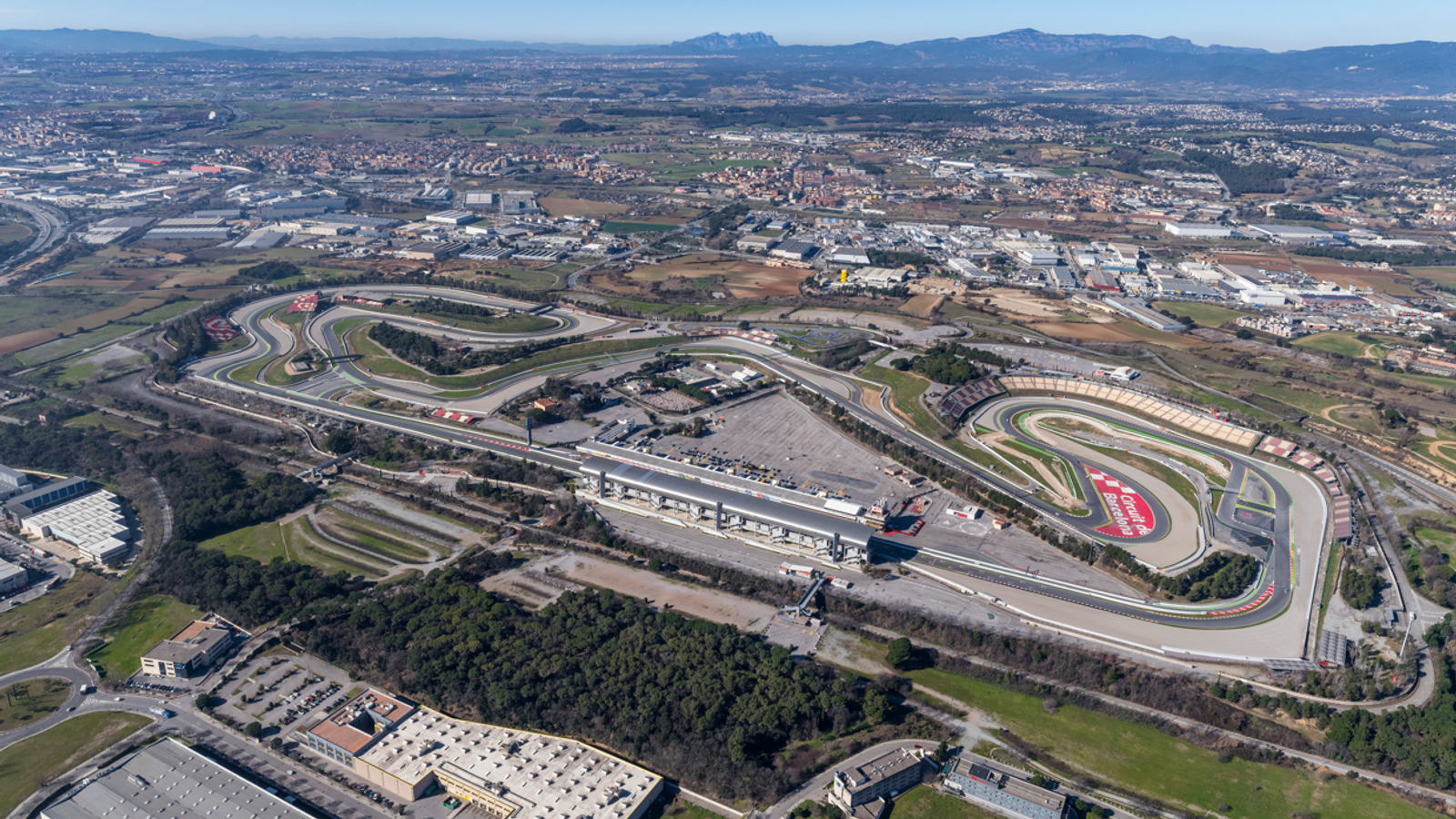
Circuit De Espana
Madrid, Spain
Nestled in the heart of Spain's capital region, Circuit de España represents one of Formula 1's most technically demanding venues, challenging drivers with its intricate blend of high-speed sections and precision corners across 5.416 kilometers of tarmac. This Madrid-based circuit has carved out its place in motorsport history as a venue where racecraft and mechanical precision converge in notable fashion. The track's layout presents a formidable test for both man and machine, weaving through varied terrain that showcases the engineering excellence required in modern Formula 1. At 5.416 kilometers in length, Circuit de España ranks among the longer circuits on the F1 calendar, with races contested over 57 grueling laps that push drivers and their machinery to the absolute limit. The extended race distance of nearly 309 kilometers ensures that strategy, tire management, and reliability play crucial roles in determining race outcomes. What immediately strikes visitors to Circuit de España is the circuit's technical complexity. The track features a sophisticated combination of corner types that test every aspect of a driver's skill set. Fast, flowing sections reward bravery and commitment, while tight technical complexes demand precision and patience. The circuit's design philosophy emphasizes the importance of finding the perfect balance between aerodynamic efficiency for the straights and mechanical grip for the more technical portions. The track surface characteristics at Circuit de España present their own unique challenges. Like many modern circuits, the tarmac composition and grip levels can vary significantly throughout a race weekend, particularly as rubber builds up on the racing line. These evolving conditions often create strategic opportunities, as teams must carefully manage tire degradation across the 57-lap race distance while seeking the optimal moments to capitalize on fresh rubber. Elevation changes throughout the circuit add another layer of complexity to an already challenging venue. These undulations not only test suspension setups but also create opportunities for eventful overtaking maneuvers as cars crest rises or dive into valleys. The varying gradients affect aerodynamic performance and braking stability, requiring teams to find delicate compromises in their car setups. Several corners have become legendary among drivers and fans alike for their technical demands and overtaking opportunities. The circuit features a mix of high-speed curves that reward aerodynamic efficiency and slower, more technical sections where mechanical grip and driver skill prove decisive. These contrasting demands often separate the championship contenders from the rest of the field, as only the most complete packages can excel across all sections of the track. The main straight provides one of the circuit's primary overtaking opportunities, with DRS zones strategically placed to encourage wheel-to-wheel combat. However, successful overtaking at Circuit de España requires more than just straight-line speed; positioning through the preceding corners and exit speed prove equally crucial in setting up passing maneuvers. Circuit de España's location near Madrid brings unique atmospheric conditions that can significantly impact race proceedings. The continental climate means temperatures can vary eventfulally throughout race weekends, affecting tire performance and aerodynamic efficiency. Wind conditions, particularly relevant given some of the circuit's more exposed sections, can also play a crucial role in lap times and race strategy. The facility itself represents modern motorsport venue design at its finest. Spectator areas provide excellent sightlines across multiple sections of the track, allowing fans to witness the full spectrum of challenges the circuit presents. The paddock and pit facilities meet the exacting standards required for Formula 1, with state-of-the-art garages and support facilities that enable teams to operate at peak efficiency. From a strategic perspective, Circuit de España often produces races where tire strategy plays a pivotal role. The 57-lap race distance, combined with the track's demanding nature, typically requires at least one pit stop, though varying strategies have led to eventful tactical battles. The circuit has witnessed numerous memorable moments that have shaped Formula 1 history. The combination of technical demands and strategic complexity has produced races featuring eventful weather changes, strategic masterclasses, and breathtaking displays of racecraft. These moments have helped establish Circuit de España's reputation as a venue where championships can be won or lost. Weather conditions at the Madrid venue can change rapidly, adding an element of unpredictability that has produced some of the most eventful races in recent memory. When rain arrives, the circuit's technical nature becomes even more pronounced, separating drivers with exceptional wet-weather skills from their competitors. Currently, Circuit de España continues to play a vital role in the Formula 1 calendar, hosting events that consistently deliver compelling racing action. The venue's challenging nature ensures that it remains a favorite among drivers who appreciate its technical demands, while fans value the strategic complexity that often leads to unpredictable race outcomes. The circuit's position within the broader Spanish motorsport landscape reflects the country's growing influence in international racing. As a showcase venue in the nation's capital region, Circuit de España serves not only as a Formula 1 destination but as a symbol of Spain's commitment to motorsport excellence at the highest level.

Circuit de Monaco
Monte-Carlo, Monaco
37,000 capacity
The Circuit de Monaco is the crown jewel of Formula 1 racing, a breathtaking street circuit that winds through the narrow streets of the Principality of Monaco. Since 1929, this legendary track has hosted the Monaco Grand Prix, widely regarded as the most prestigious race in motorsport. The 3.337-kilometer circuit is unique in Formula 1 for its ultra-tight confines, extreme elevation changes, and complete lack of run-off areas. The track features 19 corners, including the famous hairpin at the Fairmont Hotel (formerly Loews), the fastest corner in F1 at the Swimming Pool complex, and the iconic tunnel section where drivers plunge from bright sunlight into darkness and back again at speeds exceeding 260 km/h. Monaco demands absolute precision from drivers. The barriers line virtually every meter of the track, leaving zero margin for error. Overtaking is notoriously difficult, making qualifying position paramount — the pole sitter has won approximately 40% of all Monaco Grands Prix. The race rewards patience, consistency, and supreme car control over raw speed. The circuit runs through some of the most exclusive real estate in the world, passing the Casino de Monte-Carlo, the harbour filled with superyachts, and the royal palace. On race weekend, the spectacle extends far beyond the track, with celebrities, royalty, and the global elite descending on this tiny Mediterranean principality. Legendary moments at Monaco include Ayrton Senna's dominant performances in the late 1980s and early 1990s — he won six times at the circuit — Graham Hill's five victories that earned him the title "Mr. Monaco," and Lewis Hamilton's notable debut podium here in 2007. The 2022 race in wet conditions produced one of the most eventful starts in recent memory. The Monaco Grand Prix, along with the Indianapolis 500 and the 24 Hours of Le Mans, forms the Triple Crown of Motorsport. Despite ongoing debates about whether the circuit is suitable for modern F1 cars, its place on the calendar remains secure thanks to its unmatched prestige, history, and glamour. For drivers, winning at Monaco remains the ultimate achievement in their careers.
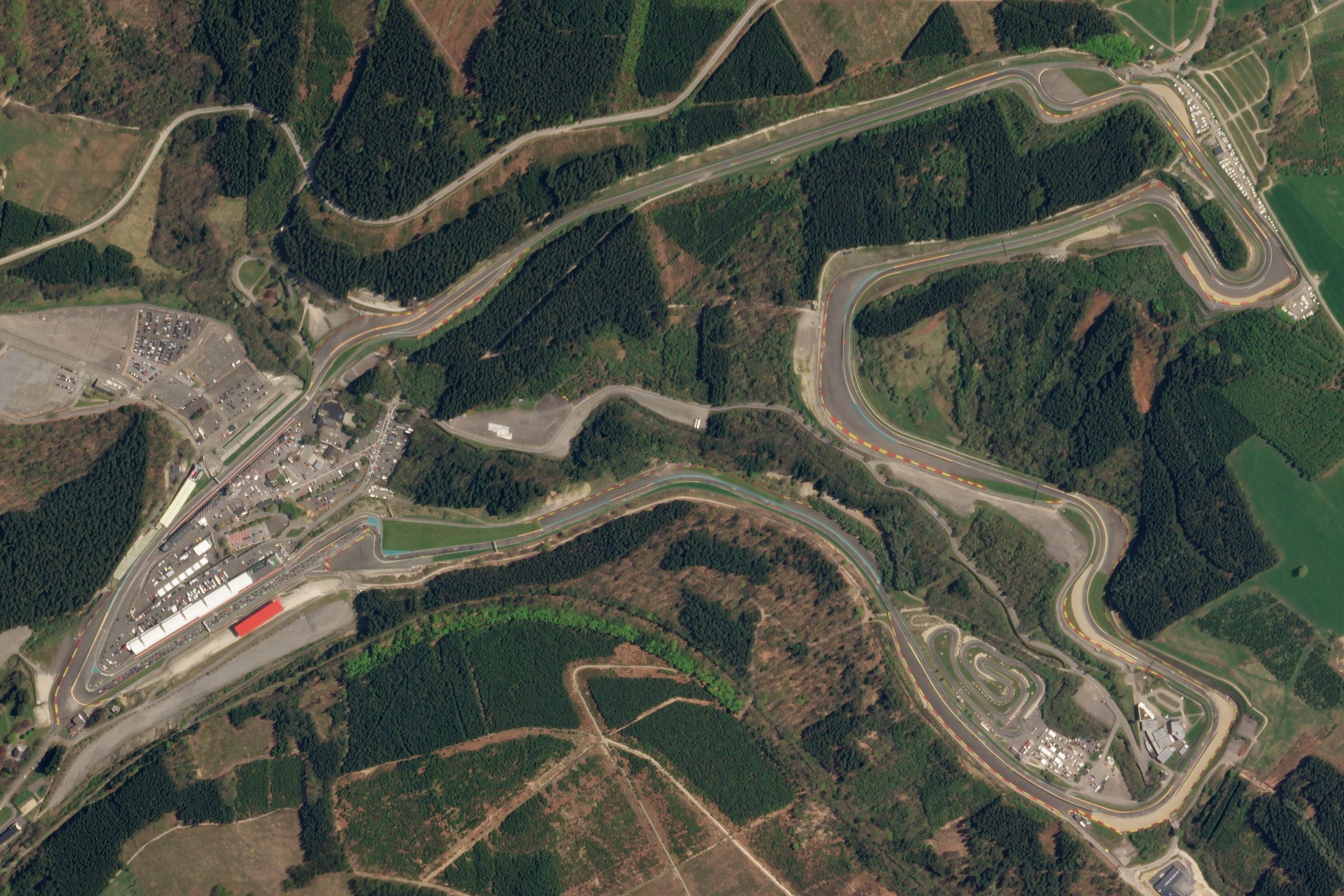
Circuit de Spa-Francorchamps
Francorchamps, Belgium
70,000 capacity
The Circuit de Spa-Francorchamps in the Belgian Ardennes is widely considered the greatest racing circuit in the world. This majestic 7.004-kilometer track, the longest on the current F1 calendar, winds through the forested hills of eastern Belgium, combining high-speed sweeps, eventful elevation changes, and notoriously unpredictable weather into an unforgettable challenge. The circuit's signature corner is Eau Rouge-Raidillon, a breathtaking sequence where drivers plunge downhill through a left-right-left complex before climbing sharply uphill at speeds exceeding 300 km/h. Taking this section flat-out requires immense courage and aerodynamic grip, and it remains one of the most celebrated corners in all of motorsport. The original Eau Rouge was even more daunting before safety modifications, but the current version still demands respect from every driver. Spa's 7-kilometer lap encompasses an extraordinary variety of challenges: the high-speed Kemmel Straight, the tricky Les Combes chicane, the double-apex Rivage, the fast Pouhon double-left, and the strategic Bus Stop chicane before the start-finish line. The circuit's massive footprint means that weather conditions can vary eventfulally from one section to another — it can be raining at one end while dry at the other, creating some of the most eventful races in F1 history. The history of Spa-Francorchamps stretches back to 1921, when racing first took place on public roads in the Ardennes. The original 14-kilometer circuit was terrifyingly fast and claimed many lives before the modern, shorter layout was introduced in 1979. Despite the redesign, Spa retains its character as a true drivers' circuit where talent and bravery are rewarded. Among the countless legendary moments at Spa, Michael Schumacher's notable debut victory in 1991 stands out — he qualified seventh and was running in the top three before his clutch failed. Ayrton Senna's dominating wet-weather performance in 1992, Kimi Räikkönen's famous first-lap charge through the field in 2004, and Lewis Hamilton's strong drive through changing conditions in 2020 all demonstrate why Spa brings out the best in the sport's greatest drivers. The Belgian Grand Prix at Spa-Francorchamps is a favourite among drivers, teams, and fans alike. Its combination of natural terrain, high-speed challenge, unpredictable weather, and rich heritage makes it an irreplaceable jewel in the Formula 1 calendar. For many, a lap of Spa represents the purest expression of grand prix racing.

Circuit Gilles-Villeneuve
Montréal, Canada
100,000 capacity
Nestled on Île Notre-Dame in the heart of Montréal's Saint Lawrence River, one of Formula 1's most beloved venues represents a perfect marriage of urban excitement and racing purity. Circuit Gilles-Villeneuve stands as Canada's temple to motorsport, delivering consistently competitive races while honoring the memory of the country's greatest racing hero. The circuit emerged from Montréal's ambitious urban development projects of the 1970s, built on an artificial island created for Expo 67. Originally known as Île Notre-Dame Circuit, the venue was renamed in 1982 to commemorate Gilles Villeneuve, the fearless Ferrari driver who captured Canadian hearts with his notable driving style before his tragic death earlier that year. This renaming transformed the circuit from merely a racing venue into a shrine for Canadian motorsport, where Villeneuve's legacy continues to inspire new generations of racing fans. Measuring 4.361 kilometers in length, the circuit challenges drivers with a unique blend of high-speed straights and technical sections that reward both outright pace and tactical brilliance. The track's character is defined by its semi-permanent nature, utilizing existing roads on the island combined with purpose-built racing sections. This configuration creates an atmosphere reminiscent of street circuits while maintaining the safety standards and infrastructure of a permanent facility. The lap begins with a flowing series of corners that immediately separate the committed from the cautious. The opening sequence leads into the circuit's signature feature: a pair of long straights connected by tight chicanes that create some of Formula 1's most notable overtaking opportunities. These high-speed sections, where cars regularly exceed 300 kilometers per hour, are punctuated by heavy braking zones that test both machinery and nerve. The final chicane before the main straight has become legendary for last-lap heroics and championship-deciding moments. What makes Circuit Gilles-Villeneuve particularly challenging is its unforgiving nature. Concrete walls line much of the track, leaving no margin for error and demanding absolute precision from drivers. The surface characteristics vary throughout the lap, with some sections offering excellent grip while others remain notoriously slippery, especially in changeable weather conditions that frequently affect the Canadian Grand Prix weekend. The circuit's elevation changes, while subtle, play a crucial role in its character. Gentle undulations affect aerodynamic balance and create blind corners that add an extra dimension of difficulty. These elevation variations, combined with the proximity of the Saint Lawrence River, often create unique weather patterns that can transform race strategies in minutes. Over the decades, Circuit Gilles-Villeneuve has produced some of Formula 1's most memorable moments. The venue has witnessed incredible comebacks, shocking upsets, and displays of raw talent that have become part of motorsport folklore. The circuit's propensity for safety car periods, caused by its unforgiving walls, often bunches up the field and creates opportunities for eventful late-race battles. The track's current lap record of 1:13.078, set by Valtteri Bottas, represents the pinnacle of single-lap performance at this demanding venue. This benchmark demonstrates how modern Formula 1 cars have evolved to extract maximum performance from every corner and straight, yet the fundamental challenge of Circuit Gilles-Villeneuve remains unchanged. The combination of high speeds, technical sections, and minimal run-off areas continues to separate the exceptional from the merely quick. With a capacity of 100,000 spectators, the venue creates an atmosphere that rivals any sporting event in North America. The grandstands, positioned strategically around the circuit's key overtaking zones, offer fans excellent views of the action while the festival atmosphere extends throughout Île Notre-Dame and into downtown Montréal. The three-day event format allows the circuit to host not only the main Formula 1 race of 70 laps but also supporting series that showcase emerging talent. Beyond its role as a Formula 1 venue, Circuit Gilles-Villeneuve serves as a year-round facility hosting various motorsport events, driving experiences, and community activities. The circuit maintains its relevance in Canadian motorsport by providing a platform for domestic racing series and serving as a testing ground for aspiring drivers hoping to follow in Gilles Villeneuve's footsteps. The venue's unique position within an urban environment, just minutes from downtown Montréal, sets it apart from many other Formula 1 circuits. This accessibility allows the Canadian Grand Prix to truly integrate with the city's cultural fabric, creating a week-long celebration that extends far beyond the circuit boundaries. The contrast between the high-tech world of Formula 1 and Montréal's historic charm creates an ambiance found nowhere else on the racing calendar. Today, Circuit Gilles-Villeneuve continues to evolve while maintaining its essential character. Ongoing improvements to facilities and safety features ensure the venue meets modern Formula 1 standards without compromising the raw challenge that has made it a favorite among drivers and fans alike. As Formula 1 continues to globalize, this Canadian jewel remains a testament to how a racing circuit can become deeply embedded in a nation's sporting identity while delivering world-class competition year after year.

Circuit of The Americas
Elroy, USA
120,000 capacity
The Circuit of the Americas (COTA) in Austin, Texas, is the first purpose-built Formula 1 circuit in the United States and has established itself as one of the premier racing venues in the world since its inaugural race in 2012. Designed by renowned circuit architect Hermann Tilke, COTA draws inspiration from some of the greatest corners in motorsport and combines them into a challenging 5.513-kilometer layout. The circuit's signature feature is Turn 1, a eventful uphill left-hander approached via a steep blind crest. Drivers arrive at the top of the hill with the track falling away beneath them, creating one of the most notable and challenging braking zones in Formula 1. The elevation change of over 40 meters across the circuit is remarkable for a venue in relatively flat Texas terrain, achieved through extensive earthworks during construction. The flowing esses of Turns 3-6 are directly inspired by Silverstone's Maggots-Becketts complex, providing a high-speed test of aerodynamic grip and driver commitment. The long back straight leads to a heavy braking zone at Turn 12, which has become a prime overtaking spot. The stadium section (Turns 15-18) was designed to accommodate large grandstands close to the action, and the amphitheatre-like setting creates an intense atmosphere on race day. COTA has quickly built a reputation for producing excellent racing. Lewis Hamilton has been the dominant force at the venue, winning five times including a strong wet-weather drive in 2015. The 2012 inaugural race saw Hamilton defeat Sebastian Vettel in front of an ecstatic crowd, immediately establishing the circuit's credentials. Kimi Räikkönen's charge from the back of the grid to the podium in 2018 demonstrated how the layout rewards brave overtaking. The United States Grand Prix at COTA has become a major cultural event, extending far beyond motorsport. The circuit regularly hosts major music concerts during race weekend, with headliners including Taylor Swift, Eminem, Billy Joel, and Ed Sheeran performing on a purpose-built stage within the circuit grounds. This fusion of racing and entertainment has helped attract new fans to Formula 1 and contributed to the sport's explosive growth in the American market. Austin's vibrant food, music, and technology scenes provide the perfect backdrop for a Grand Prix weekend, with the city's "Keep Austin Weird" culture adding a uniquely American flavour to the event. The growth of F1 in the US, fuelled by the Netflix series "Drive to Survive," has seen COTA sell-out crowds exceed 400,000 across race weekends, rivalling Silverstone as the best-attended Grand Prix. Beyond F1, COTA hosts MotoGP, NASCAR, the World Endurance Championship, and IndyCar, making it one of the most versatile and busy racing venues in North America.
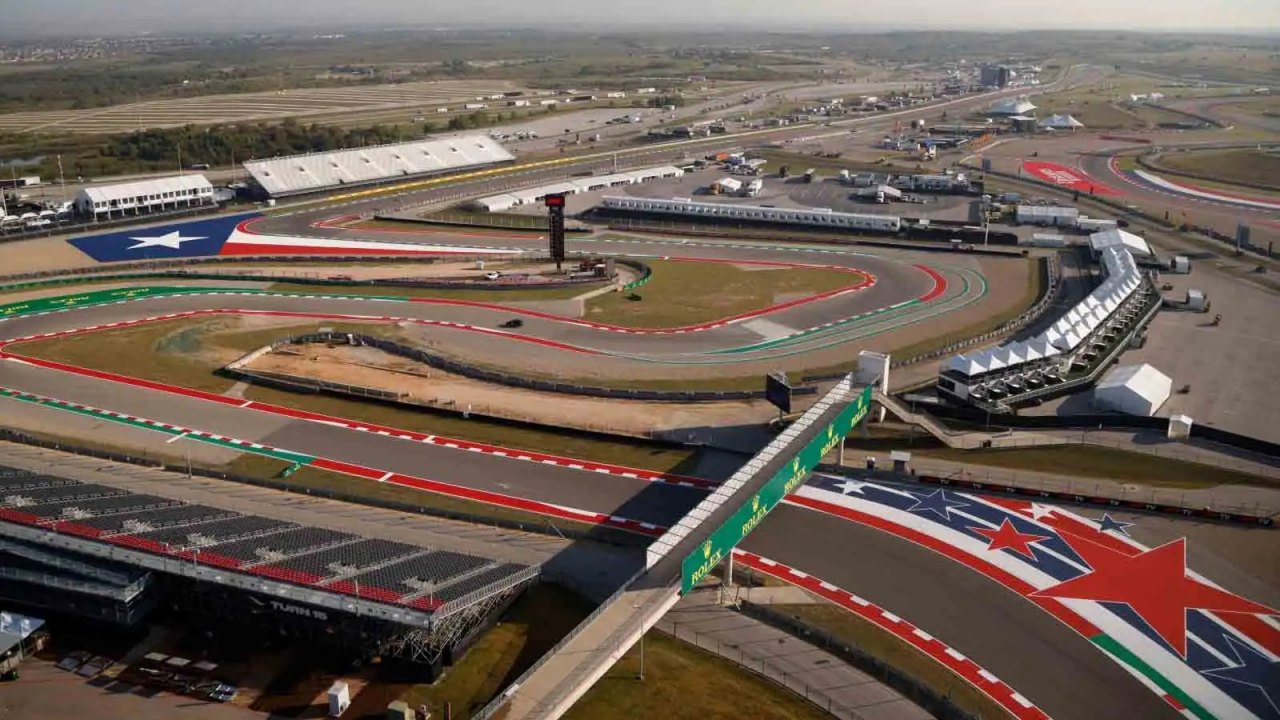
Circuit of The Americas
Austin, TX, United States
120,000 capacity
The Circuit of the Americas (COTA) in Austin, Texas, is the first purpose-built Formula 1 circuit in the United States and has established itself as one of the premier racing venues in the world since its inaugural race in 2012. Designed by renowned circuit architect Hermann Tilke, COTA draws inspiration from some of the greatest corners in motorsport and combines them into a challenging 5.513-kilometer layout. The circuit's signature feature is Turn 1, a eventful uphill left-hander approached via a steep blind crest. Drivers arrive at the top of the hill with the track falling away beneath them, creating one of the most notable and challenging braking zones in Formula 1. The elevation change of over 40 meters across the circuit is remarkable for a venue in relatively flat Texas terrain, achieved through extensive earthworks during construction. The flowing esses of Turns 3-6 are directly inspired by Silverstone's Maggots-Becketts complex, providing a high-speed test of aerodynamic grip and driver commitment. The long back straight leads to a heavy braking zone at Turn 12, which has become a prime overtaking spot. The stadium section (Turns 15-18) was designed to accommodate large grandstands close to the action, and the amphitheatre-like setting creates an intense atmosphere on race day. COTA has quickly built a reputation for producing excellent racing. Lewis Hamilton has been the dominant force at the venue, winning five times including a strong wet-weather drive in 2015. The 2012 inaugural race saw Hamilton defeat Sebastian Vettel in front of an ecstatic crowd, immediately establishing the circuit's credentials. Kimi Räikkönen's charge from the back of the grid to the podium in 2018 demonstrated how the layout rewards brave overtaking. The United States Grand Prix at COTA has become a major cultural event, extending far beyond motorsport. The circuit regularly hosts major music concerts during race weekend, with headliners including Taylor Swift, Eminem, Billy Joel, and Ed Sheeran performing on a purpose-built stage within the circuit grounds. This fusion of racing and entertainment has helped attract new fans to Formula 1 and contributed to the sport's explosive growth in the American market. Austin's vibrant food, music, and technology scenes provide the perfect backdrop for a Grand Prix weekend, with the city's "Keep Austin Weird" culture adding a uniquely American flavour to the event. The growth of F1 in the US, fuelled by the Netflix series "Drive to Survive," has seen COTA sell-out crowds exceed 400,000 across race weekends, rivalling Silverstone as the best-attended Grand Prix. Beyond F1, COTA hosts MotoGP, NASCAR, the World Endurance Championship, and IndyCar, making it one of the most versatile and busy racing venues in North America.

Circuit Paul Ricard
Le Castellet, France
90,000 capacity
Nestled in the sun-soaked hills of Provence, Circuit Paul Ricard stands as one of Formula 1's most distinctive and controversial venues. Located in Le Castellet, roughly an hour's drive from the glamorous streets of Monaco, this French racing facility has carved out a unique identity in the motorsport world through its innovative design philosophy and striking visual appearance. The circuit bears the name of Paul Ricard, the French industrialist and founder of the famous pastis company, who envisioned creating a state-of-the-art motorsport facility that would prioritize safety and flexibility above all else. The track's construction was revolutionary for its time, featuring extensive run-off areas and pioneering safety systems that would influence circuit design for decades to come. The facility's most immediately recognizable feature is its distinctive blue and red striping that adorns much of the track surface, creating a visually arresting pattern that has become synonymous with the venue. Stretching 5.842 kilometers in its current Formula 1 configuration, Circuit Paul Ricard presents drivers with a challenging blend of high-speed sections and technical corners spread across 53 racing laps. The track's layout is notably flat compared to many other F1 venues, with minimal elevation changes that allow for a different type of racing challenge. What the circuit lacks in topographical drama, it compensates for with a complex series of corners that test every aspect of a driver's skill set. The lap begins with a demanding opening sequence that immediately puts drivers to the test. The first corner complex requires precise braking and positioning, setting the tone for what follows. One of the circuit's most characteristic features is the Mistral Straight, a lengthy high-speed section that allows cars to reach their maximum velocity before arriving at the chicane that bears the straight's name. This combination of extended flat-out running followed by heavy braking creates one of the track's primary overtaking opportunities, though the circuit has historically been criticized for producing processional racing. The middle sector of the lap features a series of medium-speed corners that demand technical precision and optimal racing lines. These sections test a car's aerodynamic balance and mechanical grip while requiring drivers to maintain momentum through connected turns. The track's wide configuration and generous run-off areas, while excellent for safety, can sometimes reduce the penalty for mistakes and limit the premium placed on precision driving that characterizes other F1 venues. Circuit Paul Ricard's surface characteristics are notably different from many other Formula 1 tracks. The abrasive nature of the tarmac tends to generate high tire temperatures and increased degradation, creating strategic considerations that can significantly influence race outcomes. Teams must carefully balance setup compromises between achieving optimal lap times and managing tire wear across the 53-lap race distance. The circuit's return to the Formula 1 calendar marked a significant moment in French motorsport history after a lengthy absence from the championship. The track's modern safety standards and facilities made it an attractive option for hosting Grand Prix racing, though its ability to produce exciting wheel-to-wheel competition has remained a subject of debate among fans and competitors alike. Sebastian Vettel currently holds the official lap record at Circuit Paul Ricard with a time of 1:32.740, a benchmark that demonstrates the circuit's high-speed nature and the level of performance achievable by contemporary Formula 1 machinery. This record reflects both the track's characteristics and the evolution of F1 car performance over the years. The venue's spectator capacity of 90,000 makes it one of the larger Formula 1 facilities, with viewing areas spread around the circuit's perimeter. The relatively flat terrain provides decent sightlines for fans, though the track's wide layout means that spectators in some areas may feel distant from the action. The Provence setting offers a picturesque backdrop, with the surrounding countryside and favorable Mediterranean climate creating an appealing atmosphere for motorsport enthusiasts. Beyond Formula 1, Circuit Paul Ricard serves as an important testing facility and hosts various other motorsport categories throughout the year. Its multiple configuration options allow the track to accommodate different series and provide varied challenges for drivers and teams. The circuit's role as a test venue has been particularly significant, with its consistent weather conditions and comprehensive facilities making it a popular choice for both official and private testing sessions. The track's unique visual identity, created by its colored striping system, serves both aesthetic and practical purposes. The markings help drivers judge distances and braking points while creating one of motorsport's most instantly recognizable venues. This distinctive appearance has made Circuit Paul Ricard a standout location that photographs and televises unlike any other F1 circuit. Today, Circuit Paul Ricard continues to evolve as a motorsport facility while maintaining its core identity as a safe, modern racing venue. Its position on the Formula 1 calendar represents French motorsport's ongoing commitment to Grand Prix racing, despite the challenges of creating consistently exciting racing on a track designed primarily with safety and technical excellence in mind. The circuit remains a testament to innovative design thinking in motorsport facility development, even as the sport continues to grapple with balancing safety considerations against the desire for challenging, close-quarters competition.
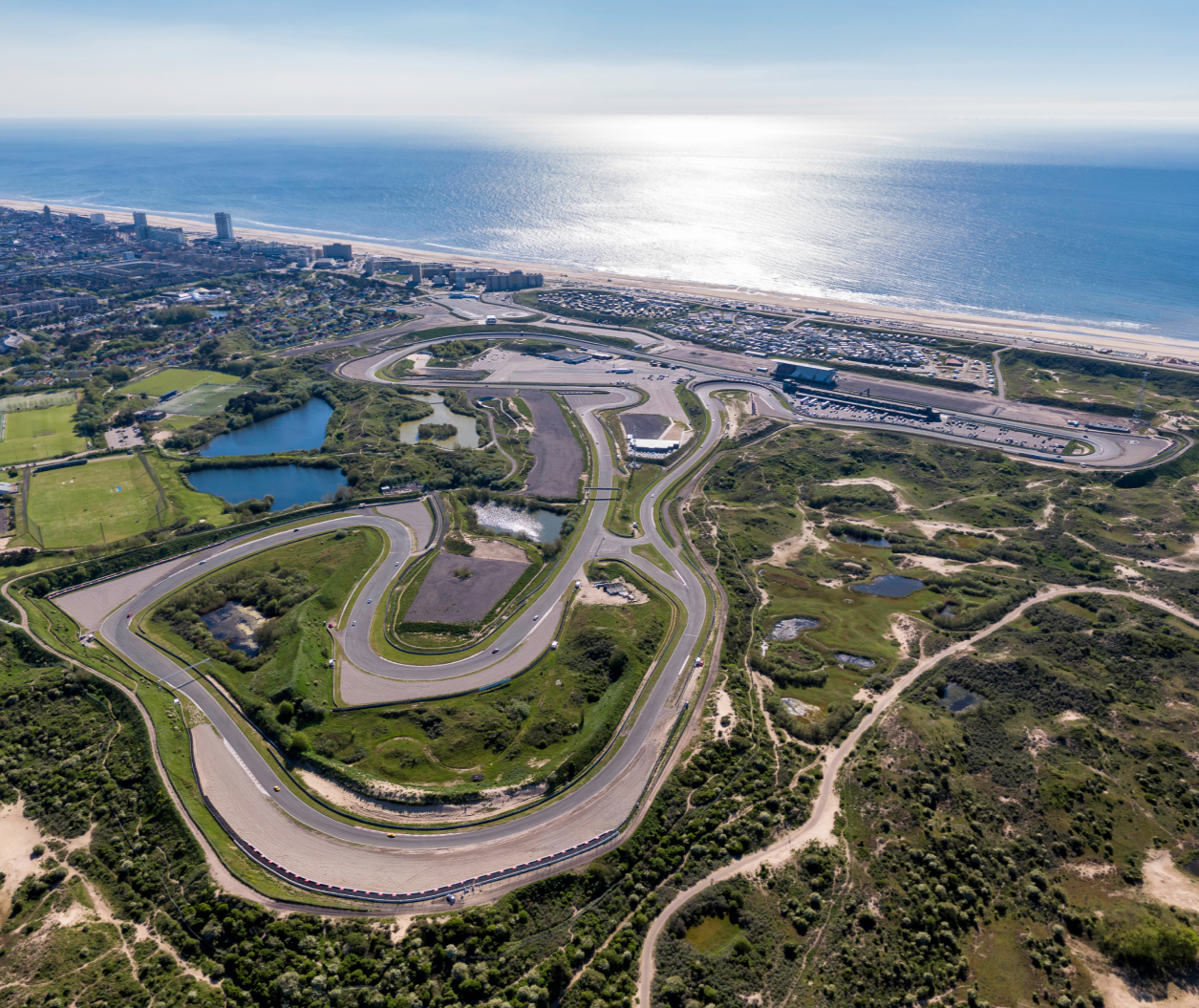
Circuit Zandvoort
Zandvoort, Netherlands
105,000 capacity
Nestled among the coastal dunes of the Netherlands, Circuit Zandvoort stands as one of Formula 1's most characterful and challenging venues. This 4.259-kilometer ribbon of asphalt winds through natural undulations that create a unique driving experience, demanding both precision and bravery from the world's finest drivers across its 72-lap Dutch Grand Prix distance. The circuit's origins trace back to the post-World War II era when the track was carved through the North Holland dunes, utilizing natural terrain features that would become its defining characteristics. The layout takes full advantage of the coastal landscape's rolling topography, creating a track that flows with the contours of the land rather than fighting against them. This organic integration with the environment gives Zandvoort a distinctly different feel from many modern purpose-built circuits. What immediately strikes drivers and spectators alike is the track's eventful elevation changes and sweeping corners that seem to emerge naturally from the dune landscape. The circuit's design philosophy emphasizes fast, flowing sections punctuated by technical challenges that test every aspect of a racing car's capabilities. The banking in several corners, most notably the final sector, creates opportunities for multiple racing lines and adds a strategic dimension to both qualifying and race scenarios. The track surface presents its own unique challenges, with the coastal location influencing grip levels throughout race weekends. The proximity to the North Sea means weather conditions can change rapidly, and the sandy environment requires constant track cleaning to maintain optimal racing conditions. These factors combine to create a venue where adaptability and setup flexibility often prove crucial to success. From a driver's perspective, Zandvoort rewards commitment and punishes hesitation. The high-speed nature of many corners means that small mistakes can have significant consequences, while the flowing layout allows skilled drivers to build rhythm and find precious tenths of a second through linked corner sequences. The current lap record of 1:11.097, set by Lewis Hamilton, demonstrates the fast pace achievable when everything comes together perfectly around this demanding circuit. The track's return to the Formula 1 calendar marked a significant moment in Dutch motorsport history, bringing top-level single-seater racing back to the Netherlands after a lengthy absence. The circuit underwent extensive modifications to meet modern F1 standards while preserving the essential character that makes it special. Banking was added to key corners to enhance overtaking opportunities, and safety infrastructure was comprehensively upgraded to contemporary specifications. One of Zandvoort's most distinctive features is its intimate atmosphere, created by the natural amphitheater effect of the surrounding dunes. With a capacity of 105,000, the venue generates an intensity of support that few circuits can match. The passionate Dutch fanbase creates an electric atmosphere that drivers consistently praise, with the orange-clad spectators providing a colorful and vocal backdrop to the racing action. The technical layout presents interesting strategic challenges for teams. The combination of high-speed sections and tighter technical areas means aerodynamic setup requires careful compromise, while tire management becomes crucial over the 72-lap race distance. The track's characteristics tend to favor cars with strong aerodynamic efficiency and mechanical grip, though the multiple racing lines available can sometimes allow different car philosophies to compete effectively. Overtaking opportunities exist but require careful planning and execution. The main straight provides the most obvious chance for DRS-assisted passes, but the track's flowing nature means that positioning through the final sector becomes critical for setting up these moves. Several corners offer alternative lines, allowing skilled drivers to position themselves for attacks or to defend against pursuing rivals. The circuit's integration with its natural environment extends beyond the track itself. The facility's design philosophy embraces sustainability principles, with efforts made to minimize environmental impact while providing world-class racing facilities. The challenge of balancing motorsport requirements with environmental responsibility reflects broader themes in contemporary Formula 1. Weather often plays a significant role at Zandvoort, with coastal conditions capable of creating rapidly changing scenarios. The track's exposure means that wind direction and strength can significantly affect car behavior, particularly in the more open sections of the circuit. Rain, when it arrives, transforms the challenge completely, with the undulating layout creating varying grip levels that separate the truly skilled from the merely quick. The venue's significance extends beyond its role as a racing circuit. It represents the Dutch nation's passion for motorsport and serves as a focal point for the country's Formula 1 enthusiasm. The circuit has become a symbol of how traditional racing venues can evolve and adapt while maintaining their essential character and appeal. Today, Circuit Zandvoort stands as proof that classic racing venues can successfully return to Formula 1's stage. Its combination of natural challenge, passionate atmosphere, and technical demands creates a unique package that enriches the championship calendar. The track continues to evolve, with ongoing refinements to enhance both the racing spectacle and the spectator experience, ensuring its place as one of Formula 1's most distinctive and beloved venues for years to come.
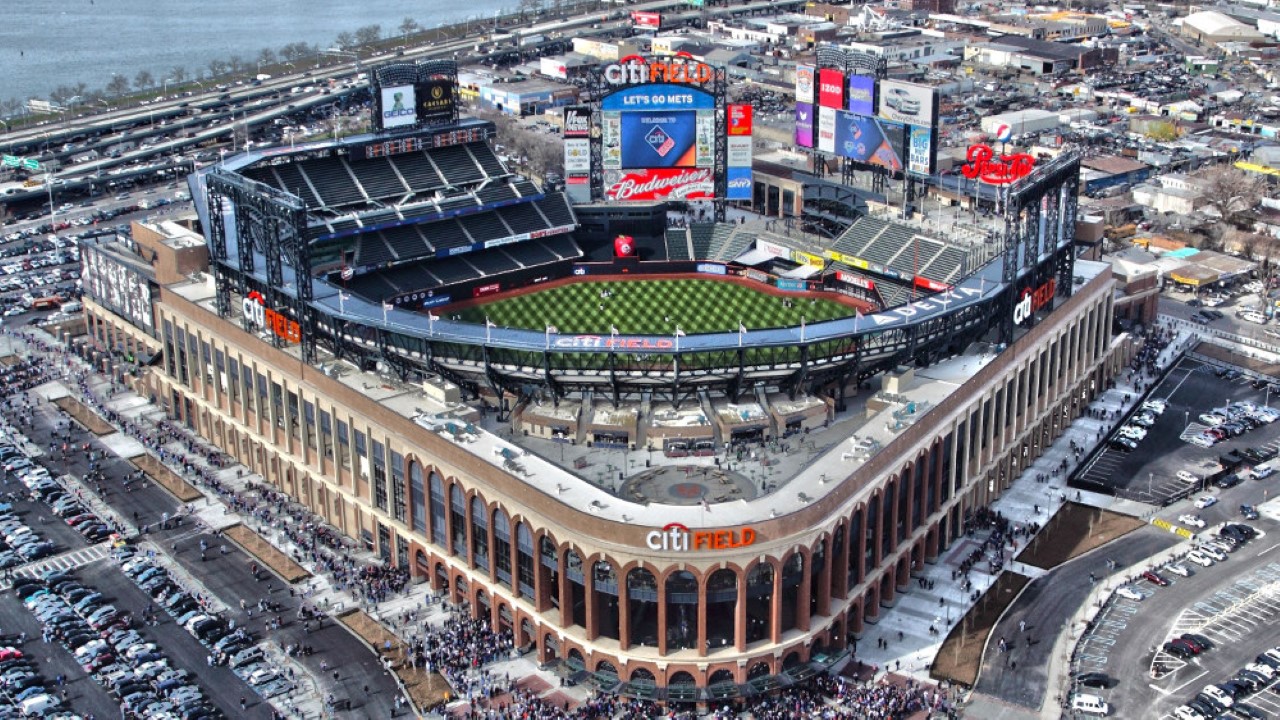
Citi Field
Flushing, New York, United States
41,922 capacity
Citi Field is a stadium located in Flushing Meadows–Corona Park in the New York City borough of Queens. Completed in 2009, it is the home baseball park of Major League Baseball's New York Mets. Citi Field was built as a replacement for the formerly adjacent Shea Stadium, which opened in 1964 next to the site of the 1964–1965 World's Fair. Citi Field was designed by Populous (then HOK Sport), and is named after Citigroup, a New York financial services company which purchased the naming rights. The $850 million baseball park was funded with $615 million in public subsides, including the sale of New York City municipal bonds which are to be repaid by the Mets plus interest. The payments will offset property taxes for the lifetime of the park. The Mets are receiving $20 million annually from Citibank in exchange for naming the stadium Citi Field. The entire public cost is being borne by city and state taxpayers in New York. The first game at Citi Field was on March 29, 2009, with a college baseball game between St. John's and Georgetown. The Mets played their first two games at the ballpark on April 3 and April 4, 2009 against the Boston Red Sox as charity exhibition games. The first regular season home game was played on April 13, 2009, against the San Diego Padres. Citi Field hosted the 2013 Major League Baseball All-Star Game. This marked the second time the Mets have hosted the game, the first being 1964, the inaugural season of Shea Stadium.
Citizens Business Bank Arena
Ontario, California, United States
Citizens Business Bank Arena (originally Ontario Community Events Center) is a multi-purpose arena, in Ontario, California, USA. It hosts local sporting events and concerts. Construction officially began on March 7, 2007, and the arena was opened on October 18, 2008. It is suitable for indoor events, including basketball, ice hockey, ice shows, boxing, graduation ceremonies and concerts. The arena's basketball capacity is 10,832. It also seats 9,736 for hockey (9,491 for Ontario Reign games) and its full capacity is 11,089. The 225,000-square-foot (20,900 m2) venue also has 36 luxury suites on two levels. It is the biggest and most modern arena within the Inland Empire region of California. The arena's construction cost was $150 million; however, it was debt free due to the city selling different properties throughout the city. It was constructed on the old Ontario Motor Speedway property. The arena is owned by the city of Ontario and from 2008 to 2016 was operated by AEG Worldwide, since July 1, 2016, the arena is operated by SMG. The arena is home to the Ontario Reign of the American Hockey League, the Ontario Fury of the Major Arena Soccer League and the Agua Caliente Clippers of the NBA G League.
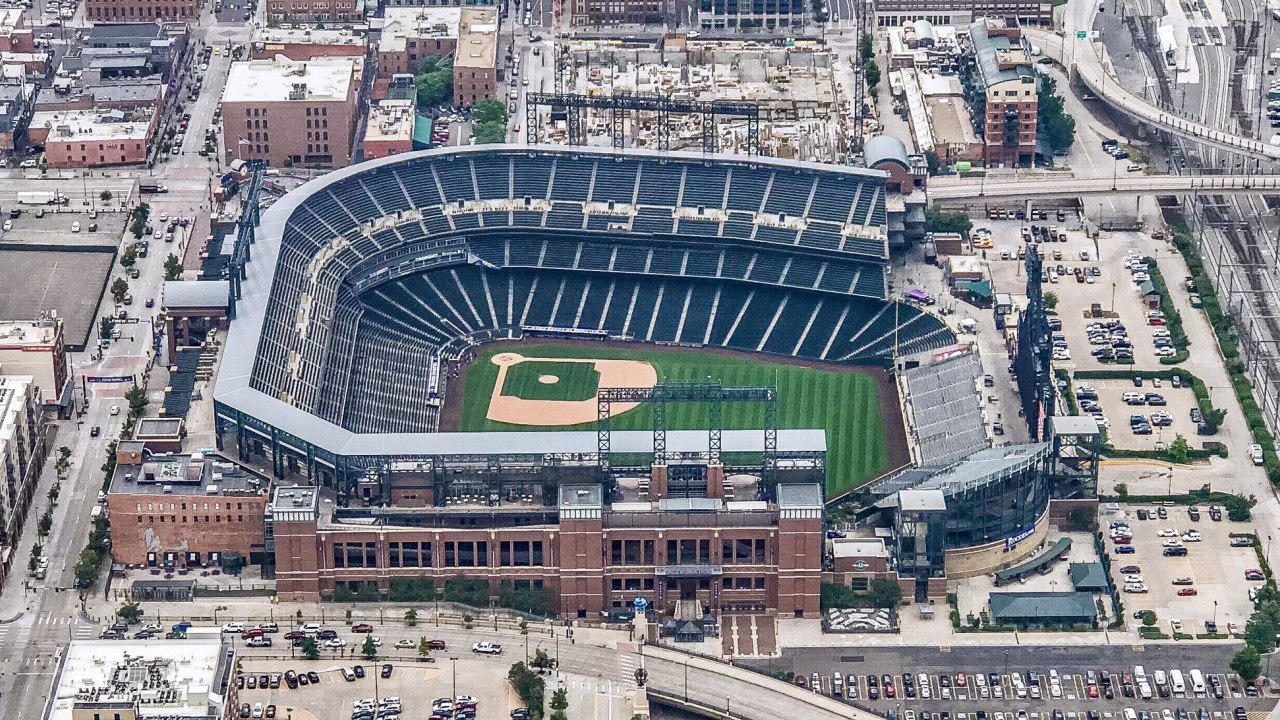
Coors Field
Denver, Colorado, United States
50,144 capacity
Coors Field is a baseball stadium in downtown Denver, Colorado. It is the ballpark of Major League Baseball's Colorado Rockies. Opened in 1995, the park is located in Denver's Lower Downtown neighborhood, two blocks from Union Station. The stadium has a capacity of 50,144 people for baseball. As an expansion team that began play in 1993, the Rockies spent their first two seasons at Mile High Stadium. During that time, Coors Field was constructed for a cost of $300 million. It includes 63 luxury suites and 4,526 club seats. Coors Field has earned a reputation as a hitter's park, due to the effect of Denver's high elevation and semi-arid climate on the distances of batted balls. To combat this, the outfield fences were positioned farther away from home plate and baseballs used in the park have been pre-stored in humidors. Coors Field has hosted the 1998 MLB All-Star Game and the 2021 MLB All-Star Game. Coors has also hosted an outdoor hockey game from the 2016 NHL Stadium Series, along with numerous concerts. In 2017, a consultant determined that Coors Field would require $200 million in capital improvements in the 2020s. To fund those improvements, the Rockies agreed to a long-term lease to develop club-owned nearby land.
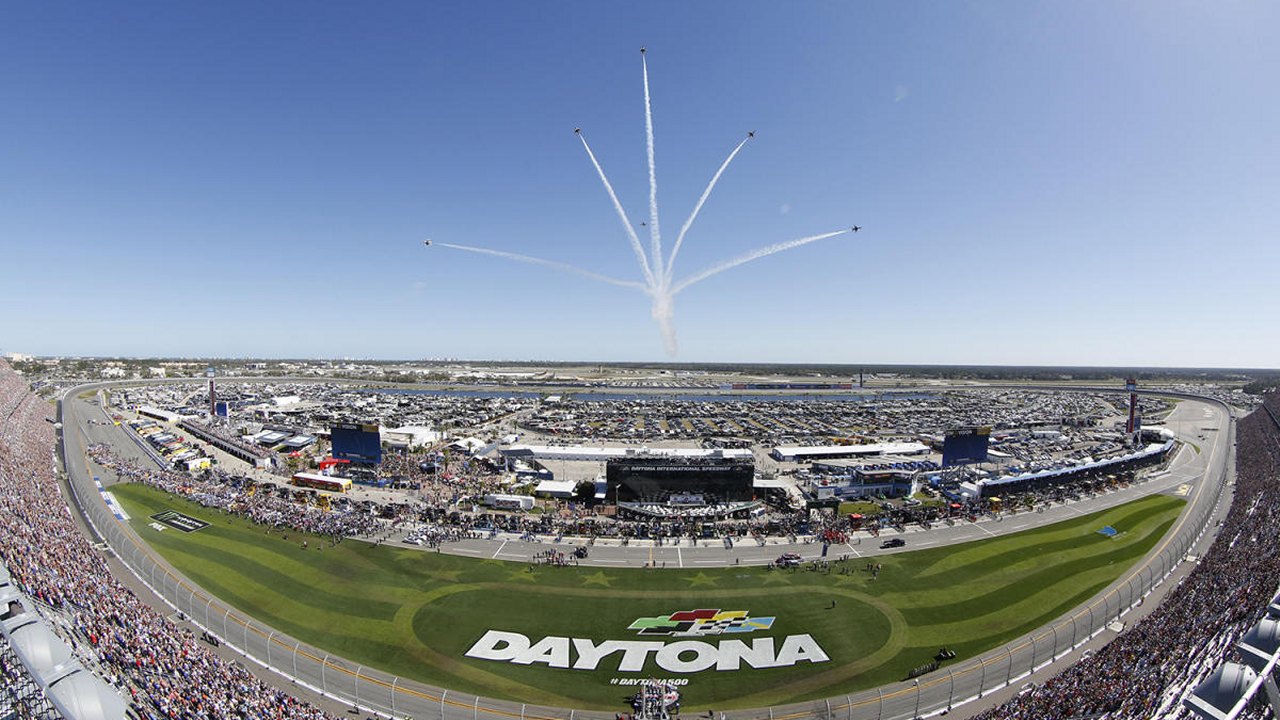
Daytona International Speedway
Daytona Beach, FL, United States
123,500 capacity
Among motorsport's most hallowed grounds stands a sprawling temple to speed in Florida's coastal plains, where generations of drivers have chased glory at velocities that defy comprehension. Daytona International Speedway represents the apex of American stock car racing, serving as both the spiritual home of NASCAR and a proving ground where legends are forged in thunderous battles at nearly 200 miles per hour. Born from the vision of NASCAR founder Bill France Sr., this iconic venue emerged in the late 1950s as racing outgrew the confines of Daytona Beach's famous beach-road course. The ambitious project transformed 444 acres of swampland into what would become known as "The World Center of Racing," opening its gates to establish a new era in American motorsport. The facility's construction marked a pivotal moment in NASCAR's evolution from regional curiosity to national phenomenon, providing a permanent home worthy of the sport's growing ambitions. The speedway's defining characteristic lies in its massive 2.5-mile tri-oval configuration, a design that combines breathtaking speeds with intense wheel-to-wheel competition. Unlike traditional ovals, the track features distinct banking variations that create multiple racing grooves and strategic opportunities. The towering 31-degree banking in turns one and two, coupled with 18-degree banking in turns three and four, allows cars to maintain extraordinary speeds while providing drivers with different lines through each corner. The frontstretch and backstretch banking of 18 degrees creates additional racing room, enabling the side-by-side battles and multi-car drafting formations that have become synonymous with superspeedway racing. This unique geometry transforms racing into an intricate chess match played at breakneck speeds. The draft becomes paramount, as cars slip behind one another to reduce air resistance, then slingshot past in carefully timed moves that can involve dozens of vehicles. The track's wide 40-foot racing surface accommodates these multi-groove battles, where position changes can happen anywhere along the 2.5-mile circuit rather than being confined to traditional passing zones. Daytona's asphalt surface has undergone numerous transformations over the decades, each repaving bringing subtle changes that affect racing dynamics. The track's relatively flat straightaways stretch for significant distances, with the frontstretch extending over 3,000 feet and providing ample opportunity for drafting maneuvers and last-second passes to the finish line. These long straights, combined with the sweeping turns, create sustained speeds that distinguish superspeedway racing from competition on shorter ovals. The speedway's crown jewel event, the Daytona 500, stands as NASCAR's most prestigious race and effectively serves as the sport's Super Bowl. Known as "The Great American Race," this season-opening notable has produced countless memorable moments that have transcended motorsport to capture mainstream American attention. The race's unique qualifying format and its position as NASCAR's most important victory have elevated winners into motorsport immortality, while its unpredictable nature ensures that underdogs can challenge established stars on racing's biggest stage. Beyond the Daytona 500, the facility hosts multiple NASCAR Cup Series events annually, including summer races that present different challenges as track temperatures and atmospheric conditions alter racing dynamics. The speedway also welcomes the Rolex 24 at Daytona, a prestigious endurance race that transforms the venue into a challenging road course using both the oval and an intricate infield section. This event attracts international sports car racing stars and provides a completely different test of man and machine over 24 grueling hours. Tragedy has also shaped Daytona's character, most notably following incidents that prompted significant safety innovations throughout NASCAR. These events led to the development and implementation of revolutionary safety technologies that have since spread throughout motorsport, demonstrating how the sport's most challenging venues often drive its most important advances in driver protection. The speedway's massive grandstand capacity of 123,500 creates an atmosphere unlike anywhere else in motorsport. The facility's sheer scale, with towering grandstands rising above the banking, provides spectators with decisive views of the entire racing surface while generating a thunderous wall of sound when 40 cars circulate at full speed. The venue's design ensures that fans can witness the intricate drafting battles and strategic positioning that define superspeedway competition. Modern Daytona continues evolving through facility upgrades and technological enhancements that maintain its status as motorsport's premier destination. The speedway incorporates cutting-edge timing and scoring systems, advanced safety equipment, and fan amenities that complement its racing heritage with contemporary comforts. These improvements ensure that while the fundamental challenge remains unchanged, the experience for both competitors and spectators continues reaching new heights. The track's influence extends far beyond its physical boundaries, as success at Daytona serves as a measuring stick for NASCAR careers. Drivers who master the unique demands of superspeedway racing often find themselves elevated to legendary status, while the speedway's unpredictable nature means that breakthrough victories can launch careers and create instant stars. Today, Daytona International Speedway remains the undisputed crown jewel of American motorsport, a venue where the past, present, and future of NASCAR converge in notable fashion. Its combination of raw speed, strategic complexity, and historic significance ensures that every event becomes part of an ongoing legacy that defines not just a racing circuit, but an entire sport's identity and aspirations.
DeltaPlex Arena
United States
Nestled in Grand Rapids, Michigan, DeltaPlex Arena stands as a unique venue in American motorsport, representing the indoor racing tradition that has captivated fans for decades. This multi-purpose facility has carved out a distinctive niche in the racing world, hosting events that showcase the versatility and adaptability of motorsport in unconventional settings. Originally conceived as an exhibition and event center, DeltaPlex Arena transformed into a motorsport venue through the vision of promoters who recognized the potential for bringing high-speed racing to indoor environments. The facility's spacious interior and robust construction made it an ideal candidate for conversion into a racing circuit, allowing organizers to create a controlled environment where weather conditions never interfere with competition and spectators enjoy unobstructed views of the action. The arena's racing configuration presents unique challenges that distinguish it from traditional outdoor circuits. The indoor layout demands precise engineering to create a track that maximizes the available space while ensuring adequate safety margins for high-speed competition. The surface characteristics of the temporary racing circuit require careful preparation, with track crews working meticulously to achieve optimal grip levels and consistent racing conditions throughout the venue. What sets DeltaPlex Arena apart in the motorsport landscape is its role in preserving and promoting the tradition of indoor racing, a discipline that has deep roots in American motorsport culture. The facility serves as a bridge between the classic era of indoor racing and modern competition, maintaining the intimate atmosphere and unique challenges that define this specialized form of motorsport. The close proximity between competitors and spectators creates an electric atmosphere that amplifies every engine note and celebrates the raw excitement of wheel-to-wheel racing. The arena's design presents specific technical challenges for drivers and teams. The confined space demands exceptional precision, as there is little margin for error when navigating the circuit at racing speeds. The temporary nature of the racing surface requires teams to adapt their setups and strategies, often working with limited practice time to find the optimal balance between speed and control. These constraints create a level playing field where driver skill and adaptability become paramount factors in determining success. Throughout its history as a racing venue, DeltaPlex Arena has witnessed numerous memorable moments that have become part of indoor racing lore. The facility has played host to battles between seasoned veterans and rising stars, with the unique environment often producing unexpected results and compelling storylines. The arena's atmosphere during racing events is particularly notable, with the enclosed space amplifying both the sounds of competition and the energy of the crowd. The technical aspects of racing at DeltaPlex Arena require specialized knowledge and preparation. Teams must consider factors such as air circulation, temperature control, and the acoustic properties of the enclosed space when developing their race strategies. The surface preparation process is critical, as crews work to create optimal racing conditions within the constraints of the indoor environment. These technical considerations add layers of complexity that challenge even the most experienced teams and drivers. From an operational standpoint, DeltaPlex Arena represents the evolution of motorsport venues in adapting to changing market conditions and fan expectations. The facility's multi-purpose nature allows for efficient utilization of resources while providing racing fans with a unique experience that cannot be replicated at traditional outdoor circuits. This versatility has helped ensure the venue's continued relevance in an increasingly competitive entertainment marketplace. The arena's contribution to the broader motorsport community extends beyond its role as a racing venue. It serves as a testing ground for innovations in track design, safety systems, and event management that often find applications in other racing environments. The facility has also played an important role in developing talent, providing drivers with experience in the specialized skills required for indoor competition while offering teams valuable insights into setup and strategy development. Looking at the current landscape, DeltaPlex Arena continues to serve the motorsport community as a venue where the traditions of indoor racing remain alive and vibrant. The facility maintains its commitment to providing a platform for competitive racing while adapting to evolving safety standards and technological advances. Its continued operation represents the enduring appeal of indoor motorsport and the dedication of organizers, competitors, and fans who appreciate this distinctive form of racing. The legacy of DeltaPlex Arena in American motorsport reflects the innovative spirit that has long characterized the sport in the United States. By transforming a conventional arena into a racing venue, the facility demonstrates the adaptability and creativity that keep motorsport relevant and exciting for new generations of fans. As indoor racing continues to evolve, venues like DeltaPlex Arena serve as important guardians of this unique motorsport tradition while pointing toward future possibilities for innovation and growth in the sport.
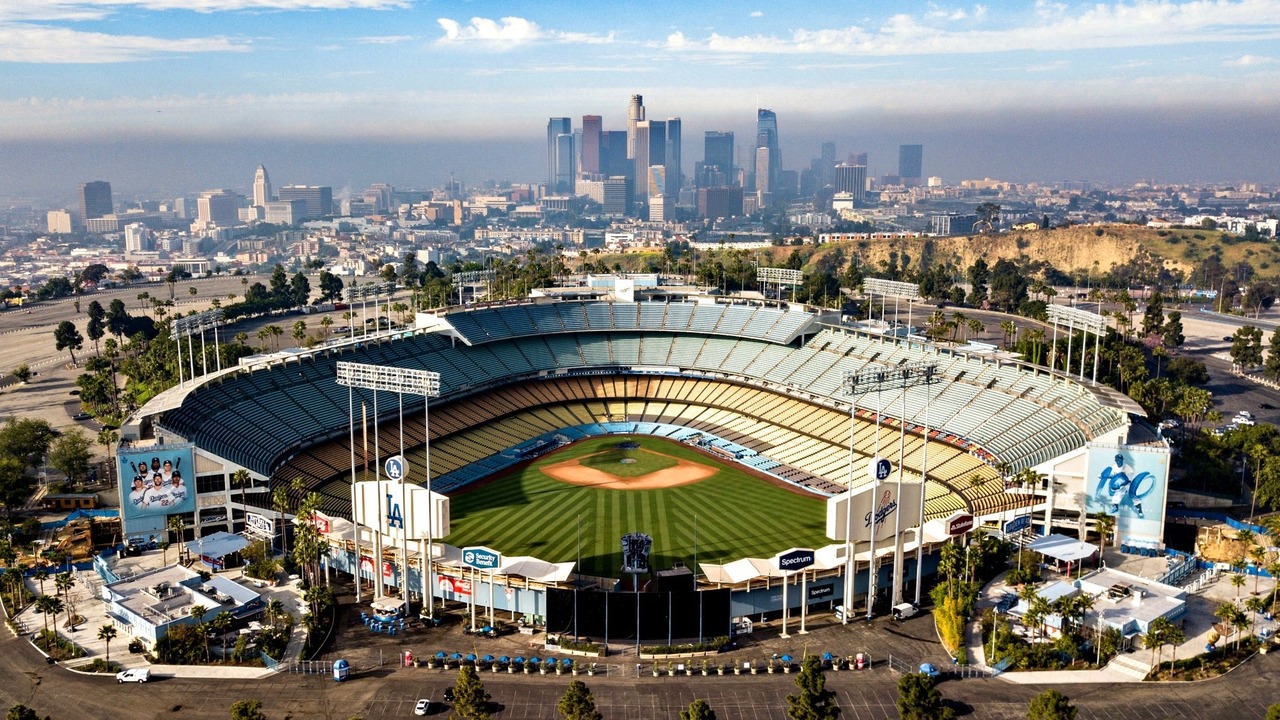
Dodger Stadium
Los Angeles, CA, USA, United States
56,000 capacity
Nestled in the heart of Los Angeles, one of motorsport's most ambitious venue transformations brought MotoGP racing to an iconic American landmark. Dodger Stadium, primarily known as the home of Major League Baseball's Los Angeles Dodgers since 1962, represents a fascinating chapter in motorcycle racing's ongoing quest to capture new audiences through innovative venue choices. The concept of transforming baseball stadiums into temporary racing circuits has gained momentum in recent years, as series organizers seek to bring high-octane motorsport action directly into urban centers and established sporting venues. Dodger Stadium's adaptation for MotoGP represents this philosophy perfectly, converting America's third-oldest ballpark into a temporary motorcycle racing facility that can accommodate 56,000 spectators in a sport-specific configuration. Located in the Chavez Ravine area of Los Angeles, the venue sits at an elevation of approximately 550 feet above sea level, providing natural elevation changes that add complexity to any temporary circuit layout. The stadium's bowl-shaped configuration and surrounding parking areas create unique opportunities for circuit designers to incorporate the existing infrastructure while developing a challenging track that meets MotoGP's exacting safety and technical standards. The transformation process involves extensive modifications to create a suitable racing surface and proper run-off areas. Temporary barriers, safety fencing, and specialized track surfacing must be installed throughout the venue, while the stadium's natural amphitheater design provides exceptional sightlines for spectators. The elevated seating arrangement allows fans to observe multiple sections of the circuit simultaneously, creating an intimate viewing experience typically impossible at traditional road racing venues. Circuit characteristics for such temporary installations typically emphasize tight, technical sections that showcase rider skill in close-quarters racing scenarios. The confined nature of a stadium venue necessitates careful attention to corner design, with particular focus on creating safe overtaking opportunities while maintaining the spectacle that MotoGP demands. Surface grip becomes a critical factor, as temporary racing surfaces often provide different characteristics compared to permanent racing facilities. The unique urban setting brings particular atmospheric qualities to race weekends. Los Angeles's Mediterranean climate provides generally favorable conditions for outdoor motorsport, though the city's proximity to the Pacific Ocean can introduce marine layer effects and temperature variations throughout race days. The venue's location within one of America's largest metropolitan areas creates opportunities for significant media exposure and fan engagement beyond traditional motorsport audiences. Stadium racing presents distinct challenges for teams and riders alike. The compact nature of such venues often means limited paddock space, requiring careful logistics planning for the extensive support equipment that MotoGP teams require. Practice and qualifying sessions become even more crucial, as the unfamiliar track surface and layout demand rapid adaptation from riders accustomed to traditional circuit racing. The spectacle of MotoGP motorcycles navigating through a venue traditionally associated with baseball creates compelling visual drama. The sound dynamics change significantly within the stadium's enclosed environment, intensifying the auditory experience of racing motorcycles for spectators while creating unique acoustic challenges for riders and teams relying on engine notes for performance feedback. Safety considerations for temporary venue racing require extensive planning and specialized equipment installation. Run-off areas must be carefully designed to meet international safety standards while working within the constraints of existing stadium architecture. Emergency response protocols must be adapted for the unique venue characteristics, ensuring that medical and safety personnel can respond effectively to any incidents. The broader significance of bringing MotoGP to venues like Dodger Stadium extends beyond individual race events. Such initiatives represent strategic efforts to expand motorcycle racing's appeal within key markets, particularly in the United States where MotoGP continues working to build stronger fan engagement. Los Angeles, as a major media and entertainment hub, provides exceptional promotional opportunities and potential for attracting new audiences to the sport. Television and media production benefits significantly from the stadium environment, with fixed infrastructure providing advantages for camera placement and broadcast equipment. The controlled environment allows for innovative broadcast angles and production techniques that may not be feasible at traditional racing circuits, potentially enhancing the viewing experience for global television audiences. The venue's capacity of 56,000 represents substantial attendance potential for American MotoGP events, providing economic justification for the significant costs associated with temporary venue conversion. The established parking, concession, and crowd management infrastructure of a major league baseball stadium translates well to motorsport event requirements, though specific adaptations are necessary for the different crowd dynamics and event duration of motorcycle racing. Looking toward the future, the success of MotoGP events at venues like Dodger Stadium could influence broader trends in motorsport venue selection and event format development. The model demonstrates how established sporting facilities can be reimagined for different uses, potentially opening opportunities for similar arrangements at other iconic venues across various markets. The intersection of America's pastime venue with international motorcycle racing excellence creates a uniquely American motorsport experience, blending traditional sporting venue grandeur with the cutting-edge technology and athletic performance that defines modern MotoGP competition. This innovative approach to venue utilization represents motorsport's continuing evolution in reaching diverse audiences while maintaining the sporting integrity and spectacle that defines world-class motorcycle racing.
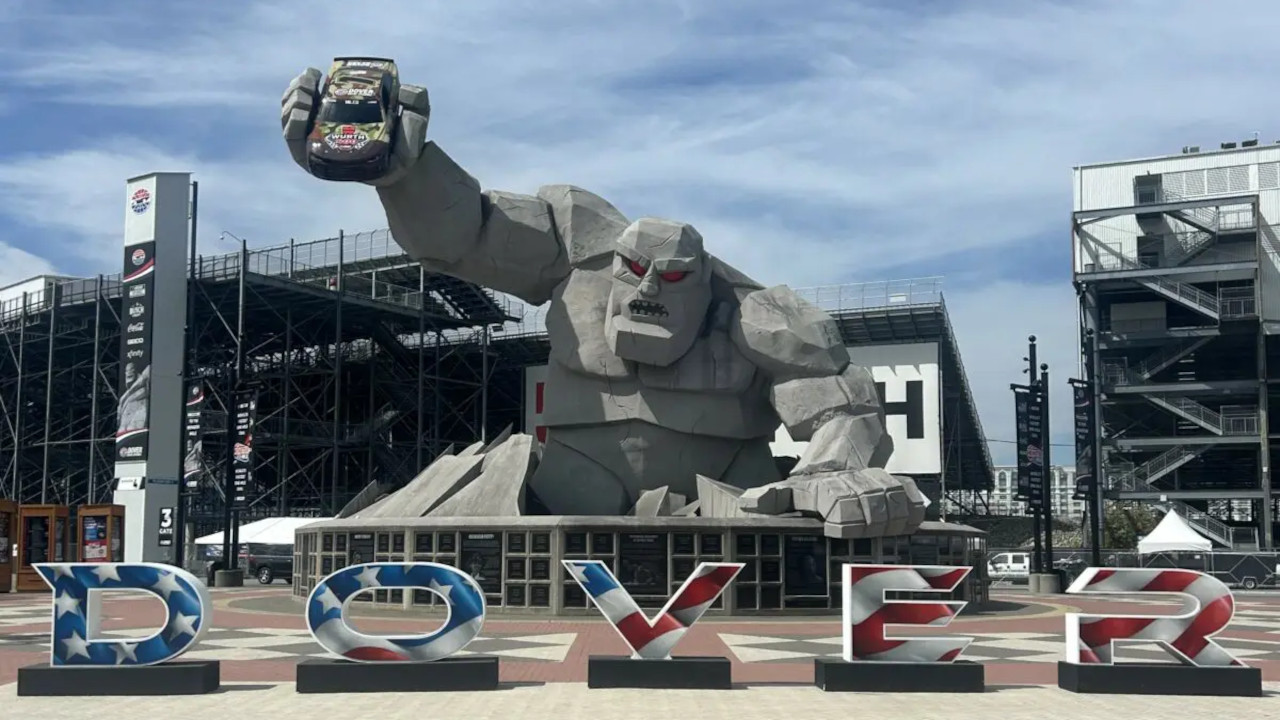
Dover Motor Speedway
Dover, Delaware, United States
Carved into the landscape of Delaware's capital region, Dover Motor Speedway stands as one of NASCAR's most distinctive and challenging venues, earning its fearsome reputation as "The Monster Mile." This concrete colossus has been testing drivers' skills and nerve since opening its gates in 1969, establishing itself as a cornerstone of American stock car racing. The speedway's origins trace back to the vision of Melvin Joseph, who sought to bring major motorsports to the First State. Construction began in the late 1960s on what would become Delaware's first and only NASCAR Cup Series venue. The track officially opened for competition in 1969, though it initially hosted primarily local and regional racing events before eventually earning its place on NASCAR's premier circuit. What immediately sets Dover apart from its contemporaries is its unique concrete racing surface, a characteristic shared by only a handful of tracks in NASCAR's top series. This abrasive surface creates distinctive racing conditions, generating higher tire wear rates and demanding exceptional car setup precision. The track's banking measures 24 degrees in the turns and nine degrees on the straightaways, creating a high-speed environment where aerodynamic efficiency proves crucial. The speedway's most defining characteristic is its one-mile oval configuration, which places it in a unique category within NASCAR's schedule. Neither a short track nor a superspeedway, Dover's intermediate length combined with its concrete surface and substantial banking creates racing dynamics unlike anywhere else on the circuit. The track's width varies from 40 feet in the corners to 46 feet on the straightaways, providing multiple racing grooves that can shift eventfulally as track conditions evolve throughout a race weekend. Dover's concrete surface becomes increasingly challenging as races progress, with the abrasive nature of the material creating tire falloff that can eventfulally alter competitive order. This characteristic has produced countless strategic battles, as teams must balance speed with tire conservation. The track's surface also tends to "rubber up" differently than asphalt, creating varying grip levels across different racing lines and adding another layer of complexity to race strategy. The venue's proximity to major East Coast population centers has made it a favorite destination for NASCAR fans, while its challenging nature has created numerous memorable moments throughout its history. Dover's demanding nature has often separated contenders from pretenders, with only the most skilled drivers and well-prepared teams able to master its concrete challenges consistently. Weather often plays a significant role at Dover, with the track's location in the Mid-Atlantic region subjecting it to various seasonal conditions. Spring and fall race weekends can experience eventful temperature swings, affecting tire performance and track grip levels. The concrete surface's response to temperature changes differs markedly from asphalt tracks, adding another variable that teams must account for in their race preparations. The facility underwent significant renovations and improvements throughout its existence, expanding grandstand capacity and upgrading amenities to enhance the spectator experience. The track's layout allows for excellent sightlines from most seating areas, giving fans clear views of the entire racing surface. The speedway's compact design creates an intimate atmosphere despite its substantial seating capacity, allowing spectators to witness the intensity of high-speed competition up close. Dover's role in NASCAR's playoff system has often elevated its importance, with races frequently occurring during crucial points in the championship battle. The track's unforgiving nature means that mechanical failures, tire strategies, or minor mistakes can have championship-altering consequences. This pressure-cooker environment has produced some of NASCAR's most eventful moments and has often served as a proving ground for championship contenders. The speedway has also played host to various support series throughout its history, including NASCAR Xfinity Series and Truck Series events. These races have often served as stepping stones for drivers advancing through NASCAR's developmental ladder, providing valuable experience on one of the sport's most demanding surfaces before reaching the Cup Series level. Beyond its racing action, Dover Motor Speedway has become an integral part of Delaware's sporting identity and economic landscape. The facility brings hundreds of thousands of visitors to the region during race weekends, generating significant economic impact for local businesses and establishing the venue as one of the state's premier entertainment destinations. The track's maintenance requirements differ significantly from asphalt facilities, with the concrete surface requiring specialized care and attention. This unique aspect has made Dover's track preparation crew among the most skilled in the business, as they must understand the nuances of maintaining optimal racing conditions on concrete throughout varied weather conditions and seasonal changes. Today, Dover Motor Speedway continues to challenge NASCAR's elite drivers while maintaining its reputation as one of the sport's most demanding venues. The combination of its concrete surface, banking configuration, and strategic importance within NASCAR's schedule ensures that "The Monster Mile" remains a crucial test of driver skill, team preparation, and strategic execution. As NASCAR continues to evolve, Dover's unique characteristics guarantee its continued relevance as a venue where championships can be won or lost, and where only the strongest survive the concrete challenge that has defined this Delaware landmark for more than five decades.
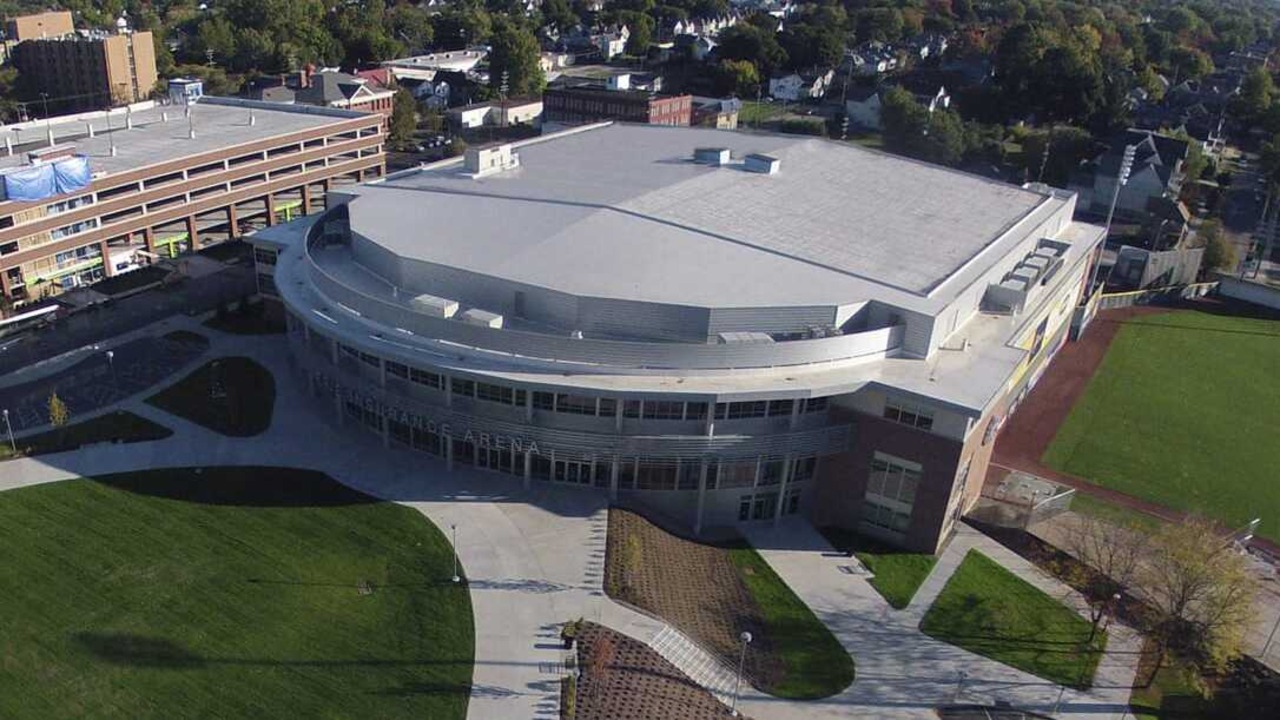
Erie Insurance Arena
Erie, Pennsylvania, United States
6,716 capacity
Nestled in the heart of Pennsylvania's fourth-largest city, Erie Insurance Arena stands as one of the more unconventional venues to host IndyCar racing, representing the series' occasional forays into indoor motorsport spectacle. This multi-purpose arena, with its intimate capacity of 6,716 seats, transforms from a traditional hockey and entertainment venue into a unique racing environment that challenges both drivers and engineers in ways that traditional road courses and ovals cannot match. The arena's primary identity centers around ice hockey, serving as home to the Erie Otters of the Ontario Hockey League, but its versatility has made it an intriguing option for motorsport exhibitions and special events. The facility's compact footprint creates an atmosphere unlike any found at purpose-built racing circuits, where the proximity of spectators to the action generates an intensity that traditional outdoor venues struggle to replicate. Every seat in the house offers an unobstructed view of the proceedings, making it an ideal venue for motorsport events that prioritize fan engagement and accessibility. When configured for IndyCar events, the arena presents unique challenges that test driver skill in ways that conventional circuits cannot. The tight confines demand precision driving at relatively low speeds, emphasizing car control, quick reflexes, and strategic thinking over pure velocity. The surface characteristics differ eventfulally from traditional racing environments, requiring specialized tire compounds and suspension setups that can adapt to the indoor conditions and the temporary track configuration that must be constructed within the arena's footprint. The venue's climate-controlled environment eliminates weather variables that typically influence outdoor racing, creating consistent conditions that allow for precise setup work and predictable performance parameters. However, this consistency comes with its own set of challenges, as drivers must adapt to the unique acoustics of an enclosed space, where engine notes and tire squeals reverberate differently than they would in an open-air environment. The lighting systems, designed primarily for hockey and entertainment events, must be supplemented to meet the specific requirements of televised motorsport competition. What makes Erie Insurance Arena particularly special in the IndyCar context is its role in bringing premier open-wheel racing to markets and demographics that might not otherwise have access to the sport. The intimate setting allows fans to witness the technical complexity and physical demands of IndyCar racing from perspectives impossible at traditional circuits. The sound of open-wheel race cars at full song within an enclosed arena creates a sensory experience that leaves lasting impressions on spectators, potentially cultivating new fans in regions where motorsport may not have deep roots. The arena's location in Erie provides strategic advantages for teams and series organizers, positioned within reasonable traveling distance of major population centers throughout the Great Lakes region and the northeastern United States. This accessibility factor has made it an attractive option for special events, exhibitions, and potentially for series looking to expand their geographic footprint into markets that lack permanent racing facilities capable of hosting major motorsport events. From a technical standpoint, the temporary nature of any racing configuration within the arena requires careful planning and execution. Safety systems must be meticulously designed and implemented to protect both competitors and spectators in an environment not originally conceived for high-speed motorsport. The run-off areas and barrier systems must be adapted to work within the constraints of the existing architecture while meeting the rigorous safety standards that modern IndyCar competition demands. The venue's support facilities, while designed for hockey operations, must be adapted to accommodate the specific needs of IndyCar teams, including garage space, technical inspection areas, and broadcast facilities. This adaptation process requires significant coordination and temporary infrastructure to ensure that teams have adequate space and resources to prepare and maintain their sophisticated racing machinery. Currently, Erie Insurance Arena continues to serve primarily as a hockey and entertainment venue, hosting concerts, family shows, and sporting events throughout the year. Its potential for motorsport applications remains largely untapped on a regular basis, though the facility's design and location make it a candidate for future IndyCar exhibitions or special events should the series choose to explore indoor racing opportunities. The arena represents part of a broader trend in motorsport toward bringing racing to non-traditional venues that can offer unique experiences for fans while expanding the sport's reach into new markets. As IndyCar continues to evolve its schedule and seek innovative ways to engage audiences, facilities like Erie Insurance Arena may play increasingly important roles in the series' future development. For Erie, Pennsylvania, the arena serves as a source of civic pride and economic activity, drawing visitors to the region for various events throughout the year. Its potential to host major motorsport events adds another dimension to its value as a community asset, demonstrating the versatility and forward-thinking design that characterizes modern multi-purpose sports and entertainment facilities. The venue stands ready to embrace whatever opportunities the future of motorsport may bring to this corner of Pennsylvania.
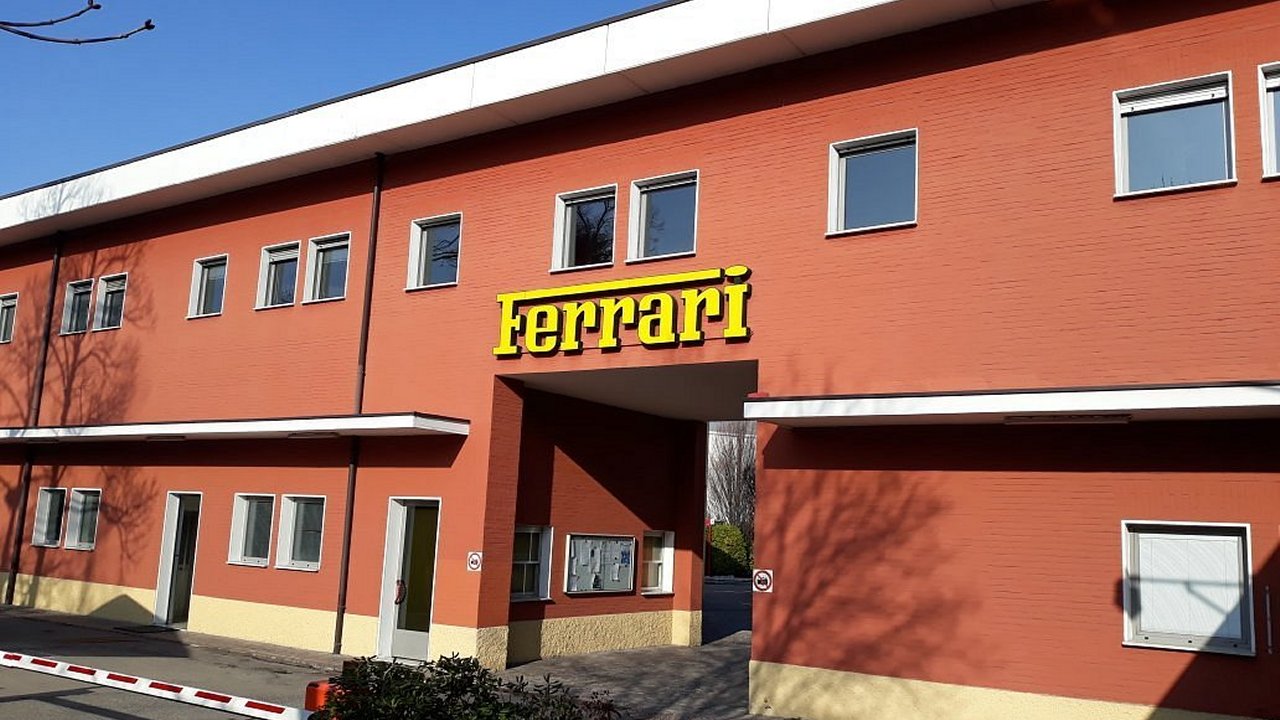
Ferrari Factory
Maranello, Emilia-Romagna, Italy, Italy
0Deep in the heart of Italy's Motor Valley lies one of the most sacred sites in Formula One history, where the prancing horse has galloped for decades in pursuit of racing perfection. The Ferrari Factory test track in Maranello represents far more than a simple testing facility—it stands as the private proving ground where legends are born and championship dreams take their first tentative steps toward reality. Nestled within the sprawling Ferrari complex in Maranello, Emilia-Romagna, this private circuit serves as the nerve center for one of motorsport's most storied manufacturers. The facility exists as an extension of Ferrari's racing DNA, providing a controlled environment where engineers, test drivers, and development teams can push the boundaries of automotive engineering without the constraints and pressures of public racing venues. The test track itself winds through the Italian countryside adjacent to the main Ferrari factory, creating an intimate setting where the sounds of screaming V6 turbo engines echo against the backdrop of the Apennine foothills. Unlike grand prix circuits designed for spectacle and overtaking, this facility prioritizes functionality and comprehensive vehicle evaluation. The layout incorporates a variety of corner types and speed zones that allow engineers to gather crucial data across the full spectrum of driving conditions encountered during a typical Formula One season. What makes this venue particularly fascinating is its role as Ferrari's primary development laboratory. Every Formula One car that has emerged from Maranello has completed countless laps around this circuit, with test drivers methodically working through setup configurations, aerodynamic packages, and power unit calibrations. The track surface, maintained to exacting standards, provides consistent conditions that enable engineers to draw meaningful conclusions from telemetry data as they refine each component of their racing machines. The circuit's technical characteristics reflect Ferrari's commitment to thorough vehicle development. The layout includes slow-speed technical sections that test chassis balance and mechanical grip, medium-speed corners that evaluate aerodynamic efficiency, and faster portions where power unit performance and top-speed capabilities come into focus. This comprehensive approach ensures that every aspect of a Formula One car's performance envelope receives proper evaluation before the vehicle reaches actual grand prix venues. Beyond its technical merits, the Ferrari Factory track holds immense symbolic significance within the motorsport community. This is where Ferrari's greatest drivers have honed their craft and established crucial relationships with their racing machinery. The facility has witnessed private testing sessions with multiple world champions, each leaving their mark on the development of Ferrari's Formula One program. The track has served as a sanctuary where drivers can explore the limits of their cars without the intense scrutiny of media and competitors present at official test sessions. The venue's influence extends throughout Ferrari's entire racing operation. Data gathered during test sessions at Maranello directly informs setup decisions for upcoming races, while correlation between track performance and computational fluid dynamics models helps validate the effectiveness of new aerodynamic developments. The circuit also serves as a final proving ground for reliability testing, where potential mechanical issues can be identified and resolved before reaching the unforgiving environment of grand prix weekends. Ferrari's commitment to continuous improvement is evident in the ongoing evolution of their test facility. The track configuration and supporting infrastructure undergo regular updates to ensure they remain relevant to current Formula One regulations and technical requirements. Advanced data acquisition systems monitor every aspect of vehicle performance, from tire temperature distribution to energy recovery efficiency, creating a comprehensive picture of each car's capabilities. The exclusivity of this venue adds to its mystique within Formula One circles. Unlike public circuits where multiple teams conduct testing, the Ferrari Factory track remains the private domain of the Scuderia, allowing for complete confidentiality in development work. This privacy enables Ferrari to pursue innovative concepts without revealing their technical direction to competitors, maintaining the strategic advantage that comes from secretive development programs. Weather conditions at the Maranello facility provide additional development opportunities, as the changing seasons allow Ferrari to evaluate their cars across varying grip levels and ambient temperatures. These natural variations help ensure that Ferrari's Formula One entries perform consistently across the diverse climatic conditions encountered throughout the global championship calendar. The track's proximity to Ferrari's wind tunnel, design offices, and manufacturing facilities creates an integrated development environment where theoretical concepts can be rapidly translated into physical components and evaluated under real-world conditions. This seamless connection between design and testing represents a significant competitive advantage, allowing Ferrari to iterate more quickly than teams whose facilities are geographically dispersed. Today, the Ferrari Factory test track continues serving its vital role in Formula One development, adapting to current regulations while maintaining its fundamental purpose as Ferrari's primary vehicle evaluation facility. The venue represents the intersection of tradition and innovation, where Ferrari's rich racing heritage meets cutting-edge technology in pursuit of future championship success. For Ferrari, this private circuit remains an irreplaceable asset in their ongoing quest to return the prancing horse to the pinnacle of Formula One competition.
Globe Life Park in Arlington
United States
Baseball and motorsport rarely intersect in the world of professional racing venues, but Globe Life Park in Arlington represents one of the most unique and temporary adaptations in MotoGP history. This former Major League Baseball stadium, which served as home to the Texas Rangers from 1994 to 2019, transformed into an extraordinary motorcycle racing venue that challenged every conventional notion of what constitutes a proper Grand Prix circuit. Located in the heart of Arlington, Texas, between Dallas and Fort Worth, the venue originally opened as The Ballpark in Arlington before undergoing several naming changes throughout its baseball tenure. The facility was designed as a classic American ballpark, featuring red brick facades and limestone accents that paid homage to traditional baseball architecture. Its conversion to accommodate MotoGP machinery represented an unprecedented engineering challenge, requiring the complete reimagining of interior spaces traditionally occupied by diamond, outfield, and spectator areas. The transformation of this baseball cathedral into a motorcycle racing circuit demanded innovative thinking from track designers and engineers. The confined space within the stadium's walls necessitated an extremely tight, technical layout that bore no resemblance to traditional Grand Prix circuits. Unlike the sweeping curves and long straights found at venues like Circuit of the Americas or Laguna Seca, Globe Life Park's configuration forced designers to create a series of sharp corners, hairpin turns, and narrow passages that challenged riders' precision and bike handling skills to their absolute limits. The track surface itself presented unique characteristics that set it apart from purpose-built racing facilities. Rather than the specialized asphalt compounds typically found at dedicated motorsport venues, the temporary circuit utilized materials suitable for the confined space and temporary nature of the installation. This created distinct grip levels and surface textures that riders had to adapt to quickly, as practice time remained limited compared to traditional Grand Prix weekends. Elevation changes within the venue added another layer of complexity to an already challenging layout. The natural contours of the former baseball field, combined with the multi-level structure of the stadium itself, created undulations that tested suspension settings and rider positioning. These elevation shifts, while modest compared to circuits like the Sachsenring or Mugello, proved significant within the context of such a compact racing environment. Overtaking opportunities at Globe Life Park existed in stark contrast to traditional MotoGP venues. The narrow confines and technical nature of the circuit made passing moves extremely difficult, placing premium value on qualifying position and strategic thinking. Riders found themselves relying more heavily on racecraft and patience rather than outright speed to gain positions, creating a different dynamic from the typical Grand Prix weekend. The spectator experience at Globe Life Park offered something entirely unique in the MotoGP calendar. Baseball stadiums are designed to provide excellent sightlines from virtually every seat, and this characteristic translated remarkably well to motorcycle racing. Fans could observe the entire track layout from their seats, witnessing every corner, every overtaking attempt, and every moment of drama throughout the race. This panoramic view contrasted sharply with traditional circuits where spectators typically see only small sections of the track from any given vantage point. Weather considerations played a crucial role in the venue's operation as a racing facility. Texas weather patterns, particularly during potential racing seasons, presented challenges ranging from extreme heat to sudden thunderstorms. The stadium's design, while featuring a partial roof structure over seating areas, left the racing surface exposed to elements, creating additional variables that teams and riders had to consider in their preparation and strategy. The technical demands of racing within Globe Life Park pushed motorcycle technology and setup philosophy in new directions. Traditional Grand Prix circuits allow engineers to optimize bikes for specific combinations of high-speed corners, long straights, and varying grip levels. The unique characteristics of this venue required completely different approaches to suspension geometry, gearing ratios, and aerodynamic configurations. From a logistical standpoint, Globe Life Park presented both advantages and challenges compared to traditional racing facilities. The existing infrastructure for crowd management, parking, concessions, and broadcast facilities provided a solid foundation for hosting major sporting events. However, the adaptation of these systems for motorcycle racing, including paddock space, team accommodations, and technical inspection areas, required creative solutions within the constraints of baseball stadium architecture. The venue's place in American motorsport reflects the ongoing efforts to expand MotoGP's presence in the United States market. While Circuit of the Americas has served as the primary American venue for the premier motorcycle racing series, the concept of utilizing alternative facilities like Globe Life Park demonstrates the sport's willingness to explore innovative approaches to venue selection and fan engagement. Globe Life Park's legacy in motorsport extends beyond its specific use as a racing venue. The successful adaptation of a baseball stadium for high-level motorcycle competition opened discussions about the potential for other unconventional venues to host premier racing events. This precedent encourages thinking beyond traditional circuit designs and considers how existing sporting infrastructure might serve multiple purposes. Today, Globe Life Park continues to operate as a significant venue in Arlington's sporting landscape, though its baseball tenants have moved to the adjacent Globe Life Field. The facility's brief but memorable foray into motorcycle racing remains a unique chapter in both MotoGP history and the ongoing evolution of American motorsport venues, demonstrating that innovation and creativity can transform even the most unlikely spaces into memorable racing theaters.
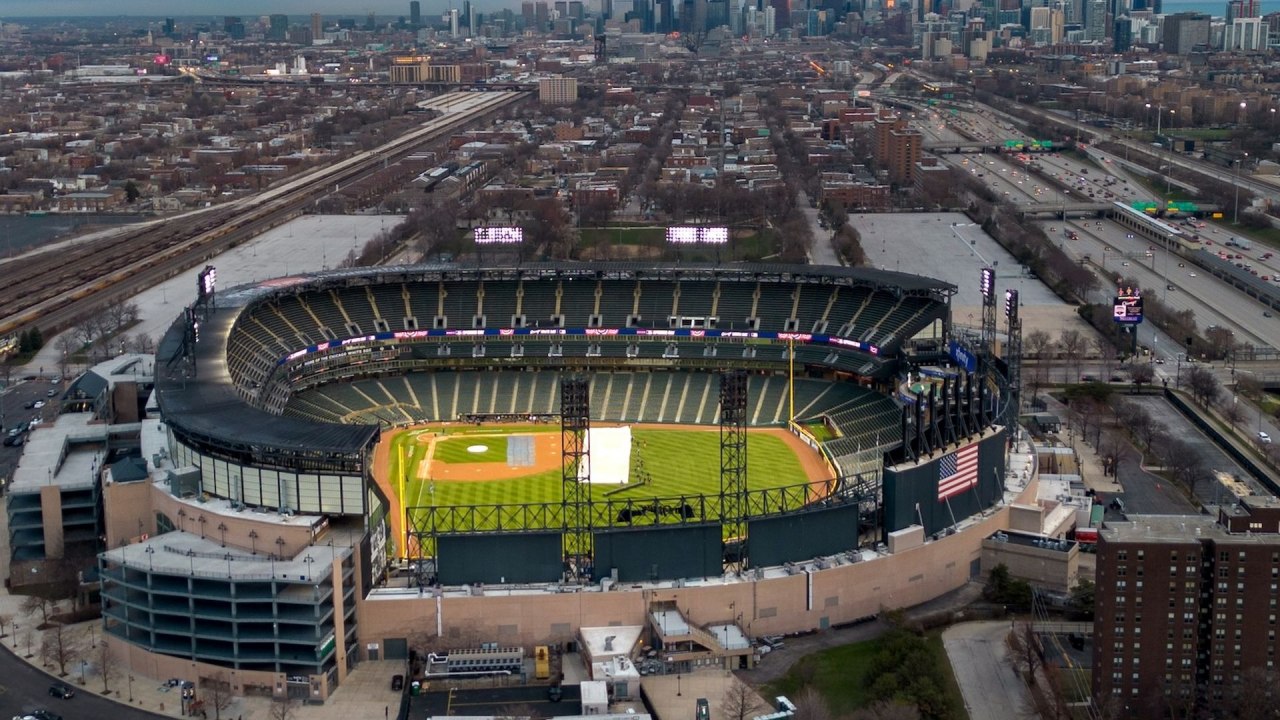
Guaranteed Rate Field
Chicago, Illinois, United States
40,615 capacity
Guaranteed Rate Field, formerly Comiskey Park and U.S. Cellular Field, is a baseball stadium located on the South Side of Chicago, Illinois, United States. It is the ballpark of Major League Baseball’s Chicago White Sox, one of the city's two MLB teams, and is owned by the state of Illinois through the Illinois Sports Facilities Authority. Completed at a cost of US$137 million, the park opened as Comiskey Park on April 18, 1991, taking its name from the former ballpark at which the White Sox had played since 1910. Guaranteed Rate Field is situated just to the west of the Dan Ryan Expressway in Chicago's Armour Square neighborhood, adjacent to the more famous neighborhood of Bridgeport. The stadium was built directly across 35th Street from the original Comiskey Park, which was demolished to make room for a parking lot for the new venue. The location of Old Comiskey's home plate is represented by a marble plaque on the sidewalk next to Guaranteed Rate Field, with the foul lines painted in the parking lot. The spectator ramp across 35th Street is designed in such a way (partly curved, partly straight but angling east-northeast) that it echoes the contour of the old first-base grandstand.

Haas Formula LLC HQ
Kannapolis, NC, USA, United States
0Nestled in the heart of North Carolina's motorsport corridor, the headquarters of Haas Formula LLC represents a remarkable American success story in Formula 1's elite landscape. Located in Kannapolis, a city with deep automotive manufacturing roots, this facility serves as the operational nerve center for the United States' most recent entry into the pinnacle of international motorsport. The Haas F1 Team headquarters stands as a testament to American engineering ambition and the vision of Gene Haas, the founder of Haas Automation and co-owner of the NASCAR Cup Series team Stewart-Haas Racing. The facility emerged from Haas's determination to establish an American presence in Formula 1, leveraging decades of experience in precision manufacturing and motorsport competition. The choice of Kannapolis proved strategic, capitalizing on the region's established motorsport infrastructure and skilled workforce, while maintaining proximity to the NASCAR operations that helped fund and inform the F1 venture. The sprawling complex houses state-of-the-art design and manufacturing capabilities that blur the lines between traditional racing team operations and high-tech industrial production. Unlike many Formula 1 facilities that focus purely on assembly and preparation, the Haas headquarters integrates advanced CNC machining capabilities directly into the racing operation. This unique approach allows the team to manufacture many of its own components in-house, from suspension pieces to intricate aerodynamic elements, providing a level of control and rapid iteration that sets it apart from competitors who rely more heavily on external suppliers. The facility's engineering offices buzz with the constant activity of computational fluid dynamics analysis, with banks of computers running complex simulations to optimize aerodynamic performance. Wind tunnel testing may happen elsewhere, but the interpretation and application of that data occurs within these walls, where American engineers work alongside international talent to push the boundaries of Formula 1 performance. The integration of NASCAR-derived knowledge with Formula 1 requirements has created a unique technical culture, where oval racing insights occasionally inform road course solutions in unexpected ways. What makes this headquarters particularly distinctive is its dual-purpose nature, serving both Formula 1 and NASCAR operations under the broader Haas umbrella. This cross-pollination of ideas and resources creates efficiencies and innovations that pure Formula 1 operations might miss. The facility's composite manufacturing capabilities produce components for both series, while the shared engineering expertise allows for technology transfer between open-wheel and stock car racing disciplines. The machine shop represents the crown jewel of the operation, featuring some of the most advanced CNC equipment available, much of it produced by Haas Automation itself. This vertical integration provides the team with unprecedented flexibility in component development and modification, allowing for rapid prototyping and production that can respond to track-specific requirements or regulatory changes with remarkable speed. The quality control standards mirror those found in aerospace manufacturing, reflecting Gene Haas's background in precision machining for demanding industrial applications. Since the team's Formula 1 debut, the Kannapolis facility has been the birthplace of numerous technical innovations and strategic decisions that have shaped the team's competitive trajectory. The headquarters has witnessed the development of partnerships with Ferrari for power units and technical collaboration, the integration of title sponsor relationships, and the evolution of the team's technical philosophy. Each race weekend sees components designed and manufactured within these walls competing at circuits around the globe, carrying with them the precision and determination that characterize American manufacturing at its finest. The facility also serves as a cultural bridge between American motorsport traditions and Formula 1's international standards. The work environment reflects a distinctly American approach to racing, emphasizing practical engineering solutions and efficient resource utilization, while adapting to Formula 1's demanding technical regulations and global competitive environment. This cultural fusion has created a unique team identity that resonates with American motorsport fans while earning respect within Formula 1's traditionally European-dominated paddock. Current operations at the headquarters continue to evolve with Formula 1's changing technical landscape. The facility has adapted to new regulations, sustainability initiatives, and cost cap requirements while maintaining its core strengths in manufacturing and engineering efficiency. The integration of advanced data analytics, virtual reality design tools, and increasingly sophisticated simulation capabilities ensures that the Kannapolis operation remains competitive with Formula 1's most established teams. Looking toward the future, the Haas Formula LLC headquarters represents more than just a racing team facility; it embodies American ambitions in global motorsport and demonstrates the potential for New World approaches to Old World racing traditions. The success of components and strategies developed within these walls continues to validate the decision to base American Formula 1 operations in North Carolina's motorsport heartland, where precision manufacturing meets racing passion in pursuit of Grand Prix glory. The facility stands as proof that Formula 1 success can be achieved through innovative approaches to traditional challenges, combining American industrial expertise with international racing excellence in a uniquely effective partnership.

Hanoi Street Circuit
Hanoï, Vietnam
Nestled in the heart of Vietnam's bustling capital, the Hanoi Street Circuit represents one of Formula One's most ambitious yet ultimately unrealized ventures into Southeast Asian motorsport. This temporary street circuit, measuring 5.607 kilometers in length and designed to host 55-lap races, was conceived as a notable showcase for Formula One racing through the historic streets of Hanoi, promising to deliver high-speed thrills against the backdrop of Vietnamese culture and urban architecture. The circuit's design represented a fascinating blend of traditional street circuit characteristics with modern Formula One requirements. Winding through the Nam Từ Liêm district, the layout incorporated both existing public roads and purpose-built sections, creating a unique hybrid configuration that aimed to capture the excitement of classic street racing while meeting contemporary safety and technical standards. The track's design featured a mix of high-speed sections and technical corners, with the longest straight stretching over one kilometer, providing excellent opportunities for overtaking and eventful wheel-to-wheel racing. One of the most distinctive aspects of the Hanoi Street Circuit was its incorporation of Vietnam's rich cultural heritage into the racing experience. The track route was carefully planned to showcase iconic Vietnamese architecture and urban landscapes, with spectators able to witness Formula One cars racing past traditional buildings alongside modern developments. This cultural integration was intended to create a uniquely Vietnamese Formula One experience, different from any other venue on the championship calendar. The circuit's technical characteristics were designed to challenge drivers across multiple disciplines. The layout featured a combination of long straights that would test power unit performance and aerodynamic efficiency, complemented by tight technical sections requiring precise handling and braking performance. Several corners were specifically designed to promote overtaking opportunities, with wide approach roads leading into heavy braking zones where drivers could attempt passing maneuvers under intense racing conditions. Surface characteristics played a crucial role in the circuit's design philosophy. As a street circuit utilizing public roads, sections of the track featured varying grip levels and surface textures, creating additional challenges for tire strategy and vehicle setup. The combination of permanent circuit sections with temporary street sections meant drivers would need to adapt their racing lines and braking points throughout different parts of the lap, adding strategic complexity to race weekends. The elevation profile of the Hanoi Street Circuit provided another layer of technical challenge. While not featuring eventful elevation changes like some traditional circuits, the subtle undulations and camber variations throughout the layout were designed to test suspension setup and aerodynamic balance. These characteristics would have required teams to carefully optimize their cars for the specific demands of racing through Hanoi's urban environment. What truly set the Hanoi Street Circuit apart was its ambitious vision for bringing Formula One racing to Vietnam for the first time. The project represented a significant milestone in Formula One's global expansion strategy, introducing the sport to a new market with enormous potential for growth and development. The circuit was positioned to become a gateway for motorsport development throughout Southeast Asia, potentially inspiring a new generation of Vietnamese racing talent and motorsport enthusiasts. The infrastructure surrounding the circuit was planned to meet the highest international standards for Formula One events. Temporary facilities were designed to accommodate teams, media, and spectators while minimizing disruption to daily life in Hanoi. The logistics of transforming city streets into a world-class racing venue required extensive coordination with local authorities and represented one of the most complex circuit construction projects in recent Formula One history. From a sporting perspective, the Hanoi Street Circuit promised to deliver exciting racing through its carefully considered corner combinations and overtaking zones. The layout included several signature corners that would have become iconic features of the Formula One calendar, each presenting unique challenges for drivers and strategic considerations for teams. The combination of high-speed sections and technical corners was designed to reward both raw pace and racecraft, potentially producing memorable battles throughout the field. The circuit's current status remains one of Formula One's most significant unrealized projects. Despite extensive planning, construction work, and international promotion, the Vietnamese Grand Prix scheduled to debut at the Hanoi Street Circuit has not materialized as originally intended. Various factors, including global events and local considerations, have prevented the circuit from hosting its inaugural Formula One race, leaving motorsport fans to wonder what might have been. Looking toward the future, the Hanoi Street Circuit remains a testament to Formula One's ambition for global expansion and the complex challenges involved in bringing world-class motorsport to new territories. While the immediate prospects for Vietnamese Formula One racing remain uncertain, the extensive planning and development work invested in the project demonstrates the potential for motorsport growth in Southeast Asia. The circuit's detailed design and infrastructure planning could potentially serve as a foundation for future motorsport ventures in Vietnam, whether in Formula One or other international racing series. The legacy of the Hanoi Street Circuit extends beyond its physical layout to represent the dreams and aspirations of Vietnamese motorsport enthusiasts and Formula One's continuing evolution as a truly global championship. Though fans have yet to witness racing cars navigating its 5.607-kilometer layout at race speeds, the circuit remains a symbol of motorsport's potential to transcend boundaries and bring world-class competition to new audiences worldwide.

Hockenheimring
Hockenheim, Germany
120,000 capacity
Nestled in the Baden-Württemberg countryside near the Rhine valley, Hockenheimring stands as one of Formula One's most distinctive and historically significant venues. This German circuit has undergone eventful transformations throughout its existence, evolving from a high-speed blast through dense forests to a more compact, stadium-like facility that continues to challenge drivers and captivate audiences with its unique character. Originally conceived as a test track for Mercedes-Benz in the 1930s, Hockenheimring began its journey as a much longer circuit that stretched deep into the surrounding woodland. The track's early configuration was famous for its incredibly long straights that cut through the Hardtwald forest, creating a venue unlike any other in motorsport. These forest sections, connected by tight chicanes and the distinctive stadium section at the circuit's heart, gave Hockenheimring a character that was both intimidating and exhilarating. The circuit's association with Formula One began in earnest during the 1970s, when it became the permanent home of the German Grand Prix. During this era, the track measured significantly longer than today's 4.574-kilometer layout, with drivers reaching extraordinary speeds as they hurtled through the forest sections. The original configuration demanded a unique approach to car setup, as teams had to balance the need for low downforce to maximize straight-line speed with sufficient grip for the twisty stadium complex. Tragedy struck Hockenheimring in 1982 when Didier Pironi suffered a career-ending accident during practice, highlighting the inherent dangers of the high-speed layout. The circuit's history is marked by both triumph and heartbreak, with numerous memorable moments etched into its asphalt. The venue has witnessed championship-deciding races, notable upsets, and displays of raw speed that have become legendary among motorsport enthusiasts. The modern Hockenheimring emerged following a comprehensive redesign completed in 2002, which eventfulally shortened the circuit and eliminated much of the forest section. This transformation created the current 4.574-kilometer layout that hosts today's 67-lap German Grand Prix. The redesigned circuit retained the beloved stadium section while introducing new technical challenges and improved spectator viewing opportunities. Today's Hockenheimring presents a fascinating blend of high-speed sections and technical complexity. The circuit begins with a flowing series of corners that test both car balance and driver commitment, leading into the eventful Parabolika curve that sweeps drivers toward the back straight. This section provides one of the few genuine overtaking opportunities on the modern layout, with the slipstream effect and DRS zone creating exciting wheel-to-wheel combat. The stadium section remains the circuit's crown jewel, featuring the distinctive hairpin and the challenging Sachs curve complex. These corners create a natural amphitheater where the circuit's 120,000 capacity crowd can witness close racing and eventful moments. The elevation changes throughout this section, while modest, add subtle complexity to car setup and driving lines. What makes Hockenheimring truly special is its ability to produce unexpected results. The circuit's characteristics often favor different car philosophies depending on weather conditions and setup choices, leading to grid shuffles and surprising race outcomes. The track surface provides good grip levels, but the combination of high-speed sections and technical corners means that finding the perfect setup balance remains a significant challenge for teams. Kimi Räikkönen's lap record of 1:13.780 stands as testament to both the Finn's exceptional talent and the circuit's demanding nature. This benchmark represents the pinnacle of single-lap performance around the modern Hockenheimring, achieved through perfect execution of the track's varied challenges. The circuit's infrastructure reflects its status as a premier motorsport venue, with state-of-the-art facilities supporting not only Formula One but also a diverse calendar of racing events throughout the year. The Hockenheimring hosts touring car championships, motorcycle racing, and various club-level competitions, maintaining its relevance in the German motorsport landscape beyond its Formula One obligations. Environmental considerations have become increasingly important at Hockenheimring, with the circuit management implementing sustainable practices and working to preserve the surrounding forest ecosystem. This approach reflects the venue's evolution from a purely speed-focused facility to a more holistic entertainment destination that respects its natural surroundings. The circuit's role in German motorsport culture cannot be overstated. It has served as the stage for some of the country's greatest racing triumphs and has helped nurture generations of German racing talent. The passionate German fanbase creates an electric atmosphere during Grand Prix weekend, with the grandstands packed with knowledgeable spectators who appreciate both technical excellence and pure racing spectacle. Looking toward the future, Hockenheimring continues to adapt to the changing landscape of motorsport. The venue regularly updates its facilities and explores new ways to enhance the spectator experience while maintaining the challenging characteristics that make it a favorite among drivers. Its position in the Formula One calendar may fluctuate based on commercial considerations, but the circuit's importance to motorsport history and its unique character ensure its enduring relevance in the racing world. Today's Hockenheimring represents a successful evolution of a classic venue, balancing respect for its storied past with the demands of modern motorsport entertainment and safety standards.
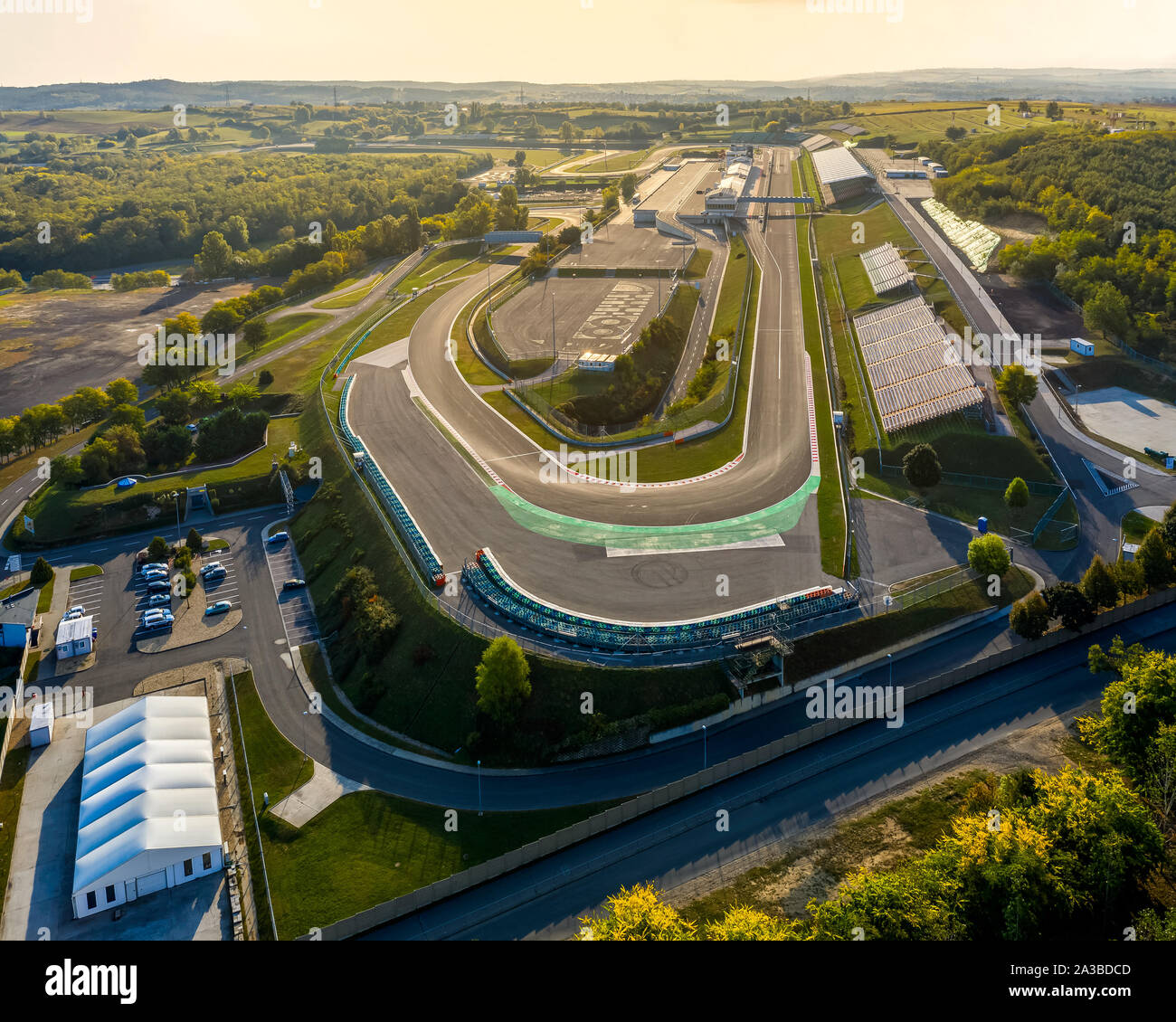
Hungaroring
Mogyoród, Hungary
70,000 capacity
The Hungaroring, located in a natural valley near Mogyoród, just northeast of Budapest, Hungary, has hosted the Hungarian Grand Prix since 1986 — making it the longest-running Formula 1 race in Central and Eastern Europe. The circuit was built in a remarkable eight months to host the first Grand Prix behind the Iron Curtain, and it has been a permanent fixture on the calendar ever since. The 4.381-kilometer circuit is characterised by its tight, twisting layout that has often been compared to "Monaco without the walls." With 14 corners, limited overtaking opportunities, and a surface that generates high tyre degradation, the Hungaroring places enormous emphasis on qualifying position, race strategy, and car setup. The narrow track width and lack of long straights mean that drivers must be at their most creative to find overtaking opportunities, often relying on strategic undercuts or DRS-assisted moves into Turn 1. The circuit sits in a natural amphitheatre, which provides excellent viewing for spectators from almost any position around the track. Turn 1 is a medium-speed right-hander at the bottom of the hill that serves as the best overtaking opportunity. The middle sector features a series of technical medium and slow-speed corners where mechanical grip is paramount. Turn 4, a long downhill right-hander, is particularly tricky and has caught out many drivers over the years. Despite its reputation as a processional circuit, the Hungaroring has produced some of Formula 1's most memorable races. Nigel Mansell's famous pass on Ayrton Senna in 1989 demonstrated that overtaking was possible with sufficient bravery. Jenson Button's notable wet-to-dry victory from 14th on the grid in 2006 is considered one of the greatest drives in F1 history. More recently, Esteban Ocon took his maiden and Alpine's breakthrough victory in the chaotic 2021 race. The Hungarian Grand Prix traditionally takes place in late July, making it one of the hottest races on the calendar. Track temperatures can exceed 50°C, creating extreme conditions for tyres and drivers alike. The thermal stress on the cars adds another dimension to the engineering challenge, and teams must carefully manage cooling and tyre wear to succeed. Budapest itself is one of Europe's most beautiful and vibrant cities, offering notable architecture, thermal baths, and a renowned nightlife scene. The proximity of the circuit to the city centre makes the Hungarian Grand Prix one of the most accessible events on the calendar for fans, contributing to consistently strong attendance figures.
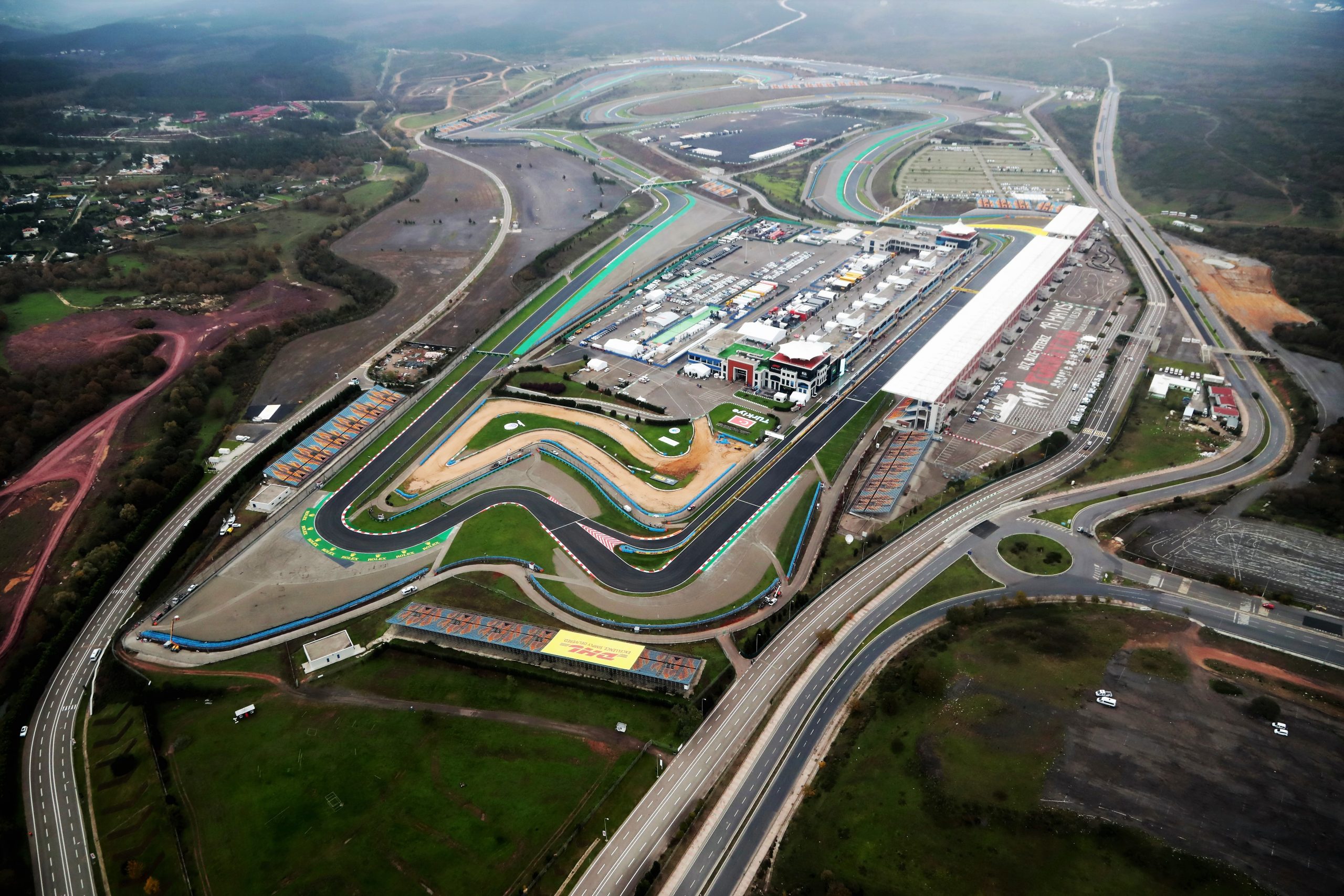
Intercity Istanbul Park
Istanbul, Turkey
125,000 capacity
Rising from the hills outside Turkey's largest metropolis, Intercity Istanbul Park stands as one of Formula 1's most challenging and distinctive racing venues. This 5.338-kilometer circuit carved its place in motorsport history as Turkey's premier racing facility, combining eventful elevation changes with technical complexity that has tested the world's finest drivers since its inception. Designed by Hermann Tilke, the renowned circuit architect behind numerous modern Formula 1 venues, Istanbul Park was conceived as Turkey's gateway into the pinnacle of international motorsport. The facility was constructed with grand ambitions, featuring a massive capacity of 125,000 spectators, making it one of the largest Formula 1 venues in the world. The circuit's location in the Tuzla district, approximately 40 kilometers east of Istanbul's city center, provided the space needed for such an ambitious project while maintaining accessibility to Turkey's economic and cultural capital. The track's layout immediately distinguished itself from other modern circuits through its bold use of topography and innovative corner sequences. The most celebrated section is the strong Turn 8, a multi-apex left-hand corner that sweeps through nearly 180 degrees of curvature. This corner, taken at extraordinary speeds, creates multiple racing lines and has become synonymous with the circuit's identity. The turn's banking and extended radius allow drivers to maintain high velocities while presenting numerous overtaking opportunities, particularly on the exit where different approaches can yield varying results. Beyond Turn 8, the circuit features significant elevation changes that add another layer of complexity to the driving challenge. The undulating nature of the track affects aerodynamics, braking points, and vehicle setup, requiring teams to find careful compromises between different sections of the lap. The surface characteristics have evolved over the years, with the asphalt providing generally good grip levels, though weather conditions can eventfulally alter the track's behavior. The technical nature of Istanbul Park is further highlighted by its lap record, held by Colombian driver Juan Pablo Montoya with a fast time of 1:24.770. This benchmark demonstrates the circuit's ability to reward precision and bravery in equal measure. The 58-lap race distance for Formula 1 events creates a substantial physical and mental test for drivers, with the combination of high-speed corners and elevation changes placing particular demands on neck and shoulder muscles. Several memorable moments have unfolded on this Turkish tarmac, cementing its reputation among drivers and fans alike. The circuit has witnessed notable wheel-to-wheel combat, particularly through the sweeping middle sector where the combination of fast corners and elevation changes creates natural overtaking zones. The main straight, leading into the heavy braking zone at Turn 1, provides another prime opportunity for position changes, especially when combined with the slipstream effect generated by the high-speed nature of the preceding corners. Weather has played a significant role in many of Istanbul Park's most eventful chapters. The circuit's exposed location makes it susceptible to sudden weather changes, and several races have been transformed by rain, creating treacherous conditions that separate the exceptional from the merely good. The track's surface can become particularly challenging in wet conditions, with standing water collecting in certain areas and the racing line offering variable grip levels. The facility's infrastructure reflects its ambitious origins, with extensive pit and paddock facilities designed to accommodate the complex logistics of modern Formula 1. The paddock building and race control tower provide decisive views of the circuit, while the spectator facilities were designed to offer excellent sightlines of the track's key sections. The circuit's design also incorporated multiple grandstands positioned to maximize viewing opportunities, particularly around the notable Turn 8 complex. Istanbul Park's journey in Formula 1 has been marked by periods of presence and absence from the championship calendar, reflecting the complex economics and politics of modern Formula 1. The circuit's return to the championship after extended absences has consistently been welcomed by drivers who appreciate its unique challenges and the opportunities it provides for genuine racing. The track's characteristics make it particularly demanding on tires, creating strategic complexity around compound selection and degradation management. The venue continues to evolve and adapt to changing motorsport requirements, with ongoing investments in safety infrastructure and facility improvements. Beyond Formula 1, Istanbul Park has hosted various other motorsport categories, demonstrating its versatility as a racing venue. The circuit's ability to challenge different types of racing machinery while providing exciting spectacle has ensured its relevance across multiple series. Today, Istanbul Park occupies a unique position in the Formula 1 landscape as a circuit that combines modern safety standards with old-school driving challenges. Its demanding nature has earned respect throughout the paddock, while its distinctive character ensures memorable racing whenever the championship visits Turkish soil. The venue represents Turkey's commitment to international motorsport and continues to serve as a bridge between European and Asian racing cultures, reflecting Istanbul's historic role as a crossroads between continents. The legacy of Istanbul Park extends beyond mere statistics, embodying the ambition and passion that drives motorsport forward while creating lasting memories for competitors and spectators alike.
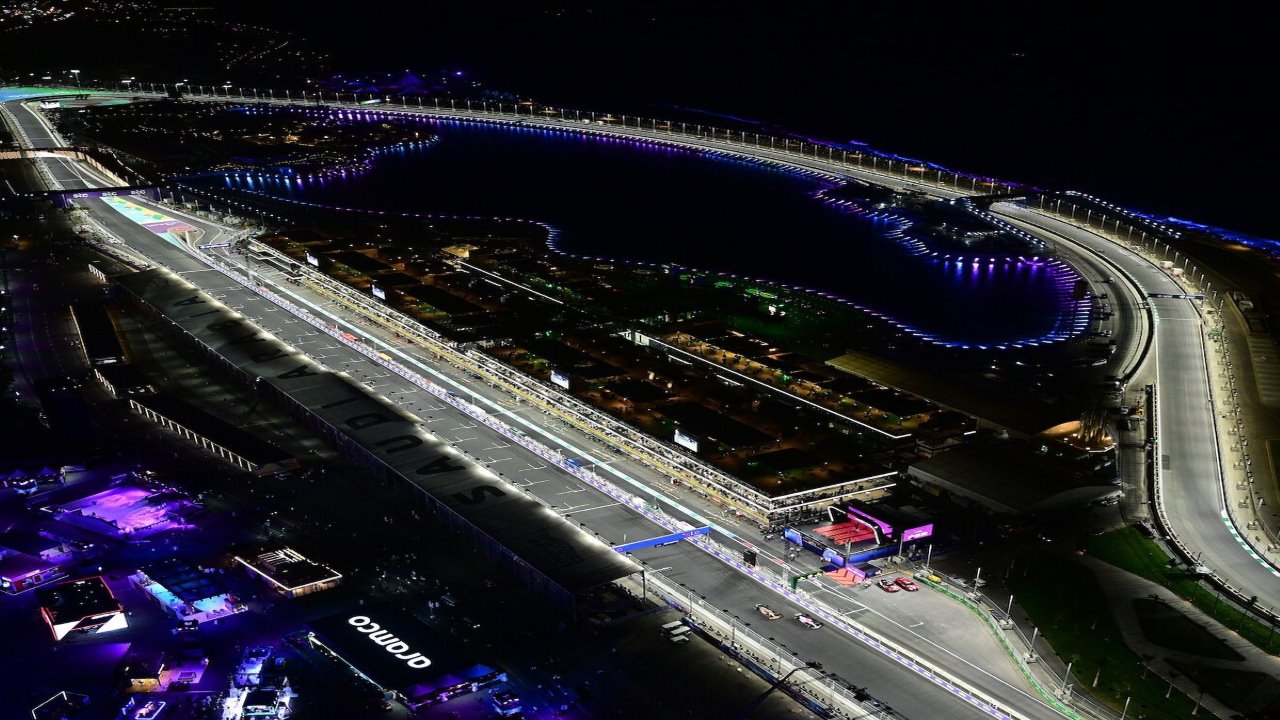
Jeddah Corniche Circuit
Jeddah, Saudi Arabia, Saudi Arabia
50,000 capacity
The Jeddah Corniche Circuit is the fastest street circuit in Formula 1 history, a breathtaking 6.174-kilometer track that snakes along the Red Sea waterfront in the heart of Jeddah, Saudi Arabia. Since its debut in 2021, this remarkable venue has produced some of the most eventful and controversial racing in the sport's recent history. The circuit features 27 corners — the most on the F1 calendar — connected by long, fast straights that see cars reach speeds exceeding 320 km/h between the concrete walls. The combination of extreme speed, blind corners, and zero run-off has drawn comparisons to the danger levels of historic street circuits, creating an exhilarating but polarising spectacle. The average speed around a lap is the highest of any street circuit, approaching 250 km/h. The layout follows the Jeddah Corniche waterfront, passing through a mix of modern infrastructure and historic areas. Several corners are taken at remarkably high speeds with walls on both sides, demanding absolute precision and confidence from drivers. Turns 22-23, a fast left-right sequence, is particularly notable and has been the scene of several eventful incidents. The long final straight into Turn 1 provides excellent overtaking opportunities. The inaugural Saudi Arabian Grand Prix in 2021 produced an extraordinary battle between Lewis Hamilton and Max Verstappen during their championship showdown, with multiple restarts, red flags, and controversial on-track incidents creating one of the most talked-about races in years. The 2022 race was overshadowed by a missile strike on a nearby Aramco facility during practice, leading to intense discussions about driver safety before the event ultimately went ahead. Saudi Arabia's Vision 2030 programme has positioned motorsport as a key element of the country's diversification strategy, with massive investment in facilities and events. The circuit is planned to eventually move to a permanent purpose-built venue as part of the Qiddiya entertainment mega-project, but the current street circuit has already established a reputation for producing unforgettable racing.
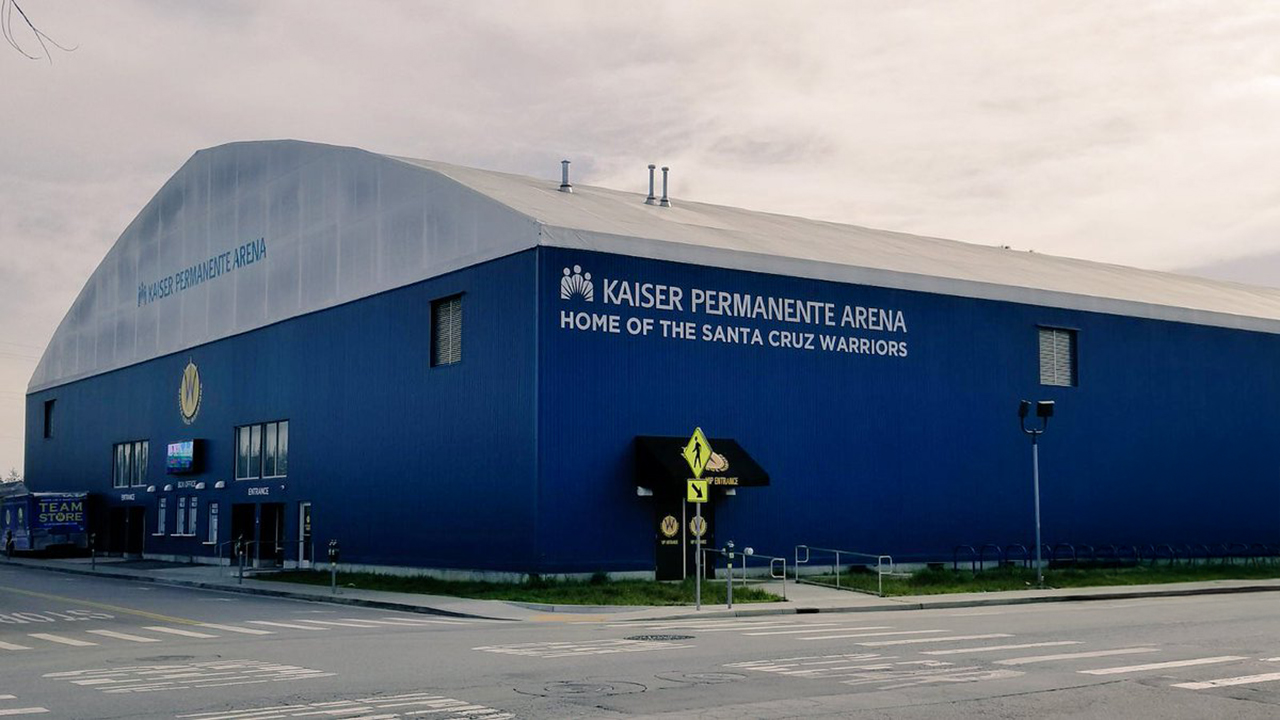
Kaiser Permanente Arena
Santa Cruz, California, United States
2,505 capacity
Kaiser Permanente Arena is an indoor arena located in Santa Cruz, in the U.S. state of California. It has a seating capacity of 2,505 spectators. It hosts the Santa Cruz Warriors of the NBA Development League. It also is the new home of the Santa Cruz Derby Girls of the Women's Flat Track Derby Association. The naming rights were bought by health care consortium Kaiser Permanente despite the company - sponsor of the Warriors' owner, the NBA's Golden State Warriors - not having facilities in Santa Cruz. A $3.5 million loan by the city of Santa Cruz was given to the Warriors to build their arena, with the 1.5-acre lot being provided by the Santa Cruz Seaside Company, owner of the Santa Cruz Beach Boardwalk. Construction ran for 78 days between September and December 2012, halted just a few times by rain. The arena was opened in December 23, 2012, with a victory of the Warriors against the Bakersfield Jam. By April 2014, Kaiser Permanente Arena had 39 sell outs out of the 53 Warriors home games. In the meantime, the Warriors reached two D-League finals. The arena also serves as the home of UC Santa Cruz men's and women's basketball games.
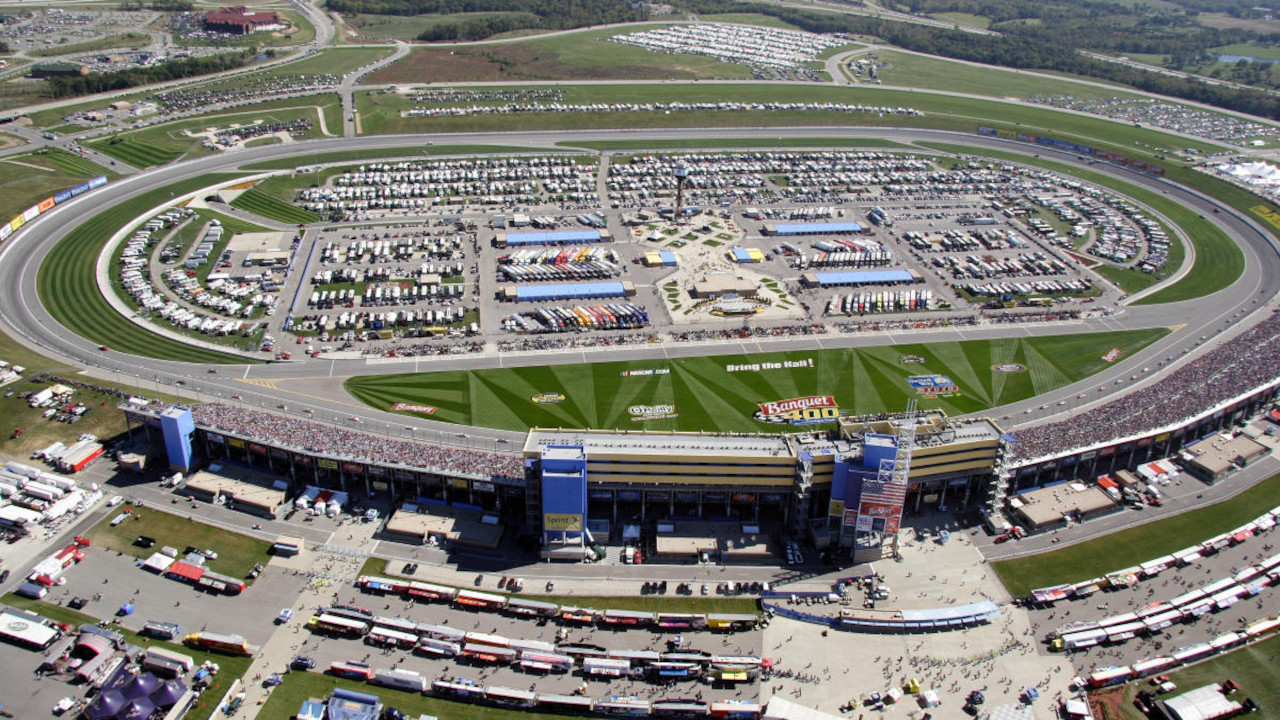
Kansas Speedway
Kansas City, Kansas, United States
48,000 capacity
Nestled in the heart of America's heartland, Kansas Speedway stands as one of NASCAR's most distinctive facilities, offering a unique blend of challenging racing conditions and Midwestern hospitality. This 1.5-mile tri-oval has carved out its own identity within the NASCAR Cup Series since opening in the early 2000s, becoming known for producing some of the sport's most memorable battles and unexpected outcomes. Built on the site of a former agricultural area in Kansas City, Kansas, the speedway was designed to bring premier motorsports entertainment to a region hungry for top-tier racing action. The facility's construction represented a significant investment in the area's sporting infrastructure, creating a world-class venue that would serve racing fans across the Great Plains and beyond. From its inception, Kansas Speedway was engineered to meet the demanding specifications required for NASCAR's premier series while incorporating modern amenities and safety features. The track's configuration presents a fascinating challenge for drivers and teams alike. Unlike many of its sister facilities in NASCAR's lineup of intermediate speedways, Kansas Speedway features progressive banking that increases from the inside to the outside of the racing surface. This variable banking creates multiple racing grooves, allowing drivers to choose different lines around the track depending on their car's handling characteristics and race strategy. The front stretch measures longer than the back stretch, creating an asymmetrical layout that adds complexity to aerodynamic packages and setup decisions. One of the most distinctive features of Kansas Speedway is its relatively flat banking in the turns compared to other intermediate tracks on the circuit. The banking measures approximately 15 degrees in turns one and two, and 17 degrees in turns three and four, with additional progressive banking that allows the track surface to bank up to 20 degrees on the outside edge. This configuration, combined with the track's width of approximately 75 feet, creates opportunities for side-by-side racing and multiple passing zones throughout each circuit of the facility. The racing surface at Kansas Speedway has evolved significantly since the track first opened. Originally constructed with a concrete surface, the track underwent a major reconfiguration that included the installation of an asphalt racing surface, which eventfulally changed the racing characteristics and driver approach to the facility. This transformation marked a pivotal moment in the track's history, as it shifted from producing single-file, aerodynamically dependent racing to creating opportunities for more diverse racing lines and passing opportunities. Kansas Speedway's location in the geographic center of the United States has made it a popular destination for fans traveling from across the region. The facility's capacity of 48,000 provides an intimate atmosphere compared to some of NASCAR's larger venues, while still offering excellent sightlines from virtually every seat in the facility. The speedway's design incorporates modern amenities including wide concourses, diverse food and beverage options, and comprehensive fan engagement areas that reflect the track's commitment to providing a complete entertainment experience. Weather has played a significant role in many of Kansas Speedway's most memorable moments. The facility's location in "Tornado Alley" has led to several rain delays and weather-related complications that have affected race outcomes and created eventful storylines. The track's exposure to prairie winds also creates unique aerodynamic challenges for drivers, as crosswinds and shifting wind patterns can significantly impact car handling and race strategy throughout an event. The speedway has become particularly known for producing unexpected winners and eventful finishes. The track's characteristics often reward drivers who can adapt their driving style throughout a race, as track conditions and tire wear create evolving challenges from green flag to checkered flag. Kansas Speedway's pit road and garage area were designed with modern NASCAR operations in mind, featuring wide pit stalls and comprehensive garage facilities that can accommodate the complex logistical requirements of contemporary NASCAR competition. The facility's infrastructure supports not only Cup Series events but also other NASCAR touring series and driving experiences that bring racing action to the facility throughout the year. The economic impact of Kansas Speedway extends well beyond race weekends, as the facility serves as a catalyst for tourism and economic development in the Kansas City metropolitan area. The speedway has become a landmark destination that attracts visitors from across the Midwest and beyond, contributing significantly to the local hospitality and service industries while providing high-profile exposure for the region on national television broadcasts. Today, Kansas Speedway continues to evolve as both a racing facility and entertainment destination. The track remains committed to providing challenging, competitive racing while enhancing the fan experience through facility improvements and expanded programming. Its position as one of NASCAR's newer facilities allows it to incorporate modern design principles and technologies while maintaining the essential character that has made it a respected and challenging venue for the sport's top competitors. The speedway's future appears bright as it continues to build upon its reputation for producing compelling racing and serving as a premier entertainment destination in the American heartland, maintaining its important role in NASCAR's diverse portfolio of racing venues.
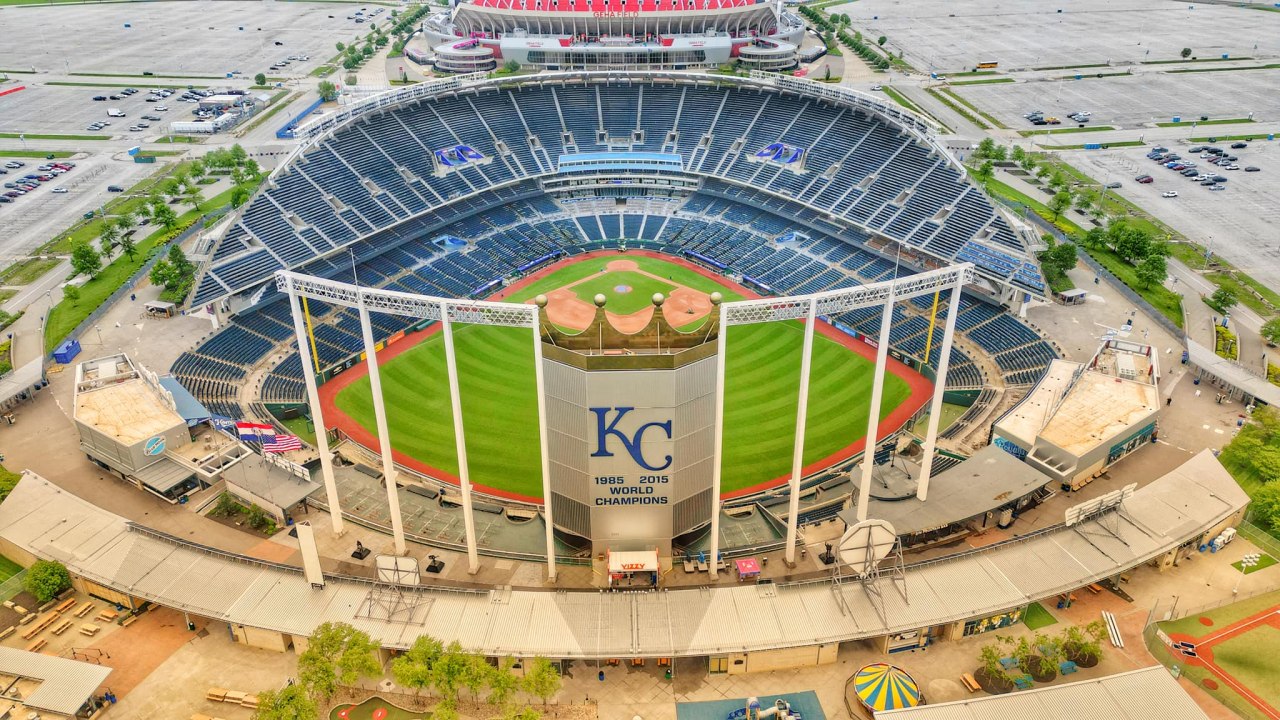
Kauffman Stadium
Kansas City, MO, United States
49,625 capacity
Kauffman Stadium (/ˈkɔːfmən/), often called "The K", is a baseball stadium located in Kansas City, Missouri. It is the home ballpark of the Kansas City Royals of Major League Baseball (MLB). It is part of the Truman Sports Complex together with the adjacent Arrowhead Stadium, home of the Kansas City Chiefs of the National Football League (NFL). The stadium is named for Ewing Kauffman, the founder and first owner of the Royals. It opened in 1973 as Royals Stadium and was named for Kauffman twenty years later on July 2, 1993. Since its last major renovation in 2009, the listed seating capacity is 37,903. Kauffman Stadium was built specifically for baseball during an era when building multisport "cookie-cutter" stadiums was commonplace. It is often held up along with Dodger Stadium (1962) in Los Angeles as one of the best examples of modernist stadium design. It is currently the only stadium in the American League to be named after a person and is also one of eight stadiums in Major League Baseball that does not have a corporate-sponsored name

Korea International Circuit
Nestled in the South Jeolla Province of South Korea, approximately 400 kilometers south of Seoul, the Korea International Circuit stands as Asia's most ambitious Formula One venue and a testament to the country's growing motorsport aspirations. Built specifically to host Formula One racing, this 5.615-kilometer circuit represents South Korea's bold entry into the pinnacle of international motorsport. Designed by renowned track architect Hermann Tilke, the Korea International Circuit was conceived as part of a broader development project in the Yeongam region. The facility was constructed with modern Formula One requirements in mind, featuring state-of-the-art safety systems, extensive run-off areas, and infrastructure capable of accommodating the complex logistical demands of a contemporary Grand Prix weekend. The circuit's creation marked South Korea's determination to establish itself on the global motorsport map, following the successful examples of other Asian nations like Japan, Malaysia, and Singapore. The track layout presents a fascinating blend of technical challenges and high-speed sections that test every aspect of a racing car's capabilities. Starting with a lengthy main straight that stretches over one kilometer, drivers face their first major challenge at Turn 1, a tight right-hand corner that often becomes a focal point for overtaking attempts and first-lap incidents. This corner leads into a series of medium-speed technical sections that demand precise car setup and driver finesse. One of the circuit's most distinctive features is its combination of elevation changes and varied corner types. The track flows through a series of undulations that add complexity to both vehicle dynamics and racing lines. The middle sector features a particularly challenging sequence where drivers navigate through a combination of fast sweeping corners and tighter technical sections, creating opportunities for different racing lines and strategic positioning. The final sector returns drivers to the main straight via a series of corners that provide additional overtaking opportunities, particularly into the penultimate corner where late braking can yield position changes. The track surface, built to modern standards, provides good grip levels while still allowing for multiple racing lines, though tire degradation has proven to be a significant factor during race weekends. From an architectural standpoint, the Korea International Circuit showcases impressive infrastructure development. The main grandstand and pit complex were designed to international FIA Grade 1 standards, featuring modern hospitality facilities, media centers, and team areas. The paddock area provides ample space for the complex logistics of Formula One, while the surrounding infrastructure was developed to support the influx of international visitors during race weekends. The circuit made its Formula One debut as part of the championship calendar, representing a significant milestone for Korean motorsport. The early races at the venue were notable for their unique challenges, including weather conditions that often added drama to race weekends. The Korean Grand Prix quickly established itself as an unpredictable event where changing conditions and the relatively unfamiliar track layout created opportunities for surprising results. Several memorable moments have already etched themselves into the circuit's racing history. Weather has played a particularly prominent role in many of these occasions, with rain and changing track conditions creating eventful race scenarios. The combination of the track's technical demands and variable weather patterns has produced races where strategy, tire selection, and driver skill have proven decisive factors. What makes the Korea International Circuit particularly special is its role in expanding Formula One's global reach into new markets. The facility represents significant investment in motorsport infrastructure and demonstrates South Korea's commitment to establishing a lasting presence in international racing. The track's design philosophy balances the need for exciting racing with modern safety standards, creating a venue that challenges drivers while maintaining the highest safety protocols. Beyond Formula One, the circuit has served as a venue for various other motorsport events and automotive activities. The facility's comprehensive infrastructure makes it suitable for hosting different categories of racing, driver training programs, and automotive industry events. The track's location and facilities have positioned it as a potential hub for motorsport development in the region. The circuit's current status reflects the broader challenges facing Formula One venue economics and the evolving landscape of international motorsport. While the facility remains a remarkable achievement in track design and construction, its future role in global motorsport continues to evolve based on various economic and strategic considerations. The Korea International Circuit's contribution to motorsport extends beyond just hosting races. It represents the globalization of Formula One and the sport's expansion into new territories and markets. The venue demonstrates how modern circuit design can create challenging racing environments while meeting contemporary safety and infrastructure requirements. Today, the Korea International Circuit stands as a significant achievement in motorsport facility development, showcasing advanced engineering and design principles. Its 5.615-kilometer layout continues to represent the potential for exciting racing, while its broader infrastructure demonstrates South Korea's serious commitment to international motorsport. Whether serving as an active racing venue or in other capacities, the circuit remains an important landmark in the ongoing story of Formula One's global expansion and the development of motorsport in Asia.
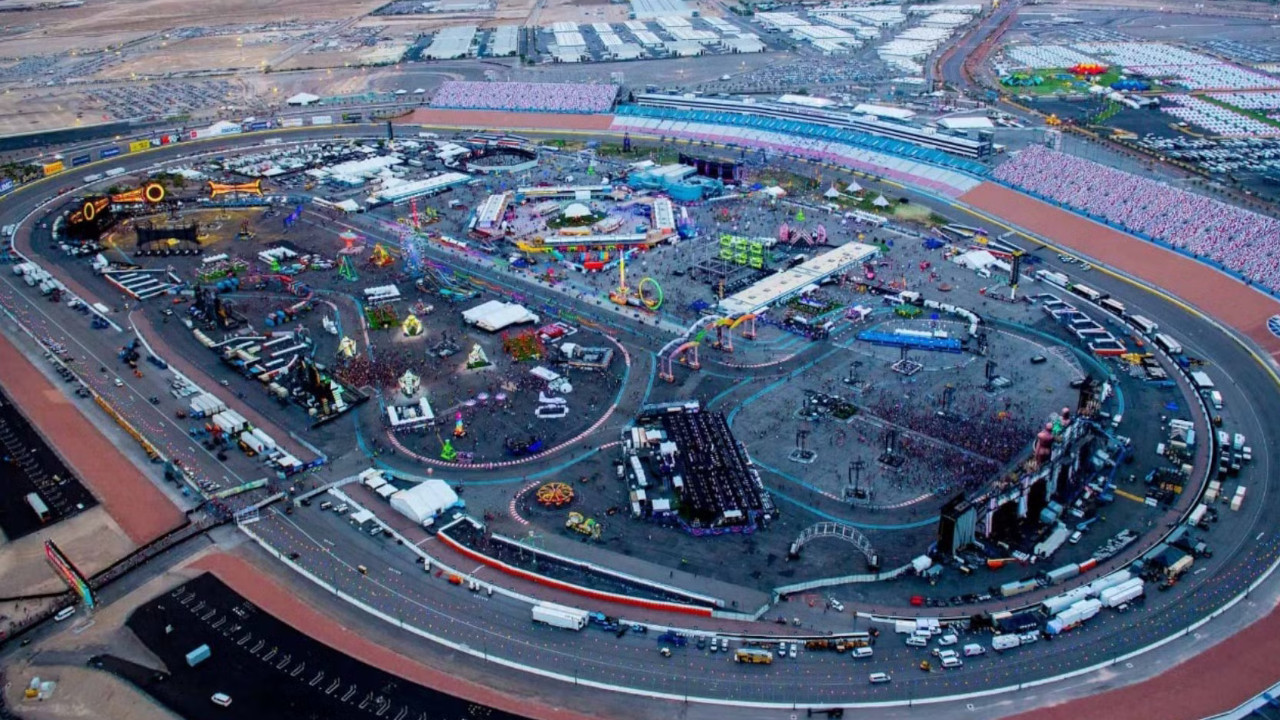
Las Vegas Motor Speedway
Las Vegas, Nevada, United States
80,000 capacity
Rising from the Nevada desert approximately fifteen miles northeast of the Las Vegas Strip, Las Vegas Motor Speedway stands as one of NASCAR's most distinctive venues, combining the spectacle of Sin City with high-speed oval racing. This 1.5-mile tri-oval has become synonymous with eventful finishes, championship battles, and the unique atmosphere that only Las Vegas can provide to motorsport. The facility emerged during NASCAR's expansion era of the 1990s, when the sport was actively seeking to broaden its geographic footprint beyond its traditional Southern strongholds. Las Vegas represented an ideal market—a rapidly growing metropolitan area with no major professional sports teams at the time, situated in a region hungry for major sporting events. The speedway's construction reflected NASCAR's ambitions to create a world-class facility that could accommodate the sport's growing popularity while taking advantage of Las Vegas's reputation as an entertainment destination. Designed as a 1.5-mile D-shaped oval, Las Vegas Motor Speedway features progressive banking that varies around the circuit. The turns are banked at 12 degrees, while the front and back straightaways maintain a relatively flat 9-degree banking. This configuration creates a unique racing dynamic where drivers must adapt their strategies between the more technical turns and the high-speed straightaways. The track's surface, originally concrete, has undergone various treatments and modifications over the years to optimize grip levels and racing quality. The speedway's layout presents several key characteristics that define its racing personality. The front straightaway stretches 1,200 feet, providing ample opportunity for drafting and side-by-side racing heading into Turn 1. The backstretch, at 1,500 feet, is even longer, creating additional passing zones and strategic opportunities. The turns themselves, while moderately banked compared to some NASCAR venues, offer multiple racing grooves that allow for various racing lines and overtaking opportunities. One of the track's most notable features is its width, which varies from 90 feet in the turns to 55 feet on the straightaways. This varying width creates natural racing dynamics, as drivers can utilize different parts of the track surface to find speed or make passes. The racing surface typically produces side-by-side competition, with the ability for drivers to run multiple grooves through the corners—a characteristic that has led to numerous memorable finishes. The facility's 80,000-seat capacity makes it one of NASCAR's larger venues, with grandstands that provide excellent sightlines of the entire racing surface. The main grandstand offers views of both the start-finish line and the critical Turn 4, where many late-race battles unfold. The speedway's location in the desert provides a unique backdrop, with the surrounding mountains creating a eventful setting for racing events. Las Vegas Motor Speedway has hosted numerous memorable moments throughout its NASCAR history. The track has been the site of multiple championship celebrations, as NASCAR has frequently scheduled Las Vegas races during crucial points in the season. The facility has witnessed eventful last-lap passes, multi-car accidents, and breakthrough victories for drivers seeking their first NASCAR Cup Series wins. The speedway's connection to Las Vegas's entertainment culture has created a unique race weekend atmosphere. The proximity to the Strip means that race weekends often extend well beyond the track, with drivers, teams, and fans taking advantage of the city's numerous entertainment options. This has helped establish Las Vegas as one of NASCAR's most popular destinations for both competitors and spectators. Beyond NASCAR Cup Series competition, Las Vegas Motor Speedway serves as a multi-purpose motorsports facility. The complex includes various racing configurations and has hosted different racing series throughout its history. The facility features additional tracks and configurations that accommodate other forms of motorsport, making it a comprehensive racing destination rather than simply a single-purpose oval. The track's surface characteristics have evolved over the years, with NASCAR and track officials working to optimize racing conditions. The concrete surface provides durability in the harsh desert climate while offering consistent grip levels throughout race distances. Weather rarely impacts racing at Las Vegas, as the desert location typically provides clear skies and minimal precipitation, though desert winds can occasionally influence racing conditions and strategy. Driver feedback about Las Vegas Motor Speedway consistently emphasizes the track's racing characteristics and the unique challenges it presents. The combination of relatively modest banking with long straightaways requires a different approach compared to higher-banked intermediate tracks. Aerodynamics play a significant role, but mechanical grip and handling remain crucial factors in lap time and race performance. The speedway's current status reflects its continued importance in NASCAR's annual schedule and its role as a premier motorsports destination in the western United States. The facility continues to invest in improvements and upgrades, maintaining its position as a modern, well-equipped racing venue that meets contemporary NASCAR standards while preserving the unique character that distinguishes it from other tracks on the circuit. Las Vegas Motor Speedway represents more than just another stop on the NASCAR calendar—it embodies the sport's successful expansion into new markets while creating a distinctive racing experience. The combination of competitive racing, notable desert setting, and Las Vegas's unmatched entertainment atmosphere has established this speedway as one of NASCAR's most recognizable and popular venues, continuing to attract fans from across the country to witness high-speed competition in America's entertainment capital.
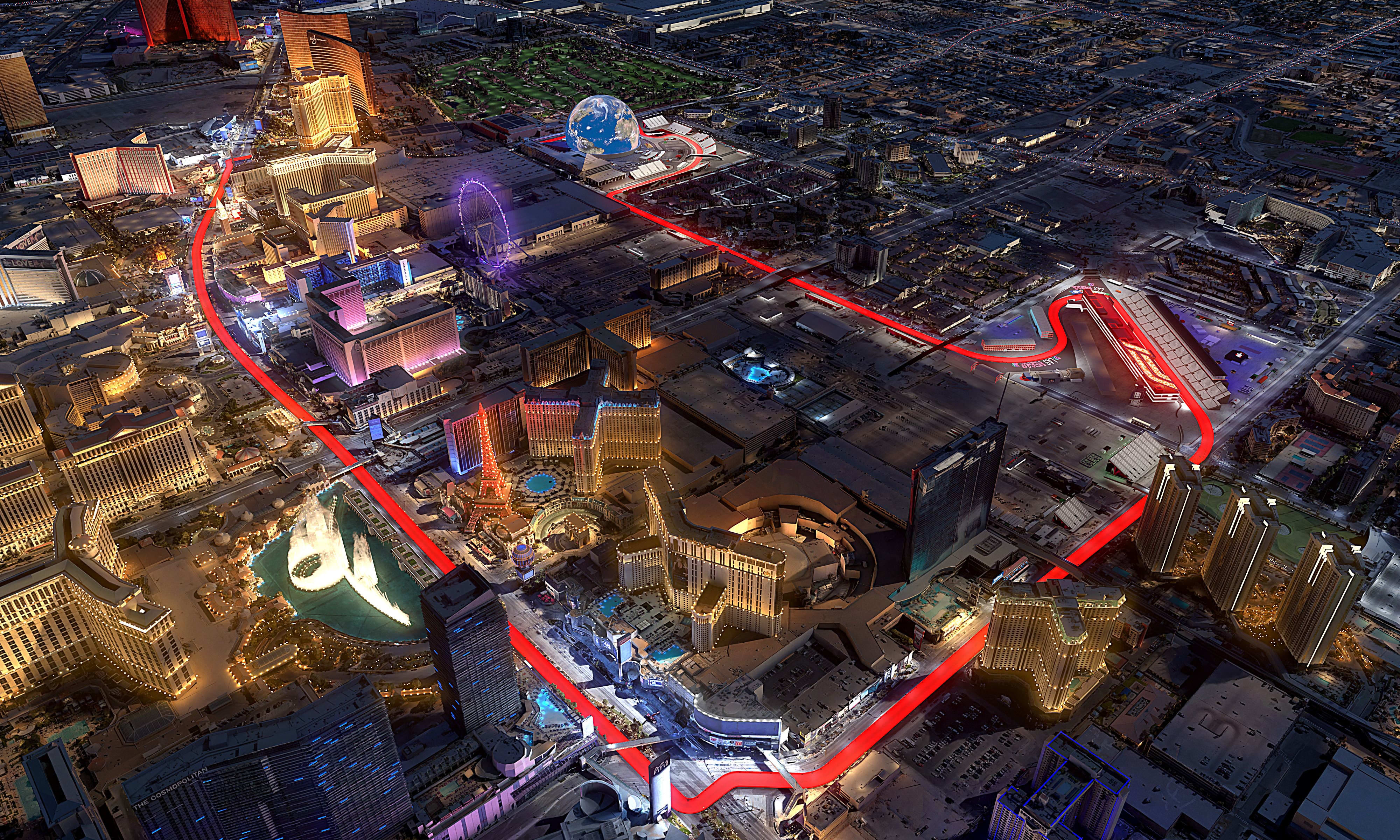
Las Vegas Strip Circuit
Las Vegas, USA
The Las Vegas Strip Circuit is Formula 1's boldest statement about the sport's ambitions in the United States. This notable 6.201-kilometer street circuit runs along the world-famous Las Vegas Strip, passing directly in front of iconic casino-hotels including the Bellagio, Caesars Palace, and the Venetian, creating what may be the most visually notable setting in all of motorsport. The circuit features 17 corners and a 1.9-kilometer main straight along Las Vegas Boulevard where cars reach speeds exceeding 340 km/h — making it the longest and fastest straight on the F1 calendar. The combination of long straights and technical corners, including the demanding Turn 14 hairpin and the chicane sections through the hotel corridors, creates a unique challenge that rewards both straight-line speed and mechanical grip. The inaugural Las Vegas Grand Prix in November 2023 was held at night, with the neon-lit Strip providing a backdrop that no purpose-built circuit could ever replicate. Despite initial controversy over ticket prices and a disrupted practice session when a drain cover damaged Carlos Sainz's car, the race itself delivered a competitive spectacle. Max Verstappen's victory from a difficult qualifying position and Charles Leclerc's battle with Sergio Perez for second demonstrated the circuit's capacity for exciting racing. The event represents a massive investment by Formula 1, which purchased land near the Strip to build permanent pit and paddock facilities. The total investment exceeds $500 million, reflecting F1's commitment to establishing Las Vegas as a cornerstone of its American expansion. Liberty Media's vision of combining the glamour of the Strip with the spectacle of Formula 1 has created an event that transcends traditional motorsport. The November timing of the race means that night-time temperatures can drop below 15°C — cold by F1 standards — creating unique challenges for tyre warm-up and car setup. The track surface, made up of public roads that are repaved specifically for the event, also presents grip challenges that add to the unpredictability. Las Vegas has a motorsport heritage dating back to the 1981 and 1982 Caesars Palace Grand Prix, held in the car park of the famous casino. The modern iteration is incomparably more notable, positioning Las Vegas alongside Monaco and Singapore as one of F1's premier showcase events.
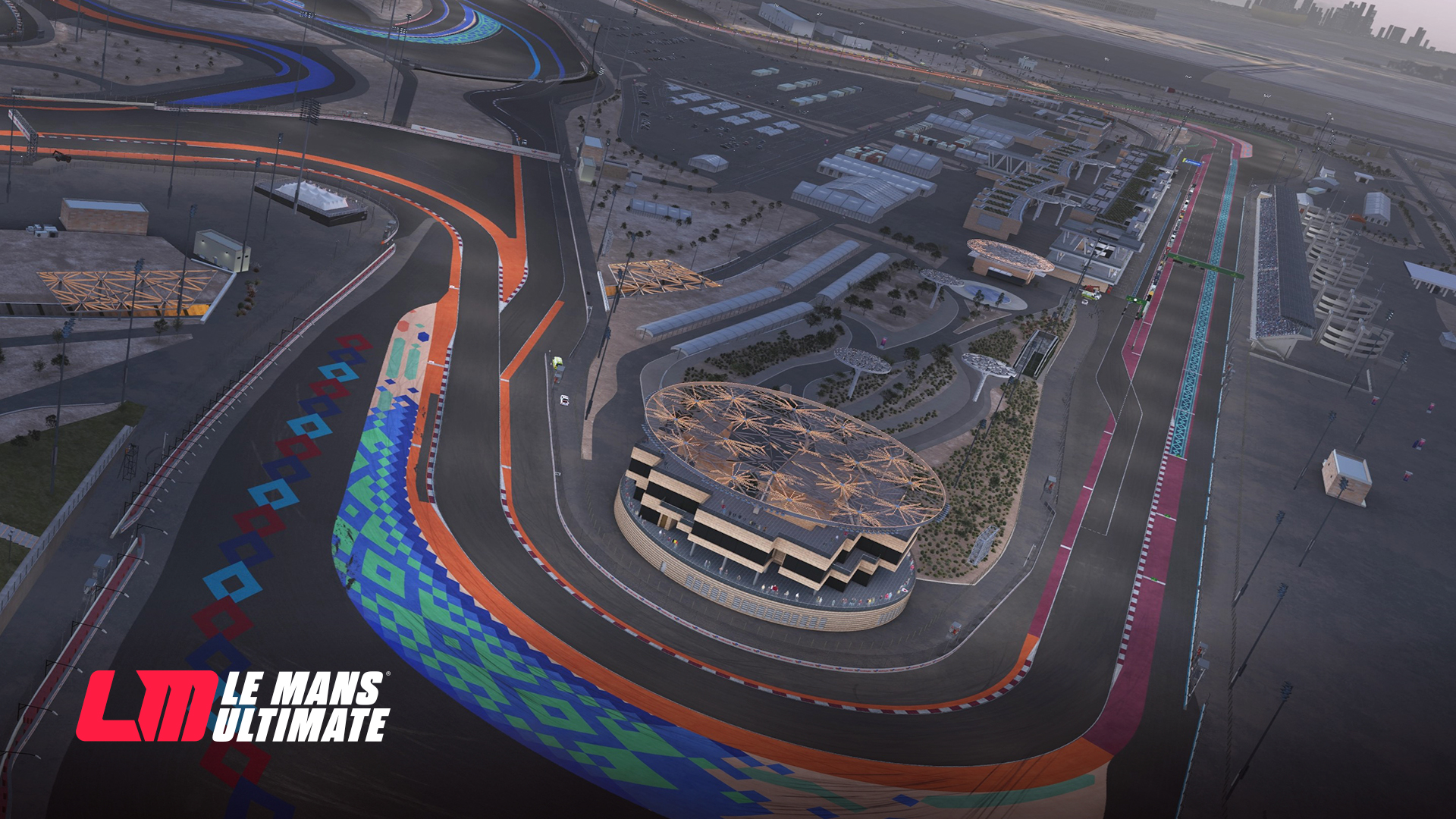
Losail International Circuit
Losail, Qatar
The Losail International Circuit, located in the northern desert outskirts of Doha, Qatar, has rapidly established itself as a significant venue in global motorsport. Originally built in 2004 primarily for MotoGP, the 5.380-kilometer circuit underwent extensive renovations to host its first Formula 1 Grand Prix in 2021 and has been a permanent fixture on the calendar since 2023. The circuit features a flowing, medium-to-high-speed layout with 16 corners that rewards cars with strong aerodynamic balance and good traction out of slow corners. The long main straight provides the primary overtaking opportunity, while the series of fast sweeps through the middle sector tests the limits of tyre grip and car stability. The track surface, originally laid for motorcycle racing, has been resurfaced and widened to meet F1 specifications, but the abrasive surface still generates significant tyre wear. Qatar's investment in motorsport facilities reflects the country's broader ambition to establish itself as a global sporting hub. The Losail circuit sits alongside a state-of-the-art paddock facility and spectator areas that have been designed to the highest international standards. Night racing capability was added for Formula 1, allowing the Qatar Grand Prix to take place under floodlights and avoid the extreme daytime desert temperatures. The harsh desert environment presents unique challenges for both cars and teams. Sand intrusion onto the track surface can reduce grip levels, particularly in the early sessions, while the temperature differential between day and night affects tyre behaviour and engine cooling. The desert wind can also be a significant factor, creating crosswinds on exposed sections of the track that test car stability.
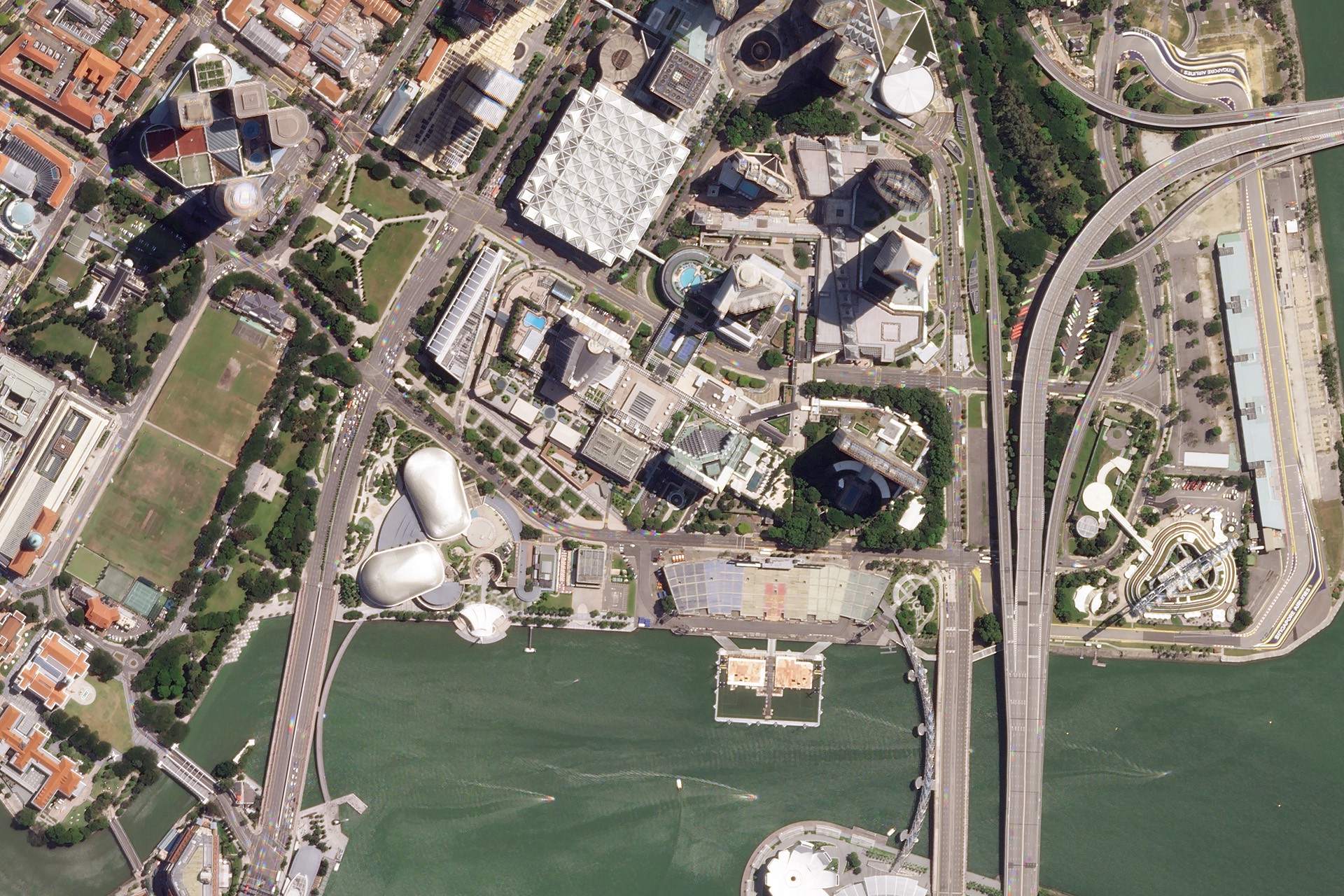
Marina Bay Street Circuit
Singapour, Singapore
90,000 capacity
The Marina Bay Street Circuit in Singapore is one of the most notable and demanding venues on the Formula 1 calendar. Since 2008, it has hosted the Singapore Grand Prix — F1's first-ever night race — transforming the gleaming skyline of Singapore's financial district into a notable backdrop for wheel-to-wheel racing under floodlights. The 4.940-kilometer street circuit winds through the heart of Singapore, passing iconic landmarks including the Esplanade theatres, the Padang cricket ground, the historic City Hall, and the Marina Bay Sands hotel. The track features 19 corners — more than almost any other circuit on the calendar — creating an intense physical challenge that pushes drivers to their limits over a race that typically approaches the two-hour time limit. The unique night-time setting of the Singapore Grand Prix creates an atmosphere unlike any other in Formula 1. The circuit is illuminated by over 1,500 lighting projectors that make the track surface four times brighter than a typical football stadium, while the surrounding city lights provide a mesmerizing backdrop. The contrast between the brightly lit track and the glittering skyline produces some of the most iconic television images in the sport. The tight, bumpy street surface demands extreme concentration for every one of the race's 61 laps. The combination of tropical heat, high humidity, and the physical demands of the circuit means that drivers can lose up to 3 kilograms of body weight during the race, making it one of the most physically gruelling events of the season. The security barriers lining every metre of the track leave zero margin for error, and the high number of safety car deployments add a strategic wildcard that has produced many surprising results. Notable moments at Marina Bay include Sebastian Vettel's dominant performances in the Red Bull era, when his aggressive driving style perfectly suited the low-speed demands of the circuit. The controversial 2008 inaugural race, later revealed to involve the "Crashgate" scandal, remains one of the most infamous episodes in F1 history. Carlos Sainz's emotional maiden victory in 2023 demonstrated that the circuit continues to produce surprises and drama. The Singapore Grand Prix weekend extends far beyond the racing, with major entertainment acts, cultural events, and culinary experiences throughout the Marina Bay area. The combination of world-class racing, notable setting, and vibrant entertainment has established Singapore as one of the crown jewels of the modern F1 calendar.

Martinsville Speedway
Ridgeway, VA, United States
65,000 capacity
Nestled in the rolling hills of southern Virginia, Martinsville Speedway stands as NASCAR's oldest continuously operated venue, earning its place as one of the most revered short tracks in American motorsport. This half-mile paperclip-shaped oval has been testing drivers' skills and patience since the sport's earliest days, creating a legacy that spans generations of racing excellence. Clay Earles founded the facility in 1947, transforming a former cornfield in Ridgeway, Virginia, into what would become known as "The Paperclip" due to its distinctive elongated oval shape. The track opened its doors during NASCAR's formative years, hosting its first Cup Series race in 1949, just one year after NASCAR's official founding. Earles' vision was to create an intimate racing venue where fans could experience the intensity of stock car racing up close, a goal that has remained central to Martinsville's identity throughout its history. The track's unique configuration sets it apart from virtually every other venue on the NASCAR circuit. Measuring exactly 0.526 miles around, Martinsville features extremely tight turns with banking of only 12 degrees, connected by long straightaways that create deceptive opportunities for speed. The corners are so sharp that drivers must slow eventfulally from straightaway speeds exceeding 120 miles per hour to negotiate the turns at roughly half that pace. This eventful speed differential, combined with the track's narrow 40-foot width in the turns, creates a bottleneck effect that makes passing extremely challenging and requires precision driving. The racing surface itself tells a story of evolution and adaptation. Originally dirt, the track was paved with asphalt in 1955, though it retained concrete in the turns until a complete repaving project. The surface characteristics contribute significantly to tire wear and handling challenges, with drivers constantly battling grip levels that change throughout a race distance. The track's relatively flat banking means drivers cannot rely on gravitational assistance through the corners, instead depending entirely on mechanical grip and driving technique. What truly distinguishes Martinsville from other NASCAR venues is its unique blend of characteristics that create a style of racing reminiscent of short-track Saturday night action, but at the sport's highest level. The combination of tight quarters, heavy braking zones, and limited passing opportunities often leads to contact between competitors, earning the facility its reputation as one of NASCAR's most physically demanding venues. Drivers frequently describe racing at Martinsville as requiring equal parts patience and aggression, as the temptation to force passes often results in contact and potential retaliation. The facility's grandfather clock trophies have become iconic symbols in NASCAR, awarded to race winners since 1964. These unique trophies, standing over three feet tall, represent one of the most distinctive prizes in American motorsport and reflect the track's connection to traditional craftsmanship and timeless racing values. The tradition began when track officials sought a trophy that would reflect the facility's Virginia heritage and the patience required to succeed on its challenging surface. Throughout its history, Martinsville has witnessed countless memorable moments that have shaped NASCAR lore. The track has been the site of numerous last-lap eventful finishes, career-defining victories, and championship-deciding races. Its spring and fall race dates have often played crucial roles in determining playoff positioning and championship outcomes, adding extra significance to victories achieved on its challenging surface. The facility has also been notable for producing some of NASCAR's most heated rivalries, as the close-quarters racing and difficulty of passing often lead to on-track incidents that carry over between competitors. The venue's intimate atmosphere, with grandstands rising steeply above the racing surface, creates an environment where fan engagement reaches levels rarely matched at larger facilities. With a current capacity of approximately 65,000, spectators enjoy clear sightlines to the entire racing surface, allowing them to witness the strategic chess match that unfolds as drivers position themselves for potential passing opportunities. The facility's famous concession stands, particularly known for their signature hot dogs and other regional specialties, have become part of the Martinsville experience for generations of race fans. Martinsville's role in NASCAR's playoff system has elevated its importance in recent years, as the facility typically hosts elimination races where championship hopes are either advanced or dashed. The track's unforgiving nature and limited margin for error make it a fitting venue for high-stakes competition, where a single mistake or moment of overly aggressive driving can end a season's championship aspirations. The facility continues to balance respect for its historical significance with necessary modernization efforts. Recent improvements have focused on enhancing fan amenities while preserving the intimate atmosphere and challenging racing characteristics that define the Martinsville experience. These upgrades ensure the venue remains relevant in contemporary NASCAR while maintaining the essential elements that have made it special for over seven decades. Today, Martinsville Speedway maintains its position as one of NASCAR's most anticipated tour stops, representing a connection to the sport's roots while continuing to challenge the world's best stock car drivers. Its enduring appeal lies in its ability to strip away aerodynamic advantages and tire strategy complexities, reducing racing to its most fundamental elements: driver skill, patience, and the ability to execute under pressure. In an era of increasingly complex racing technology, Martinsville remains a venue where driving talent and racecraft ultimately determine success, preserving the essence of what made stock car racing compelling from its earliest days.
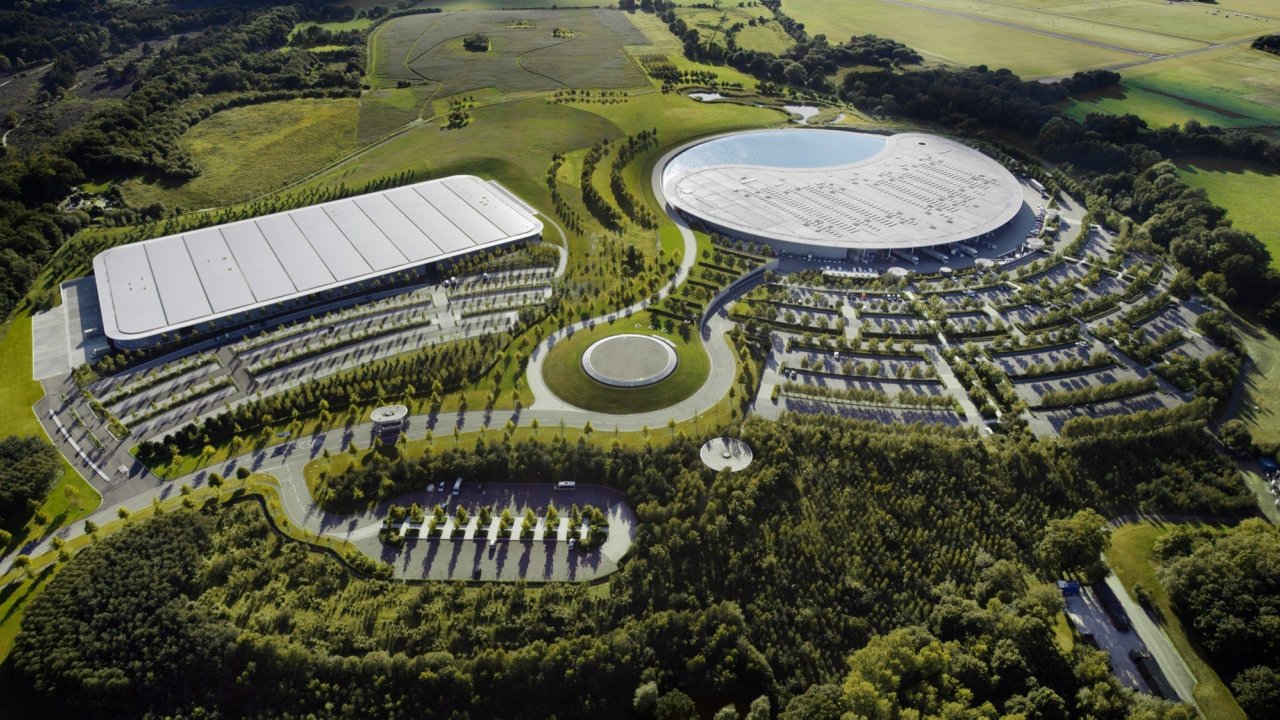
McLaren Technology Centre
Woking, England, United Kingdom
0The McLaren Technology Centre is the headquarters of the McLaren Group and its subsidiaries, located on a 500,000 m2 (50 ha) site in Woking, Surrey, England. The complex consists of two buildings: the original McLaren Technology Centre, which acts as the main headquarters for the group, and the newer McLaren Production Centre, primarily used for manufacturing McLaren Automotive cars. The main building is a large, roughly semi-circular, glass-walled building, designed by architect Norman Foster and his company, Foster + Partners. The building was short-listed for the 2005 Stirling Prize, which was won by the Scottish Parliament building. By 2015, approximately 1,500 people worked at the Technology Centre. The Technology Centre also serves as the home to McLaren Racing, McLaren Automotive, and other companies of the McLaren Group. It was also the main setting of McLaren's cartoon, Tooned. In 2011, the size of the centre was doubled after a second building, the 34,500 m2 (371,000 sq ft) McLaren Production Centre, was built. McLaren is also planning an extension to this building to be used as an applied technology centre, as well as to house a new wind tunnel and simulator for McLaren Racing. The wind tunnel became operational by October 2023.
Memorial Coliseum
Portland, Oregon, United States
Nestled in the heart of Portland, Oregon, Memorial Coliseum stands as one of NASCAR's most distinctive and historically significant venues, representing a unique chapter in American motorsport history. This iconic facility has carved out a special place in racing lore through its unconventional setting and the remarkable events it has hosted over the decades. Originally constructed as a multipurpose arena, Memorial Coliseum was transformed into a racing venue that defied conventional expectations of what a NASCAR track should look like. Unlike the sprawling superspeedways and traditional oval circuits that dominate the NASCAR landscape, this Portland facility offered something entirely different – an indoor racing experience that brought stock car competition into an intimate, enclosed environment. The venue's adaptation for motorsport represented an innovative approach to racing that captured the imagination of fans and drivers alike. The facility's unique characteristics set it apart from virtually every other venue in NASCAR's diverse portfolio of racing locations. The indoor nature of Memorial Coliseum created an atmosphere unlike any other, with the roar of engines reverberating off the walls and ceiling, amplifying the sensory experience for spectators. The confined space meant that fans were positioned much closer to the action than at traditional outdoor tracks, creating an intensity and intimacy that was both competitive and unprecedented in stock car racing. Racing at Memorial Coliseum presented drivers with a completely different set of challenges compared to their usual outdoor oval experiences. The venue's configuration required careful navigation of tight quarters, with limited room for error and unique sight lines that tested even the most experienced competitors. The indoor environment also meant dealing with different air circulation patterns and atmospheric conditions that could affect both car performance and driver comfort throughout extended racing sessions. The surface characteristics of the venue contributed significantly to the racing dynamics, with drivers needing to adapt their typical setups and driving styles to maximize performance in this specialized environment. The confined nature of the facility meant that overtaking opportunities were at a premium, requiring strategic thinking and precise execution. Every move had to be calculated, as the margin for error was significantly reduced compared to the wide-open spaces of traditional NASCAR venues. Memorial Coliseum's place in NASCAR history extends beyond its physical uniqueness to encompass the memorable moments and races that unfolded within its walls. The venue became synonymous with close-quarters competition and unpredictable racing, where field position and strategy took on heightened importance. The indoor setting created a pressure-cooker atmosphere that often produced exciting finishes and unexpected outcomes, contributing to the venue's growing reputation as a must-see destination for racing enthusiasts. The facility's significance in the broader context of NASCAR's evolution cannot be understated. At a time when the sport was expanding its horizons and experimenting with different formats and venues, Memorial Coliseum represented bold thinking about how and where stock car racing could be presented. It demonstrated NASCAR's willingness to embrace unconventional approaches and bring racing to new audiences in unique settings. Portland's motorsport heritage found a perfect expression in Memorial Coliseum, as the venue became a bridge between the region's racing enthusiasm and NASCAR's national presence. The Pacific Northwest had always maintained a strong connection to motorsport, and the coliseum provided a focal point for that passion while introducing the area to top-level stock car competition in an accessible, exciting format. The venue's design elements and architectural features contributed to its distinctive character as a racing facility. The enclosed nature of the building meant that lighting, ventilation, and acoustics all played crucial roles in creating the racing environment. These factors combined to produce an atmosphere that was both unique in NASCAR and compelling for spectators who might never have experienced indoor stock car racing before. Throughout its NASCAR involvement, Memorial Coliseum demonstrated the sport's adaptability and willingness to explore new frontiers. The venue showed that exciting racing could happen in settings far removed from the traditional oval speedways, opening up possibilities for how the sport might reach new markets and engage different audiences. This experimental spirit reflected NASCAR's ongoing evolution and its commitment to innovation. The legacy of Memorial Coliseum in NASCAR circles extends beyond the specific races held there to encompass the broader lessons learned about alternative venue formats and the potential for stock car racing in non-traditional settings. The facility proved that with proper planning and execution, NASCAR could successfully adapt to virtually any appropriate venue, maintaining the sport's competitive integrity while offering fans entirely new experiences. Today, Memorial Coliseum stands as a testament to NASCAR's adventurous spirit and willingness to push boundaries in pursuit of exciting racing and expanded fan engagement. While the motorsport landscape has continued to evolve, the venue's contribution to NASCAR history remains significant, representing a bold experiment that succeeded in bringing stock car racing to new heights of accessibility and excitement. The facility continues to serve the Portland community in various capacities, but its place in racing history is secure as one of the most unique and memorable venues ever to host NASCAR competition.
Mercedes-AMG PETRONAS F1 Team
Germany
0One of Formula 1's most dominant forces emerged from a transformation that would reshape the sport's competitive landscape. Mercedes-AMG PETRONAS F1 Team represents the works Formula 1 operation of Mercedes-Benz, headquartered in Brackley, England, with its power unit division based in Brixworth, also in England. While the team carries German automotive heritage through its Mercedes-Benz connection, its operational heart lies in the English Midlands, where decades of racing expertise have been refined into championship-winning precision. The team's foundation traces back to the acquisition of the Brawn GP team, which itself had risen from the ashes of Honda's Formula 1 withdrawal. When Mercedes-Benz decided to return as a full works team rather than merely an engine supplier, they purchased the championship-winning Brawn operation, inheriting not only facilities but also the technical expertise and personnel that had delivered both drivers' and constructors' championships. This strategic move marked Mercedes' return to Formula 1 as a complete manufacturer entry, echoing their earlier involvement in the sport during the 1950s when the Silver Arrows dominated grand prix racing. The Brackley facility serves as the nerve center for one of motorsport's most sophisticated operations. This state-of-the-art headquarters houses everything from design and engineering departments to the manufacturing facilities where race cars are born. The complex features advanced wind tunnel facilities, where aerodynamic development takes place throughout the season, alongside simulation centers that allow drivers and engineers to virtually test setups and strategies before arriving at circuits. The facility's machine shops produce components with tolerances measured in fractions of millimeters, while the composite department crafts carbon fiber bodywork that must balance strength, weight, and aerodynamic efficiency. Meanwhile, the power unit division at Brixworth represents the pinnacle of automotive engineering excellence. This facility, originally established for Mercedes' road car engine development, was transformed into a Formula 1 power unit center when the sport transitioned to turbo-hybrid technology. The Brixworth operation doesn't just serve the works team but also supplies power units to customer teams, making it one of the most influential facilities in contemporary Formula 1. The complex houses dyno rooms where engines undergo countless hours of testing, alongside clean rooms where the intricate hybrid systems are assembled with surgical precision. What distinguishes this team operation is the seamless integration between its German automotive heritage and British motorsport expertise. The partnership with PETRONAS brings advanced lubricant technology that plays a crucial role in extracting maximum performance from the sophisticated power units. This collaboration extends beyond mere sponsorship, with PETRONAS' fluid technology specialists working directly with Mercedes engineers to develop race-specific solutions that can provide competitive advantages measured in hundredths of seconds. The team's approach to competition reflects this multi-national expertise. Their race operations demonstrate meticulous attention to detail, from strategic planning that considers countless variables to pit stop procedures that regularly set benchmarks for speed and reliability. The organization's depth becomes evident during race weekends, where teams of specialists monitor everything from tire temperatures to fuel consumption, making real-time adjustments that can determine championship outcomes. Beyond the technical facilities, the team has cultivated a culture that attracts top talent from across the motorsport industry. Engineers, mechanics, and support staff are drawn not only by the resources available but also by the organization's commitment to continuous improvement. The facilities include advanced fitness centers and mental performance areas, recognizing that human performance is just as crucial as mechanical excellence in Formula 1's demanding environment. The team's impact extends far beyond the confines of its Brackley and Brixworth bases. Their success has elevated the profile of both locations, transforming them into pilgrimage sites for motorsport enthusiasts and inspiring a new generation of engineers and technicians. The organization regularly hosts educational programs and partnerships with universities, ensuring that the technical knowledge developed within their walls contributes to broader automotive advancement. Innovation remains at the core of the operation's philosophy. The facilities house departments dedicated to exploring future technologies, from advanced materials to energy recovery systems that may eventually find their way into road cars. This forward-thinking approach ensures that the team remains competitive while contributing to Mercedes-Benz's broader automotive development goals. Today, Mercedes-AMG PETRONAS F1 Team continues to set standards for operational excellence within Formula 1. Their facilities represent more than mere racing infrastructure; they embody the convergence of traditional motorsport craftsmanship with cutting-edge technology. The organization's dual-site operation demonstrates how modern Formula 1 teams must master multiple disciplines simultaneously, from aerodynamics and chassis development at Brackley to power unit innovation at Brixworth. The team's influence on Formula 1's technical direction remains profound, with developments originating from their facilities often influencing regulatory discussions and competitive strategies throughout the paddock. Their commitment to pushing boundaries while maintaining the highest standards of engineering excellence ensures that both Brackley and Brixworth will remain pivotal locations in Formula 1's ongoing evolution, continuing to produce the innovations that keep the sport at the forefront of automotive technology.
Miami International Autodrome
Miami, USA
Nestled in the heart of Miami Gardens, Florida, the Miami International Autodrome represents one of Formula 1's most ambitious recent expansions into the American market. This purpose-built circuit emerged from a vision to bring premier motorsport to South Florida, capitalizing on the region's vibrant culture and growing appetite for international racing. The autodrome's development marked a significant milestone in Formula 1's strategic push to establish a stronger foothold in the United States. Built around the Hard Rock Stadium complex, home to the Miami Dolphins NFL team, the circuit ingeniously integrates existing infrastructure while creating a unique racing environment that reflects Miami's distinctive character. The track's design philosophy embraces both the technical demands of modern Formula 1 racing and the entertainment expectations of American motorsport fans. Stretching 5.412 kilometers through its 57-lap configuration, the Miami International Autodrome presents drivers with a compelling mix of high-speed sections and technical challenges. The circuit's layout winds through multiple elevation changes, a rarity in Florida's typically flat landscape, created through careful earthwork and engineering. These undulations add complexity to car setup and provide natural amphitheater-like viewing areas for spectators. The track surface, constructed to modern FIA specifications, offers excellent grip characteristics while presenting the typical challenges associated with new circuits. Initial rubber buildup during race weekends creates evolving track conditions that demand adaptability from teams and drivers alike. The surface's composition and preparation follow contemporary standards designed to promote competitive racing while ensuring safety at Formula 1's demanding speeds. Several corners have already established themselves as defining features of the Miami circuit. The opening sequence presents drivers with a flowing combination that rewards commitment and precise positioning, setting the tone for lap times and race strategies. Mid-circuit sections incorporate slower, more technical passages that emphasize mechanical grip and aerodynamic efficiency, while faster portions test power unit performance and aerodynamic balance at higher speeds. Overtaking opportunities exist at multiple points around the circuit, with several corners feeding into longer straights that provide slipstream advantages for pursuing drivers. The track's width varies strategically, creating natural racing lines while offering alternative approaches for drivers seeking to gain positions. DRS zones have been carefully positioned to enhance overtaking potential without compromising the strategic elements that make Formula 1 racing compelling. The circuit's most distinctive characteristic lies in its integration with the surrounding stadium complex and Miami's urban environment. Palm trees and architectural elements unique to South Florida create a visual backdrop unlike any other venue on the Formula 1 calendar. The facility embraces Miami's reputation for style and entertainment, incorporating hospitality areas and fan experiences that reflect the city's cosmopolitan atmosphere. Since hosting its inaugural Formula 1 race, the Miami International Autodrome has quickly established competitive credibility. Max Verstappen's lap record of 1:29.708 demonstrates the circuit's demanding nature and the speeds achievable by contemporary Formula 1 machinery. This benchmark time reflects both the track's technical challenges and the grip levels available from its modern surface preparation. The autodrome's design incorporates extensive run-off areas and safety features that meet Formula 1's stringent requirements. Barrier placement and positioning follow FIA protocols while maintaining sight lines for spectators. The circuit's safety infrastructure represents current best practices in motorsport facility design, ensuring driver protection without compromising the racing spectacle. Weather considerations play a crucial role in the Miami venue's character. South Florida's subtropical climate introduces variables including high temperatures, humidity, and potential rain showers that can eventfulally alter race dynamics. These conditions challenge tire strategies and car cooling systems while creating opportunities for strategic variations during race weekends. The facility extends beyond the race circuit itself, incorporating paddock facilities that accommodate Formula 1's complex logistical requirements. Team garages, media centers, and administrative areas meet contemporary standards while reflecting Miami's architectural sensibilities. The integration of these functional spaces with spectator areas creates a cohesive environment that serves multiple constituencies effectively. Miami International Autodrome's emergence reflects Formula 1's broader globalization strategy and recognition of North America's growing motorsport market. The circuit represents a significant investment in infrastructure designed to serve not only Formula 1 but potentially other major racing series seeking a premium venue in the southeastern United States. The autodrome's operational model emphasizes year-round utilization beyond its marquee Formula 1 event. The facility hosts various automotive activities, corporate functions, and entertainment events that leverage its world-class infrastructure and Miami's tourism appeal. This diversified approach ensures financial sustainability while maintaining the venue's profile between major racing weekends. Looking forward, the Miami International Autodrome continues evolving as teams and drivers develop deeper understanding of its characteristics. Track surface maturation and setup optimization will likely produce faster lap times and closer competition in future seasons. The venue's position in Formula 1's championship calendar and its role in the sport's American expansion remain central to its developing identity. The circuit stands as a testament to Formula 1's adaptability and ambition in creating new traditions while respecting the sport's technical demands. Its unique combination of urban sophistication, challenging layout, and distinctive Miami atmosphere ensures its place as one of Formula 1's most recognizable and strategically important venues in the championship's continued evolution.

Mugello
Mugello, Italy
Nestled in the rolling hills of Tuscany, approximately 35 kilometers northeast of Florence, Autodromo Internazionale del Mugello stands as one of Italy's most challenging and visually notable racing circuits. This 5.245-kilometer track has evolved from a modest motorsport venue into a world-class facility that has hosted some of the most prestigious racing series on the planet, including its memorable debut as a Formula 1 venue. The circuit's origins trace back to 1974 when it was first constructed as a 5-kilometer road course winding through the Tuscan countryside. Originally built with motorcycle racing in mind, Mugello quickly established itself as a favorite among two-wheeled competitors, becoming a permanent fixture on the MotoGP calendar where it hosts the Italian Grand Prix. The track's natural terrain and elevation changes made it an instant classic, challenging riders and drivers with its demanding layout that rewards precision and bravery in equal measure. Ferrari's influence on Mugello cannot be overstated, as the Maranello-based team purchased the circuit in 1988, transforming it into their primary test facility. Under Ferrari's ownership, the track underwent significant modernization and safety improvements while maintaining its essential character as one of Europe's most demanding circuits. The facility serves dual purposes as both a testing ground for Ferrari's Formula 1 operations and a venue for various racing championships throughout the motorsport calendar. The track's layout is a masterpiece of natural topography and thoughtful design, featuring a series of challenging corners that test every aspect of a driver's skill set. The main straight leads into San Donato, a heavy braking zone that often provides overtaking opportunities for those brave enough to attempt late moves. The circuit then flows through a series of medium and high-speed corners, including the challenging Luco and Poggio Secco sections, where precise car setup and driver commitment are essential for quick lap times. One of Mugello's most distinctive features is its eventful elevation changes, with the track rising and falling through the Tuscan hills in a way that creates both notable viewing opportunities for spectators and unique challenges for competitors. The Casanova-Savelli section is particularly notable for its sweeping nature and elevation change, requiring drivers to master both the racing line and the circuit's undulating surface. The track's surface characteristics have evolved over the years, with modern safety requirements necessitating updates while preserving the challenging nature that makes Mugello special. The Arrabbiata corners, a pair of linked turns in the circuit's middle section, represent some of the most technically demanding parts of the lap. These corners require precise entry speeds and commitment through the apex, as small mistakes can result in significant time loss or, worse, contact with the barriers that line much of the circuit. The final sector includes the demanding Bucine corner and the flat-out approach to the main straight, where slipstreaming becomes crucial for overtaking attempts. Mugello made motorsport history when it hosted its first Formula 1 Grand Prix in 2020, stepping in as the venue for the Tuscan Grand Prix during the COVID-19-affected season. This race proved to be one of the most eventful of that championship year, featuring multiple safety car periods and providing Ferrari with the emotional opportunity to compete in Formula 1 at their home circuit. Lewis Hamilton's victory established the current lap record of 1:18.833, a time that showcases the pace required to master this challenging venue over the race distance of 59 laps. The circuit's reputation extends far beyond its single Formula 1 appearance, however. Mugello has hosted numerous other significant motorsport events, including rounds of the World Superbike Championship, various GT racing series, and continuing its long-standing relationship with motorcycle racing through MotoGP. The track's technical demands make it a favorite among professional drivers and riders, who often cite its combination of high-speed sections and technical corners as providing the perfect testing ground for both machine and human performance. What makes Mugello truly special is its ability to maintain the character of a classic European circuit while meeting modern safety and infrastructure standards. The facility features state-of-the-art paddock facilities, medical centers, and media infrastructure, all set against the backdrop of one of Italy's most beautiful regions. The viewing areas around the circuit take advantage of the natural elevation changes, providing spectators with decisive views of multiple corners and the surrounding Tuscan landscape. Current operations at Mugello continue to center around its role as Ferrari's primary test facility, where the team develops and refines their Formula 1 cars throughout the season. The track also maintains an active schedule of racing events, corporate hospitality functions, and driving experiences that allow enthusiasts to experience this legendary circuit firsthand. Its status as both a working test facility and a race venue ensures that Mugello remains at the forefront of motorsport technology and competition. The circuit's legacy is built on its reputation as a pure driver's track, where natural talent, technical skill, and intimate knowledge of the circuit's demands separate the great competitors from the merely good. Whether hosting the drama of MotoGP competition or the precision of Formula 1 testing, Mugello continues to embody the best traditions of European motorsport while adapting to the evolving needs of modern racing. This combination of heritage, challenge, and natural beauty ensures that Autodromo Internazionale del Mugello will remain a jewel in the crown of world motorsport for generations to come.
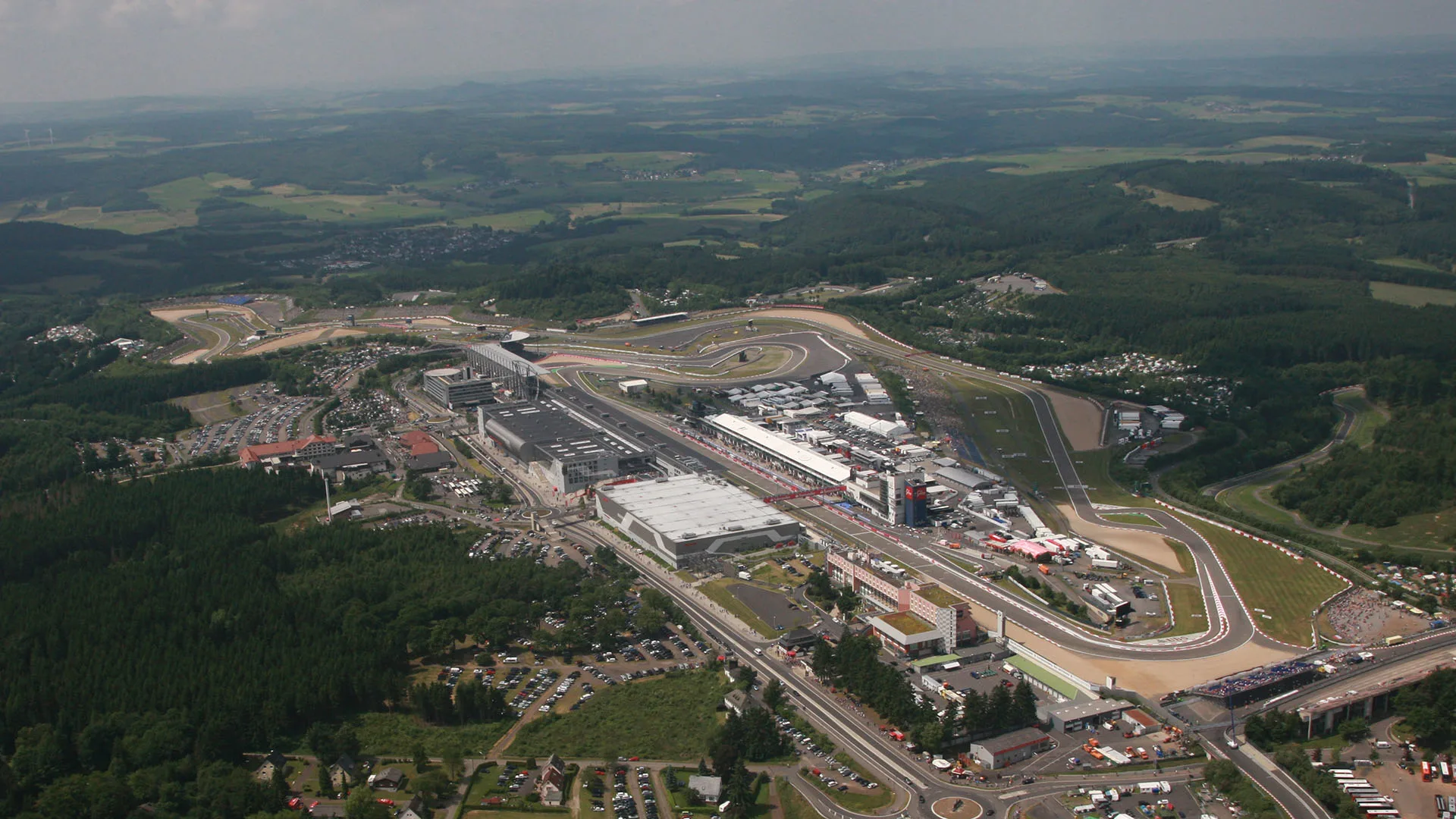
Nürburgring
Germany
Carved through the dense forests of the Eifel Mountains in western Germany, the Nürburgring stands as one of motorsport's most revered and challenging venues. This legendary circuit complex has earned its reputation through nearly a century of racing history, combining the modern Formula 1 facility with the fearsome original Nordschleife to create a destination that commands respect from drivers across all categories of motorsport. The circuit's origins trace back to the 1920s when construction began on what would become known as the "Green Hell." The original 22.8-kilometer Nordschleife, completed in the mid-1920s, wound through the Eifel countryside with over 170 corners and eventful elevation changes that could exceed 300 meters. This mammoth circuit quickly established itself as the ultimate test of driving skill and mechanical reliability, hosting the German Grand Prix and countless other prestigious events throughout the following decades. However, by the 1970s, the Nordschleife had become too dangerous for Formula 1's evolving safety standards. After Niki Lauda's near-fatal crash in 1976, the sport moved away from the original circuit, prompting the construction of a modern Grand Prix facility. The current Formula 1 circuit, measuring 5.148 kilometers, was built in the 1980s and incorporates a section of the original Nordschleife while meeting contemporary safety requirements. The modern Nürburgring Grand Prix circuit presents drivers with a fascinating blend of technical challenges and high-speed sections. The layout begins with a tight first corner complex that often creates bottlenecks during race starts, followed by a series of medium-speed corners that test car balance and aerodynamic efficiency. The track's most distinctive feature is the stadium section, where spectators can witness multiple parts of the circuit simultaneously from the grandstands. One of the circuit's defining characteristics is its significant elevation changes, inherited from its location in the rolling Eifel landscape. These undulations affect car setup considerably, as teams must balance aerodynamic packages for both the high-speed sections and the more technical portions where mechanical grip becomes crucial. The surface typically provides good grip levels, though weather conditions can change rapidly due to the region's unpredictable climate, adding another variable for teams and drivers to consider. The circuit offers several prime overtaking opportunities, particularly into the tight first corner and at the end of the main straight leading into the Mercedes Arena section. The layout's variety means that cars with different strengths can find opportunities to attack, whether through superior straight-line speed or better handling through the technical sections. This diversity has produced some memorable wheel-to-wheel battles over the years. Max Verstappen currently holds the official lap record for the Formula 1 configuration, having posted a time of 1:28.139. This record stands as testament to both the Dutch driver's exceptional skill and the ever-increasing performance capabilities of modern Formula 1 machinery. The 60-lap race distance provides ample opportunity for strategic variation, with tire degradation and fuel consumption playing crucial roles in determining race outcomes. Beyond Formula 1, the Nürburgring complex hosts an extraordinary variety of motorsport events throughout the year. The legendary Nordschleife continues to serve as a proving ground for manufacturers testing production vehicles and as the venue for endurance races including the grueling 24 Hours of Nürburgring. This marathon event attracts hundreds of entries across multiple classes, from touring cars to prototype racers, creating a spectacle that celebrates grassroots motorsport alongside professional competition. The circuit's significance extends far beyond its role as a racing venue. For automotive manufacturers, a quick lap time around the Nordschleife has become the ultimate bragging right, with countless production cars having attempted to claim the unofficial title of fastest road car around the "Ring." This pursuit has driven automotive development forward, as manufacturers push the boundaries of performance, handling, and technology in their quest for Nürburgring supremacy. The facility's unique dual identity – combining the modern Grand Prix circuit with the historic Nordschleife – creates an atmosphere unlike anywhere else in motorsport. Visitors can experience both the cutting-edge professionalism of Formula 1 and the raw, unforgiving challenge of the original circuit that helped forge motorsport legend. Weather conditions at the Nürburgring can be particularly challenging, with the microclimate of the Eifel region capable of producing rain, fog, or brilliant sunshine with little warning. These conditions have played decisive roles in many races, rewarding drivers who can adapt quickly to changing circumstances while catching others off guard. Today, the Nürburgring continues to evolve while respecting its extraordinary heritage. The facility regularly upgrades its infrastructure to meet modern standards while preserving the essential character that makes it special. When Formula 1 returns to the circuit, whether for the German Grand Prix or other events, it reconnects with one of the sport's most important historical venues. The Nürburgring's enduring appeal lies in its ability to challenge every aspect of driver skill and machine performance while maintaining the mystique and respect that decades of motorsport history have created. From the precision required on the modern Grand Prix circuit to the courage demanded by the Nordschleife, this remarkable complex continues to define what it means to be tested by one of motorsport's most demanding and celebrated venues.
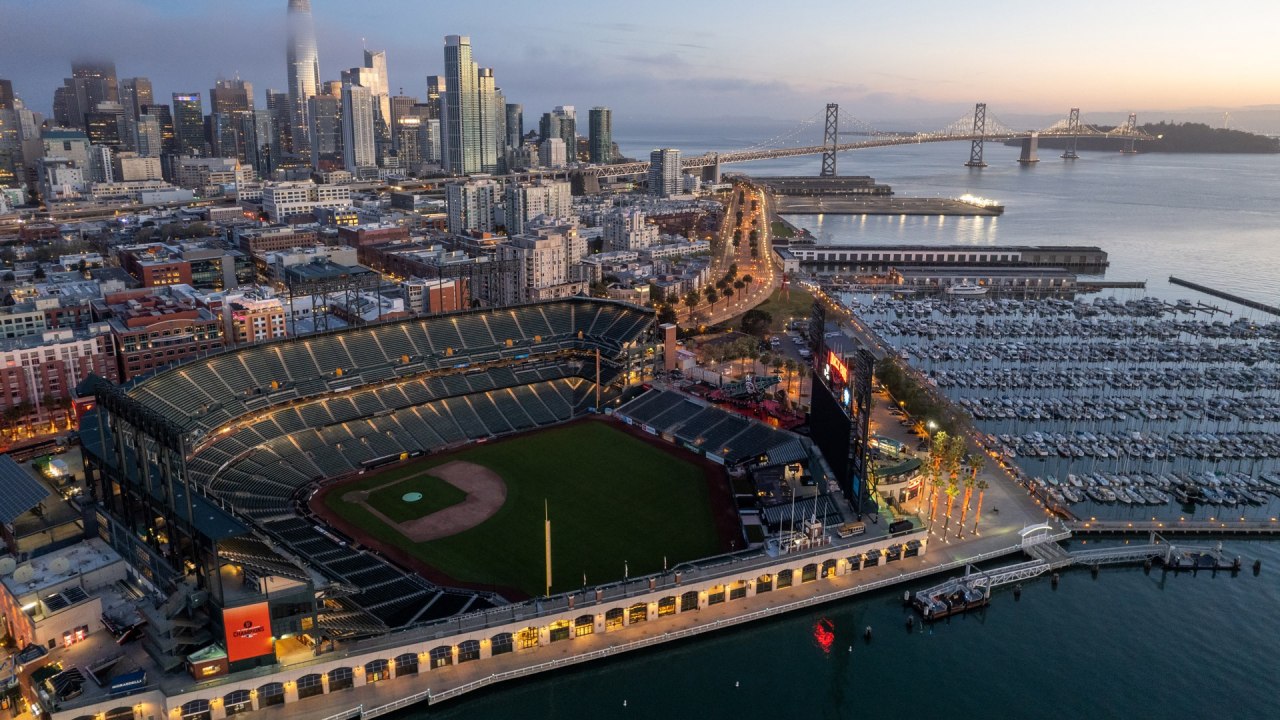
Oracle Park
San Francisco, California, USA, United States
41,915 capacity
Oracle Park is a Major League Baseball stadium in the SoMa neighborhood of San Francisco, California. Since 2000, it has been the home of the San Francisco Giants. Previously named Pacific Bell Park, SBC Park, and AT&T Park, the stadium's current name was purchased by the Oracle Corporation in 2019. The stadium stands along the San Francisco Bay; the section of the bay beyond Oracle Park's right field wall is unofficially known as McCovey Cove, in honor of former Giants player Willie McCovey. Oracle Park has also hosted professional and collegiate American football games. The stadium was the home of the annual college postseason bowl game now known as the Redbox Bowl from its inaugural playing in 2002 until 2013, and also served as the temporary home for the University of California's football team in 2011. Professionally, it was the home of the San Francisco Demons of the XFL and the California Redwoods of the United Football League. The park also hosted the annual Fight Hunger Bowl, a college football bowl game from 2002 to 2013, and other occasional sporting and musical events. For the 2011 season, the park served as the home of the California Golden Bears football team while Memorial Stadium underwent seismic retrofitting and renovations.

Petco Park
San Diego, California, United States
40,209 capacity
Petco Park is a baseball stadium in San Diego, California. It is the ballpark of the San Diego Padres of Major League Baseball (MLB). The stadium is located in downtown San Diego, adjacent to the Gaslamp Quarter. Petco Park opened in 2004, replacing San Diego Stadium as the team's home venue, where the Padres played from their inception in 1969 to 2003. On April 8, 2004, the Padres played their first game at the ballpark, defeating the San Francisco Giants 4–3 in 10 innings. Petco Park hosted the inaugural 2006 World Baseball Classic championship and the 2016 MLB All-Star Game. On July 30, 2024, Petco Park achieved an attendance record for baseball during a game against the Los Angeles Dodgers, with 47,559 people in attendance. Petco Park features unique design elements, particularly the Western Metal Supply Co. building, a historic warehouse incorporated into the ballpark; its southeast corner serves as the left field foul pole. Gallagher Square, located beyond the outfield wall, includes a community park and viewing terrace, among other features open to the public during stadium off-hours.
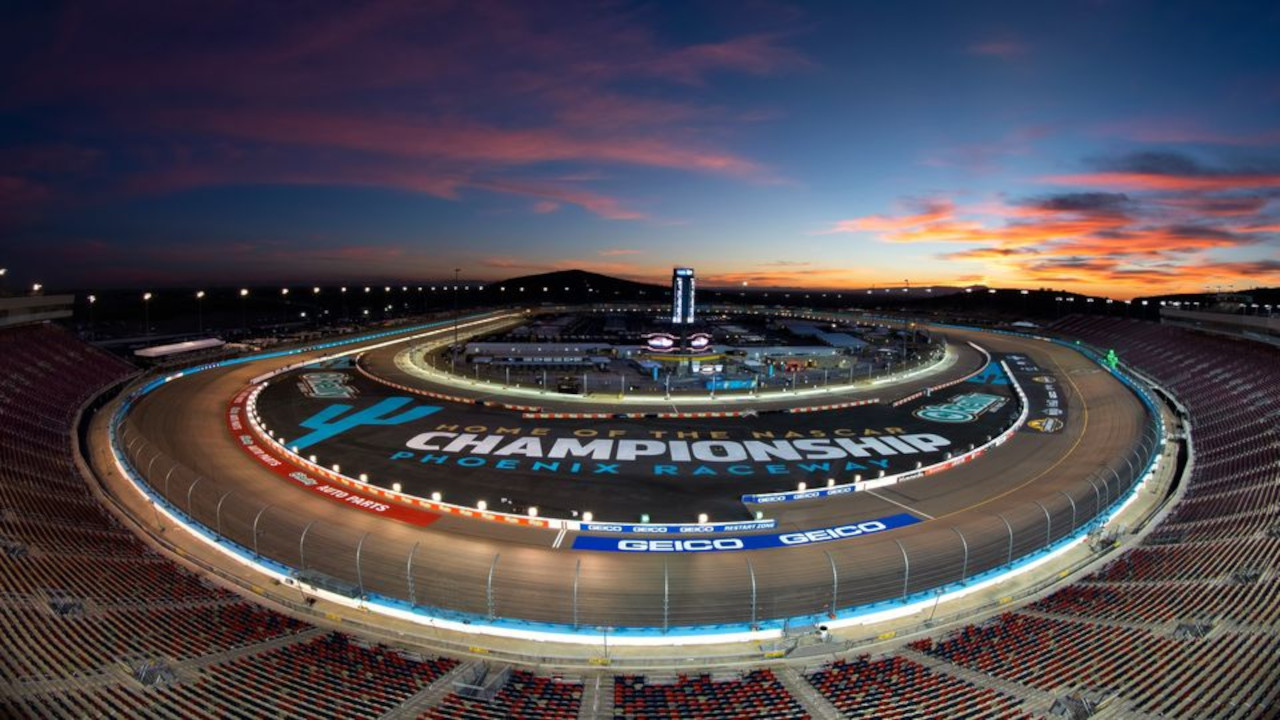
Phoenix Raceway
Avondale, Arizona, United States
42,000 capacity
Nestled in the desert landscape of Avondale, Arizona, Phoenix Raceway stands as one of NASCAR's most distinctive venues, offering a unique blend of challenging track characteristics and eventful racing action. This one-mile D-shaped oval has carved out a special place in American motorsport, serving as the crown jewel of NASCAR's western presence and hosting some of the sport's most memorable moments. Originally constructed as a flat, traditional oval, Phoenix Raceway underwent a significant transformation that would define its modern character. The facility's most distinctive feature is its asymmetrical design, with varying banking angles that create multiple racing grooves and strategic challenges for drivers. Unlike many NASCAR ovals, the track features progressive banking that ranges from relatively flat sections to more steeply banked corners, creating a complex racing surface that rewards both technical skill and tactical thinking. The track's layout presents a fascinating study in contrasts. Turn One features a dogleg configuration that opens up multiple racing lines, allowing drivers to choose between the traditional low groove or venture higher up the track for different grip levels. This corner complex often becomes a critical passing zone, as drivers can utilize the varied banking to gain momentum for the long back straightaway. Turn Two transitions into a sweeping arc that flows into the backstretch, where aerodynamic effects become particularly important as cars draft and battle for position. The most challenging section of Phoenix Raceway comes at Turns Three and Four, where the progressive banking creates a unique racing dynamic. The banking increases as drivers work their way around the corner, allowing multiple racing grooves to remain competitive throughout a race. This design philosophy has created some of the most exciting racing in NASCAR, as drivers can make moves both high and low on the track surface, often resulting in eventful side-by-side battles that extend for several turns. Phoenix Raceway's surface characteristics add another layer of complexity to the racing equation. The desert climate and track composition create changing grip levels throughout race events, with track temperature playing a crucial role in tire performance and overall car handling. The abrasive surface typically produces multiple racing grooves as rubber gets laid down during practice and racing sessions, allowing for varied racing lines and strategic opportunities. The facility's 42,000-seat capacity provides an intimate atmosphere that allows fans to experience the intensity of NASCAR racing up close. The grandstand configuration takes advantage of the track's unique shape, offering excellent sightlines to multiple sections of the racing surface. Spectators can observe the technical challenges drivers face navigating the varying banking angles and witness the strategic battles that unfold throughout race events. Racing at Phoenix Raceway demands a specific skill set from drivers and teams. The combination of low downforce aerodynamic packages typically used at the facility, combined with the challenging track characteristics, places a premium on driver talent and car setup expertise. Teams must balance their setups to handle both the flat sections and banked portions of the track, while also considering how their cars will perform as track conditions change throughout long green-flag runs. The venue has witnessed numerous pivotal moments in NASCAR history, hosting championship-deciding races that have shaped the sport's narrative. Its position in the NASCAR Cup Series schedule has varied over the years, but the track has consistently delivered compelling racing action that showcases both veteran expertise and emerging talent. The facility's role in determining champions has elevated its status within the NASCAR community and created lasting memories for fans and competitors alike. Beyond its primary NASCAR events, Phoenix Raceway has served as a testing ground for various racing series and has played host to different forms of motorsport throughout its history. The facility's location in the southwestern United States has made it an important venue for expanding NASCAR's geographic reach and attracting diverse audiences to the sport. The track's maintenance and continuous improvements reflect its importance within NASCAR's venue portfolio. Ongoing surface preparation and facility enhancements ensure that Phoenix Raceway continues to provide challenging racing conditions while meeting modern safety standards and fan experience expectations. The venue's commitment to excellence extends beyond race weekends, as it serves as a year-round facility supporting various motorsport activities and community events. Currently, Phoenix Raceway occupies a prestigious position in NASCAR's premier series schedule, continuing to challenge drivers with its unique characteristics while providing fans with exciting racing action. The facility represents the evolution of NASCAR track design philosophy, where traditional oval racing concepts meet innovative engineering solutions to create distinctive racing experiences. The venue's significance extends beyond its physical characteristics, serving as a symbol of NASCAR's growth and adaptation in changing markets. Phoenix Raceway's success demonstrates how thoughtful track design and strategic scheduling can create compelling motorsport entertainment while respecting the sport's traditional roots. As NASCAR continues to evolve, this Arizona facility remains a testament to the enduring appeal of well-designed racing venues that challenge competitors and captivate audiences through pure racing excitement.
Red Bull Ring
Spielberg, Austria
40,000 capacity
The Red Bull Ring, formerly known as the Österreichring and the A1-Ring, is a compact but competitive Formula 1 circuit set amid the notable Styrian Alps near Spielberg, Austria. At just 4.318 kilometers, it is one of the shortest tracks on the F1 calendar, but its combination of high-speed straights, elevation changes, and eventful mountain backdrop make it one of the most visually notable venues in the sport. The circuit's modern history began in 1970 when the Österreichring was built as a fast, flowing track that hosted the Austrian Grand Prix through to 1987. After a period of closure, the circuit was rebuilt as the shorter A1-Ring and returned to the F1 calendar from 1997 to 2003. Following Red Bull's acquisition and extensive renovation, it reopened as the Red Bull Ring in 2011 and returned to the F1 calendar in 2014. The layout features just ten corners spread across significant elevation changes. The main straight climbs steeply uphill to Turn 1, a hard braking zone that regularly produces eventful overtaking moves. Turn 3 is another strong overtaking opportunity at the end of a fast uphill section. The middle sector flows through Turns 4-7 with the track rising and falling through the hills, while the final sector features the fast Turn 9 and Turn 10, where drivers must balance aggression with the need to set up a good exit onto the pit straight. The circuit's relatively simple layout and multiple DRS zones have produced some of the most exciting racing in modern F1. The 2019 Austrian Grand Prix, where Max Verstappen passed Charles Leclerc on the final laps after a competitive battle, is considered one of the best races of the hybrid era. During the COVID-19 pandemic in 2020, the Red Bull Ring hosted the first two races of the delayed season and the first-ever Styrian Grand Prix, providing crucial continuity for the sport during an unprecedented crisis. The Alpine setting is perhaps the Red Bull Ring's greatest asset. The circuit is surrounded by forested mountains, and the views from the grandstands are breathtaking. The compact layout means spectators can see much of the circuit from almost any vantage point, creating an intimate atmosphere that larger venues cannot match. Dutch fans, making the short journey to support Max Verstappen, have turned the Austrian Grand Prix into an orange-tinged party in recent years. Red Bull has invested heavily in the facility, adding the Red Bull Racing showcase and creating a year-round event venue. The Energy Station hospitality area and numerous viewing platforms provide fans with premium experiences, while the circuit also hosts MotoGP, DTM, and various other motorsport events throughout the year.
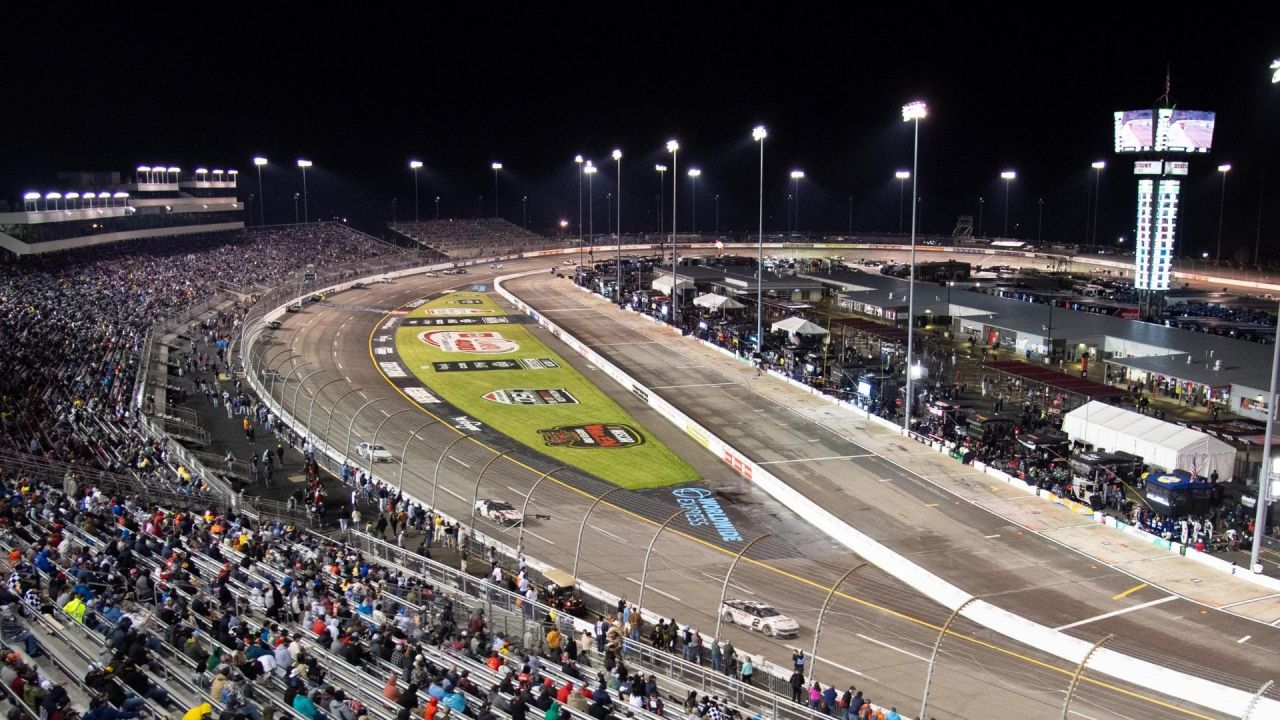
Richmond Raceway
Henrico County, Virginia, United States, United States
51,000 capacity
Richmond Raceway (RR) is a 0.750 mi (1.207 km), D-shaped, asphalt race track located just outside Richmond, Virginia in unincorporated Henrico County. It currently hosts one NASCAR Cup Series race weekend and the NASCAR Craftsman Truck Series. It formerly hosted events such as the NASCAR Xfinity Series, International Race of Champions, Denny Hamlin Short Track Showdown, and the USAC sprint car series. Richmond Raceway's "D" shape allows drivers to reach high speeds. Nicknamed the "Action Track" and "America's Premier Short Track", Richmond sold out 33 consecutive NASCAR Cup Series races before the streak ended in September 2008 due to the Great Recession as well as the impact of Tropical Storm Hanna. Richmond has hosted the final "regular-season" race, leading up to the start of the NASCAR Cup Series playoffs, each year since the format was introduced in 2004 until 2018 when its second weekend was moved into the playoffs. In 2022, their second race weekend was moved into the Summer. In 2025, the first race weekend was removed, with the Cup Series race moving to Mexico City. Before 2019, the raceway had a track seating of 59,000.
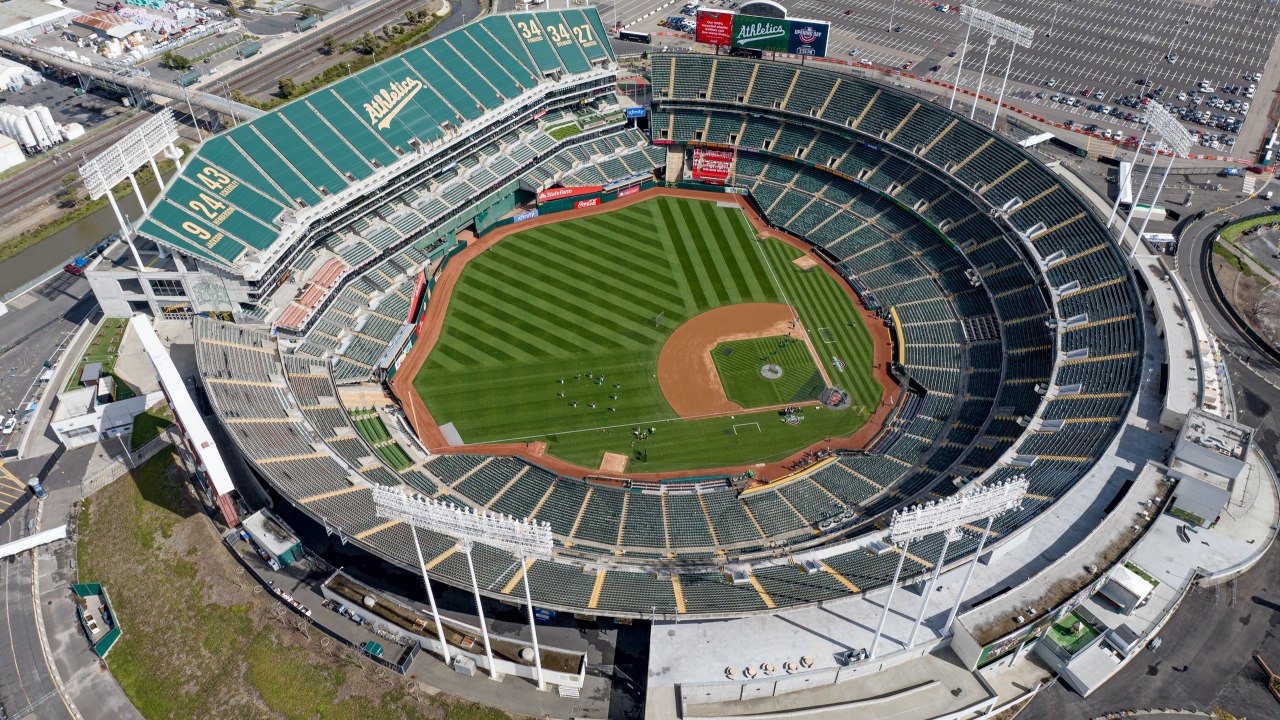
RingCentral Coliseum
Oakland, California, United States
46,847 capacity
The Oakland–Alameda County Coliseum is a multi-purpose stadium in Oakland, California, United States. It is part of the Oakland–Alameda County Coliseum Complex, with the adjacent Oakland Arena, near Interstate 880. In 2017, the playing surface was dedicated as Rickey Henderson Field in honor of Major League Baseball Hall of Famer and former Athletics left fielder Rickey Henderson. It has been the home of the Oakland Athletics of Major League Baseball since 1968. It was also the home of the Oakland Raiders of the National Football League from 1966 until 1981, when the team moved to Los Angeles, and again after the team’s return, from 1995 until 2019, when the team moved to Las Vegas. Since then, the stadium has been primarily used for baseball. It was the last remaining stadium in the United States shared by professional baseball and football teams. It has occasionally been used for soccer, including hosting selected San Jose Earthquakes matches in 2008 and 2009, and during the 2009 CONCACAF Gold Cup. The Coliseum has a seating capacity of up to 63,132 depending on its configuration; an upper deck dubbed "Mount Davis" by fans was added as part of a 1996 renovation for the Raiders' return to Oakland. In 2006, citing a desire to provide a more "intimate" environment, the Athletics blocked off the entirety of the Coliseum's third deck during its games, which artificially limited its capacity to 34,077 (making it the smallest stadium in Major League Baseball). On April 11, 2017, with Dave Kaval as the team president, the Athletics began to reopen some of the sections in the third deck, and open the Mount Davis deck for selected marquee games; this configuration makes it, by contrast, the largest baseball stadium in the United States by capacity. The current state of Oakland Coliseum has been widely criticized; fans and players alike consider the Coliseum to be poorly maintained and out of date. Along with Tropicana Field, it is often cited as one of the worst ballparks in Major League Baseball and consistently takes the last or second-to-last spot in rankings of stadiums. Major League Baseball has cited the need to replace Oakland Coliseum and Tropicana Field as one of the primary obstacles to future expansion. The Athletics are currently in the process of relocating to Las Vegas and plan to vacate the Coliseum following the expiration of their lease at the conclusion of the 2024 season and move into West Sacramento's Sutter Health Park for three seasons as a dedicated facility in Las Vegas is built.
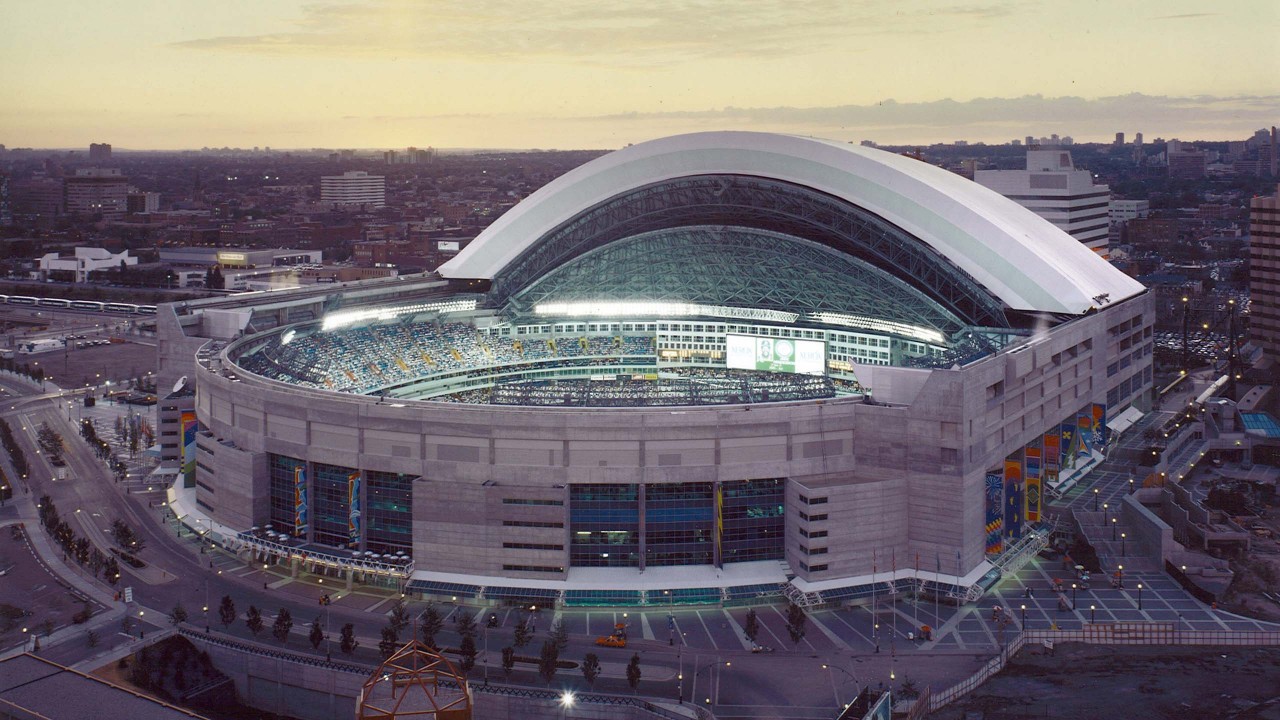
Rogers Centre
Toronto, Canada, Canada
49,282 capacity
Rogers Centre (originally named SkyDome) is a multi-purpose stadium in downtown Toronto, Ontario, Canada situated just southwest of the CN Tower near the northern shore of Lake Ontario. Opened in 1989 on the former Railway Lands, it is home to the Toronto Blue Jays of Major League Baseball (MLB). Previously, the stadium served as home to the Toronto Argonauts of the Canadian Football League (CFL), Toronto Raptors of the National Basketball Association (NBA), and the Buffalo Bills of the National Football League (NFL), which played an annual game at the stadium as part of the Bills Toronto Series. While it is primarily a sports venue, it also hosts other large-scale events such as conventions, trade fairs, concerts, travelling carnivals, and monster truck shows. The stadium was renamed "Rogers Centre" following the purchase of the stadium by Rogers Communications, which also bought the Toronto Blue Jays, in 2005. The venue was noted for being the first stadium to have a fully retractable motorized roof, as well as for the 348-room hotel attached to it, with 70 rooms overlooking the field. It is also the last North American major-league stadium built to accommodate both football and baseball. The stadium served as the site of both the opening and closing ceremonies of the 2015 Pan American Games. During the ceremonies, the site was referred to as the "Pan Am Dome" (officially as the "Pan Am Ceremonies Venue") instead of its normal name.

Sepang International Circuit
Sepang, Malaysia
Rising from the tropical landscape of Malaysia in the late 1990s, Sepang International Circuit emerged as one of the most ambitious motorsport projects in Southeast Asia, designed to put Malaysian racing on the global map. Located approximately 60 kilometers south of Kuala Lumpur near the country's main international airport, this Hermann Tilke-designed facility was conceived as part of Malaysia's broader vision to establish itself as a premier destination for international motorsport. The circuit's 5.543-kilometer layout represents a strong performance in modern track design, featuring a blend of high-speed sections and technical challenges that have consistently produced memorable racing across multiple categories. Tilke's signature is evident throughout the facility, with the track incorporating sweeping curves, eventful elevation changes, and strategic placement of corners that encourage both wheel-to-wheel combat and showcase driving skill. The clockwise configuration winds through undulating terrain, creating natural amphitheaters where spectators can witness multiple sections of track simultaneously. One of Sepang's most distinctive characteristics is its handling of Malaysia's challenging tropical climate. The circuit was designed with sophisticated drainage systems to cope with the region's frequent and intense rainfall, while the track surface utilizes specialized materials to maintain grip levels even in wet conditions. This weather factor has become an integral part of racing at Sepang, with afternoon thunderstorms often transforming race strategies and creating eventful moments that separate the exceptional drivers from the merely competent. The track's layout features several signature sections that have become synonymous with Southeast Asian motorsport. The main straight stretches for nearly 900 meters, providing ample opportunities for slipstreaming and overtaking maneuvers, before feeding into a tight hairpin that often becomes a focal point for position changes. The flowing middle sector combines medium and high-speed corners that test aerodynamic efficiency and mechanical grip, while the final sector's combination of technical turns and elevation changes demands precision and commitment from drivers. Sepang's elevation changes, while not as eventful as some historic European circuits, add crucial character to the racing experience. The track rises and falls naturally with the landscape, creating blind crests and compression zones that challenge drivers' spatial awareness and timing. These undulations also contribute to the circuit's visual appeal, offering photographers and television directors dynamic perspectives that capture both the speed and grace of modern motorsport machinery. The circuit's surface characteristics have evolved significantly since its opening, with regular resurfacing programs maintaining optimal grip levels while adapting to the specific demands of different racing categories. The abrasive nature of the track surface, combined with high ambient temperatures, creates unique tire degradation patterns that add strategic complexity to longer races. Teams must carefully balance setup compromises between qualifying pace and race-day tire management. Formula One's arrival at Sepang marked a watershed moment for Malaysian motorsport, establishing the venue as the centerpiece of the country's annual sporting calendar. The Malaysian Grand Prix quickly gained a reputation for unpredictable weather conditions and exciting racing, with the afternoon start time often coinciding with tropical storms that transformed dry-weather races into strategic battles of tire choice and driving finesse. The circuit's wide track and multiple racing lines facilitated genuine overtaking opportunities, making it a favorite among drivers who appreciated the ability to race wheel-to-wheel without excessive risk. Beyond Formula One, Sepang has hosted an impressive array of international motorsport events, cementing its status as Southeast Asia's premier racing facility. The circuit has welcomed MotoGP, creating some of the most notable motorcycle racing moments in the region, while also serving as a venue for endurance racing, touring car championships, and various regional racing series. Each category of motorsport has highlighted different aspects of the track's versatility, from the high-speed motorcycle battles to the close-quarters combat of touring car racing. The facility's infrastructure extends far beyond the racing surface itself, featuring world-class pit facilities, media centers, and spectator amenities that meet the exacting standards required for international motorsport events. The main grandstand and surrounding spectator areas were designed to provide excellent sightlines while offering protection from Malaysia's intense sun and frequent rainfall. Corporate hospitality facilities have made Sepang a popular venue for business entertainment and international events beyond motorsport. Sepang's cultural significance extends throughout the Southeast Asian region, serving as an inspiration for motorsport development across neighboring countries and providing a platform for local talent to compete alongside international stars. The circuit has played a crucial role in nurturing Malaysian motorsport culture, from grassroots karting programs to professional racing series that use the facility as their flagship venue. Today, Sepang International Circuit continues to evolve, adapting to changing dynamics in international motorsport while maintaining its position as one of Asia's most respected racing venues. The facility regularly updates its infrastructure and safety systems to meet contemporary standards, ensuring its continued relevance in an increasingly competitive global motorsport landscape. Whether hosting major international championships or supporting local racing development, Sepang remains a testament to Malaysia's commitment to motorsport excellence and its vision of establishing Southeast Asia as a significant player in the global racing community.
Shanghai International Circuit
Shanghai, China
Rising from the rice paddies and farmland of Shanghai's Jiading District, the Shanghai International Circuit stands as one of Asia's most architecturally striking and technically challenging Formula 1 venues. Designed by renowned German track architect Hermann Tilke, this modern facility opened its doors in 2004, marking China's entry into the pinnacle of international motorsport and representing the country's growing automotive industry ambitions. The circuit's most distinctive feature is immediately apparent from aerial views—its layout incorporates Chinese cultural elements into its very design, with the track configuration resembling the Chinese character "shang," the first character in Shanghai's name. This thoughtful integration of local culture into international motorsport infrastructure demonstrates the venue's role as a bridge between Eastern and Western racing traditions. The facility cost approximately $240 million to construct and spans 267 hectares, making it one of the larger Formula 1 circuits in terms of overall site area. Stretching 5.451 kilometers in length with 16 turns, the Shanghai International Circuit presents drivers with a unique combination of high-speed sections and technical challenges. The track begins with one of Formula 1's longest pit straights, measuring 1.175 kilometers, which provides excellent overtaking opportunities and regularly sees cars reaching speeds exceeding 320 kilometers per hour. This front straight feeds into Turn 1, a tight right-hand hairpin that creates significant braking challenges and frequent overtaking attempts during race conditions. The circuit's most celebrated sequence begins with Turn 6, which leads into the famous Turns 7 and 8 combination. This sweeping left-hand corner complex gradually tightens as it progresses, creating what many drivers describe as a snail-shell configuration. The decreasing radius nature of these corners makes them particularly treacherous, as drivers must constantly adjust their line and speed while managing tire degradation through the extended cornering sequence. The section tests both car setup and driver precision, often separating the field during qualifying sessions. Following the technical middle sector, the track opens up through Turns 9 and 10 before diving into another challenging sequence. Turn 13, known as the "Shanghai Turn," presents another decreasing radius corner that has caught out numerous drivers over the years. The final sector includes a series of direction changes that lead back onto the main straight, with Turn 16 providing a final overtaking opportunity as drivers exit onto the lengthy front stretch. Weather conditions often play a crucial role at Shanghai, with the circuit's location in the Yangtze River Delta creating unpredictable meteorological situations. Spring races frequently encounter rain, which transforms the already challenging track surface into an even more demanding proposition. The circuit's modern drainage systems generally cope well with precipitation, though standing water in certain areas has occasionally created eventful racing conditions. The venue has witnessed numerous memorable moments since joining the Formula 1 calendar. Its inaugural race in 2004 saw Rubens Barrichello claim victory for Ferrari, while subsequent years have produced competitive contests featuring multiple lead changes and strategic battles. The long front straight and DRS zones have facilitated some notable overtaking maneuvers, while the technical sections have rewarded drivers who excel in high-downforce configurations. Beyond its primary role as a Formula 1 venue, Shanghai International Circuit serves as a hub for motorsport development in China. The facility hosts various domestic racing series, motorcycle events, and automotive exhibitions throughout the year. Its comprehensive infrastructure includes multiple circuit configurations, allowing for different event requirements and driver training programs. The venue also features extensive hospitality facilities, reflecting the growing commercial importance of the Chinese market for international motorsport. The circuit's impact extends beyond pure racing activities into automotive industry development. Major manufacturers use the facility for vehicle testing and product launches, taking advantage of both the track infrastructure and the symbolic importance of the venue within China's automotive landscape. This dual role as both racing circuit and industry showcase reflects the broader objectives behind the facility's construction. Track surface characteristics at Shanghai present unique challenges for teams and tire suppliers. The relatively smooth asphalt provides good grip levels when properly prepared, though rubber buildup during race weekends can create significant variations in traction across different racing lines. The combination of high-speed sections and slow technical corners places diverse demands on tire compounds, often creating strategic opportunities during race conditions. From a technical perspective, the circuit generally favors cars with strong aerodynamic efficiency and good mechanical grip. The long straights reward low-drag configurations, while the technical sections demand sufficient downforce for consistent lap times. This balance often creates close competition between different car philosophies and has produced some of the most strategically complex races on the Formula 1 calendar. Today, Shanghai International Circuit maintains its position as one of Asia's premier motorsport facilities, though its future on the Formula 1 calendar has faced uncertainty in recent years due to various factors including global events and calendar restructuring. Regardless of its Formula 1 status, the venue continues to play a vital role in Chinese motorsport development and stands as a testament to the country's commitment to international racing excellence. Its unique design elements, challenging layout, and cultural significance ensure its place among the world's most distinctive racing circuits.
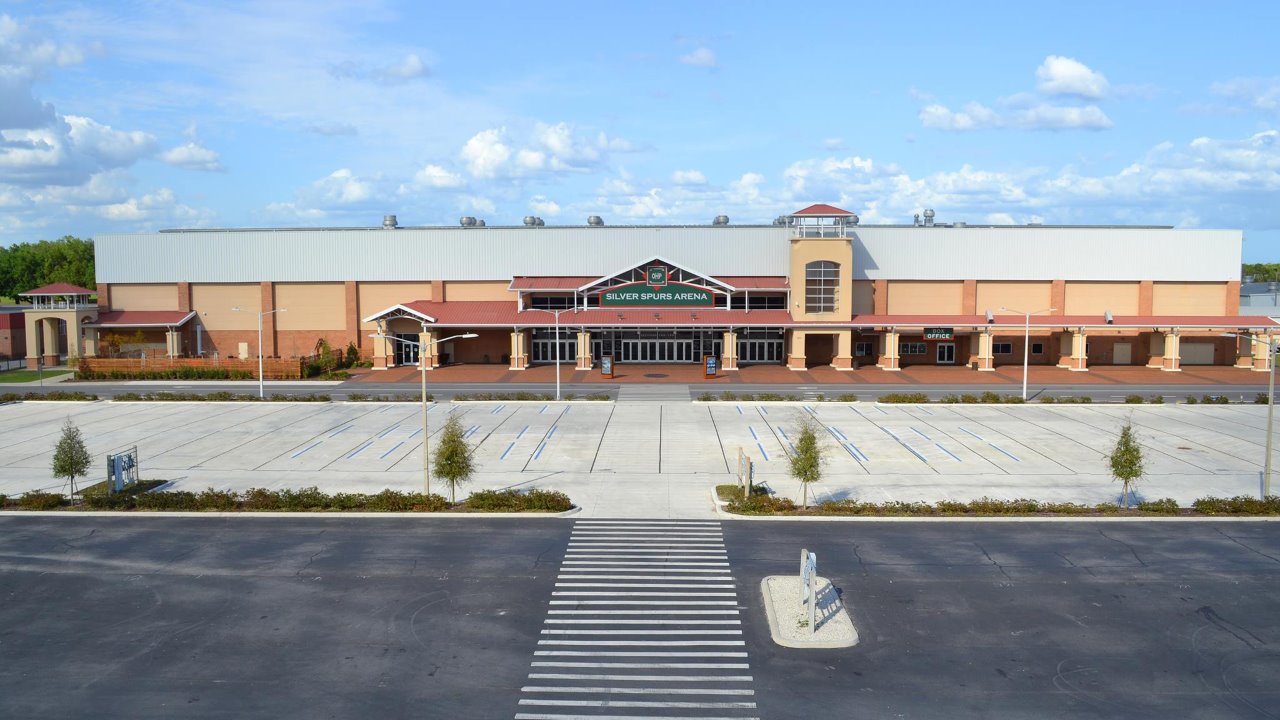
Silver Spurs Arena
Kissimmee, Florida, United States
2,296 capacity
The current Silver Spurs Arena is an 8,000-seat (11,500 seat max capacity), 33,946 square foot multi-purpose arena, in Kissimmee, Florida. It was built in 2003. It replaced the original Silver Spurs grand stand. Both are home to the Silver Spurs Rodeo a semi-annual rodeo event. Concerts, family shows, school graduations, and sporting events are also held there. The arena, part of the Osceola Heritage Park entertainment complex, features 12 luxury suites, four locker rooms and additional amenities. The arena was home to the Florida Seals of the Southern Professional Hockey League from October 2005 until January 4, 2007. During the 2005 season, it was home to the Kissimmee Kreatures of the National Indoor Football League. During 2006, the team was to be known as the Osceola Outlaws but then changed their name to Osceola Football as another team in the NIFL located in Billings, Montana held that nickname. For the 2007 season the team changed its nickname to Osceola Ghostriders and played in the World Indoor Football League. From 2018 to 2020, it served as the home of the Orlando SeaWolves of the Major Arena Soccer League. On April 11, 2023, it was announced that it will serve as the home of the NBA G League team Osceola Magic.
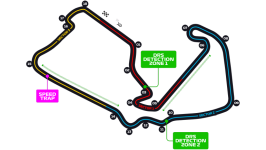
Silverstone Circuit
Silverstone Northamptonshire, United Kingdom
150,000 capacity
Silverstone Circuit is the spiritual home of Formula 1 and one of the most iconic racing venues in the world. Located on the site of a former Royal Air Force bomber station in Northamptonshire, England, Silverstone hosted the very first Formula 1 World Championship race on 13 May 1950, when Giuseppe Farina won for Alfa Romeo in front of King George VI and Queen Elizabeth. The 5.891-kilometer circuit is one of the fastest on the calendar, featuring a mix of high-speed corners that reward aerodynamic excellence and driver bravery. The opening sequence of Abbey, Farm, and Village tests car balance at medium speed before the track opens up into the legendary Maggots-Becketts-Chapel complex — a breathtaking series of high-speed direction changes that is considered by many drivers to be the finest sequence of corners in all of motorsport. Taken at speeds approaching 280 km/h, this section demands absolute commitment and produces some of the most notable on-board footage in Formula 1. The Hangar Straight that follows provides a crucial overtaking opportunity into Stowe corner, while the infield section through Vale, Club, and the redesigned Arena complex adds technical variety. The Wellington Straight leads to Brooklands and the final complex of Luffield and Woodcote before the start-finish line. Copse, once one of the fastest corners in F1, was the scene of the famous 2021 incident between Lewis Hamilton and Max Verstappen that further cemented Silverstone's reputation for producing eventful moments. The British Grand Prix at Silverstone is one of the best-attended events on the F1 calendar, regularly drawing crowds exceeding 400,000 across the weekend. The passionate British fans create an electric atmosphere, particularly in the grandstands around Copse, Becketts, and Club corners. The 2022 race saw a notable multi-car incident at Abbey on the opening lap, while Carlos Sainz claimed his maiden victory. Silverstone has been the proving ground for Britain's greatest drivers. Jim Clark, Jackie Stewart, Nigel Mansell, Damon Hill, David Coulthard, Jenson Button, and Lewis Hamilton have all triumphed here, with Hamilton's record eight British Grand Prix victories making him the most successful driver in the race's history. His 2019 victory on three wheels after a last-lap puncture remains one of the most iconic moments in the sport. The circuit has undergone significant development in recent years, with the Silverstone Wing pit and paddock complex opened in 2011 providing world-class facilities. The surrounding Silverstone Park technology cluster has attracted numerous motorsport and high-performance engineering companies, cementing the area's status as the heart of "Motorsport Valley." The circuit's flat, open landscape means it can be windy and is exposed to the often unpredictable British weather, adding another variable that can influence races. Beyond Formula 1, Silverstone hosts MotoGP, the World Endurance Championship, British Superbikes, and numerous club racing events throughout the year, making it one of the busiest racing circuits in the world.
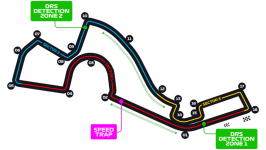
Sochi Autodrom
Sochi, Russia
55,000 capacity
Nestled along the Black Sea coast in the Krasnodar region, Sochi Autodrom stands as Russia's premier Formula 1 venue, a purpose-built circuit that brought the pinnacle of motorsport to the country in notable fashion. The 5.872-kilometer track weaves through the Olympic Park complex that hosted the 2014 Winter Olympics, creating a unique sporting legacy that bridges the gap between Olympic glory and Formula 1 excellence. The circuit's conception emerged from Russia's ambitious plans to establish itself as a major player in international motorsport. Construction began following the successful hosting of the Winter Olympics, with the track designed to utilize the existing Olympic infrastructure while creating a world-class racing facility. The venue officially opened its doors to Formula 1 in 2014, marking Russia's return to the sport's calendar after decades of absence and fulfilling a long-held ambition to bring the world's most prestigious racing series to Russian soil. Sochi Autodrom's layout presents a fascinating blend of high-speed sections and technical corners that challenge drivers across its 53-lap race distance. The track begins with a lengthy main straight that flows into the first sector, where drivers navigate a series of medium-speed corners that set the tone for the lap. The circuit's character is defined by its mixture of long straights and tight corner sequences, creating multiple opportunities for overtaking while demanding precision and racecraft from competitors. The track's most distinctive feature is its use of public roads that double as Olympic Park thoroughfares when not hosting racing events. This dual-purpose design creates an interesting dynamic, with sections of the circuit serving everyday traffic before being transformed into a high-speed racing environment. The layout incorporates both permanent racing infrastructure and temporary modifications, resulting in a unique blend of purpose-built motorsport facilities and adaptable urban elements. One of the circuit's defining characteristics is its relatively flat topography, with minimal elevation changes throughout the lap. This creates a different challenge compared to many traditional Formula 1 venues, placing emphasis on aerodynamic efficiency and straight-line speed rather than the elevation-based corner complexes found at classic circuits. The smooth asphalt surface provides excellent grip levels, though it can be demanding on tire degradation, particularly during the intense summer heat that often accompanies the race weekend. The most significant overtaking opportunities occur along the main straight leading to Turn 2, where the DRS zone allows following cars to reduce their aerodynamic drag and attempt passes under braking. Additional passing chances present themselves at the end of the back straight leading into Turn 13, where drivers can utilize slipstream effects before heavy braking. These zones have produced memorable wheel-to-wheel battles and strategic positioning battles throughout the venue's Formula 1 history. Lewis Hamilton has etched his name into Sochi Autodrom's record books with the fastest lap time of 1:35.761, a benchmark that demonstrates the circuit's high-speed nature and the level of performance required to excel at this venue. This lap record reflects the track's characteristic blend of technical precision and outright speed, where marginal gains across multiple sectors combine to create significant time differences. The circuit has witnessed numerous memorable moments since its Formula 1 debut, with races often decided by strategic battles and late-race drama. The venue's tendency to produce safety car periods and changeable weather conditions has led to several unexpected results and championship-defining moments. The track's layout has proven particularly suited to creating strategic complexity, with tire degradation and fuel consumption playing crucial roles in race outcomes. Beyond its Formula 1 hosting duties, Sochi Autodrom serves as a multi-purpose motorsport facility that accommodates various racing series and automotive events throughout the year. The venue's infrastructure includes modern pit facilities, timing systems, and safety equipment that meet the highest international standards. The circuit's location within the Olympic Park provides additional amenities and attractions for visitors, creating a comprehensive entertainment destination that extends beyond pure motorsport. The facility's capacity of 55,000 spectators reflects its status as a major international venue, with grandstand positioning designed to provide excellent viewing opportunities across multiple sections of the track. The venue's modern facilities include hospitality areas, media centers, and support buildings that cater to the complex logistical requirements of contemporary Formula 1 operations. Looking toward the future, Sochi Autodrom continues to evolve as a motorsport destination while maintaining its unique identity as a track that combines Olympic heritage with Formula 1 excellence. The venue's position within Russia's sporting landscape remains significant, representing the country's commitment to hosting world-class motorsport events and developing its domestic racing culture. The circuit's legacy extends beyond lap times and race results to encompass its role in expanding Formula 1's global reach and introducing new audiences to the sport. As one of the more recent additions to the Formula 1 calendar, Sochi Autodrom represents the modern era of circuit design and the ongoing evolution of the sport's international presence, standing as a testament to motorsport's ability to adapt and thrive in diverse cultural and geographical settings.
St. Elizabeths East Entertainment and Sports Arena
United States
Nestled within the grounds of a former psychiatric hospital in Washington, D.C., an unlikely motorsport venue has carved out its place in American racing history. The St. Elizabeths East Entertainment and Sports Arena represents one of the more unconventional settings to host IndyCar competition, transforming what was once institutional land into a temporary racing circuit that challenges drivers with its unique urban environment. The facility sits on the historic St. Elizabeths Hospital campus, where the eastern portion of the property underwent significant redevelopment to create a multi-purpose entertainment complex. This transformation brought professional motorsport to the nation's capital in a way few could have anticipated, utilizing the existing infrastructure and open spaces of the former hospital grounds to create a racing environment unlike any other on the IndyCar calendar. What sets this venue apart is its distinctive blend of permanent structures and temporary racing configuration. The arena itself serves multiple functions throughout the year, but when configured for IndyCar competition, the circuit incorporates both the interior arena space and external areas of the campus. This hybrid approach creates a racing experience that combines the intimacy of an indoor venue with the technical challenges of street circuit racing. The track layout presents drivers with a series of technical challenges that demand precision and adaptability. Tight corners and elevation changes characterize much of the circuit, with drivers navigating between permanent buildings and structures that formed part of the original hospital complex. The surface transitions between different materials as the course winds through various sections of the facility, requiring teams to carefully consider tire strategy and suspension setup to handle the varying grip levels. One of the most distinctive features of racing at St. Elizabeths East is how the circuit incorporates the existing architecture into the racing line. Drivers must thread their cars through spaces originally designed for pedestrian traffic, creating opportunities for overtaking in unexpected locations while demanding absolute precision to avoid costly contact with unforgiving concrete barriers. The proximity of spectators to the racing action, particularly in sections where the track runs close to grandstand areas, creates an atmosphere of intensity rarely matched at traditional permanent racing facilities. The venue's location within Washington, D.C. adds another layer of significance to any racing event held there. The backdrop of the nation's capital provides a striking visual contrast to the high-speed action on track, while the urban setting presents unique logistical challenges for teams accustomed to more conventional racing facilities. Limited space for paddock areas and support facilities requires creative solutions from race organizers and competing teams alike. Weather considerations play a particularly important role at St. Elizabeths East, given the exposed nature of portions of the circuit and the way certain sections of track can be affected by wind patterns created by the surrounding buildings. These microclimatic conditions can change rapidly throughout a race weekend, adding another variable for teams to monitor and adjust for as they optimize their car setups. The facility's multi-purpose nature means that racing events must be carefully coordinated with other activities and events scheduled at the venue. This scheduling complexity requires advance planning and flexibility from all parties involved, but also creates opportunities for cross-promotion between motorsport and other entertainment offerings at the arena. From a technical standpoint, the circuit places particular emphasis on mechanical grip and aerodynamic efficiency in slow-speed corners. The nature of the track layout, with its series of direction changes and varying radius turns, rewards cars that can maximize traction out of corners while maintaining stability under braking. Teams often find that traditional road course setups require significant modification to work effectively at St. Elizabeths East. The venue's role in IndyCar competition highlights the series' willingness to explore unconventional racing locations and formats. By bringing open-wheel racing to such a unique setting, the sport demonstrates its adaptability and commitment to reaching new audiences in major metropolitan markets. The urban location provides accessibility for fans who might not otherwise attend races at traditional permanent circuits located further from major population centers. Safety considerations at St. Elizabeths East require special attention due to the confined nature of much of the circuit. Run-off areas are necessarily limited in many sections, placing premium importance on barrier placement and emergency response procedures. The venue's configuration demands that drivers exercise particular caution while still maintaining the competitive intensity that IndyCar racing demands. Looking toward the future, St. Elizabeths East Entertainment and Sports Arena represents the evolution of motorsport venues in the twenty-first century. Its success in hosting IndyCar competition demonstrates how creative use of existing facilities can bring professional racing to new markets and audiences. The venue stands as an example of how motorsport can adapt to urban environments while maintaining the technical challenges and competitive integrity that define top-level open-wheel racing. The continued development of the surrounding St. Elizabeths East campus ensures that the venue will remain a dynamic and evolving location for years to come, with potential for further enhancements to both its entertainment offerings and its capabilities as a motorsport facility.
Suzuka International Racing Course
Suzuka, Japan
Suzuka International Racing Course, nestled in the hills of Mie Prefecture, Japan, is one of the most technically demanding and beloved circuits in Formula 1. Designed by Dutch architect John Hugenholtz and opened in 1962 as a Honda test facility, Suzuka is unique among current F1 tracks for its figure-eight layout, where the track crosses over itself via an overpass between turns 8 and 9. The 5.807-kilometer circuit features an extraordinary variety of corners that test every aspect of a car and driver's capabilities. The opening sequence begins with the daunting 130R approach into turn 1, followed by the S Curves (turns 3-6) — a flowing, high-speed sequence that rivals Silverstone's Maggots-Becketts for sheer driving pleasure. These esses demand perfect rhythm and commitment, with the car constantly changing direction at speeds that leave no margin for correction. Degner 1 and Degner 2 lead into the technical hairpin, one of the slowest points on the circuit and a prime overtaking spot. The back section features the fast Spoon Curve, a long double-apex left-hander that punishes any loss of momentum, before the legendary 130R — once a flat-out corner requiring extraordinary courage, and still one of the fastest turns in F1 even after modifications. The final chicane before the main straight provides one last overtaking opportunity and has been the scene of numerous title-deciding moments. Suzuka's place in F1 history is unparalleled for drama. The 1989 and 1990 championship showdowns between Ayrton Senna and Alain Prost, both decided by controversial collisions, remain among the most debated moments in the sport's history. Michael Schumacher clinched multiple world championships here, and the circuit has regularly produced competitive races due to its ability to separate the truly exceptional drivers from the rest. The Japanese fans are renowned as the most knowledgeable and passionate in Formula 1, arriving days early to secure their preferred viewing spots and showing deep appreciation for all drivers, not just the frontrunners. The atmosphere at Suzuka is unique — a blend of intense sporting passion and the respectful, meticulous culture of Japan. Fans create elaborate displays of support, and the post-race celebrations are among the most memorable on the calendar. The circuit's location within the Suzuka Circuit amusement park gives race weekends a festival atmosphere unlike any other Grand Prix. The October timing of the Japanese Grand Prix often means the event takes place amid beautiful autumn colours, adding to the visual spectacle of cars threading through this strong circuit. Suzuka's combination of technical excellence, rich history, passionate fans, and notable natural setting make it an essential fixture on the Formula 1 calendar and a track that every racing driver aspires to master.
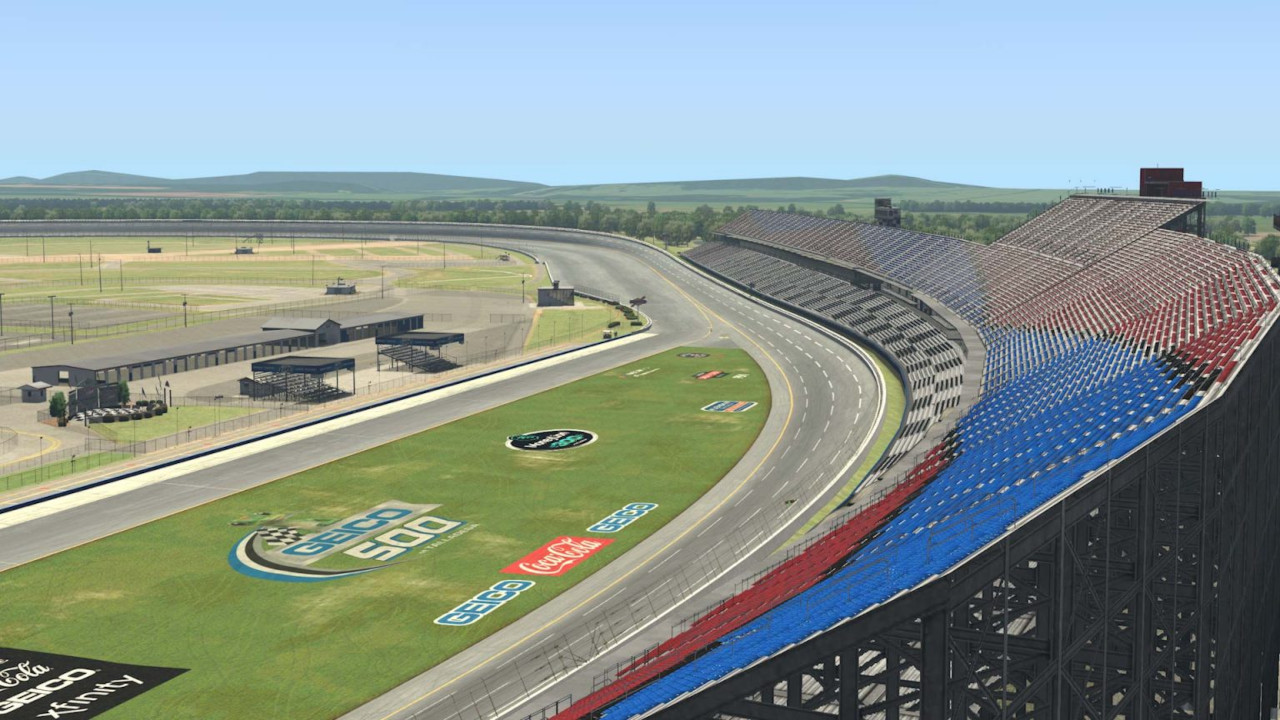
Talladega Superspeedway
Lincoln, Alabama, United States
80,000 capacity
Talladega Superspeedway (formerly named Alabama International Motor Speedway from 1969 to 1989) is a 2.66-mile (4.28 km) tri-oval superspeedway in Lincoln, Alabama. The track has hosted a variety of racing events since its inaugural season of racing in 1969, primarily races sanctioned by NASCAR. The track is currently owned by NASCAR and is led by track president Brian Crichton. The facility has a grandstand capacity of 80,000 as of 2022. Along with the main track, the track complex also features a 4-mile (6.4 km) long roval-style road course. After a proposal in Spartanburg, South Carolina, fell through in the early 1960s, NASCAR founder Bill France Sr. opted to seek his proposal elsewhere, eventually landing on an area near Talladega, Alabama. Over the track's first couple decades, it gained a reputation for being a fast, wild, and chaotic track, with speeds of over 200 miles per hour (320 km/h), major accidents, and unusual occurrences being commonplace. NASCAR's introduction of the restrictor plate and the subsequent appearance of pack racing in the late 1980s exacerbated its chaotic reputation, with "Big One" accidents involving 10 or more cars occurring often; a phenomenon that has lasted into the present day.
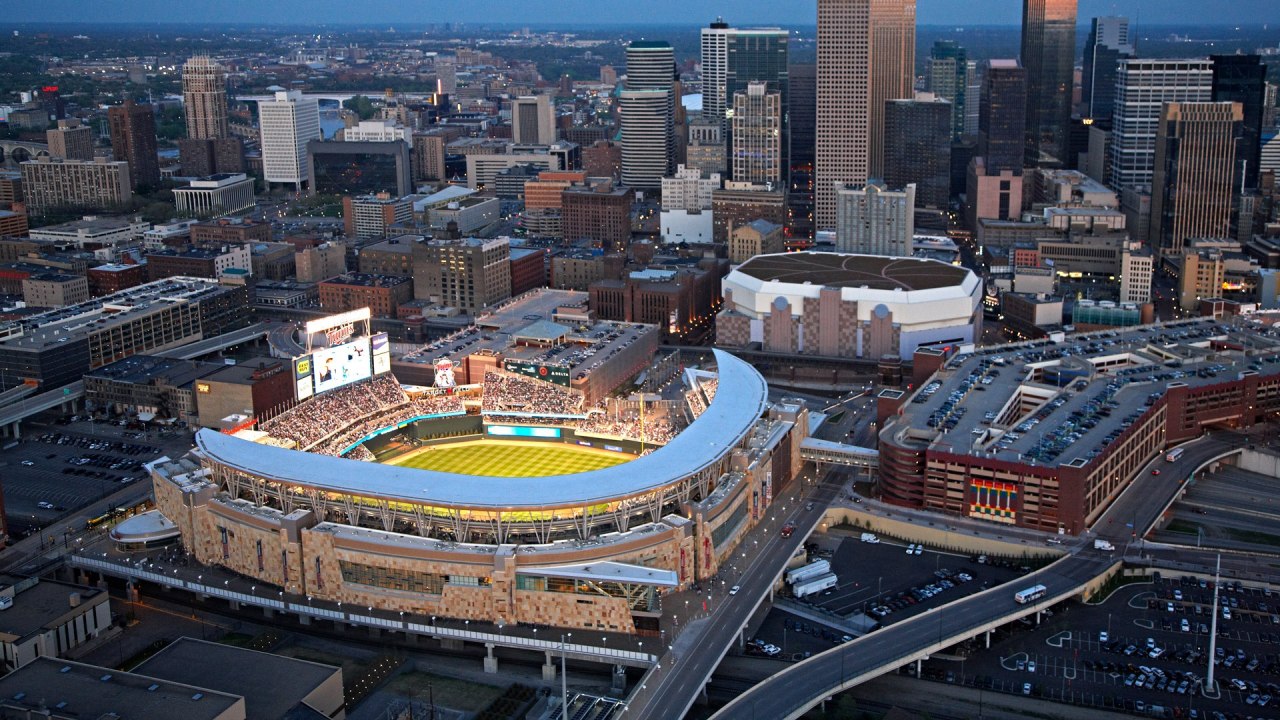
Target Field
Minneapolis, Minnesota, USA, United States
38,544 capacity
Target Field is a baseball stadium in the historic warehouse district of downtown Minneapolis. Since its opening in 2010, the stadium has been the ballpark of Major League Baseball's Minnesota Twins. It is named for Target Corporation, which is headquartered in Minneapolis. The stadium hosted the 2014 Major League Baseball All-Star Game. It has also served as the home of other local and regional baseball events. The ballpark is open-air; though originally designed for baseball, it has also hosted football, soccer, hockey games, and concerts. In 2010, ESPN The Magazine ranked Target Field as the number one baseball stadium experience in North America. Summary Target Field during a game vs. Kansas City in 2010 Target Field is the Twins/Senators sixth ballpark, and the franchise's third in Minnesota. The Twins had played 28 seasons at the Hubert H. Humphrey Metrodome, and before that 21 seasons at Metropolitan Stadium. The Twins shared both facilities with the Minnesota Vikings, and the Metrodome with the University of Minnesota Golden Gophers football team. The final budget for construction was $435 million, of which $175 million was paid by the Twins and $260 million was paid by Hennepin County by way of a 0.15% county-wide sales tax. An additional $120 million in infrastructure costs were split between the county ($90 million), the team ($20 million), Target Corporation ($4.5 million), the Minnesota Department of Transportation ($3.5 million) and the Minnesota Ballpark Authority ($2 million) bringing the project's total cost to US$555 million.
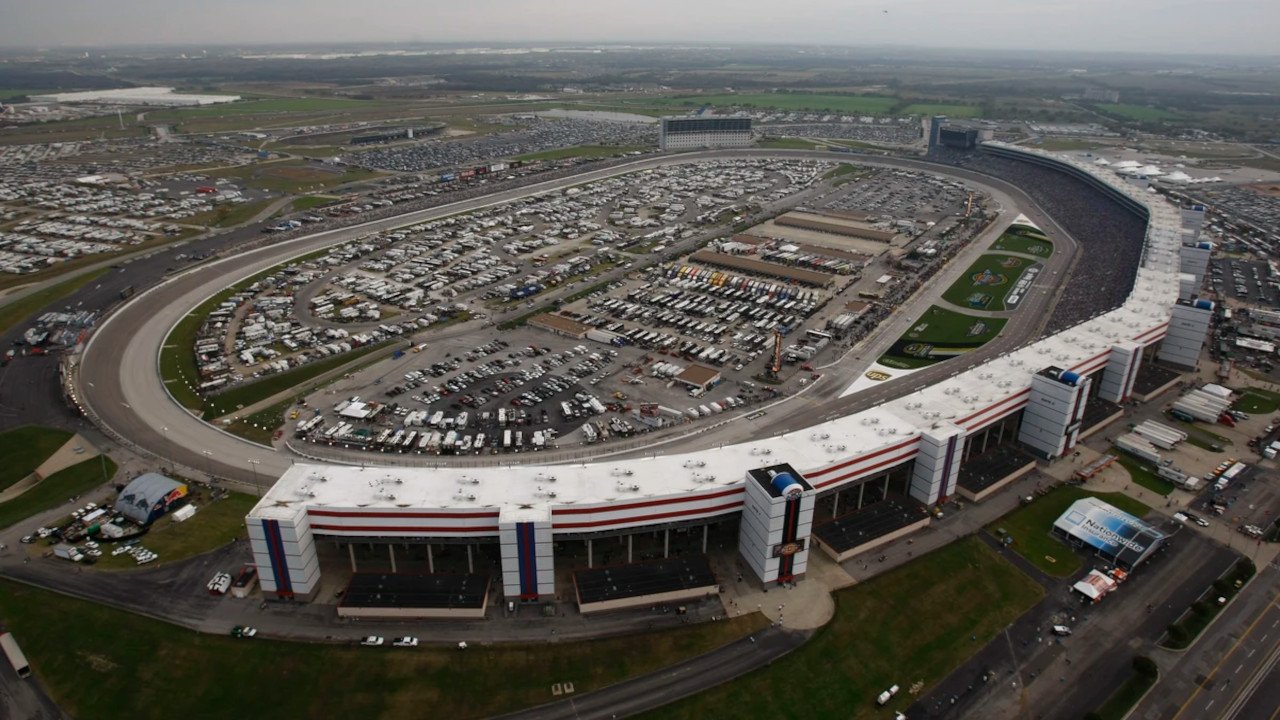
Texas Motor Speedway
Fort Worth, Texas, United States
75,000 capacity
Rising from the rolling hills of North Texas in the mid-1990s, Texas Motor Speedway emerged as one of NASCAR's most ambitious venue projects, designed to bring premier motorsports to the heart of cowboy country. Located in Fort Worth, this massive facility was conceived during NASCAR's explosive growth period when the sport was expanding beyond its traditional southeastern roots to capture new markets across America. The track's creation represented a bold vision to establish a world-class motorsports destination that could rival any facility in the country. Built as a 1.5-mile quad-oval, Texas Motor Speedway features progressive banking that varies from 8 degrees in the turns to 5 degrees on the frontstretch and 9 degrees on the backstretch. This configuration places it among NASCAR's intermediate tracks, a category that has become increasingly important in determining championship outcomes due to the frequency of races held on similar-sized ovals throughout the Cup Series schedule. What immediately distinguishes Texas Motor Speedway from many of its contemporaries is its sheer scale and ambition. The facility's grandstands accommodate 75,000 spectators, making it one of the larger venues on the NASCAR circuit. The track's design philosophy emphasized creating multiple racing grooves to encourage side-by-side competition, with a racing surface width of 60 feet in the turns that gradually expands to 80 feet on the straightaways. This varying width was specifically engineered to provide drivers with multiple lines through the corners, theoretically creating more opportunities for overtaking and eventful racing action. The racing surface itself tells the story of constant evolution and adaptation. Originally constructed with a specific aggregate and asphalt composition, the track has undergone several repaving and reconfiguration projects over its operational history. These surface changes have eventfulally altered racing characteristics, sometimes creating periods of dominant single-file racing followed by eras of more competitive side-by-side action. The track's relationship with tire wear has been particularly noteworthy, with some race weekends producing significant tire degradation that rewards strategic thinking and car setup expertise. From a driver's perspective, Texas Motor Speedway presents unique challenges that have evolved with each surface iteration. The track's four turns are identical in radius but subtle differences in banking transitions and surface characteristics can create distinct handling challenges. The long straightaways place a premium on horsepower and aerodynamic efficiency, while the turns reward cars with superior mechanical grip and balanced setups that can maintain speed through the extended cornering sequences. Notable racing moments at Texas Motor Speedway have become part of NASCAR lore, though the track's reputation has fluctuated with changes to its racing surface and NASCAR's technical regulations. The facility has hosted numerous memorable finishes, championship-deciding races, and career-defining performances. The track's position in the NASCAR Cup Series schedule has often placed it at crucial moments in the championship battle, amplifying the significance of victories achieved there. Beyond NASCAR's premier series, Texas Motor Speedway has served as a versatile motorsports venue hosting various racing disciplines. The facility has welcomed IndyCar racing, which presents entirely different challenges on the same racing surface due to open-wheel cars' distinct aerodynamic and handling characteristics compared to stock cars. These diverse racing programs have helped establish the venue's credibility across multiple forms of motorsport. The track's infrastructure extends far beyond the racing surface itself. The facility includes extensive garage and pit areas designed to accommodate the logistical demands of modern NASCAR operations. The infield contains numerous buildings housing race control, media facilities, driver meeting areas, and technical inspection bays. This comprehensive infrastructure allows Texas Motor Speedway to handle not just race weekends but also serve as a testing venue and corporate entertainment destination throughout the year. Weather considerations play a significant role in racing at Texas Motor Speedway, particularly during traditional spring and fall race dates. Texas weather patterns can produce eventful temperature swings, sudden wind changes, and occasional precipitation that fundamentally alters racing conditions. The track's exposed location means wind direction and intensity can significantly impact aerodynamic performance, creating additional strategic variables for teams to consider. The venue's impact on Fort Worth and the broader Dallas-Fort Worth metroplex cannot be understated. Race weekends bring hundreds of thousands of visitors to the region, creating substantial economic impact while establishing the facility as a landmark destination. The track has become integrated into the local cultural landscape, hosting concerts, driving experiences, and corporate events beyond its racing calendar. Currently, Texas Motor Speedway maintains its position as a significant venue in NASCAR's Cup Series schedule, typically hosting races that attract large television audiences and substantial attendance figures. The track continues to evolve, with ongoing discussions about surface improvements, facility upgrades, and schedule positioning that reflect NASCAR's broader strategic objectives. The facility represents both the opportunities and challenges facing modern NASCAR venues. While its scale and infrastructure capabilities position it well for contemporary motorsports demands, the ongoing quest to consistently produce compelling on-track competition remains paramount. Texas Motor Speedway's story continues to unfold as NASCAR evolves, maintaining its role as a major destination where championships are won and racing legends are made in the heart of Texas.
UCLA Health Training Center
United States
Nestled in the heart of Los Angeles, the UCLA Health Training Center represents a unique intersection of medical excellence and motorsport innovation in the IndyCar world. This specialized facility serves as a cutting-edge training and preparation center rather than a traditional racing circuit, embodying the modern approach to driver fitness and performance optimization that has become essential in contemporary open-wheel racing. Unlike conventional racing venues with their sweeping curves and high-speed straights, the UCLA Health Training Center focuses on the human element of motorsport performance. The facility operates as a comprehensive training environment where IndyCar drivers and teams can access world-class medical expertise, advanced fitness equipment, and specialized programs designed specifically for the unique physical and mental demands of open-wheel racing. This approach reflects the sport's evolution from its early days when driver preparation was largely informal to today's highly scientific methodology. The center's significance in IndyCar extends beyond simple physical training. Located in one of America's most prestigious medical and academic environments, the facility provides access to cutting-edge sports science research and medical technology. Drivers utilize specialized equipment designed to simulate the extreme G-forces, heat stress, and concentration demands they face during races on ovals and road courses throughout the IndyCar season. The cardiovascular training programs are particularly crucial, as IndyCar drivers must maintain peak performance while experiencing sustained G-forces that can exceed 5Gs during oval racing. What distinguishes the UCLA Health Training Center from other motorsport training facilities is its integration of medical research with practical application. The center serves as both a training ground and a laboratory where the latest developments in sports medicine can be tested and refined specifically for motorsport applications. This dual purpose creates a unique environment where theoretical research meets the practical demands of racing at speeds exceeding 230 mph on superspeedways and navigating the technical challenges of street circuits. The facility's importance has grown alongside IndyCar's increased emphasis on driver safety and performance optimization. Modern IndyCar racing places extraordinary demands on drivers, who must maintain split-second reaction times and precise control inputs while managing complex aerodynamic packages and hybrid power systems. The physical preparation required extends far beyond traditional fitness training, encompassing specialized programs for neck and core strength to handle the sustained G-forces of oval racing, heat acclimatization for races in extreme temperatures, and cognitive training to maintain focus during the intense concentration required for close-quarters racing. Training programs at the center address the specific challenges of IndyCar's diverse schedule, which includes high-speed ovals, technical road courses, and demanding street circuits. Each type of venue requires different physical and mental preparation. Oval racing demands exceptional cardiovascular fitness and the ability to maintain concentration during races that can last several hours, while road and street courses require different muscle groups and reaction patterns. The center's programs are tailored to help drivers excel across this varied landscape. The facility also plays a crucial role in injury prevention and recovery, particularly important in a sport where the margin for error is minimal. IndyCar's safety record has improved eventfulally over recent decades, but the physical stresses of racing remain intense. The center's medical expertise helps drivers maintain peak physical condition throughout the demanding season, which typically runs from March through September and includes the Indianapolis 500, one of motorsport's most prestigious events. Beyond individual driver training, the UCLA Health Training Center serves as a resource for teams seeking to optimize their human performance elements. In an era where technical regulations have created closer competition, the human factor has become increasingly important. Teams recognize that driver fitness and mental preparation can provide crucial competitive advantages, making facilities like this essential components of their overall performance strategy. The center's influence extends to the broader IndyCar community through its contributions to safety research and driver health protocols. The data and insights generated through training programs help inform safety regulations and medical procedures used throughout the sport. This research component adds another layer of significance to the facility's role in IndyCar's ecosystem. Current operations at the UCLA Health Training Center continue to evolve with advances in sports science and changes in IndyCar's competitive landscape. The introduction of hybrid power systems and continued development of safety technology create new training requirements that the facility is positioned to address. The center's location in Los Angeles also provides convenient access for drivers and teams based on the West Coast, though its reputation attracts participants from throughout the IndyCar community. The facility represents the modern reality of professional motorsport, where success depends not only on mechanical excellence and driving talent but also on comprehensive preparation and optimization of human performance. As IndyCar continues to attract top international talent and maintain its position as one of the world's premier racing series, facilities like the UCLA Health Training Center play an increasingly vital role in developing and maintaining the physical and mental capabilities required to compete at the highest level of open-wheel racing.

Valencia Street Circuit
Carved from the bustling streets of Spain's third-largest city, the Valencia Street Circuit emerged as Formula One's ambitious attempt to bring grand prix racing to the heart of an urban environment. This temporary racing facility, measuring 5.419 kilometers in length, transformed the modern port district of Valencia into a high-speed battleground that combined the challenges of street racing with the spectacle of contemporary motorsport. Located in the City of Arts and Sciences area, the circuit wound its way through Valencia's striking architectural landscape, incorporating both permanent roads and specially constructed sections. The track's design represented a unique hybrid approach, utilizing existing infrastructure while adding purpose-built racing elements to create a venue that could accommodate Formula One's exacting standards. Unlike traditional street circuits that rely entirely on public roads, Valencia's layout featured wider sections and modern safety installations that distinguished it from classics like Monaco or Adelaide. The circuit's most distinctive characteristic was its relationship with the Mediterranean coastline and the city's futuristic skyline. Racing took place against the backdrop of Santiago Calatrava's iconic architectural creations, including the swooping curves of L'Àgora and the gleaming surfaces of the Palau de les Arts Reina Sofía. This setting provided a visually notable environment that made Valencia instantly recognizable on television broadcasts worldwide. From a technical perspective, the Valencia Street Circuit presented drivers with a demanding combination of medium and high-speed corners interspersed with heavy braking zones. The layout featured several long straights that allowed for significant speed differentials, creating natural overtaking opportunities that were often lacking at other street venues. The circuit's surface, composed of both permanent asphalt and temporary sections, required careful tire management and offered varying levels of grip throughout a race weekend as rubber was laid down on previously unused road surfaces. One of the track's most challenging sections was a tight hairpin that demanded precise braking and positioning, often becoming a focal point for overtaking attempts and strategic positioning. The circuit also featured a series of sweeping corners that tested aerodynamic efficiency and driver commitment, particularly as fuel loads lightened and tire degradation became a factor in longer stints. These characteristics made Valencia a venue where both car performance and driver skill were equally crucial for success. The street circuit concept in Valencia represented Formula One's broader strategy during the late 2000s to expand into new markets and create visually impressive venues that would appeal to television audiences. The backdrop of Valencia's modern architecture and Mediterranean setting provided a distinctive visual identity that set it apart from traditional European venues. The facility could accommodate substantial crowds while maintaining the intimate atmosphere that street circuits are known for, bringing spectators closer to the action than many purpose-built facilities allow. Valencia's tenure on the Formula One calendar showcased both the potential and the challenges of street circuit racing in the modern era. The venue produced races that ranged from processional affairs to eventful encounters featuring multiple lead changes and strategic battles. The circuit's layout, while providing overtaking opportunities, also highlighted the ongoing tension between creating notable racing and maintaining the safety standards required for contemporary Formula One. The economic and logistical complexity of constructing and dismantling a Formula One-grade street circuit multiple times proved to be significant factors in Valencia's story. The temporary nature of much of the facility meant that substantial resources were required each year to bring the venue up to championship standards, from safety barriers and pit facilities to spectator areas and media centers. These challenges reflected broader questions about the sustainability and practicality of street racing in Formula One's increasingly global calendar. Throughout its active period, the Valencia Street Circuit served as a testing ground for various innovations in temporary circuit construction and safety systems. The venue's requirements pushed the boundaries of what could be achieved in transforming urban infrastructure into a world-class racing facility, contributing to the broader understanding of how modern motorsport could integrate with city environments. The circuit's legacy extends beyond its racing history to its role in Valencia's urban development and international profile. The facility helped establish the City of Arts and Sciences district as a major tourist destination and demonstrated how motorsport could serve as a catalyst for broader economic and cultural initiatives. The infrastructure investments required for Formula One racing contributed to long-term improvements in the area's accessibility and facilities. Today, while no longer hosting Formula One, the Valencia Street Circuit remains a significant chapter in the sport's evolution and its ongoing relationship with urban environments. The venue's experience provided valuable lessons about the challenges and opportunities of street racing that continue to influence circuit design and event planning in motorsport. The striking visual legacy of Formula One cars racing through Valencia's futuristic architectural landscape remains one of the most distinctive images from the sport's expansion into new territories during the early 21st century. The story of Valencia Street Circuit reflects the broader narrative of Formula One's global growth and the continuous search for venues that can combine sporting excellence with notable presentation, leaving an indelible mark on both the city of Valencia and the history of grand prix racing.
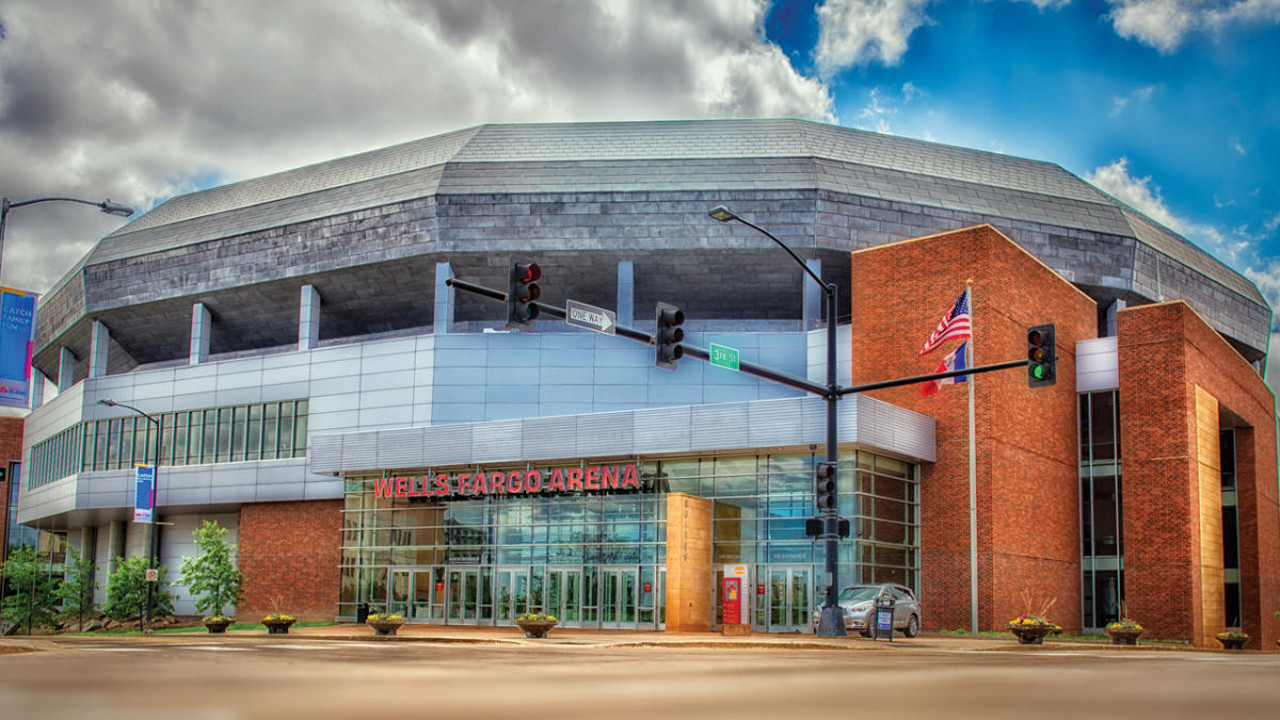
Wells Fargo Arena
Des Moines, Iowa, United States
15,181 capacity
Nestled in the heart of Iowa's capital city, Wells Fargo Arena stands as one of America's premier multi-purpose entertainment venues, though its connection to IndyCar racing represents a unique chapter in the facility's diverse sporting legacy. With a seating capacity of 15,181, this Des Moines landmark has hosted everything from professional basketball and hockey to major concerts and special events, but its motorsport heritage adds a distinctive element to its operational portfolio. The arena's architectural design reflects modern venue construction principles, featuring a bowl-shaped seating configuration that provides excellent sightlines from virtually every seat in the house. Built as part of Des Moines' downtown revitalization efforts, the facility serves as an anchor for the city's entertainment district and represents a significant investment in Iowa's sporting infrastructure. The venue's versatility stems from its ability to reconfigure for various events, with a floor space that can accommodate different sporting layouts and entertainment setups. For IndyCar events, Wells Fargo Arena transforms from a traditional indoor arena into a unique motorsport venue, though the specific nature of these racing activities differs significantly from outdoor road courses or ovals. Indoor motorsport events at venues like Wells Fargo Arena typically involve specialized formats that can accommodate the spatial constraints of an arena setting while still delivering the excitement and technical precision that IndyCar racing demands. The concrete floor surface and controlled environment create distinct challenges and opportunities compared to traditional racing venues. The arena's location in Des Moines positions it strategically within America's heartland, making it accessible to racing fans from across the Midwest. Iowa's central location provides convenient access for spectators traveling from neighboring states, while the venue's downtown setting offers numerous hospitality options and urban amenities that enhance the overall event experience. The facility's proximity to major highways and transportation hubs facilitates logistics for racing teams and equipment transport. What distinguishes Wells Fargo Arena from traditional racing circuits is its intimate atmosphere and controlled environment. The relatively compact seating arrangement ensures that spectators maintain close proximity to the action, creating an atmosphere that amplifies sound and energy in ways that outdoor venues cannot replicate. The arena's sophisticated lighting and sound systems provide production capabilities that enhance the spectacle of motorsport events, while climate control ensures consistent conditions regardless of Iowa's sometimes unpredictable weather patterns. The venue's operational flexibility represents one of its greatest strengths in hosting diverse events. The arena floor can accommodate various configurations, while the facility's infrastructure supports complex event productions. Modern amenities include premium seating areas, hospitality suites, and comprehensive concession facilities that cater to diverse audience preferences. The venue's technology infrastructure supports broadcast requirements for televised events, ensuring that racing action can reach broader audiences beyond those in attendance. Wells Fargo Arena's role in Iowa's sporting landscape extends well beyond motorsport, as the facility serves as home to professional basketball and hockey teams while hosting numerous other sporting and entertainment events throughout the year. This multi-use approach maximizes the venue's economic impact on the Des Moines community while providing diverse entertainment options for local residents and visitors. The arena's year-round operational schedule demonstrates its significance as a regional entertainment hub. The facility's contribution to IndyCar racing represents part of the sport's broader efforts to diversify venue types and reach new audiences in different markets. Indoor motorsport events can introduce racing to demographics and geographic areas that might not otherwise have access to traditional racing circuits. The unique format and intimate setting create memorable experiences that differentiate these events from standard outdoor racing competitions. From a technical standpoint, racing within an arena environment presents distinct challenges for drivers and teams. The confined space requires precise vehicle setup and driving techniques adapted to the specific demands of indoor competition. Surface characteristics, air circulation, and spatial limitations all influence strategic and tactical decisions, creating a specialized subset of motorsport competition that demands particular expertise and adaptation. The arena's modern facilities include comprehensive safety systems and emergency response capabilities essential for hosting motorsport events. Professional-grade medical facilities, fire suppression systems, and security infrastructure ensure that events meet the strict safety standards required for competitive racing. The venue's design incorporates multiple access points and egress routes that facilitate efficient crowd management during large events. Currently, Wells Fargo Arena continues to operate as a premier entertainment venue in the Des Moines market, maintaining its reputation for hosting diverse, high-quality events. The facility's management continues to explore opportunities for unique sporting events that can take advantage of the venue's distinctive characteristics and central location. The arena's legacy as an IndyCar venue represents part of its broader commitment to bringing world-class motorsport entertainment to Iowa audiences. The venue's ongoing success reflects Des Moines' growth as an entertainment destination and the arena's adaptability in serving diverse market demands. As motorsport continues evolving and exploring new formats and venues, facilities like Wells Fargo Arena demonstrate the potential for non-traditional racing venues to contribute meaningfully to the sport's development and audience expansion. The arena stands as a testament to the innovation and flexibility that characterize modern motorsport venue utilization.
Whiteways Technical Centre
United Kingdom
0Hidden away in the countryside of Oxfordshire, Whiteways Technical Centre represents one of Formula 1's most intriguing yet secretive facilities, serving as a crucial testing and development venue for some of the sport's most prestigious teams. Unlike the glamorous permanent circuits that host Grand Prix weekends, this private facility operates away from the public eye, where cutting-edge automotive technology meets the relentless pursuit of marginal gains that define modern F1. The facility emerged during an era when Formula 1 teams recognized the critical importance of private testing venues, allowing them to develop and refine their machinery without the constraints and scrutiny that come with public circuits. Whiteways Technical Centre was conceived as more than just a test track – it was designed as a comprehensive technical facility where aerodynamic theories could be validated, chassis setups perfected, and drivers could familiarize themselves with new regulations or car configurations in complete privacy. What distinguishes Whiteways from traditional racing circuits is its purpose-built nature specifically for technical development rather than wheel-to-wheel racing. The track layout incorporates a variety of corner types and configurations that allow engineers to test different aspects of car performance across a range of scenarios. The facility features medium and high-speed corners that enable teams to evaluate aerodynamic packages and suspension setups, while tighter technical sections provide opportunities to assess mechanical grip and low-speed handling characteristics. The surface characteristics at Whiteways have been carefully engineered to provide consistent grip levels and tire wear patterns that teams can correlate with data from Grand Prix venues. This consistency proves invaluable for development work, as engineers can establish baseline performance metrics and accurately measure the impact of various technical modifications. The track's relatively compact nature means that teams can complete numerous testing cycles within a single day, maximizing the efficiency of their development programs. One of the facility's most significant advantages lies in its flexibility and adaptability. Unlike permanent racing circuits with fixed layouts, certain sections of Whiteways can be modified or reconfigured to simulate specific corner characteristics found at various Grand Prix venues around the world. This adaptability allows teams to prepare for upcoming races by recreating similar corner speeds, banking angles, or surface conditions they expect to encounter during the championship season. The technical infrastructure supporting the track rivals that found at any major Grand Prix circuit. Sophisticated timing and data acquisition systems capture thousands of data points during each test session, while high-speed cameras and telemetry equipment provide detailed analysis of car behavior and driver inputs. The facility's pit and garage complex offers teams a controlled environment for car preparation and between-session modifications, complete with the specialized equipment necessary for modern F1 operations. Weather conditions at the Oxfordshire location provide teams with valuable testing opportunities across different scenarios. The changeable British climate means that teams often encounter varying track conditions during extended test sessions, allowing them to evaluate wet weather setups and intermediate tire compounds alongside their dry weather development programs. This unpredictability, while occasionally frustrating for test schedules, provides invaluable real-world data that proves crucial during unpredictable race weekends. Security and confidentiality remain paramount concerns at Whiteways Technical Centre. The facility operates under strict access controls, with teams able to conduct their development work without fear of competitor surveillance or media scrutiny. This privacy proves essential during the development of new aerodynamic packages, engine mappings, or strategic innovations that teams prefer to keep secret until race weekends. The isolated location further enhances this confidentiality, allowing teams to test radical car configurations or experimental components away from prying eyes. The venue has witnessed numerous significant moments in Formula 1 development, though many remain shrouded in secrecy due to the competitive nature of the sport. New car launches, rookie driver evaluations, and the testing of experimental technologies have all taken place within the facility's confines. While specific details rarely emerge publicly, the impact of development work conducted at Whiteways often becomes apparent during subsequent Grand Prix weekends when teams unveil performance improvements or strategic innovations. Driver development represents another crucial aspect of Whiteways' operations. The facility provides young drivers with opportunities to gain experience in current-specification Formula 1 machinery without the pressure and public scrutiny associated with official test sessions at Grand Prix venues. Reserve drivers, academy prospects, and even established racers returning from injury have all utilized the facility to maintain or develop their skills in a controlled environment. Currently, Whiteways Technical Centre continues to operate as a vital component of Formula 1's development ecosystem. As the sport's technical regulations become increasingly complex and the margins between competitors continue to shrink, the importance of facilities like Whiteways only grows. The venue adapts to accommodate new technical requirements, whether related to hybrid power unit development, advanced aerodynamic testing, or the evaluation of sustainable fuel technologies that will shape F1's future. The facility's ongoing relevance in modern Formula 1 reflects the sport's evolution from a primarily weekend-based activity to a year-round technical development race. While fans may never witness the innovations and breakthroughs that occur at Whiteways Technical Centre, the facility's contribution to the spectacle and competitiveness of Grand Prix racing remains both substantial and enduring, cementing its position as one of Formula 1's most important yet least visible venues.
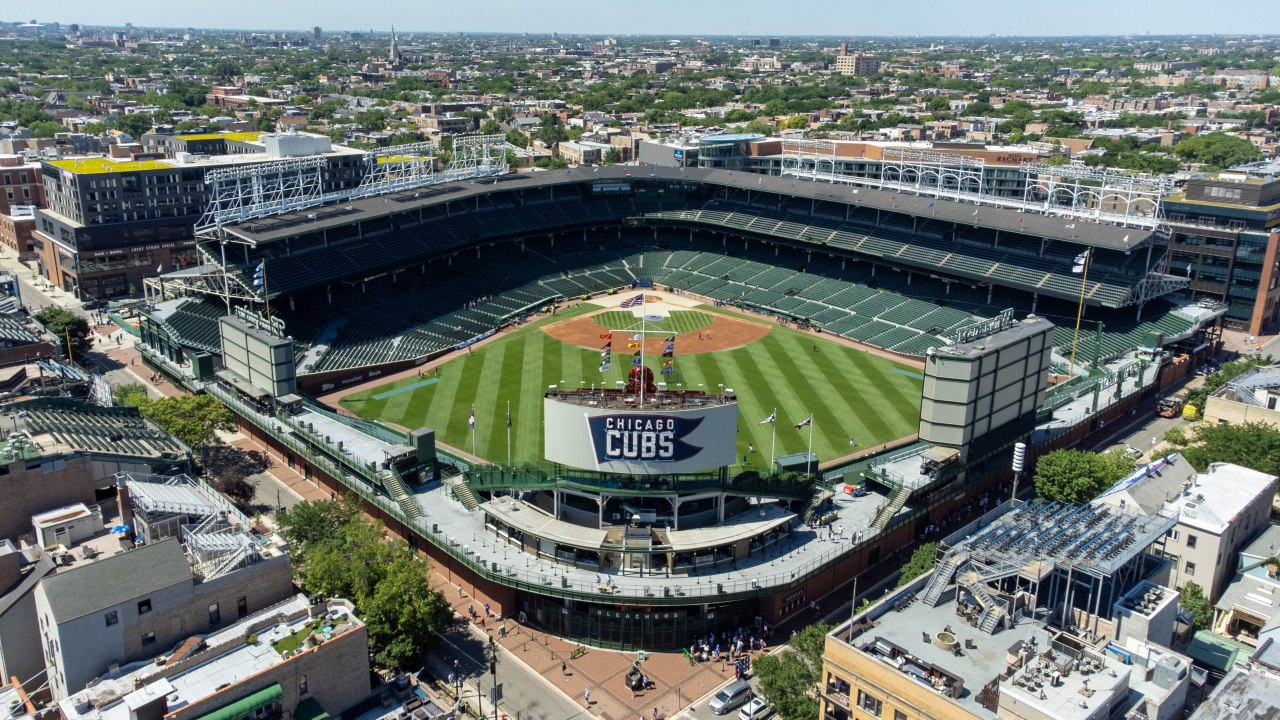
Wrigley Field
Chicago, Illinois, United States
41,649 capacity
Wrigley Field is a baseball stadium located in Chicago, Illinois, United States, home of the Chicago Cubs. It was built in 1914 as Weeghman Park for the Chicago Federal League baseball team, the Chicago Whales. The Cubs played their first game at Weeghman Park on April 20, 1916, defeating the Cincinnati Reds 7–6 in eleven innings. In November 1918, Weeghman resigned as team president. Chewing gum magnate William Wrigley, Jr. acquired complete control of the Cubs by 1921. It was called Cubs Park from 1920 through 1926, before officially becoming Wrigley Field for the 1927 season. Located in the north side community area of Lakeview, Wrigley Field sits on an irregular block bounded by Clark (west) and Addison (south) Streets and Waveland (north) and Sheffield (east) Avenues. Wrigley Field is nicknamed The Friendly Confines, a phrase popularized by "Mr. Cub", Hall of Famer Ernie Banks. The current capacity is 41,009, making Wrigley Field the 10th-smallest actively used ballpark. It is the oldest National League ballpark and the second oldest active major league ballpark (after Fenway Park on April 20, 1912), and the only remaining Federal League park. Wrigley Field is known for its ivy covered brick outfield wall, the unusual wind patterns off Lake Michigan, the iconic red marquee over the main entrance, the hand turned scoreboard, and for being the last major league park to have lights installed for play after dark, with lighting installed in 1988. The area surrounding the ballpark contains residential streets, in addition to bars, restaurants and other establishments and is called Wrigleyville. Between 1921 and 1970, it was also the home of the Chicago Bears of the National Football League. It hosted the second annual National Hockey League Winter Classic between the Chicago Blackhawks and the Detroit Red Wings, on January 1, 2009.
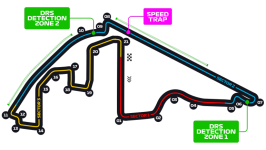
Yas Marina Circuit
Yas Marina, Abou Dabi , United Arab Emirates
60,000 capacity
Rising from the desert sands of Abu Dhabi in the late 2000s, Yas Marina Circuit emerged as Formula 1's newest jewel and the sport's first twilight race venue. This notable 5.281-kilometer circuit represents the pinnacle of modern motorsport facility design, seamlessly blending cutting-edge technology with the luxurious ambitions of the United Arab Emirates' capital emirate. Constructed on Yas Island, a purpose-built entertainment destination, the circuit was conceived as part of Abu Dhabi's broader vision to establish itself as a global sporting and tourism hub. The facility's unique twilight racing format creates one of the most visually notable spectacles in motorsport, with races beginning in daylight and concluding under the circuit's elaborate LED lighting system as darkness falls over the Persian Gulf. The track layout presents a fascinating blend of high-speed sections and technical challenges that have evolved since its original configuration. The circuit begins with a relatively straightforward opening sequence before drivers encounter the demanding Turn 5-6-7 chicane complex, which often proves crucial for lap times and race strategies. The middle sector features the circuit's longest straight, providing prime overtaking opportunities as cars reach their highest speeds before braking hard for the tight hairpin that follows. Perhaps the most iconic section of Yas Marina Circuit is its notable finale, where the track passes directly underneath the circuit's distinctive Yas Viceroy Hotel. This architectural marvel, with its LED-illuminated grid shell covering, creates a tunnel effect that has become synonymous with the venue's identity. The hotel integration represents one of motorsport's most ambitious structural achievements, allowing guests to watch the action from their rooms while cars thunder beneath at over 300 kilometers per hour. The surface characteristics of Yas Marina Circuit have undergone significant refinement since its inception. The smooth asphalt provides excellent grip levels, though the desert environment presents unique challenges with sand frequently blown onto the racing line. Track temperatures can vary eventfulally between practice sessions held in scorching afternoon heat and the cooler evening race conditions, requiring teams to carefully manage tire strategies and car setups. Overtaking opportunities exist primarily at two key locations: the long back straight leading into the hairpin, and the main start-finish straight where DRS assistance and slipstreaming effects come into play. The circuit's relatively wide layout allows for multiple racing lines in several corners, though finding opportunities to pass remains challenging due to the high grip levels and modern Formula 1 car characteristics. Kevin Magnussen currently holds the lap record with a time of 1:25.637, a mark that reflects both the circuit's flowing nature and the continuous evolution of Formula 1 car performance. This record demonstrates the track's capacity to challenge drivers while rewarding precision and commitment through its varied corner combinations. The venue's 60,000-seat capacity is distributed across multiple grandstands that offer notable viewing angles, particularly for the start-finish sequence and the eventful hotel tunnel section. The main grandstand provides panoramic views of the harbor and marina, creating an atmosphere unlike any other Formula 1 venue. Premium hospitality facilities, including yacht berths directly alongside the circuit, establish new standards for luxury motorsport experiences. Beyond Formula 1's annual 58-lap race, Yas Marina Circuit hosts an impressive calendar of international motorsport events. The venue regularly welcomes GT racing championships, touring car series, and serves as a testing facility for various racing categories. The circuit's state-of-the-art facilities, including a driving center and karting track, support motorsport development programs throughout the region. The track's design philosophy emphasizes safety without compromising racing excitement. Wide run-off areas, modern barrier systems, and excellent sight lines for marshals create an environment where drivers can push to the absolute limit. The facility's medical center and safety infrastructure meet the highest international standards, reflecting Formula 1's unwavering commitment to competitor welfare. Climate control represents a constant consideration at Yas Marina Circuit, with the desert environment creating extreme temperature variations between day and night sessions. The twilight race format not only provides notable television imagery but also ensures more comfortable conditions for both competitors and spectators as temperatures drop from the intense daytime heat. The circuit's role extends beyond motorsport, serving as a catalyst for Abu Dhabi's broader entertainment and tourism sector. The venue's integration with theme parks, shopping destinations, and luxury hotels creates a comprehensive destination experience that attracts visitors year-round, not merely during race weekends. Technological innovation remains central to Yas Marina Circuit's identity. The venue continuously invests in cutting-edge timing systems, communications infrastructure, and broadcast facilities that support Formula 1's global television production requirements. The circuit's LED lighting system, essential for twilight racing, represents one of the most sophisticated permanent lighting installations in world motorsport. Today, Yas Marina Circuit stands as a testament to ambitious vision and flawless execution, offering a unique blend of challenging motorsport action and unparalleled luxury amenities. Its position as Formula 1's traditional season finale ensures that many championship battles reach their eventful conclusion beneath the distinctive glow of its architectural lighting, cementing its status as one of the sport's most recognizable and prestigious venues.