
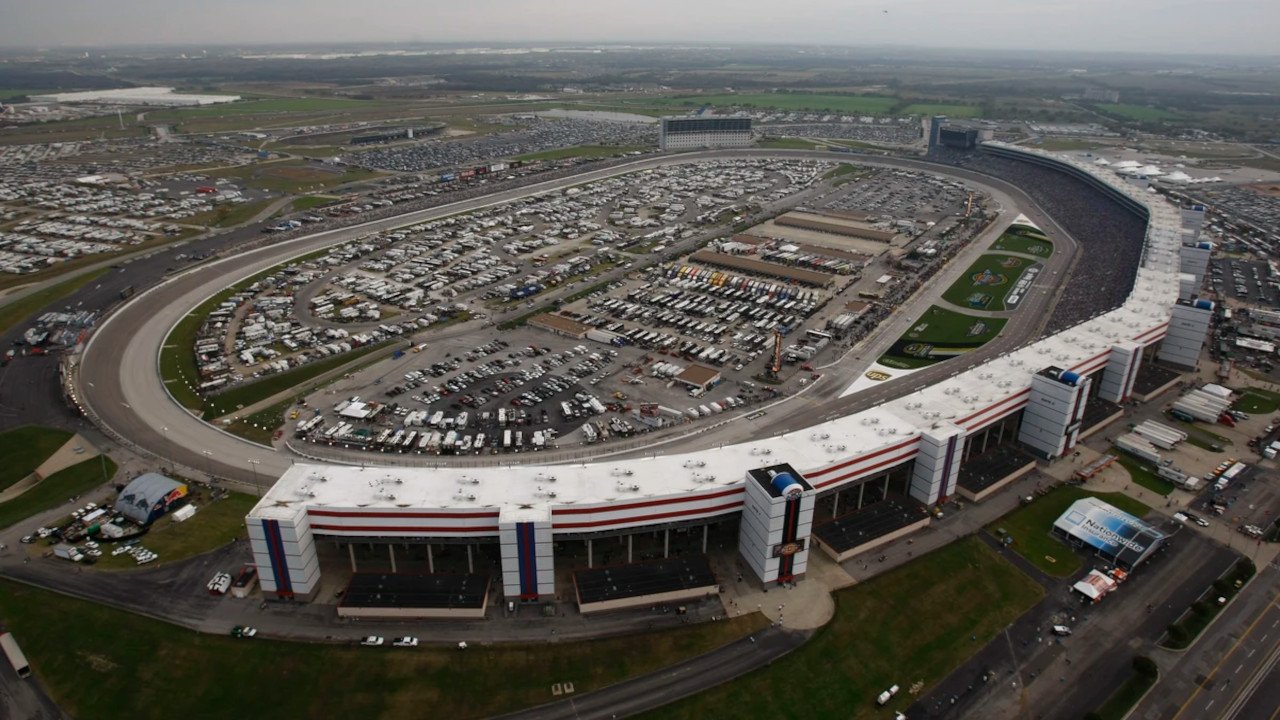
Texas Motor Speedway
Rising from the rolling hills of North Texas in the mid-1990s, Texas Motor Speedway emerged as one of NASCAR's most ambitious venue projects, designed to bring premier motorsports to the heart of cowboy country. Located in Fort Worth, this massive facility was conceived during NASCAR's explosive growth period when the sport was expanding beyond its traditional southeastern roots to capture new markets across America. The track's creation represented a bold vision to establish a world-class motorsports destination that could rival any facility in the country. Built as a 1.5-mile quad-oval, Texas Motor Speedway features progressive banking that varies from 8 degrees in the turns to 5 degrees on the frontstretch and 9 degrees on the backstretch. This configuration places it among NASCAR's intermediate tracks, a category that has become increasingly important in determining championship outcomes due to the frequency of races held on similar-sized ovals throughout the Cup Series schedule. What immediately distinguishes Texas Motor Speedway from many of its contemporaries is its sheer scale and ambition. The facility's grandstands accommodate 75,000 spectators, making it one of the larger venues on the NASCAR circuit. The track's design philosophy emphasized creating multiple racing grooves to encourage side-by-side competition, with a racing surface width of 60 feet in the turns that gradually expands to 80 feet on the straightaways. This varying width was specifically engineered to provide drivers with multiple lines through the corners, theoretically creating more opportunities for overtaking and eventful racing action. The racing surface itself tells the story of constant evolution and adaptation. Originally constructed with a specific aggregate and asphalt composition, the track has undergone several repaving and reconfiguration projects over its operational history. These surface changes have eventfulally altered racing characteristics, sometimes creating periods of dominant single-file racing followed by eras of more competitive side-by-side action. The track's relationship with tire wear has been particularly noteworthy, with some race weekends producing significant tire degradation that rewards strategic thinking and car setup expertise. From a driver's perspective, Texas Motor Speedway presents unique challenges that have evolved with each surface iteration. The track's four turns are identical in radius but subtle differences in banking transitions and surface characteristics can create distinct handling challenges. The long straightaways place a premium on horsepower and aerodynamic efficiency, while the turns reward cars with superior mechanical grip and balanced setups that can maintain speed through the extended cornering sequences. Notable racing moments at Texas Motor Speedway have become part of NASCAR lore, though the track's reputation has fluctuated with changes to its racing surface and NASCAR's technical regulations. The facility has hosted numerous memorable finishes, championship-deciding races, and career-defining performances. The track's position in the NASCAR Cup Series schedule has often placed it at crucial moments in the championship battle, amplifying the significance of victories achieved there. Beyond NASCAR's premier series, Texas Motor Speedway has served as a versatile motorsports venue hosting various racing disciplines. The facility has welcomed IndyCar racing, which presents entirely different challenges on the same racing surface due to open-wheel cars' distinct aerodynamic and handling characteristics compared to stock cars. These diverse racing programs have helped establish the venue's credibility across multiple forms of motorsport. The track's infrastructure extends far beyond the racing surface itself. The facility includes extensive garage and pit areas designed to accommodate the logistical demands of modern NASCAR operations. The infield contains numerous buildings housing race control, media facilities, driver meeting areas, and technical inspection bays. This comprehensive infrastructure allows Texas Motor Speedway to handle not just race weekends but also serve as a testing venue and corporate entertainment destination throughout the year. Weather considerations play a significant role in racing at Texas Motor Speedway, particularly during traditional spring and fall race dates. Texas weather patterns can produce eventful temperature swings, sudden wind changes, and occasional precipitation that fundamentally alters racing conditions. The track's exposed location means wind direction and intensity can significantly impact aerodynamic performance, creating additional strategic variables for teams to consider. The venue's impact on Fort Worth and the broader Dallas-Fort Worth metroplex cannot be understated. Race weekends bring hundreds of thousands of visitors to the region, creating substantial economic impact while establishing the facility as a landmark destination. The track has become integrated into the local cultural landscape, hosting concerts, driving experiences, and corporate events beyond its racing calendar. Currently, Texas Motor Speedway maintains its position as a significant venue in NASCAR's Cup Series schedule, typically hosting races that attract large television audiences and substantial attendance figures. The track continues to evolve, with ongoing discussions about surface improvements, facility upgrades, and schedule positioning that reflect NASCAR's broader strategic objectives. The facility represents both the opportunities and challenges facing modern NASCAR venues. While its scale and infrastructure capabilities position it well for contemporary motorsports demands, the ongoing quest to consistently produce compelling on-track competition remains paramount. Texas Motor Speedway's story continues to unfold as NASCAR evolves, maintaining its role as a major destination where championships are won and racing legends are made in the heart of Texas.