
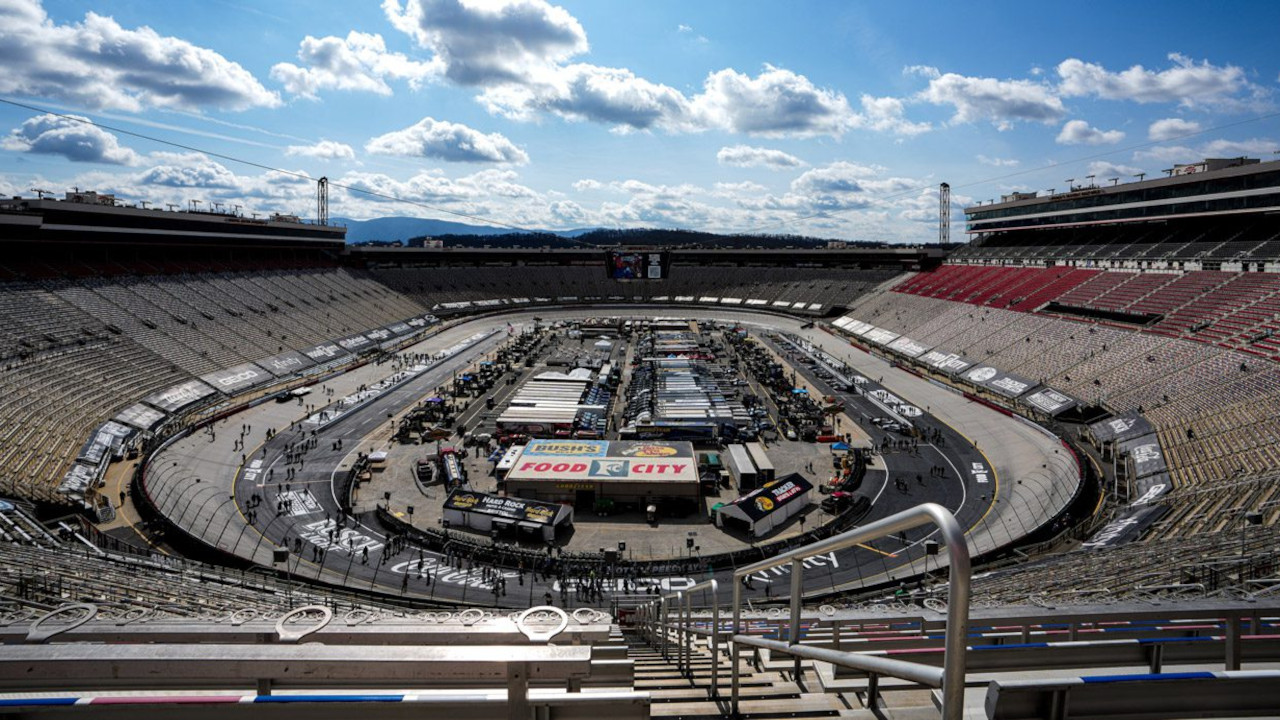
Bristol Motor Speedway
Nestled in the rolling hills of East Tennessee lies one of NASCAR's most iconic and intimidating venues, a concrete colosseum that has earned its place as the sport's most beloved short track. Bristol Motor Speedway stands as a testament to the raw intensity and close-quarters combat that defines short-track racing, drawing massive crowds to witness some of the most competitive and unpredictable competition in motorsports. Originally constructed as Bristol International Raceway, this half-mile oval opened its gates in the 1960s as a dirt track before evolving into the concrete fortress that defines modern short-track racing. The transformation from dirt to concrete fundamentally changed the character of racing at Bristol, creating the high-banked, high-speed environment that would make it one of NASCAR's premier destinations. The track's evolution mirrors that of NASCAR itself, growing from regional racing roots into a national spectacle that captivates audiences across the country. The physical characteristics of Bristol Motor Speedway set it apart from virtually every other venue on the NASCAR circuit. Measuring exactly 0.533 miles in length, the track features progressive banking that ranges from 24 to 28 degrees in the turns, with the front and back straightaways banked at a relatively modest 6 to 10 degrees. This unique banking configuration creates a racing environment where cars can maintain extraordinarily high speeds despite the track's compact dimensions, often exceeding 120 miles per hour in a space where drivers can see the entire racing surface from their cockpit. The concrete surface at Bristol presents its own set of challenges and opportunities for competitors. Unlike the asphalt surfaces found at most NASCAR tracks, Bristol's concrete provides different grip characteristics and wear patterns that significantly impact racing strategy. The surface tends to be less forgiving of setup mistakes while offering multiple racing grooves that can shift throughout an event as track conditions evolve. The combination of high banking and concrete surface creates a scenario where aerodynamic draft plays a crucial role despite the relatively short straightaways, leading to the pack racing and frequent position changes that have become synonymous with Bristol competition. Perhaps no venue in NASCAR generates more excitement about overtaking opportunities than Bristol Motor Speedway. The track's compact nature means that slower traffic becomes a constant factor throughout races, creating situations where lead changes can occur rapidly and frequently. The high banks allow cars to run multiple grooves simultaneously, from the preferred inside line to the challenging but sometimes faster outside wall. Turn entries and exits provide prime passing opportunities, though the concrete surface and high speeds make every move a calculated risk that can result in either notable success or devastating contact. Bristol's reputation as "The Last Great Colosseum" stems from the gladiatorial nature of competition that unfolds within its concrete walls. The track's unforgiving characteristics have produced some of NASCAR's most memorable moments, from notable crashes to eventful last-lap battles that have defined careers and championships. The venue has witnessed everything from dominant performances where single drivers have led wire-to-wire to chaotic affairs featuring dozens of lead changes and multiple caution periods that test every aspect of team strategy and driver skill. The atmosphere at Bristol Motor Speedway rivals that of any sporting venue in America. With a seating capacity of 146,000, the facility creates an amphitheater-like environment where spectators enjoy unobstructed views of the entire racing surface. The steep banking of the grandstands mirrors the track's banking, creating sightlines that allow fans to follow the action from any seat in the house. The proximity of the seating to the track surface intensifies the sensory experience, with the sound of 40 NASCAR engines reverberating off the concrete walls and aluminum grandstands to create an audio assault that embodies the raw power of stock car racing. Night racing at Bristol adds another dimension to the venue's mystique. The track's lighting system transforms the concrete oval into a nighttime spectacle where the combination of high speeds, close competition, and eventful shadows creates television coverage that regularly ranks among NASCAR's highest-rated broadcasts. The cooler nighttime temperatures often change track conditions throughout the event, adding strategic elements that teams must navigate while managing the intense wheel-to-wheel racing that defines Bristol competition. Bristol Motor Speedway has also served as a venue for innovation within NASCAR, hosting experimental race formats and serving as a testing ground for new rules packages designed to enhance competition. The track's unique characteristics make it an ideal laboratory for understanding how changes to cars and competition procedures affect racing quality, with lessons learned at Bristol often applied to NASCAR's broader competitive landscape. Beyond NASCAR's premier Cup Series, Bristol Motor Speedway hosts multiple racing series throughout its annual calendar. The venue regularly features NASCAR Xfinity Series and Truck Series competition, each bringing their own distinct racing characteristics to the concrete surface. The track has also hosted various touring series and special events that showcase different forms of motorsports, though stock car racing remains the facility's primary identity. Today, Bristol Motor Speedway continues to hold its position as one of NASCAR's most anticipated annual stops, with tickets for Bristol races traditionally among the most difficult to obtain in the sport. The combination of limited seating relative to demand, notable racing, and the venue's reputation for unpredictability ensures that Bristol maintains its status as a crown jewel on the NASCAR schedule. As the sport continues to evolve, Bristol Motor Speedway remains a constant reminder of NASCAR's short-track roots and the raw, uncompromising competition that built the sport's foundation.