
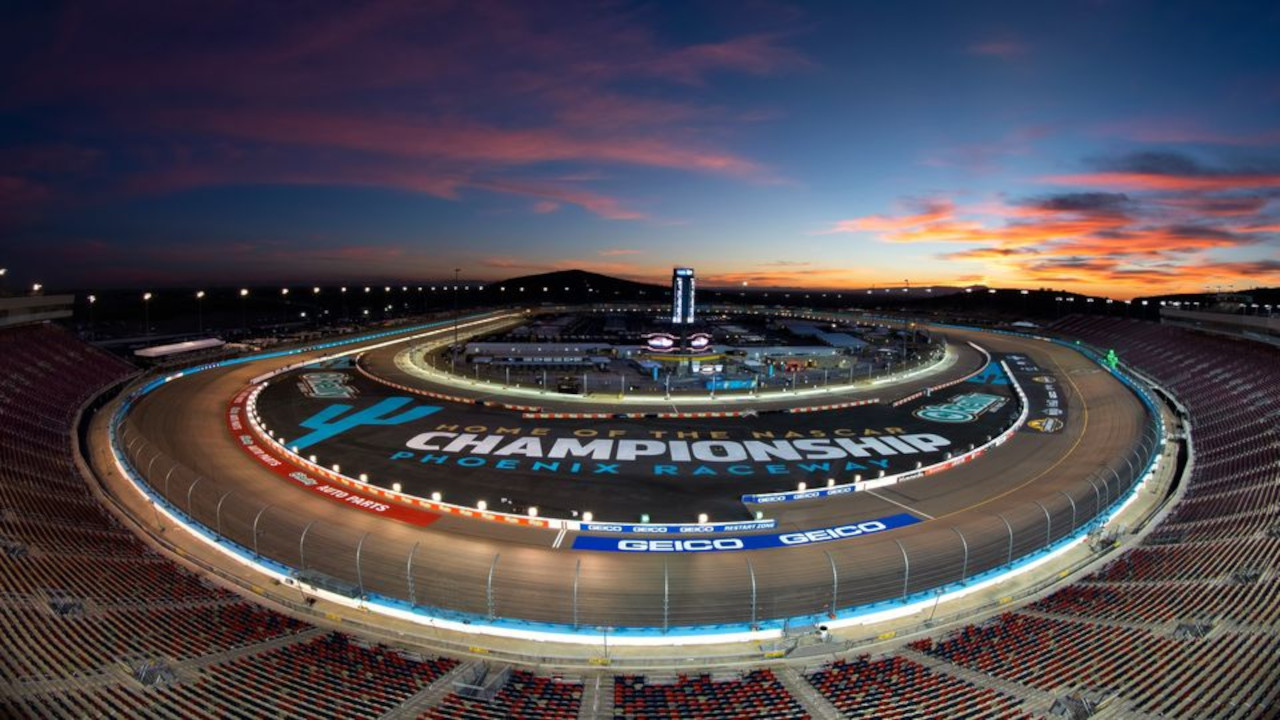
Phoenix Raceway
Nestled in the desert landscape of Avondale, Arizona, Phoenix Raceway stands as one of NASCAR's most distinctive venues, offering a unique blend of challenging track characteristics and eventful racing action. This one-mile D-shaped oval has carved out a special place in American motorsport, serving as the crown jewel of NASCAR's western presence and hosting some of the sport's most memorable moments. Originally constructed as a flat, traditional oval, Phoenix Raceway underwent a significant transformation that would define its modern character. The facility's most distinctive feature is its asymmetrical design, with varying banking angles that create multiple racing grooves and strategic challenges for drivers. Unlike many NASCAR ovals, the track features progressive banking that ranges from relatively flat sections to more steeply banked corners, creating a complex racing surface that rewards both technical skill and tactical thinking. The track's layout presents a fascinating study in contrasts. Turn One features a dogleg configuration that opens up multiple racing lines, allowing drivers to choose between the traditional low groove or venture higher up the track for different grip levels. This corner complex often becomes a critical passing zone, as drivers can utilize the varied banking to gain momentum for the long back straightaway. Turn Two transitions into a sweeping arc that flows into the backstretch, where aerodynamic effects become particularly important as cars draft and battle for position. The most challenging section of Phoenix Raceway comes at Turns Three and Four, where the progressive banking creates a unique racing dynamic. The banking increases as drivers work their way around the corner, allowing multiple racing grooves to remain competitive throughout a race. This design philosophy has created some of the most exciting racing in NASCAR, as drivers can make moves both high and low on the track surface, often resulting in eventful side-by-side battles that extend for several turns. Phoenix Raceway's surface characteristics add another layer of complexity to the racing equation. The desert climate and track composition create changing grip levels throughout race events, with track temperature playing a crucial role in tire performance and overall car handling. The abrasive surface typically produces multiple racing grooves as rubber gets laid down during practice and racing sessions, allowing for varied racing lines and strategic opportunities. The facility's 42,000-seat capacity provides an intimate atmosphere that allows fans to experience the intensity of NASCAR racing up close. The grandstand configuration takes advantage of the track's unique shape, offering excellent sightlines to multiple sections of the racing surface. Spectators can observe the technical challenges drivers face navigating the varying banking angles and witness the strategic battles that unfold throughout race events. Racing at Phoenix Raceway demands a specific skill set from drivers and teams. The combination of low downforce aerodynamic packages typically used at the facility, combined with the challenging track characteristics, places a premium on driver talent and car setup expertise. Teams must balance their setups to handle both the flat sections and banked portions of the track, while also considering how their cars will perform as track conditions change throughout long green-flag runs. The venue has witnessed numerous pivotal moments in NASCAR history, hosting championship-deciding races that have shaped the sport's narrative. Its position in the NASCAR Cup Series schedule has varied over the years, but the track has consistently delivered compelling racing action that showcases both veteran expertise and emerging talent. The facility's role in determining champions has elevated its status within the NASCAR community and created lasting memories for fans and competitors alike. Beyond its primary NASCAR events, Phoenix Raceway has served as a testing ground for various racing series and has played host to different forms of motorsport throughout its history. The facility's location in the southwestern United States has made it an important venue for expanding NASCAR's geographic reach and attracting diverse audiences to the sport. The track's maintenance and continuous improvements reflect its importance within NASCAR's venue portfolio. Ongoing surface preparation and facility enhancements ensure that Phoenix Raceway continues to provide challenging racing conditions while meeting modern safety standards and fan experience expectations. The venue's commitment to excellence extends beyond race weekends, as it serves as a year-round facility supporting various motorsport activities and community events. Currently, Phoenix Raceway occupies a prestigious position in NASCAR's premier series schedule, continuing to challenge drivers with its unique characteristics while providing fans with exciting racing action. The facility represents the evolution of NASCAR track design philosophy, where traditional oval racing concepts meet innovative engineering solutions to create distinctive racing experiences. The venue's significance extends beyond its physical characteristics, serving as a symbol of NASCAR's growth and adaptation in changing markets. Phoenix Raceway's success demonstrates how thoughtful track design and strategic scheduling can create compelling motorsport entertainment while respecting the sport's traditional roots. As NASCAR continues to evolve, this Arizona facility remains a testament to the enduring appeal of well-designed racing venues that challenge competitors and captivate audiences through pure racing excitement.