Stake F1 Team Kick Sauber
ActiveAbout Stake F1 Team Kick Sauber
The Stake F1 Team Kick Sauber represents a dynamic and evolving presence in the high-octane world of Formula 1, rooted in the motorsport-rich region of Hinwil, Switzerland. The team’s lineage traces back to the Sauber F1 Team, which was founded by Peter Sauber in 1993, marking Switzerland’s return to the pinnacle of motorsport after a prolonged absence. Sauber’s entry into Formula 1 was built on a foundation of endurance racing success, having previously fielded competitive entries in events like the 24 Hours of Le Mans. The team quickly established itself as a midfield contender, known for its meticulous engineering and a pragmatic approach to competition. Over the years, the organization has undergone several transformations, including a partnership with BMW from 2006 to 2009, which saw the team rebranded as BMW Sauber and achieve notable success, including a race victory at the 2008 Canadian Grand Prix. Following BMW’s withdrawal, the team reverted to its original Sauber identity before entering a new chapter with the Alfa Romeo branding from 2018 to 2023. The latest evolution came with the announcement of Stake F1 Team Kick Sauber, a fresh identity reflecting new commercial partnerships and a renewed ambition to climb the grid.
Throughout its history, the team has celebrated several landmark achievements, though a world title has remained elusive. The BMW Sauber era marked the pinnacle of its competitive success, with Robert Kubica securing the team’s sole victory in Montreal in 2008, a race remembered for its chaotic finish and Kubica’s composed drive. The Polish driver’s performance that season, which included multiple podium finishes, helped the team secure second place in the Constructors’ Championship, a feat that remains its highest finish. In the Sauber and Alfa Romeo guises, the team has consistently punched above its weight, often developing competitive chassis and nurturing young talent. Notable highlights include Kamui Kobayashi’s podium at the 2012 Japanese Grand Prix and Sergio Pérez’s trio of podiums during the same season, showcasing the team’s ability to capitalize on opportunities in mixed conditions. While championships have not yet materialized, the team’s resilience and ability to adapt have cemented its reputation as a respected competitor in Formula 1.
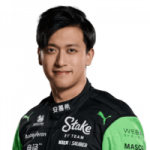
The team has been a proving ground for several drivers who later became stars of the sport. Kimi Räikkönen, the 2007 world champion, made his Formula 1 debut with Sauber in 2001, immediately impressing with his raw speed and earning a promotion to McLaren the following year. Similarly, Felipe Massa honed his skills with the team before moving to Ferrari, where he became a title contender. More recently, Charles Leclerc used his 2018 season with Alfa Romeo Sauber as a springboard to a Ferrari seat, demonstrating the team’s continued role as a talent incubator. The current lineup features a mix of experience and youth, with Valtteri Bottas bringing his Mercedes pedigree and Zhou Guanyu representing the team’s commitment to expanding its global appeal, particularly in the Chinese market. These drivers exemplify the team’s philosophy of blending proven performance with emerging potential, a strategy that has defined its approach to driver selection for decades.
Technically, the team has long been recognized for its innovative yet pragmatic engineering philosophy. Based in Hinwil, Sauber’s state-of-the-art facility includes a cutting-edge wind tunnel and advanced simulation tools, enabling the team to maximize its resources despite operating with a smaller budget than the sport’s elite. The collaboration with BMW brought significant technical expertise, particularly in powertrain development, while the Alfa Romeo partnership provided access to Ferrari’s power units. The team has often excelled in aerodynamic efficiency, a hallmark of its car designs, and has been proactive in embracing new regulations to gain an edge. In the current ground-effect era introduced in 2022, the team has focused on optimizing floor and suspension design to extract performance, though it has faced challenges in translating wind tunnel data to on-track results consistently. The technical team, led by experienced figures like James Key, continues to refine its processes to bridge the gap to the front of the grid.
In the current era, Stake F1 Team Kick Sauber finds itself in a transitional phase, striving to establish itself as a consistent points scorer amid fierce competition. The 2023 season, under the Alfa Romeo banner, yielded mixed results, with moments of promise overshadowed by reliability issues and a lack of outright pace. The rebranding for 2024, incorporating Stake and Kick as title partners, signals a new commercial direction, leveraging digital and entertainment platforms to enhance its profile. On track, the team faces the familiar challenge of competing against better-funded rivals, but there is optimism that its technical partnerships and driver lineup can deliver incremental progress. The long-term goal remains clear: to return to the upper midfield and, eventually, challenge for podiums regularly. With Formula 1’s budget cap now in place, the team believes it can close the gap through smarter resource allocation and strategic innovation.
The team’s headquarters in Hinwil, Switzerland, is a testament to its engineering heritage and commitment to excellence. The facility houses not only the Formula 1 operation but also Sauber’s advanced technologies division, which works on projects ranging from aerodynamics to sustainable mobility solutions. The wind tunnel, one of the most sophisticated in motorsport, is a critical asset, used by other racing series and automotive manufacturers, providing additional revenue streams. The campus reflects the team’s Swiss precision, with every department designed for efficiency and collaboration. This infrastructure has been a cornerstone of the team’s ability to compete at the highest level, even when financial resources have been constrained.
Under its current management, led by CEO Andreas Seidl and Technical Director James Key, the team is undergoing a period of restructuring aimed at elevating its competitive standing. Seidl, who joined from McLaren, brings a wealth of experience from his tenure at Porsche in endurance racing and McLaren in Formula 1, where he oversaw a significant performance improvement. His leadership emphasizes a no-nonsense, results-driven culture, with a focus on strengthening the technical team and fostering closer collaboration with engine partner Ferrari. Key, a seasoned F1 engineer with stints at McLaren and Toro Rosso, is tasked with refining the car’s design philosophy to exploit regulatory opportunities. Together, they represent a renewed sense of purpose, aiming to steer Stake F1 Team Kick Sauber toward a brighter future in Formula 1. The road ahead is challenging, but with a clear vision and a legacy of resilience, the team remains a fascinating and integral part of the sport’s fabric.