
Venues
12 venues
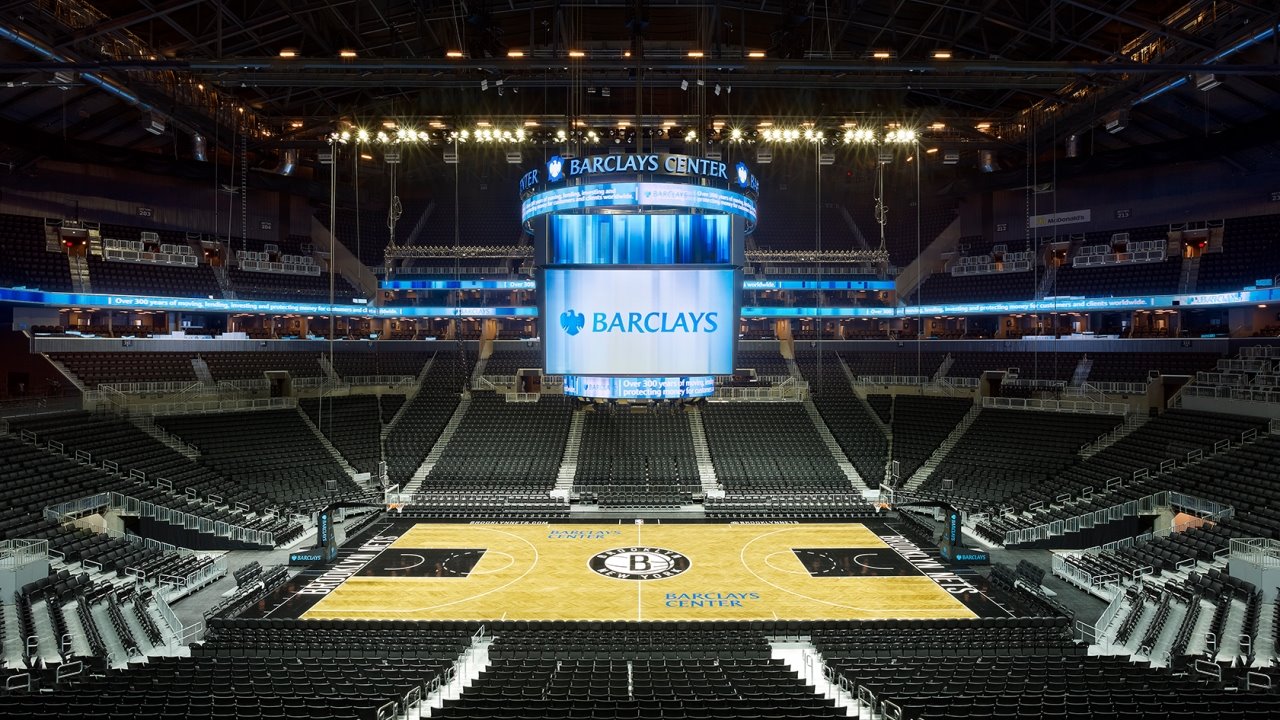
Barclays Center
Brooklyn, New York, United States
17,732 capacity
Barclays Center is a multi-purpose indoor arena in the New York City borough of Brooklyn. It sits partially on a platform over the Metropolitan Transportation Authority (MTA)-owned Vanderbilt Yards rail yard at Atlantic Avenue for the Long Island Rail Road (LIRR). It is part of a $4.9 billion future business and residential complex now known as Pacific Park. The site is located adjacent to the renamed Atlantic Avenue–Barclays Center subway station on the 2 3 4 5 B Q D N R routes, as well as directly above the LIRR's Atlantic Terminal. The arena is currently home to the Brooklyn Nets of the National Basketball Association and the New York Islanders of the National Hockey League. The arena also hosts concerts, conventions and other sporting and entertainment events. The arena competes with other facilities in the New York metropolitan area, including Madison Square Garden in Manhattan and Prudential Center in Newark. The arena and the Brooklyn Nets are owned by Mikhail Prokhorov's American holdings. The arena, initially proposed in 2004 when real estate developer Bruce Ratner purchased the Nets for $300 million as the first step of the process to build a new home for the team, experienced significant hurdles during its development. Its use of eminent domain and its potential environmental impact stirred up community resistance, especially as residential buildings and businesses such as the Ward Bakery were to be demolished and large amounts of public subsidies were used, which led to multiple lawsuits. The global recession of 2009 also caused financing for the project to dry up. As a result, the start of construction was delayed until 2010, with no secure funding for the project having been allotted. Groundbreaking for construction occurred on March 11, 2010, and the arena opened to the public on September 21, 2012, which was also attended by some 200 protesters. It held its first event with a Jay-Z concert on September 28, 2012.
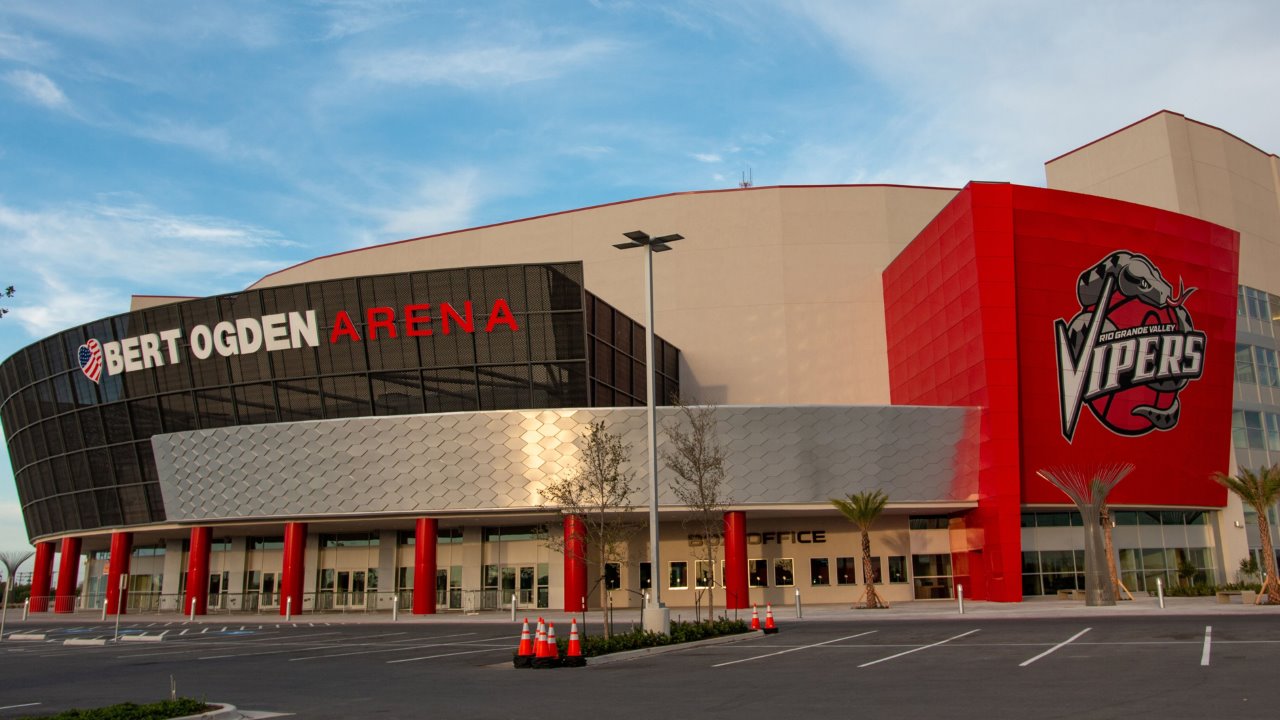
Bert Ogden Arena
Edinburg, Texas, United States
7,688 capacity
Deep in the heart of South Texas, an unconventional motorsport venue has carved out a unique niche in the American racing landscape. Bert Ogden Arena in Edinburg, Texas, represents a fascinating intersection of traditional motorsport and innovative event hosting, challenging conventional notions of where high-speed racing can take place. Located in the Rio Grande Valley, just miles from the Mexican border, this multipurpose arena serves as home to a diverse array of events that extend far beyond typical motorsport venues. With a capacity of 7,688 spectators, the facility operates on a scale that prioritizes intimate fan experiences over massive grandstand spectacles, creating an atmosphere where every seat offers proximity to the action that larger venues simply cannot match. The arena's connection to IndyCar racing represents one of the more intriguing developments in American open-wheel motorsport's ongoing evolution. While traditional IndyCar venues typically feature either oval superspeedways or permanent road courses, Bert Ogden Arena's configuration challenges these established formats. The venue's indoor capabilities and flexible layout options have opened doors to racing formats that blur the lines between traditional motorsport disciplines and exhibition-style competition. What sets this Edinburg facility apart from conventional racing venues is its fundamental design philosophy. Rather than being purpose-built exclusively for motorsport, the arena was conceived as a community anchor capable of hosting everything from concerts and sporting events to family entertainment and cultural celebrations. This multipurpose approach reflects the evolving economics of modern venue development, where successful facilities must generate revenue streams throughout the calendar year rather than relying solely on racing events. The arena's technical specifications create unique challenges and opportunities for drivers and teams. The controlled indoor environment eliminates weather variables that can eventfulally impact outdoor racing events, ensuring consistent track conditions regardless of South Texas's sometimes unpredictable climate. The compact dimensions demand precision driving skills that differ markedly from the high-speed endurance required at traditional IndyCar ovals or the complex braking zones found on permanent road courses. For spectators, the arena format offers an entirely different motorsport experience. The proximity of seating to the racing surface creates sound levels and visual perspectives that outdoor venues cannot replicate. Every engine note reverberates through the enclosed space, while the ability to see the entire racing surface from most vantage points provides comprehensive race awareness that sprawling outdoor circuits often fail to deliver. The venue's location in Edinburg carries significant cultural and economic implications for the region. South Texas has historically been underserved by major motorsport events, despite a passionate local fanbase that regularly travels hundreds of miles to attend races in other markets. Bert Ogden Arena's presence helps fill this geographic gap while introducing motorsport to communities that might otherwise have limited exposure to professional racing. The facility's operational flexibility extends beyond simple venue rental arrangements. The arena's infrastructure can accommodate the complex logistical requirements of modern motorsport, from broadcast television production to corporate hospitality functions. This adaptability has proven crucial in an era where racing events must serve multiple constituencies simultaneously, balancing pure sporting competition with entertainment value and commercial viability. Technical teams face unique challenges when preparing for events at Bert Ogden Arena. The controlled environment affects everything from tire compound selection to aerodynamic setup strategies. Without natural wind patterns or temperature fluctuations to consider, engineers must focus on different variables than those that dominate outdoor racing preparation. These distinctive requirements have contributed to the venue's reputation as a technical proving ground that rewards innovative thinking. The arena's compact scale also influences race strategy in fundamental ways. Traditional fuel strategy calculations become less relevant in shorter-format events, while the premium on qualifying performance increases when overtaking opportunities may be limited by track configuration. These factors combine to create racing that emphasizes different driver skills than those required at traditional IndyCar venues. Community engagement represents another defining characteristic of Bert Ogden Arena's operational approach. The venue's programming extends well beyond motorsport, hosting educational initiatives, cultural celebrations, and family-oriented events that help establish deep local roots. This community integration helps sustain long-term viability while building the next generation of motorsport fans. The facility's impact on the broader IndyCar landscape reflects ongoing changes within American motorsport. As traditional venues face economic pressures and changing fan demographics, innovative formats and non-traditional locations have gained increased attention from series organizers and broadcast partners. Bert Ogden Arena's model demonstrates how motorsport can adapt to serve underserved markets while creating new revenue opportunities. Looking toward the future, the arena's flexible design positions it well for continued evolution alongside changing motorsport trends. The facility's ability to accommodate different racing formats, coupled with its established community presence and modern infrastructure, suggests continued relevance as the industry navigates technological advancement and shifting fan preferences. Today, Bert Ogden Arena stands as a testament to motorsport's capacity for innovation and adaptation. By successfully integrating high-level racing competition with broader community entertainment needs, the venue has established a sustainable model that serves multiple constituencies while advancing the sport's reach into previously underserved markets. This approach may well represent the future of motorsport venue development in an increasingly competitive entertainment landscape.
Bob Carpenter Center
United States
Located in Newark, Delaware, the Bob Carpenter Center represents a unique chapter in American motorsport history as one of the few indoor arenas to have hosted major open-wheel racing. This multipurpose facility, primarily known as the home venue for the University of Delaware's basketball teams, briefly transformed into an unconventional racing circuit that challenged both drivers and the traditional boundaries of IndyCar competition. Built as a basketball arena and convocation center, the Bob Carpenter Center opened its doors to serve the University of Delaware community and the broader region. The facility was designed with the typical characteristics of a modern sports arena: concrete construction, permanent seating arranged in tiers around a central floor space, and the infrastructure necessary to host large-scale events. What made this venue extraordinary in motorsport terms was its temporary conversion into a racing circuit, representing the ambitious and sometimes experimental nature of American open-wheel racing during certain periods of its evolution. The arena's transformation into a racing venue required extensive modifications to accommodate high-speed motorsport within the confines of an indoor space. Temporary barriers were installed around the perimeter of the arena floor, creating a short oval circuit that pushed the limits of what was considered feasible for IndyCar competition. The track configuration was necessarily compact, with tight turns that demanded precise car control and offered limited opportunities for traditional overtaking maneuvers. The surface, adapted from the arena's standard flooring, presented unique challenges in terms of grip levels and tire management that differed significantly from purpose-built racing circuits. Racing at the Bob Carpenter Center was characterized by its intensity and close-quarters competition. The confined nature of the circuit meant that drivers had to exercise exceptional car control while maintaining competitive speeds. The short straights between corners provided minimal opportunity for slipstreaming and overtaking, placing premium value on qualifying position and race strategy. The indoor environment created a distinctive atmosphere, with engine noise reverberating off the arena walls and creating an acoustic experience unlike any traditional outdoor racing venue. The technical demands of racing within the arena were considerable. Drivers had to adapt their racing lines and braking points to accommodate the tight confines of the circuit, while teams faced unique challenges in car setup and aerodynamic configuration. The short lap times meant that traffic management became a critical factor, with slower cars potentially creating significant obstacles for leaders attempting to maintain competitive pace. The limited space also meant that any incident could quickly affect multiple competitors, adding an element of unpredictability to race outcomes. What distinguished the Bob Carpenter Center from other motorsport venues was its dual identity as both an academic institution's sports facility and a professional racing circuit. This duality reflected a particular era in American motorsport when promoters and sanctioning bodies were willing to experiment with unconventional venues in efforts to expand the sport's reach and appeal to new audiences. The arena races represented an attempt to bring the excitement of open-wheel racing to regions and demographics that might not typically have access to major motorsport events. The logistics of converting a basketball arena into a racing circuit were complex and required careful coordination between university officials, racing organizers, and safety personnel. Temporary grandstand configurations had to be adjusted to provide optimal viewing angles for motorsport rather than basketball, while ensuring that safety barriers and emergency access routes met the stringent requirements of professional racing. The arena's existing infrastructure, including lighting, sound systems, and broadcast capabilities, had to be adapted to serve the specific needs of televised motorsport events. From a competitive standpoint, races at the Bob Carpenter Center often produced unexpected results due to the unique challenges presented by the venue. The compact nature of the circuit and the indoor environment created racing conditions that favored different driving styles and car setups compared to traditional oval or road course venues. This leveling effect sometimes allowed less-favored competitors to achieve strong results, contributing to the unpredictable and entertaining nature of these events. The Bob Carpenter Center's role in IndyCar history, while brief, represents an important example of the sport's willingness to innovate and experiment with different formats and venues. These arena races demonstrated both the adaptability of open-wheel racing and the challenges inherent in translating high-speed motorsport to unconventional settings. The events held there contributed to ongoing discussions within the motorsport community about venue diversity and the balance between traditional racing environments and efforts to reach new markets. Today, the Bob Carpenter Center has returned to its primary function as a university sports and events facility, hosting basketball games, concerts, and other entertainment events. While its days as a racing venue have passed, the arena remains a notable footnote in the broader history of American open-wheel racing and stands as a testament to the experimental spirit that has characterized various periods in the sport's evolution. The facility continues to serve the University of Delaware and the surrounding community, maintaining its role as a significant venue in the region's sports and entertainment landscape, even as its brief but memorable chapter in professional motorsport history remains part of its unique legacy.
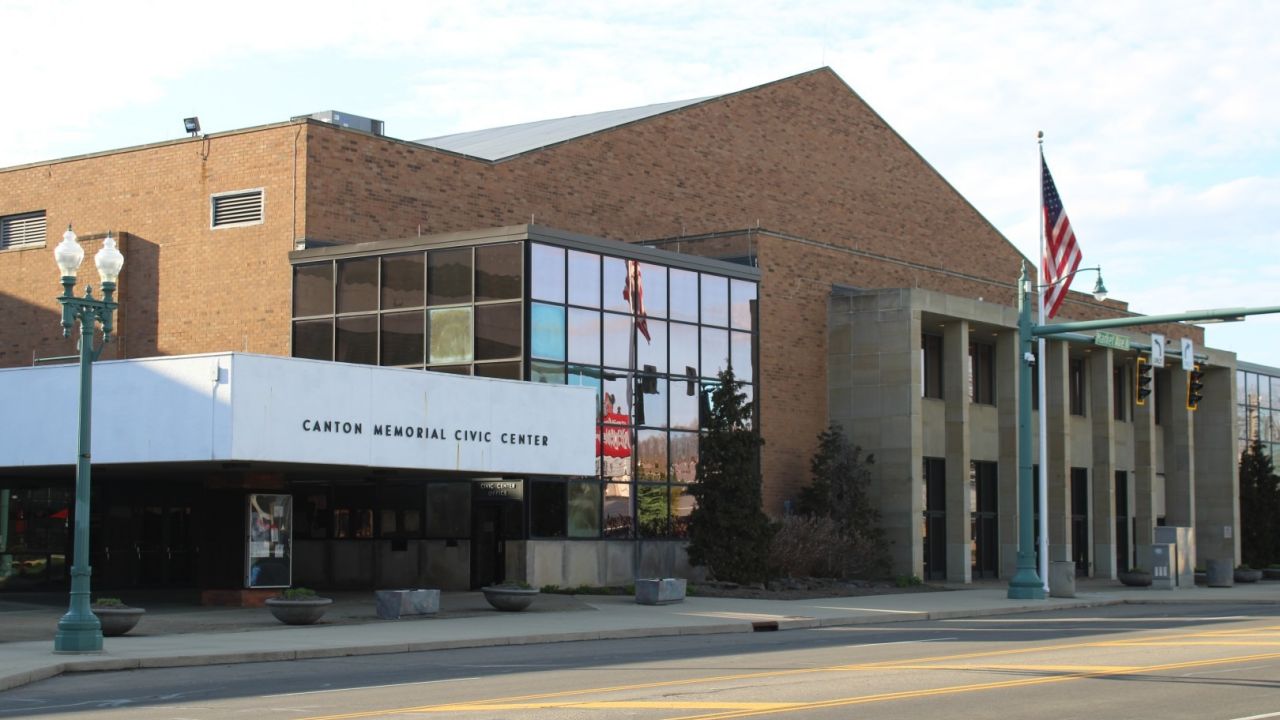
Canton Memorial Civic Center
Canton, Ohio, United States
5,200 capacity
Nestled in the heart of Ohio's Stark County, the Canton Memorial Civic Center stands as a unique venue in American motorsport history, having briefly hosted IndyCar racing during the sport's experimental indoor racing era. This multi-purpose facility, with its 5,200-seat capacity, represents one of the more unconventional chapters in open-wheel racing's ongoing quest to bring high-speed competition to new audiences and markets. The civic center itself was constructed as part of Canton's broader urban development initiatives, designed primarily to serve as a venue for concerts, conventions, trade shows, and community events. Like many municipal facilities of its era, the building featured a large, open floor plan that could be adapted for various purposes, including sporting events. The facility's architecture emphasized functionality over form, with its concrete construction and utilitarian design typical of mid-20th century civic buildings across industrial America. Canton's connection to motorsport extends beyond this single venue, as the city sits within a region that has long embraced racing culture. Ohio has produced numerous racing legends and continues to host significant motorsport events across various disciplines. The state's central location and strong industrial heritage made it a natural fit for racing promoters looking to expand their reach into new markets during periods of growth and experimentation in American motorsport. The IndyCar events held at Canton Memorial Civic Center were part of a broader trend in the 1980s and early 1990s, when race promoters experimented with indoor racing formats to extend the racing season and bring the sport to markets that lacked traditional racing facilities. These events typically involved constructing temporary racing surfaces within existing buildings, creating tight, technical courses that bore little resemblance to the high-speed ovals and road courses that traditionally hosted Indy car competition. The indoor racing format presented unique challenges for both drivers and teams. The confined space meant that races were run on extremely tight circuits, often featuring sharp turns, limited straightaway sections, and minimal room for error. Visibility could be compromised by dust and exhaust fumes, while the hard walls and limited runoff areas made crashes potentially more dangerous than those on traditional circuits. The racing surface, typically constructed of concrete or specialized materials, offered different grip characteristics than the asphalt or concrete found on conventional racing venues. For drivers accustomed to reaching speeds exceeding 200 miles per hour on traditional IndyCar circuits, the indoor events required significant adjustments in driving technique and racecraft. The emphasis shifted from raw speed to precision, car control, and tactical positioning. Overtaking opportunities were extremely limited, placing greater importance on qualifying position and strategic decision-making during pit stops and caution periods. The technical demands of indoor racing also presented unique challenges for racing teams and their equipment. Cars required specific setup modifications to handle the tight confines and different surface characteristics. Aerodynamic packages needed adjustment for the lower speeds and confined spaces, while suspension settings had to account for the different track surface and the increased likelihood of contact with walls or other cars. From a spectator perspective, indoor IndyCar events offered an intimate racing experience that traditional large-capacity speedways could not match. The 5,200-seat capacity of Canton Memorial Civic Center meant that virtually every seat provided a close-up view of the action, allowing fans to hear the engines, see driver inputs, and experience the intensity of wheel-to-wheel competition in ways that weren't possible at larger venues. The controlled environment also meant that weather was never a factor, and the acoustic properties of the enclosed space amplified the sound of the high-performance racing engines. The indoor racing experiment, while innovative, ultimately proved to have limited staying power in the IndyCar world. Safety concerns, the artificial nature of the competition, and the challenges of creating compelling racing on such tight circuits led to the eventual abandonment of most indoor racing initiatives. The sport's focus returned to traditional ovals, road courses, and street circuits that better showcased the speed and technical capabilities of Indy cars while providing more natural racing environments. Today, Canton Memorial Civic Center continues to serve its original purpose as a multi-use municipal facility, hosting a variety of community events, exhibitions, and entertainment programming. While its brief connection to IndyCar racing represents just one chapter in its history, that period serves as a reminder of the sport's willingness to experiment and adapt in pursuit of new audiences and racing experiences. The facility's legacy in motorsport history, though brief, illustrates the creative approaches that racing series have employed to expand their reach and explore new formats. While indoor IndyCar racing did not become a permanent fixture of the sport, venues like Canton Memorial Civic Center played important roles in pushing the boundaries of what was considered possible in professional motorsport, contributing to the ongoing evolution of racing entertainment and the sport's relationship with its fans and communities.
Citizens Business Bank Arena
Ontario, California, United States
Citizens Business Bank Arena (originally Ontario Community Events Center) is a multi-purpose arena, in Ontario, California, USA. It hosts local sporting events and concerts. Construction officially began on March 7, 2007, and the arena was opened on October 18, 2008. It is suitable for indoor events, including basketball, ice hockey, ice shows, boxing, graduation ceremonies and concerts. The arena's basketball capacity is 10,832. It also seats 9,736 for hockey (9,491 for Ontario Reign games) and its full capacity is 11,089. The 225,000-square-foot (20,900 m2) venue also has 36 luxury suites on two levels. It is the biggest and most modern arena within the Inland Empire region of California. The arena's construction cost was $150 million; however, it was debt free due to the city selling different properties throughout the city. It was constructed on the old Ontario Motor Speedway property. The arena is owned by the city of Ontario and from 2008 to 2016 was operated by AEG Worldwide, since July 1, 2016, the arena is operated by SMG. The arena is home to the Ontario Reign of the American Hockey League, the Ontario Fury of the Major Arena Soccer League and the Agua Caliente Clippers of the NBA G League.
DeltaPlex Arena
United States
Nestled in Grand Rapids, Michigan, DeltaPlex Arena stands as a unique venue in American motorsport, representing the indoor racing tradition that has captivated fans for decades. This multi-purpose facility has carved out a distinctive niche in the racing world, hosting events that showcase the versatility and adaptability of motorsport in unconventional settings. Originally conceived as an exhibition and event center, DeltaPlex Arena transformed into a motorsport venue through the vision of promoters who recognized the potential for bringing high-speed racing to indoor environments. The facility's spacious interior and robust construction made it an ideal candidate for conversion into a racing circuit, allowing organizers to create a controlled environment where weather conditions never interfere with competition and spectators enjoy unobstructed views of the action. The arena's racing configuration presents unique challenges that distinguish it from traditional outdoor circuits. The indoor layout demands precise engineering to create a track that maximizes the available space while ensuring adequate safety margins for high-speed competition. The surface characteristics of the temporary racing circuit require careful preparation, with track crews working meticulously to achieve optimal grip levels and consistent racing conditions throughout the venue. What sets DeltaPlex Arena apart in the motorsport landscape is its role in preserving and promoting the tradition of indoor racing, a discipline that has deep roots in American motorsport culture. The facility serves as a bridge between the classic era of indoor racing and modern competition, maintaining the intimate atmosphere and unique challenges that define this specialized form of motorsport. The close proximity between competitors and spectators creates an electric atmosphere that amplifies every engine note and celebrates the raw excitement of wheel-to-wheel racing. The arena's design presents specific technical challenges for drivers and teams. The confined space demands exceptional precision, as there is little margin for error when navigating the circuit at racing speeds. The temporary nature of the racing surface requires teams to adapt their setups and strategies, often working with limited practice time to find the optimal balance between speed and control. These constraints create a level playing field where driver skill and adaptability become paramount factors in determining success. Throughout its history as a racing venue, DeltaPlex Arena has witnessed numerous memorable moments that have become part of indoor racing lore. The facility has played host to battles between seasoned veterans and rising stars, with the unique environment often producing unexpected results and compelling storylines. The arena's atmosphere during racing events is particularly notable, with the enclosed space amplifying both the sounds of competition and the energy of the crowd. The technical aspects of racing at DeltaPlex Arena require specialized knowledge and preparation. Teams must consider factors such as air circulation, temperature control, and the acoustic properties of the enclosed space when developing their race strategies. The surface preparation process is critical, as crews work to create optimal racing conditions within the constraints of the indoor environment. These technical considerations add layers of complexity that challenge even the most experienced teams and drivers. From an operational standpoint, DeltaPlex Arena represents the evolution of motorsport venues in adapting to changing market conditions and fan expectations. The facility's multi-purpose nature allows for efficient utilization of resources while providing racing fans with a unique experience that cannot be replicated at traditional outdoor circuits. This versatility has helped ensure the venue's continued relevance in an increasingly competitive entertainment marketplace. The arena's contribution to the broader motorsport community extends beyond its role as a racing venue. It serves as a testing ground for innovations in track design, safety systems, and event management that often find applications in other racing environments. The facility has also played an important role in developing talent, providing drivers with experience in the specialized skills required for indoor competition while offering teams valuable insights into setup and strategy development. Looking at the current landscape, DeltaPlex Arena continues to serve the motorsport community as a venue where the traditions of indoor racing remain alive and vibrant. The facility maintains its commitment to providing a platform for competitive racing while adapting to evolving safety standards and technological advances. Its continued operation represents the enduring appeal of indoor motorsport and the dedication of organizers, competitors, and fans who appreciate this distinctive form of racing. The legacy of DeltaPlex Arena in American motorsport reflects the innovative spirit that has long characterized the sport in the United States. By transforming a conventional arena into a racing venue, the facility demonstrates the adaptability and creativity that keep motorsport relevant and exciting for new generations of fans. As indoor racing continues to evolve, venues like DeltaPlex Arena serve as important guardians of this unique motorsport tradition while pointing toward future possibilities for innovation and growth in the sport.
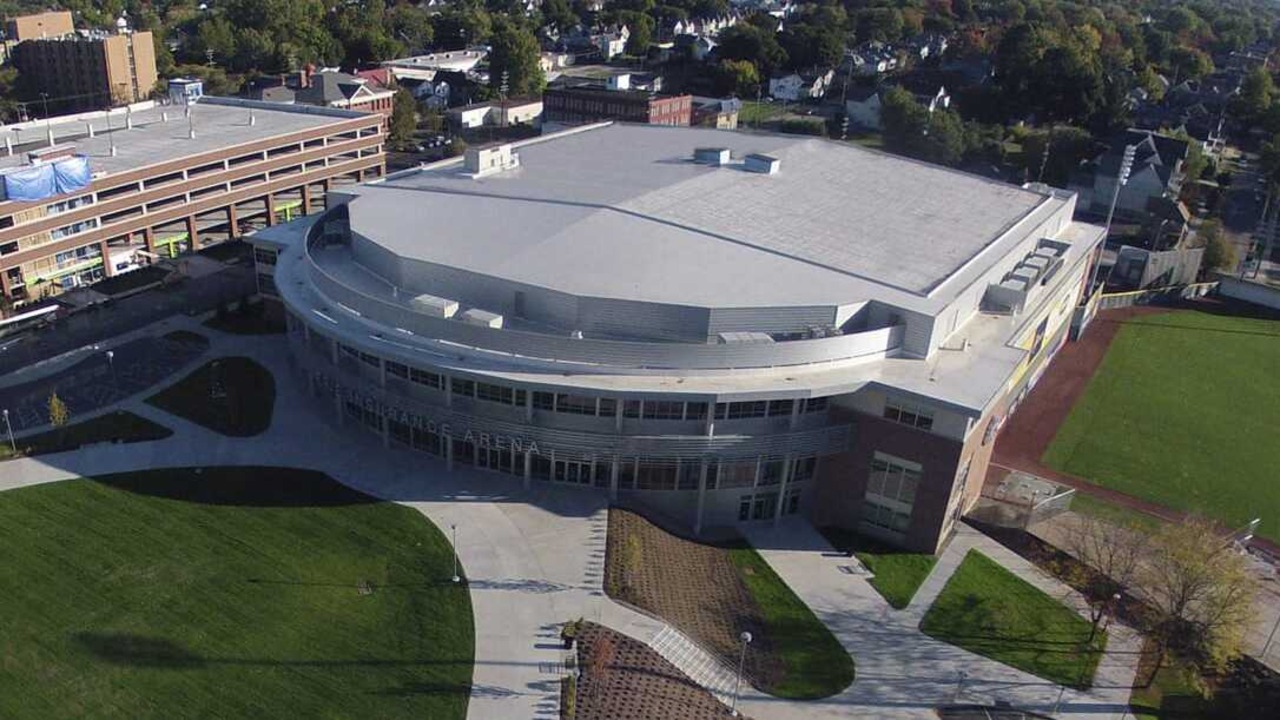
Erie Insurance Arena
Erie, Pennsylvania, United States
6,716 capacity
Nestled in the heart of Pennsylvania's fourth-largest city, Erie Insurance Arena stands as one of the more unconventional venues to host IndyCar racing, representing the series' occasional forays into indoor motorsport spectacle. This multi-purpose arena, with its intimate capacity of 6,716 seats, transforms from a traditional hockey and entertainment venue into a unique racing environment that challenges both drivers and engineers in ways that traditional road courses and ovals cannot match. The arena's primary identity centers around ice hockey, serving as home to the Erie Otters of the Ontario Hockey League, but its versatility has made it an intriguing option for motorsport exhibitions and special events. The facility's compact footprint creates an atmosphere unlike any found at purpose-built racing circuits, where the proximity of spectators to the action generates an intensity that traditional outdoor venues struggle to replicate. Every seat in the house offers an unobstructed view of the proceedings, making it an ideal venue for motorsport events that prioritize fan engagement and accessibility. When configured for IndyCar events, the arena presents unique challenges that test driver skill in ways that conventional circuits cannot. The tight confines demand precision driving at relatively low speeds, emphasizing car control, quick reflexes, and strategic thinking over pure velocity. The surface characteristics differ eventfulally from traditional racing environments, requiring specialized tire compounds and suspension setups that can adapt to the indoor conditions and the temporary track configuration that must be constructed within the arena's footprint. The venue's climate-controlled environment eliminates weather variables that typically influence outdoor racing, creating consistent conditions that allow for precise setup work and predictable performance parameters. However, this consistency comes with its own set of challenges, as drivers must adapt to the unique acoustics of an enclosed space, where engine notes and tire squeals reverberate differently than they would in an open-air environment. The lighting systems, designed primarily for hockey and entertainment events, must be supplemented to meet the specific requirements of televised motorsport competition. What makes Erie Insurance Arena particularly special in the IndyCar context is its role in bringing premier open-wheel racing to markets and demographics that might not otherwise have access to the sport. The intimate setting allows fans to witness the technical complexity and physical demands of IndyCar racing from perspectives impossible at traditional circuits. The sound of open-wheel race cars at full song within an enclosed arena creates a sensory experience that leaves lasting impressions on spectators, potentially cultivating new fans in regions where motorsport may not have deep roots. The arena's location in Erie provides strategic advantages for teams and series organizers, positioned within reasonable traveling distance of major population centers throughout the Great Lakes region and the northeastern United States. This accessibility factor has made it an attractive option for special events, exhibitions, and potentially for series looking to expand their geographic footprint into markets that lack permanent racing facilities capable of hosting major motorsport events. From a technical standpoint, the temporary nature of any racing configuration within the arena requires careful planning and execution. Safety systems must be meticulously designed and implemented to protect both competitors and spectators in an environment not originally conceived for high-speed motorsport. The run-off areas and barrier systems must be adapted to work within the constraints of the existing architecture while meeting the rigorous safety standards that modern IndyCar competition demands. The venue's support facilities, while designed for hockey operations, must be adapted to accommodate the specific needs of IndyCar teams, including garage space, technical inspection areas, and broadcast facilities. This adaptation process requires significant coordination and temporary infrastructure to ensure that teams have adequate space and resources to prepare and maintain their sophisticated racing machinery. Currently, Erie Insurance Arena continues to serve primarily as a hockey and entertainment venue, hosting concerts, family shows, and sporting events throughout the year. Its potential for motorsport applications remains largely untapped on a regular basis, though the facility's design and location make it a candidate for future IndyCar exhibitions or special events should the series choose to explore indoor racing opportunities. The arena represents part of a broader trend in motorsport toward bringing racing to non-traditional venues that can offer unique experiences for fans while expanding the sport's reach into new markets. As IndyCar continues to evolve its schedule and seek innovative ways to engage audiences, facilities like Erie Insurance Arena may play increasingly important roles in the series' future development. For Erie, Pennsylvania, the arena serves as a source of civic pride and economic activity, drawing visitors to the region for various events throughout the year. Its potential to host major motorsport events adds another dimension to its value as a community asset, demonstrating the versatility and forward-thinking design that characterizes modern multi-purpose sports and entertainment facilities. The venue stands ready to embrace whatever opportunities the future of motorsport may bring to this corner of Pennsylvania.
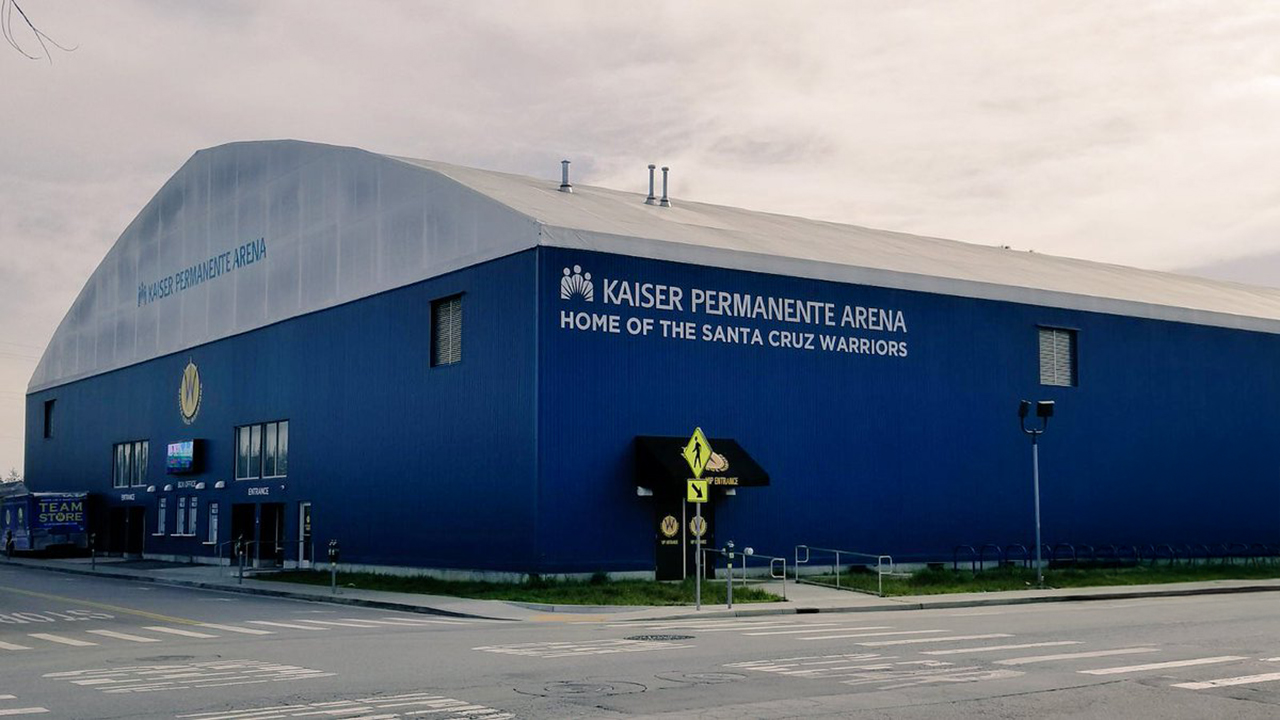
Kaiser Permanente Arena
Santa Cruz, California, United States
2,505 capacity
Kaiser Permanente Arena is an indoor arena located in Santa Cruz, in the U.S. state of California. It has a seating capacity of 2,505 spectators. It hosts the Santa Cruz Warriors of the NBA Development League. It also is the new home of the Santa Cruz Derby Girls of the Women's Flat Track Derby Association. The naming rights were bought by health care consortium Kaiser Permanente despite the company - sponsor of the Warriors' owner, the NBA's Golden State Warriors - not having facilities in Santa Cruz. A $3.5 million loan by the city of Santa Cruz was given to the Warriors to build their arena, with the 1.5-acre lot being provided by the Santa Cruz Seaside Company, owner of the Santa Cruz Beach Boardwalk. Construction ran for 78 days between September and December 2012, halted just a few times by rain. The arena was opened in December 23, 2012, with a victory of the Warriors against the Bakersfield Jam. By April 2014, Kaiser Permanente Arena had 39 sell outs out of the 53 Warriors home games. In the meantime, the Warriors reached two D-League finals. The arena also serves as the home of UC Santa Cruz men's and women's basketball games.
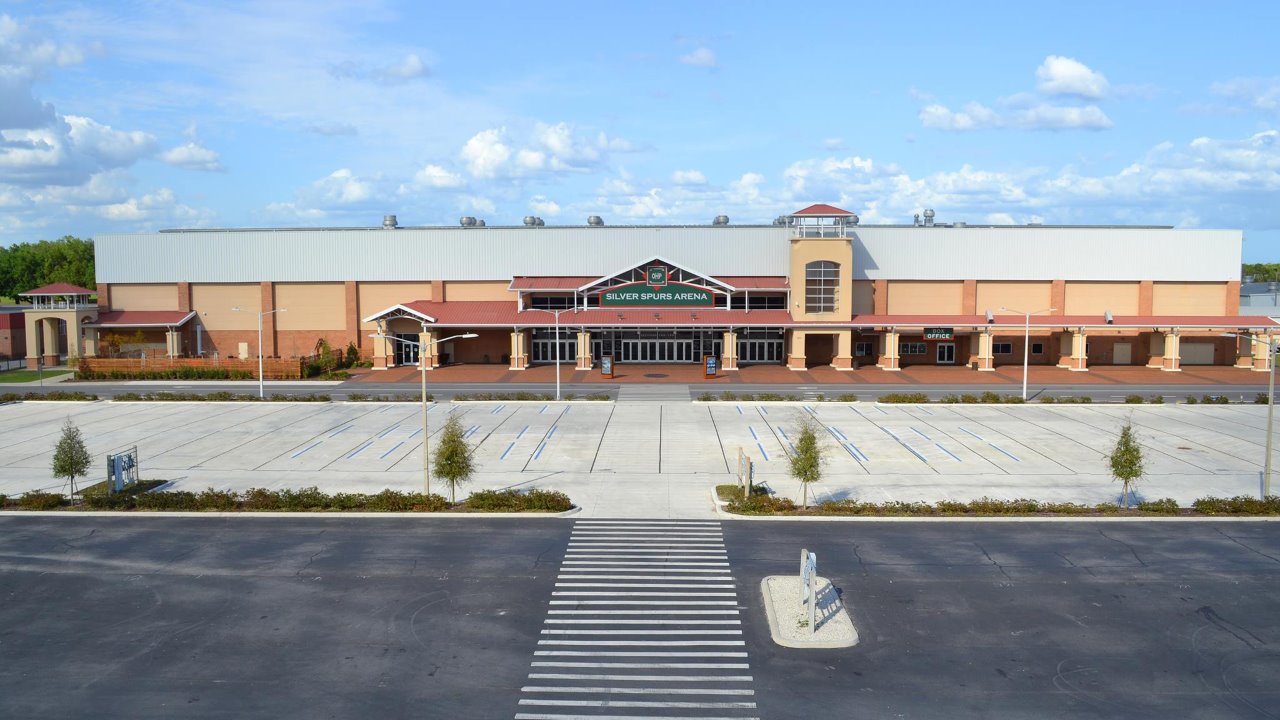
Silver Spurs Arena
Kissimmee, Florida, United States
2,296 capacity
The current Silver Spurs Arena is an 8,000-seat (11,500 seat max capacity), 33,946 square foot multi-purpose arena, in Kissimmee, Florida. It was built in 2003. It replaced the original Silver Spurs grand stand. Both are home to the Silver Spurs Rodeo a semi-annual rodeo event. Concerts, family shows, school graduations, and sporting events are also held there. The arena, part of the Osceola Heritage Park entertainment complex, features 12 luxury suites, four locker rooms and additional amenities. The arena was home to the Florida Seals of the Southern Professional Hockey League from October 2005 until January 4, 2007. During the 2005 season, it was home to the Kissimmee Kreatures of the National Indoor Football League. During 2006, the team was to be known as the Osceola Outlaws but then changed their name to Osceola Football as another team in the NIFL located in Billings, Montana held that nickname. For the 2007 season the team changed its nickname to Osceola Ghostriders and played in the World Indoor Football League. From 2018 to 2020, it served as the home of the Orlando SeaWolves of the Major Arena Soccer League. On April 11, 2023, it was announced that it will serve as the home of the NBA G League team Osceola Magic.
St. Elizabeths East Entertainment and Sports Arena
United States
Nestled within the grounds of a former psychiatric hospital in Washington, D.C., an unlikely motorsport venue has carved out its place in American racing history. The St. Elizabeths East Entertainment and Sports Arena represents one of the more unconventional settings to host IndyCar competition, transforming what was once institutional land into a temporary racing circuit that challenges drivers with its unique urban environment. The facility sits on the historic St. Elizabeths Hospital campus, where the eastern portion of the property underwent significant redevelopment to create a multi-purpose entertainment complex. This transformation brought professional motorsport to the nation's capital in a way few could have anticipated, utilizing the existing infrastructure and open spaces of the former hospital grounds to create a racing environment unlike any other on the IndyCar calendar. What sets this venue apart is its distinctive blend of permanent structures and temporary racing configuration. The arena itself serves multiple functions throughout the year, but when configured for IndyCar competition, the circuit incorporates both the interior arena space and external areas of the campus. This hybrid approach creates a racing experience that combines the intimacy of an indoor venue with the technical challenges of street circuit racing. The track layout presents drivers with a series of technical challenges that demand precision and adaptability. Tight corners and elevation changes characterize much of the circuit, with drivers navigating between permanent buildings and structures that formed part of the original hospital complex. The surface transitions between different materials as the course winds through various sections of the facility, requiring teams to carefully consider tire strategy and suspension setup to handle the varying grip levels. One of the most distinctive features of racing at St. Elizabeths East is how the circuit incorporates the existing architecture into the racing line. Drivers must thread their cars through spaces originally designed for pedestrian traffic, creating opportunities for overtaking in unexpected locations while demanding absolute precision to avoid costly contact with unforgiving concrete barriers. The proximity of spectators to the racing action, particularly in sections where the track runs close to grandstand areas, creates an atmosphere of intensity rarely matched at traditional permanent racing facilities. The venue's location within Washington, D.C. adds another layer of significance to any racing event held there. The backdrop of the nation's capital provides a striking visual contrast to the high-speed action on track, while the urban setting presents unique logistical challenges for teams accustomed to more conventional racing facilities. Limited space for paddock areas and support facilities requires creative solutions from race organizers and competing teams alike. Weather considerations play a particularly important role at St. Elizabeths East, given the exposed nature of portions of the circuit and the way certain sections of track can be affected by wind patterns created by the surrounding buildings. These microclimatic conditions can change rapidly throughout a race weekend, adding another variable for teams to monitor and adjust for as they optimize their car setups. The facility's multi-purpose nature means that racing events must be carefully coordinated with other activities and events scheduled at the venue. This scheduling complexity requires advance planning and flexibility from all parties involved, but also creates opportunities for cross-promotion between motorsport and other entertainment offerings at the arena. From a technical standpoint, the circuit places particular emphasis on mechanical grip and aerodynamic efficiency in slow-speed corners. The nature of the track layout, with its series of direction changes and varying radius turns, rewards cars that can maximize traction out of corners while maintaining stability under braking. Teams often find that traditional road course setups require significant modification to work effectively at St. Elizabeths East. The venue's role in IndyCar competition highlights the series' willingness to explore unconventional racing locations and formats. By bringing open-wheel racing to such a unique setting, the sport demonstrates its adaptability and commitment to reaching new audiences in major metropolitan markets. The urban location provides accessibility for fans who might not otherwise attend races at traditional permanent circuits located further from major population centers. Safety considerations at St. Elizabeths East require special attention due to the confined nature of much of the circuit. Run-off areas are necessarily limited in many sections, placing premium importance on barrier placement and emergency response procedures. The venue's configuration demands that drivers exercise particular caution while still maintaining the competitive intensity that IndyCar racing demands. Looking toward the future, St. Elizabeths East Entertainment and Sports Arena represents the evolution of motorsport venues in the twenty-first century. Its success in hosting IndyCar competition demonstrates how creative use of existing facilities can bring professional racing to new markets and audiences. The venue stands as an example of how motorsport can adapt to urban environments while maintaining the technical challenges and competitive integrity that define top-level open-wheel racing. The continued development of the surrounding St. Elizabeths East campus ensures that the venue will remain a dynamic and evolving location for years to come, with potential for further enhancements to both its entertainment offerings and its capabilities as a motorsport facility.
UCLA Health Training Center
United States
Nestled in the heart of Los Angeles, the UCLA Health Training Center represents a unique intersection of medical excellence and motorsport innovation in the IndyCar world. This specialized facility serves as a cutting-edge training and preparation center rather than a traditional racing circuit, embodying the modern approach to driver fitness and performance optimization that has become essential in contemporary open-wheel racing. Unlike conventional racing venues with their sweeping curves and high-speed straights, the UCLA Health Training Center focuses on the human element of motorsport performance. The facility operates as a comprehensive training environment where IndyCar drivers and teams can access world-class medical expertise, advanced fitness equipment, and specialized programs designed specifically for the unique physical and mental demands of open-wheel racing. This approach reflects the sport's evolution from its early days when driver preparation was largely informal to today's highly scientific methodology. The center's significance in IndyCar extends beyond simple physical training. Located in one of America's most prestigious medical and academic environments, the facility provides access to cutting-edge sports science research and medical technology. Drivers utilize specialized equipment designed to simulate the extreme G-forces, heat stress, and concentration demands they face during races on ovals and road courses throughout the IndyCar season. The cardiovascular training programs are particularly crucial, as IndyCar drivers must maintain peak performance while experiencing sustained G-forces that can exceed 5Gs during oval racing. What distinguishes the UCLA Health Training Center from other motorsport training facilities is its integration of medical research with practical application. The center serves as both a training ground and a laboratory where the latest developments in sports medicine can be tested and refined specifically for motorsport applications. This dual purpose creates a unique environment where theoretical research meets the practical demands of racing at speeds exceeding 230 mph on superspeedways and navigating the technical challenges of street circuits. The facility's importance has grown alongside IndyCar's increased emphasis on driver safety and performance optimization. Modern IndyCar racing places extraordinary demands on drivers, who must maintain split-second reaction times and precise control inputs while managing complex aerodynamic packages and hybrid power systems. The physical preparation required extends far beyond traditional fitness training, encompassing specialized programs for neck and core strength to handle the sustained G-forces of oval racing, heat acclimatization for races in extreme temperatures, and cognitive training to maintain focus during the intense concentration required for close-quarters racing. Training programs at the center address the specific challenges of IndyCar's diverse schedule, which includes high-speed ovals, technical road courses, and demanding street circuits. Each type of venue requires different physical and mental preparation. Oval racing demands exceptional cardiovascular fitness and the ability to maintain concentration during races that can last several hours, while road and street courses require different muscle groups and reaction patterns. The center's programs are tailored to help drivers excel across this varied landscape. The facility also plays a crucial role in injury prevention and recovery, particularly important in a sport where the margin for error is minimal. IndyCar's safety record has improved eventfulally over recent decades, but the physical stresses of racing remain intense. The center's medical expertise helps drivers maintain peak physical condition throughout the demanding season, which typically runs from March through September and includes the Indianapolis 500, one of motorsport's most prestigious events. Beyond individual driver training, the UCLA Health Training Center serves as a resource for teams seeking to optimize their human performance elements. In an era where technical regulations have created closer competition, the human factor has become increasingly important. Teams recognize that driver fitness and mental preparation can provide crucial competitive advantages, making facilities like this essential components of their overall performance strategy. The center's influence extends to the broader IndyCar community through its contributions to safety research and driver health protocols. The data and insights generated through training programs help inform safety regulations and medical procedures used throughout the sport. This research component adds another layer of significance to the facility's role in IndyCar's ecosystem. Current operations at the UCLA Health Training Center continue to evolve with advances in sports science and changes in IndyCar's competitive landscape. The introduction of hybrid power systems and continued development of safety technology create new training requirements that the facility is positioned to address. The center's location in Los Angeles also provides convenient access for drivers and teams based on the West Coast, though its reputation attracts participants from throughout the IndyCar community. The facility represents the modern reality of professional motorsport, where success depends not only on mechanical excellence and driving talent but also on comprehensive preparation and optimization of human performance. As IndyCar continues to attract top international talent and maintain its position as one of the world's premier racing series, facilities like the UCLA Health Training Center play an increasingly vital role in developing and maintaining the physical and mental capabilities required to compete at the highest level of open-wheel racing.
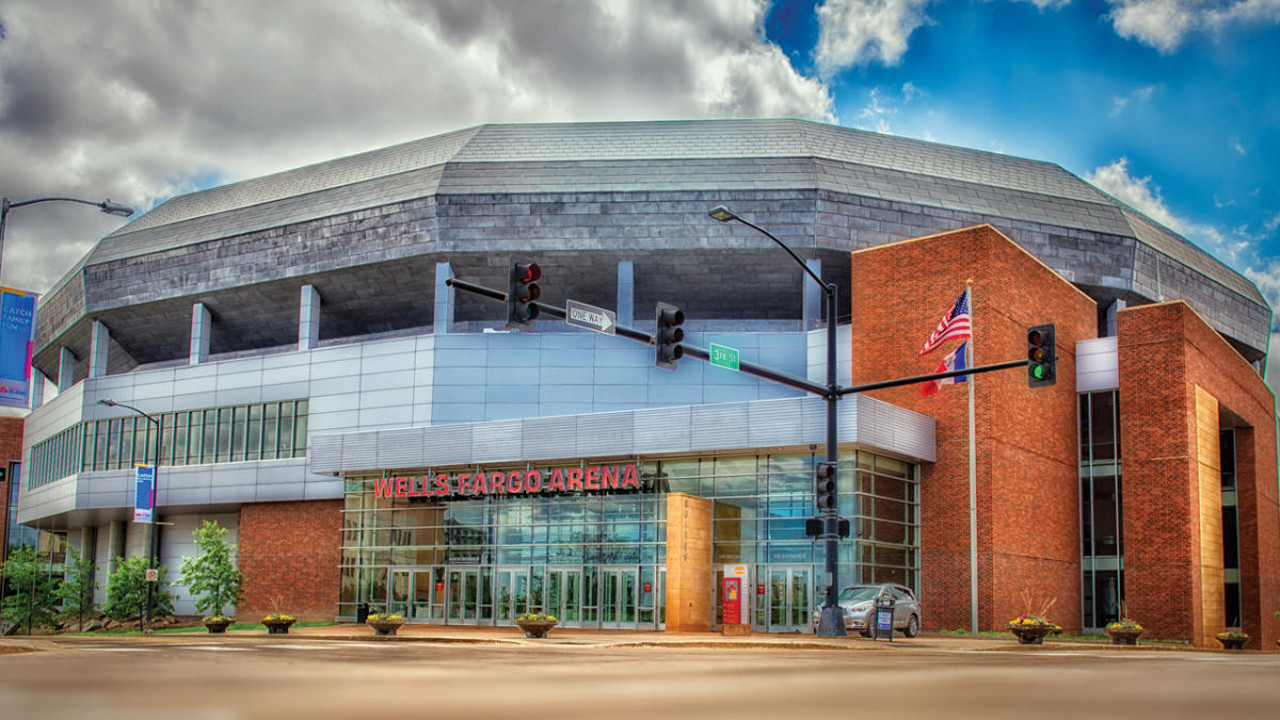
Wells Fargo Arena
Des Moines, Iowa, United States
15,181 capacity
Nestled in the heart of Iowa's capital city, Wells Fargo Arena stands as one of America's premier multi-purpose entertainment venues, though its connection to IndyCar racing represents a unique chapter in the facility's diverse sporting legacy. With a seating capacity of 15,181, this Des Moines landmark has hosted everything from professional basketball and hockey to major concerts and special events, but its motorsport heritage adds a distinctive element to its operational portfolio. The arena's architectural design reflects modern venue construction principles, featuring a bowl-shaped seating configuration that provides excellent sightlines from virtually every seat in the house. Built as part of Des Moines' downtown revitalization efforts, the facility serves as an anchor for the city's entertainment district and represents a significant investment in Iowa's sporting infrastructure. The venue's versatility stems from its ability to reconfigure for various events, with a floor space that can accommodate different sporting layouts and entertainment setups. For IndyCar events, Wells Fargo Arena transforms from a traditional indoor arena into a unique motorsport venue, though the specific nature of these racing activities differs significantly from outdoor road courses or ovals. Indoor motorsport events at venues like Wells Fargo Arena typically involve specialized formats that can accommodate the spatial constraints of an arena setting while still delivering the excitement and technical precision that IndyCar racing demands. The concrete floor surface and controlled environment create distinct challenges and opportunities compared to traditional racing venues. The arena's location in Des Moines positions it strategically within America's heartland, making it accessible to racing fans from across the Midwest. Iowa's central location provides convenient access for spectators traveling from neighboring states, while the venue's downtown setting offers numerous hospitality options and urban amenities that enhance the overall event experience. The facility's proximity to major highways and transportation hubs facilitates logistics for racing teams and equipment transport. What distinguishes Wells Fargo Arena from traditional racing circuits is its intimate atmosphere and controlled environment. The relatively compact seating arrangement ensures that spectators maintain close proximity to the action, creating an atmosphere that amplifies sound and energy in ways that outdoor venues cannot replicate. The arena's sophisticated lighting and sound systems provide production capabilities that enhance the spectacle of motorsport events, while climate control ensures consistent conditions regardless of Iowa's sometimes unpredictable weather patterns. The venue's operational flexibility represents one of its greatest strengths in hosting diverse events. The arena floor can accommodate various configurations, while the facility's infrastructure supports complex event productions. Modern amenities include premium seating areas, hospitality suites, and comprehensive concession facilities that cater to diverse audience preferences. The venue's technology infrastructure supports broadcast requirements for televised events, ensuring that racing action can reach broader audiences beyond those in attendance. Wells Fargo Arena's role in Iowa's sporting landscape extends well beyond motorsport, as the facility serves as home to professional basketball and hockey teams while hosting numerous other sporting and entertainment events throughout the year. This multi-use approach maximizes the venue's economic impact on the Des Moines community while providing diverse entertainment options for local residents and visitors. The arena's year-round operational schedule demonstrates its significance as a regional entertainment hub. The facility's contribution to IndyCar racing represents part of the sport's broader efforts to diversify venue types and reach new audiences in different markets. Indoor motorsport events can introduce racing to demographics and geographic areas that might not otherwise have access to traditional racing circuits. The unique format and intimate setting create memorable experiences that differentiate these events from standard outdoor racing competitions. From a technical standpoint, racing within an arena environment presents distinct challenges for drivers and teams. The confined space requires precise vehicle setup and driving techniques adapted to the specific demands of indoor competition. Surface characteristics, air circulation, and spatial limitations all influence strategic and tactical decisions, creating a specialized subset of motorsport competition that demands particular expertise and adaptation. The arena's modern facilities include comprehensive safety systems and emergency response capabilities essential for hosting motorsport events. Professional-grade medical facilities, fire suppression systems, and security infrastructure ensure that events meet the strict safety standards required for competitive racing. The venue's design incorporates multiple access points and egress routes that facilitate efficient crowd management during large events. Currently, Wells Fargo Arena continues to operate as a premier entertainment venue in the Des Moines market, maintaining its reputation for hosting diverse, high-quality events. The facility's management continues to explore opportunities for unique sporting events that can take advantage of the venue's distinctive characteristics and central location. The arena's legacy as an IndyCar venue represents part of its broader commitment to bringing world-class motorsport entertainment to Iowa audiences. The venue's ongoing success reflects Des Moines' growth as an entertainment destination and the arena's adaptability in serving diverse market demands. As motorsport continues evolving and exploring new formats and venues, facilities like Wells Fargo Arena demonstrate the potential for non-traditional racing venues to contribute meaningfully to the sport's development and audience expansion. The arena stands as a testament to the innovation and flexibility that characterize modern motorsport venue utilization.