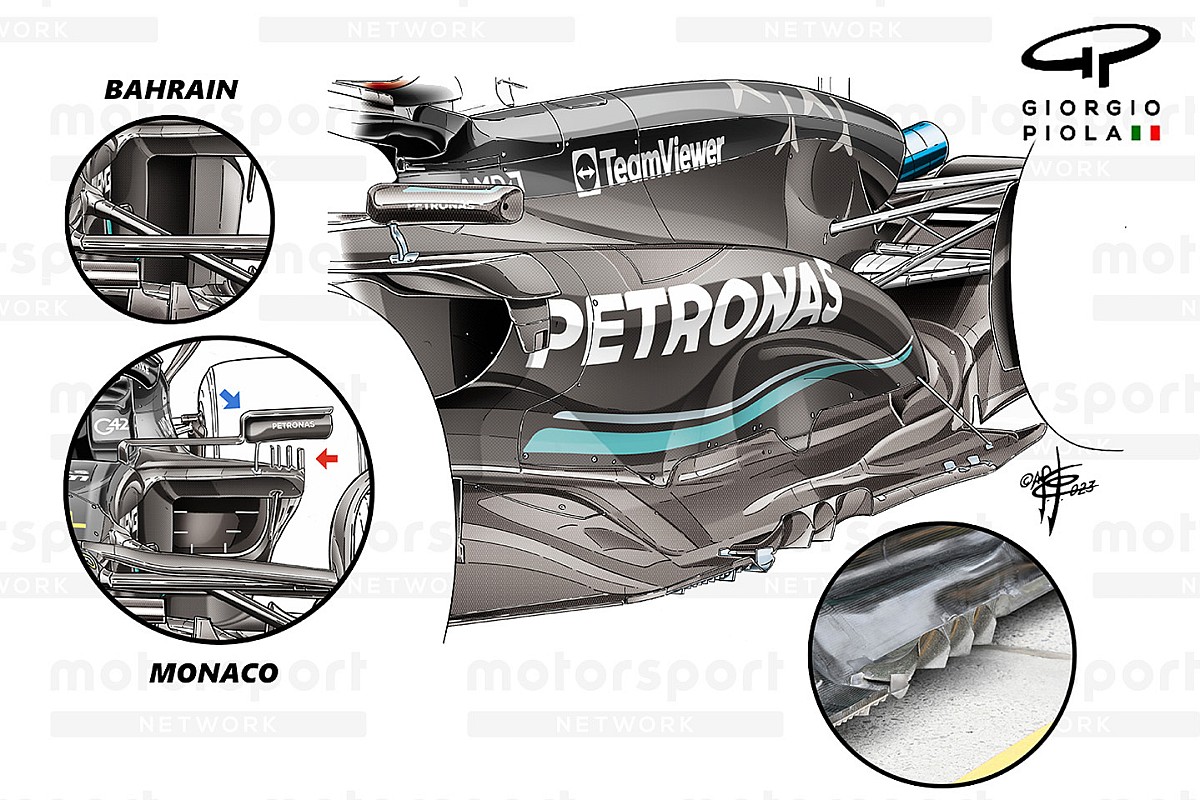
Mercedes made a noteworthy adjustment to its W14 Formula 1 car’s sidepods at the Belgian Grand Prix, a move aimed at closing the performance gap with leading competitor Red Bull. This update is part of the team's ongoing efforts to refine its vehicle in response to previous challenges faced this season.
The latest changes build on a significant conceptual shift initiated during the Monaco Grand Prix, where Mercedes decided to abandon its 'zeropod' design - a strategy that had been utilized since the current ground effect regulations took effect. Instead, it has opted for a wider, downwash ramp-style approach, akin to what its competitors have already adopted.
However, the modifications are described by experts as a “makeshift solution.” "It appears Mercedes cannot go as aggressive with the bodywork shaping as it would like, so only really has a makeshift solution," noted automotive analyst Giorgio Piola.
"It appears Mercedes cannot go as aggressive with the bodywork shaping as it would like, so only really has a makeshift solution,"
Impact and Legacy
The team's constraints stem primarily from the design of its Side Impact Structure (SIS) and the encasing fairing, which cannot be altered without the expense and effort of homologating a new chassis. This situation is complicated further by the budget cap regulations that restrict teams from making profound alterations during the season.
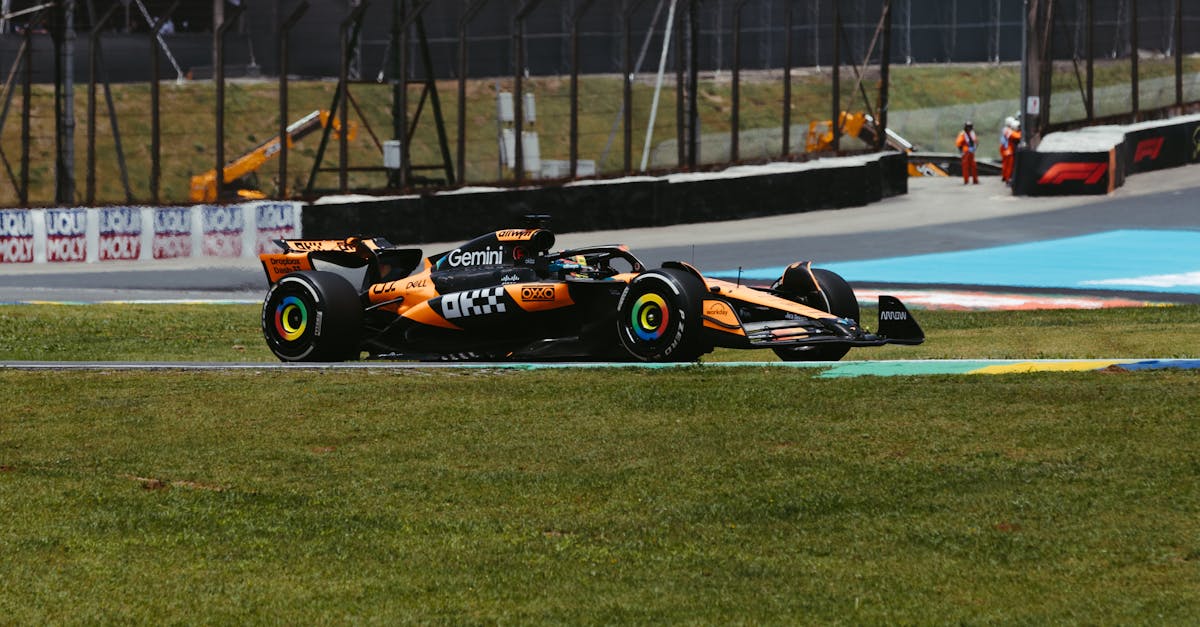
Despite the limitations on the SIS fairing, Mercedes has made meaningful adjustments to the aerodynamic features around it. Earlier this season, they removed a mirror slat located above the housing, and during updates in Canada, the row of vortex generators that previously consisted of four was reduced to three, ultimately being entirely deleted in the most recent update.
Mercedes presented the taller sidepod inlet unveiled at the Belgian Grand Prix as primarily a reliability upgrade. “This suggests there’s work that has been undertaken to the internal ducting, as well as the external bodywork,” said an insider from the team, highlighting that the team is focusing not just on aerodynamics but also ensuring the reliability of their vehicle.
Furthermore, the alterations to the inlet have introduced a more cylindrical scoop, deviating from the previously boxy design. This change has implications for cooling capacity, leading to a revised undercut layout that aims to optimize airflow downstream of the vehicle.

Critics suggest that without a complete overhaul, Mercedes risks remaining stagnant relative to competitors, particularly Red Bull, who continue to push the envelope of performance. “The reality is, until Mercedes can afford to homologate a new chassis, they are operating under considerable constraints,” remarked a former team engineer, outlining the uphill battle the team faces.
Team Dynamics
In this shadow of Red Bull’s ongoing dominance, Mercedes' adjustments could yield only limited improvements unless more substantial changes are made. The engineering team is left to navigate a fine balance between innovation and the restrictions placed by funding regulations and existing designs.
The ongoing developments in Mercedes' sidepod strategy will be closely scrutinized as the season progresses. The spotlight remains firmly on Mercedes as they strive for solutions in an increasingly competitive field.